اندیشهفلسفهخردگفتگوحکمتمعناپرسشفرهنگ
Religion
Religion as Servant, Institutionalism, and Social Cooperation in the Thought and Practice of Imam Musa al-Sadr and Mehdi Bazargan
Imam Musa al-Sadr and Mehdi Bazargan both saw religion as a servant of humanity, not its master—a vision that makes institutionalism and social cooperation essential for breaking free from tyrants, serving the oppressed, rejecting subjugation, and pursuing social tawhid.
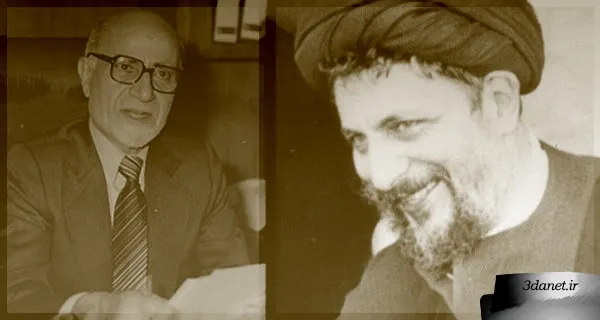
In the previous article, a model for a cooperative liberation theology was presented, and it was stated that this theology possesses a humanistic worldview and spiritual conduct (monotheism and mysticism). However, this humanistic approach occurs only if we hold a humanistic view of religion and regard religion not as the master but as the servant of humanity. In this article, we will examine the teachings of Imam Musa al-Sadr and Engineer Bazargan in this regard, as well as concerning social cooperation and collaboration, and the importance of institutionalism in their vision, method, and character.
1
Seyyed Javad Miri says of Imam Musa al-Sadr's humanistic approach to religion:
".. Imam Musa al-Sadr proposes two general approaches to viewing religion: one in which religion is in the service of humanity, and the other in which humanity is in the service of religion. This, in a way, goes back to the same view mentioned in sociology, the authoritarian view of religion versus the human-centered view of religion .."
The human-centered view sees religion as a tool for humanity to use for its own transcendence; the authoritarian view considers religion as the goal and human beings as servants of religion. Imam Musa al-Sadr and Engineer Bazargan considered religion to be the servant of humanity. In his address at the Capuchin Church, Imam Musa al-Sadr says of being a servant:
".. We have gathered for humanity, the humanity for whom religions came.. Religions were one, because they served a single purpose: calling towards God and serving humanity. And these two are manifestations of a single truth. And when religions sought to serve themselves, discord arose among them. Each religion's attention to itself became so great that it almost led to the forgetting of the original purpose. Conflicts intensified, and human suffering increased... Religions were one, because the starting point of all of them, namely God, is one; and their goal, namely humanity, is one; and the context of their unfolding, namely the universe, is one; and when we forgot the goal and distanced ourselves from serving humanity, God also left us to ourselves and distanced Himself from us, and we went our separate ways, and we turned into different fragments, and we divided the unified world, and we sought to serve our own particular interests, and we chose other gods besides God, and we drove humanity to destruction.. Let us now return to the right path and to suffering humanity, so that God may also return to us, and we may be saved from divine punishment. Let us gather to serve the oppressed, fragmented, and perishing humanity, so that we may become one in everything and regarding God, and so that religions may remain one.."
Engineer Bazargan also, at the beginning of the revolution, considered one of his differences of opinion with Ayatollah Khomeini to be over whether religion is a servant or a master:
"Both I and the Imam believe in Iran and Islam, but Imam Khomeini wants Iran for Islam, whereas I want Islam for Iran."
2
Imam al-Sadr, like other new thinkers before the revolution, emphasized socio-political monotheism in his monotheistic worldview:
“… The religions were one and pursued a common goal: to fight against earthly gods and tyrants, and to aid the oppressed and the suffering. And these two are also manifestations of a single truth. And when the religions triumphed, and along with them the oppressed also triumphed, the tyrants changed their face and rushed to seize the spoils, and sought to rule in the name of the religions, and took up the weapon of religion, and thus the suffering and affliction of the wronged were redoubled, and the religions were afflicted with calamity and discord. There is no conflict except for the interests of profiteers… The molds of depriving freedom and destroying capabilities have changed over time: sometimes in the form of despotism, sometimes in the form of colonialism, sometimes in the form of the lord-serf system, sometimes in the form of intellectual terrorism and claiming guardianship over people and deeming their intellectual power immature, and sometimes in the form of neo-colonialism, and sometimes in the form of imposing positions on individuals or nations through economic, cultural, and intellectual pressures. The politics of neglect and depriving some people of opportunities, keeping people in ignorance and illiteracy, and depriving people of health and opportunities for mobility and development, all and all, are among the various forms of depriving freedom and crushing human capability…”
He considered the corruptions of society to stem from the "lordship of the self" in human beings:
“… Wars, racial discrimination, the humiliation of others, and intense conflict in the various nuclei of society, from the family to the international community, are all conflicts whose cause is one, though their nature and extent differ. These conflicts, which have been considered a fundamental component of creation, are the result of the transformation of self-regard into self-worship. The egoism and selfishness of the individual has the same negative effect within the group. Groups and societies were formed to serve humanity. Human nature is civil and social. The human being is an entity with two dimensions: personal and social. When self-worship spreads to society, the human problem manifests in various forms: from individual selfishness to familial selfishness, to tribal selfishness, to sectarian and religious selfishness, which transforms heavenly values into earthly characteristics and empties religion and creed of their content, and destroys loftiness and tolerance—that very sectarianism which turns lofty values into a means of trade and, ultimately, reaches selfish nationalism…”
In the second article of the collection on socio-political monotheism, the negation of political and religious subjugation in Bazargan's view was explained. He believed that in a despotic environment under the domination of false gods, God is not worshipped. In volume 25 of his collected works, he considers the condition for God's entry into individual and social life to be liberation from the mental and social bonds of false gods:
“… In the goodly word ‘There is no god but God’ (lā ilāha illā Allāh), negation comes first, then affirmation. Therefore, until the subjugation, belief, servitude, and captivity to false gods and to the incorrect desires fabricated and concocted by ignorant humanity are eliminated, or until the impositions of arrogant, tyrannical oppressors upon the oppressed are denied, and the mind, intellect, action, and life of human beings are not emptied of the love and obedience of tyrants, God will not enter and rule over the individual and society. The word ṭāghūt, which appears frequently in the Quran and was formerly considered the name of a specific manufactured idol, has a general concept and includes any being, object of worship, or mentality that is concomitant with rebellion against God's sovereignty in the universe and against the authority of law in nature, considering oneself, or another, or something, as the owner of necks on earth, autonomous in movements and actions, and dominant and superior to others, or transgressing the limits and principles governing nature. The late Taleghani often took ṭāghūt as synonymous and concurrent with despot, despotism, and dictatorship…”
Engineer Bazargan considered not knowing one's own worth to lead to resignation from the self and selfhood, and turning to personality cults and xenophilia. He writes about the personality cult:
“… The origin and source of despotism, which culminates in the cult of personality and polytheism toward God, is the failure to recognize one’s own worth and value, or rights and freedoms, and those of one’s fellow human beings. Its result is turning to the great ones for one’s needs, and instead of serving God and putting oneself to work, one falls into servitude to others. Nations, by imagining and accepting that they personally lack merit and competence, and do not have the qualification, right, or ability to manage themselves, and that special individuals must be their guardians, custodians, and rulers, and become the leaders of their thoughts and actions, place the yoke of captivity to kings and grandees around their own necks with their own hands. In this way, they lose their human personality, God-given assets, and transcendent destiny, remaining perpetually abject and subjugated. Their sole task becomes submission, flattery, and glorification of the tyrants (or charismas), and serving them. In such societies, since self-reliance, or self-sufficiency and self-governance, disappears, flourishing and generativity do not emerge or grow, and the possibility of construction and reconstruction is limited to the level of meager individual and private needs … Conversely, with knowledge of God and servitude to God—which is accompanied by recognizing the human being as free and serving creation—polytheism, or the need for and worship of tyrants, is avoided. Ideals and talents flourish, and individuals, self-reliant and organized, find a path toward self-sufficiency, self-governance, and an evolutionary course toward creativity and reform…”
He considered the other face of self-resignation to be xenophilia:
“… The other face of self-resignation and despotism-affliction is xenophilia, whose positive aspect is wage-slavery and begging from foreigners, which is considered treason to country and nation, and whose negative aspect (which exists in every worship and servitude) is xenophilia, which manifests as blaming others and becoming hostile toward them. Despotism-afflicted and depersonalized societies are the complete opposite of the saying of Ali (AS), who stated: ‘Your ailment is from yourself, and your remedy is [also] within yourself.’ Depersonalized yet arrogant and comfort-seeking people, because they do not wish to see themselves as guilty and responsible for their misfortunes, believing or feeling their own inability and incapacity to remedy evils, are compelled to search for causes and factors to blame, saying that as long as those exist, nothing is of any use. When self-resignation from personality and responsibility emerges from or is freed from despotism-affliction and xenophilia, it then takes refuge in leader-worship and leader-affliction (charismatic), making imitation of and obedience to them the path to salvation and the cure for pains, and with eyes fixed on the doors of the great ones’ houses, awaits a great or cunning one to step forward and lead the herd of people to pasture or to the slaughterhouse…”
In Bazargan’s view, the monotheistic human being must attain self-awareness, know their own worth, and by serving God, avoid the worship of tyrants (personality cult and xenophilia).
3
From the perspective of Sadr and Bazargan, helping creation is an inseparable part of worshiping God. In the charter of the Freedom Movement, Engineer Bazargan states:
“… We are Muslims, not in the sense that we consider our sole duty to be fasting and prayer. Rather, our entry into politics and social activity is by way of national duty and religious obligation; we do not consider religion separate from politics, and we regard service to creation and managing the affairs of the nation as worship. We recognize freedom as a primary divine gift, and its acquisition and preservation as part of Islamic traditions and the distinctions of Shi’ism. We are Muslims in the sense that we believed in the principles of justice, equality, sincerity, and other social and human duties before the Great French Revolution and the United Nations Charter declared them…”
Imam Sadr also says about social worship:
“… God has deemed every effort to uphold truth and every activity to aid the oppressed as a striving in His path and like prayer in the sanctuary of His worship. He Himself is the guarantor of help and victory… God is not pleased with one who can ignore the hunger of neighbors, the pain and suffering of friends, the helplessness of the poor, and the need of the toilers, while being happy and joyful in his own home with his children…”
In his book *Hadith-e Sahargahan* and in his commentary on Surah Ma’un, he considers the worship of God and helping others to be inseparable:
«..At the beginning of the surah, the inseparability of faith in God and concern for and attention to human affairs is emphasized, and at its end, a connection is also established between prayer, which is the worship of God, and service to people. Thus, love and faith in God cannot be separated from love and respect for human beings, especially the afflicted. Just as the worship of God cannot be separated from service to the needy human being on earth. In this way, a complete picture of faith, conduct, and action is presented in this blessed surah, and we ask God to grant us success in following it..».
4
Theocentric humanism and praxis in the thought and practice of Imam Musa al-Sadr, as well as the importance of humanity in his thought, are similar to Dr. Shariati; he considers the Prophet's mission to be based on humanity and regards human action as the driver of history:
«.. Muhammad's revolution is, in the first degree, based on humanity.. the human being, a creature created in attributes upon the image of its Creator, God's vicegerent on earth, the purpose of existence, the beginning and goal of society, and the mover of history... For the human being, nothing remains but their striving, and deeds are everlasting, and that the value of a human being lies in their radiance and illuminations in various fields and horizons.. It is only human action that makes history, changes it, sets it in motion, and advances it. External factors have no influence on the course of building human societies; rather, it is only the human being who, through action stemming from knowledge and cognition, or arising from ignorance and folly, or resulting from negligence and indifference, has the opportunity to choose a path and prefer one step over another. Social realities will be whatever they have chosen. Historical change and transformation, or so-called historical determinism, is nothing but the interaction between the human being and the world..».
Engineer Mohammad Tavassoli also says about praxis in Engineer Bazargan's vision:
«.."Indeed, Allah will not change the condition of a people until they change what is in themselves," this divine word, from Shahrivar 1320 [September 1941], was the axis of Engineer Bazargan's thought, who always prioritized cultural and social activities in his programs and viewed them as the cornerstone and infrastructure of human-building programs in society.».
Engineer Bazargan always complained about Iranians' aversion to work and also to collective action. He writes about the importance of action and praxis and his complaint about Iranians' inaction:
«..Comparing ourselves with the nations ruling the world, one of the prominent cases is the marked difference that they typically possess the characteristic or upbringing of dutifulness and a taste for activity and work, and this state is among their centuries-old traits and one of the secrets of their superiority, progress, and constructiveness. Conversely, among us, even the responsible and duty-bound are typically given to rhetoric and are fond of advancing affairs through propaganda and inciting people. The pressure of national culture, instead of being on thought and deed, has shifted towards speech, and we are not bothered to spend hours on futile talk and literary or political diversions and to pass days and months idly and fruitlessly!.. It is not at all unlikely that this traditional characteristic is also from the sediments of despotic culture. If despots and arrogant ones, who are the parasites of civilized societies, do not engage in weakening and exploiting their fellow human beings, it is to escape work and toil. They want to not work but receive wages and become possessors of treasure. And since, according to the prophetic saying, "People follow the religion of their kings," these same unworthy parasitic exploiters have become the model for weakened, tyranny-stricken nations and the inspiration for the culture of subjugated societies. In such societies, working and considering oneself duty-bound to serve and responsible before God and the people has not only lost value and respect but has become a sign of weakness and abjectness, considered the occupation of slaves and servants, and they have disdained it.. It is evident that God's pleasure and salvation in the Hereafter are secured through faith, righteous deeds, and piety, and in a faith-based society where people obey none but God and are respectful and devout, the collaborations and actions of individuals are carried out in the direction of righteousness, service, and good, and purity, honesty, and piety prevail. Working to secure a living and serve others is considered worship and rewarded, and covenants and trusts become a religious duty for all..».
5
Engineer Bazargan was a critic of the neglect of “worshipping God through creation” by jurists and religious scholars, and he emphasized its importance:
“... for the reconstruction of the country and the revival of the nation, the literature, sciences, philosophy, and techniques that are necessary are those that are not rhetorical and theoretical but are accompanied by action and piety, and that give Iranians a humane personality and God-worshipping character, making them insightful and knowledgeable, people of research and inquiry, possessing discernment and constructive, positive, and effective decision-making, not imitators and disciples or people of mere talk and pretension... In our understanding of Islam and the Quran, and in traditional religious education, as the martyred Ayatollah Sadr has explicitly and courageously pointed out, the attention of jurists is usually directed toward individual rulings. Both the social necessities and aspects of the Sharia are less considered, and rulings are examined through the lens of individual needs and relationships. Teachers and preachers of religion have also viewed faith in God and the principles and rulings of religion mostly through the linear perspective of ‘God and creation,’ seeking to cultivate believers who, at the highest level, are good servants of God. Exegetes of the Quran have also pursued the goal of doctrinal and moral verses in the direction of monotheism in worship and attaining pious individuals who perform individual obligations. Neither have social and national issues been much of a concern for scholars and jurists, nor have exegetes and theologians sought the attainment of God’s pleasure and obedience in the quality of believers’ relations and conduct with one another and with the people of the world. In the Quran’s anthropology, where the dimension of faith and the faith-orientation of people or the making of believers is discussed, on the whole, two different faces or two different programs are observed. What is abundant and explicit in general surahs and verses is mostly the training and strengthening of individuals whose account with their Creator must become pure, refined, and constructive. In other words, the primary attention goes toward the elements and raw materials of societies, that is, individuals or persons. From the tenth and eleventh years of the Prophetic mission, we encounter verses and expressions, and we see recommendations and teachings that make the believing individual, in seeking the path toward God the Creator, attentive and committed toward others or non-self. These others or non-selves begin with children and parents, gradually extending to relatives, the needy, and those in charge, and their scope expands to the community of believers or the Ummah, and finally to the entire world. God clearly and explicitly wants His worship and the implementation of teachings to be carried out socially, collectively, and with organization and unity. From the early years of the Hijra onward, the believing Muslim who is pleasing to God is not someone who sees only himself and seeks only his God. Faith and worship of God, or being a Muslim, as Saadi says, become concomitant with service to creation. In the surahs and in the group of verses from the late Medinan years, such as Shura, Hujurat, Mujadila, Nisa, and Ma’ida, a series of emphases and teachings have come that are mostly of the category of social relations and rights, counting them, like prayer, fasting, and Hajj, as part of the obligations and essentials. Brotherhood, equality, forgiveness, respect for the dignity and rights of individuals, as well as benevolence and charity, good character, fulfillment of commitments and covenants, and even protection and self-sacrifice do not have the status of being recommended or desirable but are recognized as a requisite of being a Muslim and servitude to God. Guidance and path-openings, conditions and obligations that, if not present in people’s conduct and relations, neither will the family find stability, durability, and righteousness, nor will coexistence and fruitful cooperation in practical life be realized, nor will salvation and progress become possible. Pessimism and malevolence, and even self-centeredness and selfishness, are incompatible with God-worshipping. In summary, the true Muslim recommended and accepted by the Quran is someone who is both personally and individually a sincere and pure worshipper of God, and whose faith, ethics, worship, and actions are carried out in harmony, cooperation, and service to other servants..”
Mehdi Motamedi Mehr writes about Bazargan’s Quranic foundations in his attention to civil society and social cooperation:
«..Bazargan derives his doctrinal foundation from the Qur'an. He even seeks the bases of historical and cultural understanding in the Qur'an. In his epistemology of dictators, Bazargan certainly paid attention to the character that the Qur'an presents of Pharaoh... In the Qur'an, Pharaoh is a domineering and arrogant figure; the power of such an individual finds meaning and continuity not in legitimacy and gaining public opinion, but in keeping people weak and preventing the articulation and cohesion of their demands. It was therefore obvious that he would desire subjects who never contemplate their own freedom and human dignity, and since the unity of the people would lead to the arousal of collective reason and the channeling of their energy and movement toward their human rights and identity, Pharaoh had correctly reasoned that the greatest threat to the continuity of his totalitarian rule would be the practical unity and intellectual cohesion of the people of Egypt. Hence, in order to keep them weak, he prevented the unity and organization of the people's ideals and movement. (Pharaoh exalted himself in the land and divided its people into factions – Qasas, verse 4).. In contrast, Moses and his brother, as the religious and social leaders seeking change in their time, realize that in an era of suffocation, the secret to defeating the autocratic ruler lies solely in the unity and cohesion of like-minded fellow sufferers. Therefore, it was revealed to Moses and his brother to, without questioning the people's faith and solely for the purpose of protection from general oppression, establish for them adjacent houses with windows facing one another (And We revealed to Moses and his brother: 'Settle your people in Egypt in houses, and make your houses a qibla' – Yunus, verse 87). So that the oppressed might gain strength, and the wronged and freedom-seekers might hear each other's voices, free from servitude to Pharaoh and the tyranny of his threefold supporters, adopt unity, bear witness to one another's condition, become aware of each other's pains, and be a remedy for one another... It is perhaps based on such a doctrinal/cognitive foundation regarding despotism and the path to liberation that Engineer Bazargan repeatedly, on various occasions, raises the discussion of patience, connection, collective effort and cooperation, and emulation of the meaning of verse 200 of Surah Al-e-Imran. (O you who believe, persevere individually [self-cultivation] and collectively, and maintain connection with one another, and be mindful of God, so that you may prosper.) ..».
Engineer Bazargan also spoke about the cooperation between God and man. Hadi Saber, whose views on divine-human participation and cooperation were discussed in the eighth article, considered Engineer Bazargan's article "The Cooperation of God and Man" to be "a more research-oriented, better-structured, substantively coherent, and highly impactful work... According to Saber, this important work (The Cooperation of God and Man) has been neglected by Bazargan's like-minded colleagues and fellow travelers, and has not received the contemplation and republication it deserves. He divided the vibrant written essence into two parts: 'The (initial) Call, the response, and the spontaneous and respectful cooperation between God and man that leads to growth,' and 'The Nudge and Correction of Perception.' 'The Call' was another subject in this work that had attracted his attention. He considered the Call to contain the mechanism for swift, direct, and easy transaction-cooperation. The first step enumerated by Saber was human investment (faith, recourse-reliance, and piety), and the second step was described as response (response-problem-solving, attention-answering)..».
Imam Musa al-Sadr, like Engineer Bazargan, emphasized the social aspects of worship. He says about "worshipping God through His creation":
«..Faith in God and religiosity have two dimensions: a dimension toward the heavens, meaning faith, commitment, and submission to God, and a dimension toward the earth, which is summed up in attention and service to humanity... The Islamic principle emphasizes that whoever sets right their relationship with God, God will set right their relationship with people. In truth, the goal of human effort and movement should be God's pleasure, even when one is serving people and fulfilling their needs and desires. God is worshipped through service to creation. Of course, this does not mean that we should make people and their satisfaction the goal, for in that case, a feeling of pleasing people will grow in the human soul, and people will become an idol for one's worship. And this leads to striving to win their approval, even if it is against their best interests, in addition to the fact that achieving this goal is difficult. One must align with the One God, and one's intention in movement and effort should be God's pleasure. Through this, one will also attain people's love and respect, without that being the goal... The existence of justice in Islam is equivalent to the existence of faith, and faith without human striving for the realization of justice has no authenticity..».
He also writes about the participatory approach in the religious teaching of Infaq (charitable giving):
«..Infaq is the revitalization of poor families and toiling groups who do not have sufficient means for a dignified life, and as a result of infaq, they secure this life, health, nutrition, and education for their children. With this infaq, we have both participated in building our society and elevating its level, and we have brought new individuals into participation... 'And spend in the way of God, and do not throw yourselves with your own hands into destruction' (Surah Al-Baqarah, Verse 195). For when a person capable of giving refrains from doing so, it means they have neglected groups and citizens and left them to struggle in their poverty, illness, and ignorance, and not to participate in building their society... This situation exposes them to afflictions that are not limited to the children of the poor, but spread to all citizens, and also exposes them to moral and behavioral deviation, which is the result of poverty..».
Imam al-Sadr considered helping the deprived his greatest ideal:
«I wish I could save all the deprived.»
«We have no goal other than serving suffering humanity throughout the world.»
He, like Saber's firefly strategy and Chamran's candle-like approach, speaks of a "life pleasing to Ali":
«..I am not saying each of us can transform the whole world. Such a claim is fantasy and far-fetched idealism. We must be realistic. We can be influential to the extent of our own small environment, to the extent of our own spirit and body, to the extent of those around us, and to the extent of our friends and relatives. We can be educators. We can be movement-creators. We can become a living, vital being. This is the life that Imam Ali ibn Abi Talib (AS) wants... I will suffice with this much, and in conclusion, we pray to God Almighty and ask Him to make us aware of the realities in which we live, and to grant us a particle of resolve to act and to step out of the circle of mere talk... How much we have talked and not acted, how many responsibilities we have undertaken but not fulfilled, how many commitments we have accepted but not adhered to, to the point where we have followed every call and been swayed this way and that by every blowing wind. Ali ibn Abi Talib (AS) does not want such a person..».
6
Engineer Bazargan writes about the importance of cooperation and collaboration, isolation, pessimism, and deprivation from collective work:
«..از آثار شوم استبداد و تسلط بیگانگان بر ملتها، ایجاد روح بدبینی و انزواطلبی است که منجر به تکروی میشود و به خودداری از کارهای دستهجمعی و هرگونه عمل اجتماعی و همکاری با دیگران. میدانیم که در دنیای امروز تنها فعالیتهایی به صورت مشارکت و تیم که با تجمع سرمایهها و افکار و دستها صورت گیرد به موفقیت میرسد... در داخله.. تا دست از انحصارگریهای گروهی و شخصی و تکرویها برنداشته رو به تجمع و تشکیلات موضوعی و ملی نیاوریم، نخواهیم توانست هیچ کاری انجام دهیم...از طرف دیگر پیدایش و استواری استبداد و ضرورت و اقتدار آن ملازمه با تکزیستی مردم و عدم ارتباط و آمادگی افراد و جوامع برای همزیستی و همکاری و برای کارهای دستهجمعی دارد. و بالعکس، رهائی از استبداد داخلی و استیلای خارجی که توأم با تأمین و توفیق حکومتهای مردمیِ شورائی باشد، بدون فراهم شدن شرایط و لوازم مذکور در بالا قابل تحقق و تصور نمیتواند باشد...کار در مرحلهٔ اول با توجه و تذکر و تعلیم انجام میگیرد و بیشتر مربوط به نویسندگان و ناشرین یا پژوهندگان و روشنفکران میشود که آموزگاران جامعه و مبلغین مرامنامههای ملی هستند، ضمن آنکه باید توأم با رو آوردن عمومی به خواندن و آموختن آن مطالب و معانی باشد...در مرحله دوم که مهمتر از مرحله اول است عمل و تمرین و تن دادن از روی اعتقاد و علاقه. تصمیم و برنامه هر کس باید این باشد که کارهای انفرادی و اختصاصی گذشته را بالاتفاق و در اجتماع و مشارکت با سایرین انجام داده، دست از تکزیستی و تکروی و بهانهگیری بردارد. چارهای نیست جز آنکه علیرغم دردسرها و کندی پیشرفت، تن به همکاری و انضباطهای دستهجمعی بدهیم...کار دستهجمعی و مشارکتها علاوه بر نظم و اصول، احتیاج به اعتماد و اطمینان دارد. اعتماد و اطمینان نیز بدون ایمان و اخلاق و تقوا یا تصمیم به بازگشت به حق، تأمین نخواهد گشت. بکوشیم که لااقل در رابطه و رفتارها، در قول و قرارها و در عهد و امانتها، صداقت و مراقبت داشته باشیم..».
Imam al-Sadr, in his interview with the newspaper Al-Hayat, also pointed to the importance of social action and activity:
«..Islam, according to the noble verse "So race to all that is good," teaches us to compete with other peoples and faiths in building the country and raising the standard of living of the people, in all its moral and social dimensions, without regard to prejudices, destructive methods, negative effects, and the immense suffering we have endured so far. "Indeed this, your community, is one community, and I am your Lord, so worship Me." With God's help, I will adopt this approach and will invite the followers of all faiths to employ their capabilities in construction and positive activities..».
And in his commentary on Surah Al-Ma'un, he says:
«..The believer in God assumes their social responsibilities, and their faith necessitates attention to society. There are many who try to sever the link between these concepts and distance them from people. These individuals say that religion is a heartfelt connection with God and has nothing to do with our ordinary life. This is never the case; rather, our faith is completely intertwined with our ordinary life. Our social activities are rooted in faith in God. This is true faith, living faith, vibrant faith. Anything else is dead faith, corrupt faith, dormant faith, and these are not faith at all..».
7
Motamedi Mehr writes about the collectivist, democratic approach in the character and method of Engineer Bazargan:
«..Bazargan never walks the path alone in any of the domains of his religious and political action... For educational, promotional, and even economic activities, he believes in collective work within the framework of civil institutions and organizations with collective and democratic management. The establishment and launch of the Karamouz Vocational School, the Hosseiniyeh Ershad Institute, Yad, Safiyad, etc., are among the objective manifestations of attention to this characteristic. In none of these institutions are decisions made personally, and all are directed and managed by a board of directors. It is these very platforms that enable Engineer Bazargan to secure the companionship of capable and thoughtful allies and the cooperation of the country's most expert and committed managers and specialists..».
Mohammad Bostanegar speaks about the importance of forming civil institutions and social cooperation in the character and method of Engineer Bazargan:
«..Bazargan, in his 1966 speech titled “The Need of the Day,” spoke about this subject in detail. He believed that to change the autocratic rule of that period, civil institutions had to be formed from the bottom up. He would even say that picnics and eating together should be done collectively. He himself was a pioneer in the formation of many civil institutions, such as the associations of engineers, physicians, and teachers, and institutions like the Enteshar Publishing Company. In one respect, in one of his writings titled “The Path Traveled,” he explained his views on civil society very simply and in plain language..».
Throughout his life, Bazargan was the founder of many civil, technical-engineering, educational, and political institutions. Mohammad Quchani writes about the institution-centeredness and founding personality of Engineer Bazargan:
«..His first job in Iran was teaching at the Faculty of Engineering of the University of Tehran.. In 1936, along with his friends: “we established a seven-person, jack-of-all-trades company called EMA (Ettehad-e Mohandesan-e Iran / Union of Iranian Engineers) with a capital of seven thousand tomans.” According to Bazargan himself, this company was the first engineering consulting firm in Iran... Some time later, Bazargan was appointed head of the Department of Installations and Technical Calculations at Bank Melli, and then, in the government of Dr. Mohammad Mossadegh, he became Deputy Minister of Culture. His most important government post in Iran was the chairmanship of the board of directors of the National Iranian Oil Company after the nationalization, and for a time he also headed the Tehran Water Piping Organization.. With the coup d’état of 19 August 1953, Bazargan returned to the university but did not neglect activity in the private sector. When he was dismissed from the university in protest against the Consortium Agreement (a retreat from the Iranian National Oil Movement during the second Pahlavi era), he, along with 10 university professors, created the YAD (Yazdah Ostad-e Daneshgah / Eleven University Professors) company... After prison, however, Bazargan realized that the “private sector” without “civil society” could not resist the institution of the state. The creation of a confederation of civil institutions was a product of this same period and a continuation of that paternal tradition of Bazargan, whose father was the head of the Tehran Chamber of Commerce. The name of this civil confederation was “Jam’iyat-e Mata’” which is considered an abbreviated interpretation of “Maktab-e Tarbiyati, Ejtema’i va Amali” (Educational, Social, and Practical School)... In total, the following institutions formed its structure: 1- Islamic Association of Engineers 2- Karamouz Technical School 3- Islamic Association of Physicians 4- Enteshar Joint-Stock Company 5- Islamic Association of Women 6- Islamic Association of Teachers 7- Narmak Islamic Institute, including the Narmak Jame Mosque, which was built by this institute, and Kamal Narmak High School, where individuals like Mohammad-Ali Rajai taught 8- The IRFO company and factory, which was dedicated to industrial production.. In 1968, Mehdi Bazargan had also created the Safiyad Industrial Production Center, which was revived and activated after the Islamic Revolution. This company produced heating and ventilation installation equipment, and Mehdi Bazargan was the managing director of its factory until the victory of the Islamic Revolution .. Alongside this private sector and genuine, independent civil society, Mehdi Bazargan was also the founder of institutions in the political arena that, regardless of their content, rank among Iran’s long-standing political parties. His participation in reviving the National Front, creating the National Resistance Movement, founding the Freedom Movement of Iran, and the Iranian Committee for the Defense of Human Rights shows that Bazargan was a professional politician and a non-governmental reformist..».
Abolfazl Bazargan says about the reason for establishing the institutions founded by Engineer Bazargan:
«..These companies were not created to bring financial profit to the association and had no profit-seeking aim; for example, the “Karamouz” company has a technical school where, alongside teaching technical courses, doctrinal lessons are also given to the students. The companies that were formed also had a more cultural and engineering dimension; for instance, the association played a role in forming the “Enteshar Publishing Company” and the “Qalam Publishing Company,” which do purely cultural work. These companies are not very profitable; the Qalam Publishing Company even incurs losses. But the reason the engineers gathered together was that the late Bazargan believed the problem of Iranians is “dispersion” and that we do not know how to do collective work; therefore, we must use any pretext to come together. For this purpose, they created numerous institutes and institutions like “Mata’”... Establishing the association at that time was a courageous act. Four years had passed since the coup of 19 August 1953, and the coup government was still dominant. The National Resistance Movement was also unable to carry out effective activity due to government pressure. The Shah’s regime also had no interest in the emergence of a political and motivating religion; therefore, its formation was considered a form of opposition..».
8
From his time in Iran, Imam al-Sadr was a founding and institution-oriented personality; the culmination of this thought bore fruit during his presence in Lebanon, and the Amal Movement and the institutions of Imam Musa al-Sadr, alongside the dignified and empowered community of the Shiites of southern Lebanon, are among his achievements together with Dr. Chamran:
“.. In 1958, Imam al-Sadr, along with some seminary students, published the first seminary journal called Lessons from the School of Islam, for which he wrote a series of articles from its very first issue entitled ‘Economics in the School of Islam’—a completely novel subject at the time. In 1959, aiming to train and cultivate a committed and specialized cadre of youth for the future, he established the Sadr National Elementary and Secondary School in the city of Qom, which was considered one of the best schools in Qom in terms of academics and upbringing. Alongside these activities, in cooperation and consultation with a group of young scholars of the Qom Seminary, including Ayatollah Beheshti, he drafted a preliminary plan for reforming seminary affairs, which failed due to the lack of suitable conditions in the seminary... After arriving in Lebanon in the winter of 1960 and following the reorganization of the charitable society ‘al-Birr wa al-Ihsan,’ by devising an emergency program to meet the financial needs of impoverished families, he completely eradicated the scourge of begging from the city of Tyre and its surroundings... Between 1961 and 1969, within the framework of a medium-term plan, traveling one hundred thousand kilometers annually among the cities and villages throughout Lebanon, he launched dozens of charitable societies and cultural and vocational training institutions, the result of which was the attainment of employment and economic self-sufficiency for thousands of impoverished families, a reduction in the illiteracy rate, the growth of public culture, and the implementation of hundreds of small and large development projects in the deprived regions of that country. Another institution was ‘Bayt al-Fatat’ (House of Girls), where orphaned and destitute girls were taught sewing and handicrafts. Women and girls, in addition to their activities in the women's section of the al-Birr wa al-Ihsan society, worked and endeavored at the Bayt al-Fatat institute. He also established another center for women as a nursing school. In this school, girls who had obtained a diploma were admitted and received nursing training under the supervision of experienced instructors, and after graduating, they were dispatched to health, medical centers, and hospitals; while being a source of hope and livelihood for themselves and their families, they served the deprived and the helpless in those centers. This center became known as Madinat al-Tibb and provided medical and health services to many deprived villages in southern Lebanon. The carpet-weaving institute was considered one of the fateful centers for women and other deprived people, and due to this importance, it was managed under the supervision of the great martyr Dr. Mostafa Chamran, and more than 300 girls from the Jabal Amel region were engaged in learning carpet weaving at this training center. Another important and enduring initiative of Sayyid Musa al-Sadr was the establishment of another active center called Ma‘had al-Dirasat al-Islamiyya (the Center for Islamic Studies). ‘Ma‘had al-Dirasat al-Islamiyya’ (the Center for Islamic Studies) was a cultural institution dedicated to training students of religious sciences from Lebanon, African countries, Indonesia, China, Thailand, and Japan, and learned scholars graduated from this seminary. In the late 1960s, he founded the ‘Jabal Amel Industrial School’ for the education and training of orphaned and deprived Shiite teenagers and youth in Lebanon. This boarding school operated in seven important technical fields such as carpentry, blacksmithing, welding, electricity, electronics, agricultural machinery, etc., and students would graduate after four years and enter society and the job market. The directorship of this school was held for eight years by the martyr Dr. Mostafa Chamran, who himself was a technical graduate of American universities... Of course, the various institutions and centers built through the efforts and leadership of Sayyid Musa al-Sadr cannot be summarized in just these few examples, as two other important institutions named Dar al-Aytam and the Women's Organization also came to fruition as a result of his efforts and self-sacrifices... One of al-Sadr's programs was the movement towards rebuilding the identity and cohesion of the Lebanese Shiite community. To this end, he undertook the establishment of the Supreme Islamic Shiite Council, the Movement of the Deprived organization, and the Amal military organization, which led to the dignity of southern Lebanon, the formation of Lebanese resistance against Israel, and the empowerment of the Shiites of Lebanon..”.
9
One of the pitfalls for non-political, people-based institutions can be their entry into politics. Abolfazl Bazargan says of Engineer Bazargan's approach in the Islamic Association of Engineers:
"...Engineer Bazargan himself strictly maintained this separation from politics and always said he wore two hats; in the Association, he only wore the hat of the Islamic Association of Engineers, and outside of it, he was a political activist and did political work. If individual members of the Association want to do political work outside the Association, there is no prohibition. Inside the Association, there was no activity that could be labeled political, and this approach has always been preserved."
Therefore, according to Engineer Bazargan's belief, one should do political work in a political organization and social work in a social organization. Humanist theology depends on a humanistic view of religion. This article addressed the importance of social cooperation and collaboration, institutionalism, and the social aspects of religion in "worshipping God through serving creation" from the perspective of Imam Musa al-Sadr and Engineer Bazargan. In the next article, we will address the category of liberating consciousness in the teachings of Iqbal and Shariati.
.
.
Second Article from the Series on Cooperative Liberation Theology
Religion as Servant, Institutionalism, and Social Cooperation in the Thought and Practice of Imam Musa al-Sadr and Engineer Bazargan
Author: Mohammad Qotbi
.
.



Discussion0 comments
No comments yet; let yours be the first voice.