Religion
Mohammad Ghotbi's essay “Friendship with Animals: A Model for Human–Animal Relations”
In a monotheistic worldview, animals, like humans, are God's creatures, possessing will and rights; therefore, their captivity, slaughter, enslavement, or blind pity toward them is unethical. A friendly relationship based on freedom and animal rights must therefore be established.
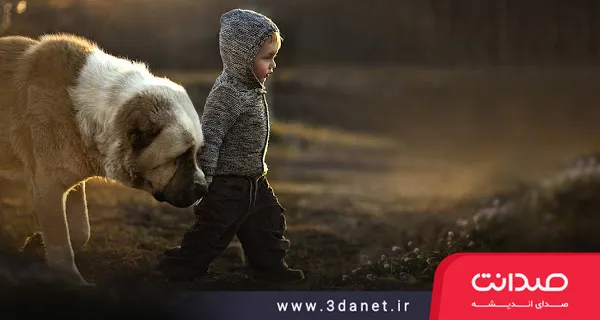
In the monotheistic perspective, as discussed in the collection of writings on Dual-Foundation Monotheism, all creatures are equal to one another in their creation by God and in being His creatures. It was stated there that “...the world has a single Creator; He created human beings diverse and varied in physical appearance and form; with different genders, races, nationalities, and ethnicities, all of whom are equal and alike before God... Equal human beings, due to the free will, volition, and choice granted to them by God, possess fundamental human rights, including civil rights, the right to freedom of religion, freedom of belief, freedom of expression, freedom of dress, etc., which must be recognized equally and uniformly for all human beings, regardless of religion, gender, nationality, etc...”[1].
In this worldview, animals, like humans, are God's creatures; they too possess will and volition, and therefore, like humans, they have rights. In the words of Nazli Kamouri, “...to possess rights such as the right to life, the right to self-determination, the right to live according to one's chosen way, an animal is just as deserving of rights as an articulate human who verbally seeks the right to self-determination, freedom, democracy, and so on. The fact that there is no mechanical common language between humans and animals does not place the animal in a subordinate position where humans can impose anything upon it, including their own superiority....
In religious texts concerning human behavior towards animals, one of the best examples is the letter of Imam Ali to the Zakat collectors regarding the animals given as Zakat. In his ethical recommendations to the Zakat collectors, the Imam writes: “...and entrust their care to none but a benevolent, compassionate, and trustworthy man, who will guard them well. One who does not treat the beasts harshly, nor drive them hard, nor exhaust them... When your trustee receives the Zakat camels, ask him not to separate a mother from her suckling foal, nor to milk her so much that it harms her foal, nor to exhaust them by riding them, and to be just between the camel he rides or milks and the other camels. And let him allow the tired camel to rest, and treat gently the camel whose foot is wounded and cannot walk, and lead them to watering places and give them water, and drive them along routes close to pastures, not along dry, barren paths, and give them periods of rest to drink water or graze...”[2]
Captivity and Enslavement of Animals
It has been said that the animal is a creature of God and, like humans, possesses free will and volition; therefore, any leashing and captivity of animals under the titles of zoos, bird parks, circuses, pets, scientific experiments, etc., according to the monotheistic perspective, is considered an unethical act, akin to the enslavement of humans. Since the Industrial Revolution and the invention of the machine, using animals for riding and carrying loads, except in exceptional cases where access to machines is unavailable due to material or other reasons, is also unethical for recreation and entertainment.
Slaughter of Animals
In the monotheistic perspective, the life and death of creatures are in God's hands. Permission to slaughter certain animals has been granted by God to humans for the provision of food and clothing. Much has been said about the environmental harms of slaughtering animals for food and clothing in industrial livestock farming. Killing animals is unethical when alternative means of meat-based nutrition and suitable clothing exist. Today, with the advancement of science, artificial leather and artificial meat for food and clothing have been introduced. Those who cannot settle for vegetarianism may, in the coming years, be able to nourish themselves with artificial meat.
Therefore, the slaughter of animals, whether in the form of recreational hunting, for trafficking, or slaughterhouse killing for food and clothing, except in circumstances where access to artificial food and clothing is unavailable, is unethical according to the monotheistic perspective.
Destructive Relationships
Human–animal relations can be divided into several categories: enslavement, blind compassion, enmity, and friendship. The master–slave relationship with animals was described earlier. This relationship is usually given religious and philosophical justification. Reactionary religionists seize upon the mortality and soullessness or lack of a spirit in animals; the point is that lacking an immortal soul does not logically negate the relevance of rights, and even if we take it as a definitive religious verdict that there is no afterlife for animals, it then seems more reasonable to provide the conditions for this, their only opportunity to live, so that they may live as comfortably and as long as possible. Philosophical critiques, however, attempt to challenge the idea of animal rights through rational argument. Cohen, based on the premise that animals are amoral, i.e., morally neutral, and that amoral beings have no rights toward one another, concludes that animals have no rights toward one another. He continues his argument by reasoning that if animals have no rights toward one another, then they also have no rights toward us humans. Cohen’s argument rests on the view that animals are not moral agents or actors; they are amoral, meaning morality is not relevant to them, but rather they are neutral toward moral good and evil. Of course, according to what biological scientists say, behaviors resembling the moral behaviors of humans are observed in some animals... In its more radical form, this relationship takes on the shape of enmity and antagonism, which is observed in brutal behaviors toward animals.
Humans have disrupted the order of nature and destroyed a large percentage of animal species. In reaction to this, some have turned to blind compassion in their encounters with animals. In a psychological and cultural critique, it can be said that the high fever for pet ownership in recent years, the transformation of the animal into a commodity whose possession brings vainglory, rivalry, and a race not to fall behind fashion, is one dimension of the matter. Another dimension is that with the modernization of society and the decline in childbearing and caregiving, a kind of satisfaction of the parental and emotional instinct is taking place through animals. This volume of spending on pets, up to the point of cosmetic surgeries, and the indifference toward destitute humans; the weeping and mourning over the injury, harm, and death of pets, and the indifference toward the daily oppression, repression, and killing of humans around the world, is another sign of this blind compassion. In biological discussion, disrupting the feeding cycle of animals has caused many calamities. The excessive increase of certain species as a result of indiscriminate feeding by humans has disrupted the order of nature; in the struggle for survival, the mother cannot provide food for all the cubs, which have now multiplied, and a number of them perish. On the other hand, their natural food, which is another animal, increases unnaturally in species due to not being hunted. In another dimension, plastics and containers left in nature by humans for feeding purposes destroy the environment in another way.
Friendship with Animals
Instead of enslaving, showing blind compassion toward, or being hostile to animals, we should establish a relationship of friendship with them. A relationship based on respecting the freedom, rights, and boundaries of animals. If we love animals, let us reduce consumerism so that a share of nature’s food basket remains for animals. Let us not use clothes and foods related to the slaughter of animals. Let us not encroach upon forests and mountains so as not to destroy and shrink wildlife. There are many things we can do to help animals; just as they do not want our enslavement and enmity, if we respect their freedom, rights, and boundaries, they will also have no need for the blind compassion of humans. Instead of Westoxification, yellow-pressification, and reactionism, let us replace enslavement, enmity, and blind compassion with an ethical, rights-oriented approach based on friendship with animals.
*This note is a summary of a writing related to the Social Philosophy Notebook, which will commence after the completion of the writings of the Philosophy of Religion Notebook (Doboni Theology).
.
.
[1] The Necessity of Reviving the Topic of “Socio-Political Monotheism” in the Discourse of Religious New-Thinking / Mohammad Ghotbi
[2] Letter 25 of Nahj al-Balagha
.
.




Discussion0 comments
No comments yet; let yours be the first voice.