Philosophy
Spirituality in a Meaningless World: An Interview with Bijan Abdolkarimi
Bijan Abdolkarimi explains the distinction between ordinary whys and the fundamental why of life, and examines the relationship between spirituality and rationality in the contemporary world; an interview on the meaning of being and the challenges of a meaning-oriented life in the modern age.

Spirituality in a Meaningless World
An Interview by Amir Taki with Dr. Bijan Abdolkarimi; Summer 2019
Amir Taki – Human beings have always sought answers to the whys of their lives, whether these whys are fundamental and structural or minor and faint. The why of "being" is perhaps the most fundamental of these whys, and by answering this question, "what to become"—which is the very goal and ultimate end—finds meaning. The purpose, motivation, and ultimate end of human movement depend on knowing and discovering answers that are convincing to the individual. Beyond creating a purpose for life, this fundamental answer will constitute the values of every human being. In light of these values, the manner of one's life is determined. Thus, in light of this answer to the why of being, both the direction of human movement is specified and the manner and quality of living this movement become apparent.
In addition to these two, human identity, from the perspective of its acquired aspect, is also organized in dependence on finding meaning. In fact, this identity is like the root of a tree that has made its trunk—which is movement and purpose—steadfast.
Therefore, the three categories of identity, purpose, and value will arise from the meaning of "being." In this case, the search for meaning becomes a fundamental concern for humans. On the path to finding this meaning, some consider reason, science, and experience sufficient and seek to answer these questions based on their arguments. Others do not consider these external tools adequate and contemplate other, inner and spiritual, faculties for human beings. Throughout history, this challenge has accompanied humanity: "Is the world in truth the same as what we perceive with our external senses, or does it possess a different essence that does not fit within our external sight and perception?"
If one accepts a truth beyond the appearance of this world, perceiving its inner essence requires the inner tools of the human being. Thus, the inner voice, inspiration, revelation, personal intuition, dreams, and so on become prominent. To find this truth throughout history, humans in various societies have turned to religions, schools of thought, leaders, mystical paths, and so on.
Every individual has sought the truth for some aspect of their life, from resolving physical and mental problems to achieving a successful life and preparing for life in a world after this one, and from attaining a peaceful, ethical, and tranquil life to those who have considered finding the truth as the discovery of their inner self and the transcendence and growth of their humanity.
But in the modern era, given the dominance of science and reason over the lives of the general populace worldwide, the confrontation between rationalism and the pursuit of spirituality is one of the significant challenges of this period. Reconciling reason and meaning is among the efforts of those who consider a meaning-oriented life the best way of living for human beings.
In any case, whether we accept that we are spiritual beings or not, this inner self-awareness and awareness of the surrounding world confronts the human mind with weighty questions, the outcome of which creates dynamism and a spirit of inquiry for the individual in both personal and even social dimensions.
For those who believe in a world beyond the material world, self-awareness and individual transcendence, ethics and human character, and the expansion of this state of awareness and the discovery of hidden truths demand a personal and social lifestyle that will not necessarily align with a materialistic thinking and interpretation of the world.
In this interview with Dr. Bijan Abdolkarimi, an attempt has been made to examine the topic of spirituality from various philosophical, ethical, rational, and other perspectives, both to prod the whys of the realm of meaning and, by considering ethical and rational categories, to analyze the relationships between the two. Certainly, the perspective on the subject of spirituality in the modern era is vastly different from what was founded in past centuries. For this reason, an effort has been made in this interview to look at angles commensurate with the current challenges of developing and evolving societies in relation to the domain of meaning and spirituality.
In your opinion, how does each person choose the why of their own life?
I think the most important keyword in this question is in fact the word “why.” What does “why” itself mean? We encounter a great many “whys,” for instance: Why do we go to university? In order to study. Why do we work? In order to earn a living. Why do we marry? To satisfy our physical, spiritual, and emotional needs, and so on. But in this question, the word “why” becomes fully visible and prominent. Why is this “why” a particular kind of “why”? This “why” cannot be an ordinary, commonplace “why.” Some “whys” are answered by science, such as why it rains or why a rainbow appears, which are naturally not our subject here. We are now asking about the “why” within the domain of human life, which is always present in his life. We actually find our “whys” in our everyday lives, or in life in its totality. These “whys” are psychological, or “whys” of a sociological kind, such as: Why did you marry this girl? The reasons for this are psychological. Why did you refuse to marry that boy? The answer to this question is also psychological and personal. Sometimes our “whys” are sociological “whys.” That is, within the field of sociology, these “whys” are answered, such as: Why did such-and-such happen to our students, or why has divorce increased in our society?
Why has the number of household units in our country decreased? Yet these “whys” are still not the “whys” intended in this question. The “why” intended in this question is fundamental. The difference between the fundamental “why” and other “whys” is that in the “whys” we discuss in the sociological and psychological domains—the psychological “whys” and the sociological “whys”—they themselves can be referred back to other matters and modified, such as: Why do you go to university? In order to study. But I can then ask: Why do you want to study? So that I can, for example, have a good position in society. Well, why must you have a good position in society?
This chain of questions can still be continued. But the fundamental “why” is that “why” which, when you encounter it, you find the answer, and it cannot be extended to another “why” and does not transform into another matter. If we accept this distinction, we will have ordinary and commonplace “whys” that the sciences of psychology, sociology, and other sciences answer.
When we speak of the “why” of life, we mean that fundamental “why.” That is, that which in fact seeks to present something as the meaning of life, or even the meaning of the world. When you encounter it, you see a kind of intrinsic desirability in it, meaning it is for its own sake. We do not want it for something else; we want it solely and exclusively for itself.
What is this intrinsic desirability? What examples can be found for it?
In my view, the two categories of love and friendship are among the things that possess intrinsic desirability. That is, I want love for the sake of love itself. I do not want love in order to, for example, attain money and wealth, or to achieve a good social position. If that were the case, it would no longer be the category of love. Or friendship has value and validity for the sake of friendship itself. Where an instrumental encounter exists, friendship does not exist. Friendship is not an instrumentalist treatment of the friend. Friendship itself is for friendship, not for anything else. I said this to bring it closer to the mind.
How do human beings find the why of their own lives? That is, how does each person choose the fundamental why of their own life (that which has intrinsic desirability in their life)?
This is a secret. That is to say, this question of the fundamental why is in fact a question of foundations, and the question of foundations is a question of the secrets of the world. As Gabriel Marcel showed us, secrets are different from problems. Problems, in translation, are "Problem" and its plural "Problems," and secret and secrets, in translation, are the word "secret" and its plural "secrets." Problems are those kinds of questions to which we provide answers, or if we cannot answer them, they are answerable in principle, and if we do not answer them today, we will answer them tomorrow. For instance, why do metals contain electricity? Science will eventually provide an answer to that. For example, why do many liquids evaporate due to heat? Science will answer in the future what the cure for cancer is or what the solution to the disease of cancer is. We do not know today. But this question is answerable in principle. That is, we do not know today, but we will know in twenty years. If we do not know in twenty years, we will find the answer in fifty years.
But what the meaning of the world is, what the meaning of life is, and what the fundamental why of life is, is a great secret that each person must answer for themselves. Problems are those kinds of questions that, when asked and when their answer is obtained, are acceptable to everyone, like when we say two times two equals four.
This is acceptable to all the people of the world. But these questions—what is the meaning of the world, what is the meaning of life, and what is the fundamental why of life—each person must answer for themselves. We cannot say, so-and-so's view on the world is such, and I accept this meaning as well; no, it is not like that.
You stated that secrets are those kinds of questions whose answers each person must provide for themselves. Is it truly possible for all of us to answer these questions?
We do not start from zero. When we human beings are born, we are born within a culture, just as we are born within a language, we come into the world within a society that has a history, just as most of us, not all, were born in the twentieth century. Or that we were born in Iranian society and within Iranian-Islamic-Shiite culture, or, for example, within the Islamic culture of Sunni Islam. My point is that every human being is born within a specific historical horizon and a specific cultural horizon. We do not begin life from zero. We are in the middle of the story.
No human being begins from zero, and this was the Cartesian delusion that sought to doubt everything and begin from zero. That is, life was flowing before us, and we are within life, and after we die, life will continue. Life itself, the history itself in which we are situated, the culture itself in which we are situated, places possibilities before us. Various cultures exist before us and place possibilities before us. It is these thinkers, intellectuals, artists, mystics, and great prophets who, based on the authentic experience they have gained from encountering the world, provide an answer to our fundamental questions.
We, who have not acquired those authentic experiences, are in fact not among the founders of a culture; I am not the Buddha, who is the founder of a great historical tradition; I am not Confucius, Abraham, Moses, Jesus (peace be upon them), and Muhammad (PBUH), who had a profound, deep experience from their encounter with Being. But I am placed before the possibilities that various cultures place before me.
In asking about the fundamental why of life, we are faced with two radical possibilities, two fundamental possibilities. These two fundamental possibilities, which can take on various forms and diverse cultural shapes, are, metaphysically, philosophically, and in terms of wisdom, two fundamental possibilities: one, the world and, consequently, human life are devoid of meaning. There is no meaning in it, and the world is utterly absurd, empty, and meaningless. But another conception is that the world is entirely and fully imbued with meaning, and every particle of this universe is, in fact, related to reason, wisdom, logos, and consciousness. So we are faced with two fundamental possibilities; first, that the human world and, consequently, human life is meaningless, and the other fundamental possibility is that the world and the human being are meaningful, and following the meaningfulness of the world and the meaningfulness of the human being, life has meaning. By meaning, I mean precisely the answer to the fundamental why.
In your view, why has this question become so important in our time? Why, in our time, in the modern period, after the emergence of modernity and at its peak after the rise of reason and enlightenment, does a current emerge and the issue of the meaning of life and the fundamental why of life is raised and becomes an important question?
In past ages, this question was not raised with the intensity that it is in our time. Because the modern world is a metaphysical world, meaning has departed from life and the world, and therefore the question of the why of life, which is a fundamental question, has become prominent. I have already answered that everyone must find this answer for themselves, but I want to raise again in this context the phrases you have heard from me many times. Because it is a very important issue. The point is that the meaning of the world is not itself one of the entities of the world. I repeat: the meaning of the world is not itself one entity among the countless entities of the world. That is, we cannot say that the meaning of the world is, for instance, the sun, or that the sun is an answer to that fundamental why. The meaning of the world cannot be an event among the events of the world itself.
So the meaning of the world cannot be an entity or an event among the entities and events of the world itself. Because whichever of the world's entities we choose as the meaning of the world and as an answer to the fundamental questions of the world, we can pose this question before it. That is, if we say the meaning of the world consists of human life, we can ask what is the meaning of human life? If we say that the meaning of human life is for humanity to achieve freedom, we ask why should humanity achieve freedom? This question can always continue.
The next point is that the meaning of history cannot be an event among the events of history itself. We cannot say that the emergence of the Germanic people is the meaning of history. We cannot say that the realization of justice is the meaning of history, because again we can ask why should the Germanic people emerge? Why should justice be realized? So the meaning of history must be sought not in history itself but in meta-history, and another point is that the meaning of life cannot itself be an event of life. In our lives, we have various events, such as birth, going to school, reaching sexual maturity, going to university, getting married, getting divorced, finding a job, retiring, and like death itself. These are events of life. But none of the events of life can be the meaning of life.
So if you accept these three premises from me—that the meaning of the world is not itself an entity or an event within the world, that the meaning of history is not itself historical events, and that the meaning of life is not itself an incident or event among the various incidents and events of life—then you will sympathize with my assertion that if something is not meta-particular, that is, if it is not beyond the world, beyond history, and beyond life, then the world, history, and life will lose their meaning.
Life will be a mere cup of water from this bitter ocean of meaninglessness, and the human being a drop from this vast ocean of non-meaning.
But great historical traditions, outside the Western metaphysical tradition and outside the new scientific and technological rationality that is the result and product of the Greek metaphysical tradition, show us that this world is not merely composed of countless things. Within this multiplicity, there is a unity. Within this multiplicity, there is a truth that is, in fact, the soul of this multiplicity, and this multiplicity together internally constitutes an ordered world, and the order of this world is not of the same kind as the individual entities themselves. The Greeks referred to this truth as Logos, and in the Hebrew tradition in another way; in the Indian tradition, it was also referred to as the world-soul, as Mana, as the realm of the sacred. Then, in this type of worldview and understanding of the world, when you encounter a truth that is not of the kind of entities, in encountering it, you find meaning and are struck by wonder, and when you encounter it, the 'why' loses its color, and you become filled with meaningfulness, contentment, and transcendence.
My answer has gone on too long. I did not give an answer! I merely placed two fundamental possibilities before you. In my view, within the essence of life, within life itself, a truth reveals itself that is not of the kind of life's events, and when we encounter this truth, we find life meaningful. For this very reason, despite all the hardships of the world and despite all its ugliness, we generally love life.
Those few individuals who commit suicide—I wish there were a way that, after this experience, a return were possible and one could ask: Are you truly pleased that you undertook this experience? Is non-being truly better than being? My imagination tells me that if there were a way back, they might return to life. Here, I have merely sketched some lines with which you might be able to find a meaning for your own life.
How should the critical situation of contemporary humanity regarding meaning be analyzed?
Let me say again here, when we say meaning, we do not mean the meaning of words. For example, what is the meaning of this Quranic verse? What is the meaning of this line of Hafez? When we say meaning, we do not mean linguistic discussions or the philosophy of language. When we say meaning, we do not mean psychological meaning. Because, psychologically speaking, none of human actions are meaningless, and all human actions are meaningful. That is, if you see, say, a four-year-old child kick over a pitcher of water and spill it on the ground, do not say what a meaningless act. In fact, psychologists say that child's act is meaningful. That is, their action has a function. For instance, the child is expressing their protest against the parents' neglect.
At the same time, when we speak of meaning, it is not a sociological category either, as Weber, for instance, understands it. From the perspective of sociologists, all social actions are meaningful, and if, say, a football match is held in a stadium and the fans of one team set buses on fire and smash bank windows, these behaviors are meaningful. We understand meaning here in the philosophical and ontological sense of the word. That is, we understand meaning as Nietzsche understands it, we understand meaning as Dostoevsky or Heidegger understand it. The crisis-ridden condition of contemporary humanity is the result of a particular ontology that prevails in our world. It is the result of the emergence and dominance of a rationality that only comprehends the positive and the successful. It has no understanding of the intangible, or is cold toward it. It is indifferent toward it, and its principal concern is not, in fact, that indeterminate matter.
The crisis-ridden condition of contemporary humanity is precisely what Dostoevsky expressed so well: "If God does not exist, everything is permitted." If you remove the sun from the sky, orientation no longer has meaning. Hence, freedom itself turns into a nightmare. For this very reason, when the madman in The Gay Science brings the news of God's death, Nietzsche, through his voice, cries out with anguish that our hands are stained with the blood of the most sacred being in this world. He then asks, how did we do this? How did we remove the sun from the sky? Is this sun the same sun that Plato, at the dawn of the history of metaphysics, also uses as an example and speaks of the sunlight of truth? Where he speaks of the prisoners of the cave, and the entire endeavor of Platonic philosophy and Socratic thought is a kind of training and turning around. The gaze is drawn from the shadows, that is, from beings, toward the sunlight of truth, and again Nietzsche, through the voice of that madman, cries out, how did we swallow up this ocean? Therefore, the death of God means the absence of that intangible matter I spoke of.
We should not see the death of God as an event that occurred in the nineteenth century; rather, in a Nietzschean-Heideggerian interpretation of the history of metaphysics, the death of God must be understood as a process and an occurrence that took place with the emergence of Western metaphysics. Of course, this story is the story of the West, but in our analyses, we must pay attention to one point. A point that many of my friends overlook is that we live in an era where world history has taken shape. With the advent of modernity, the pace of the process of world history's formation greatly intensified. In this last half-century, especially with the developments in the field of media technologies, the emergence of mass media, and social networks, the human lifeworld has also changed to some extent. One of the results and implications of the differences we have experienced in recent decades is that the process of world history's formation has gained greater speed, intensity, and force; in a sense, we are moving from early modernity into late modernity, or from the industrial world into the post-industrial era, or, in another interpretation, from the modern era into the postmodern era. If in the past we had independent histories like streams flowing alongside one another—meaning one history was the history of Islamic civilization, another was the history of China, and another was the history of Europe—in the current era, all histories are interconnected. This means that the historical distance between different peoples has diminished. In Marshall McLuhan's terms, these conditions mean that we live in an era where the global village has taken shape; therefore, in terms of spiritual states, culture, and anthropological characteristics, there is not much difference between a French girl and an Iranian girl. Of course, we can pay attention to cultural differences, but we cannot ignore the common characteristics either. In any case, to understand our own conditions, we must pay attention to the dialectic of the global and the local. Understanding the local is impossible without considering the global atmosphere. The components of the culture, atmosphere, and lifeworld of the current era undoubtedly take on their own local color in every society, and as some sociologists put it, today we are faced not with the global or the local, but with the glocal. I mention these preliminaries because we must not approach cultural and socio-historical issues in an essentialist manner. Our society, like all societies across the globe, has changed and been influenced by global components. Therefore, if with modernity, the death of God was an event that emerged and, consequently, the death of meaning was realized, this death of God or death of meaning is a planetary or global matter that, with varying degrees of intensity, is also visible in our society. Hence, today in Iran, too, which possesses a deep spiritual cultural history, we are facing a critical situation regarding meaning.
In our action, in our souls, in our speech, in our poetry, in our practice, when that truth is not present, action and speech are emptied of substance. As a result, speech is degraded to the level of mere utterance and the shaking of words, and action is deprived of the intrinsic desirability of what should be intrinsically desirable, left hanging in the air, and speech becomes desperate, and consequently, human life is annihilated.
The critical situation of contemporary humanity is the result of the nihilism brought about by the expansion of metaphysical thought. This thought, following modernity, has become global and is the result of the expansion of the new scientific and technological rationality. In fact, this rationality has no relation to meaning and cannot establish a relation. Am I disparaging science? Do I want to ignore the greatness of science and technology? Not at all. I only want to show the limitations of modern science and rationality. The new rationality, science, and technology cannot make our life and our world meaningful, because meaning lies outside the domain of scientific and technological inquiry and the new rationality.
What is your analysis of this statement: "Spirituality as an awareness of existence or a force beyond the material aspects of life, creating a deep sense of unity or connection with the universe"?
I very much agree with this statement. In the sense that spirituality is not something that originates from human self-consciousness. Spirituality is not something that originates from our emotions, and the way to have spirituality is that our thinking must be rooted in a soil, in a ground.
Edmund Husserl, the founder of phenomenology, has a book called "The Crisis of European Sciences and Transcendental Phenomenology"; in this book, Husserl shows that the new sciences are in crisis. When he says the new European sciences, he means the new science that originated in Europe and went to other parts of the world, that is, physics, chemistry, mechanics, biology, and other sciences.
By crisis, he does not mean a moral crisis. He does not mean that scientists have become immoral and that these sciences have problems they cannot solve. Although the immorality of scientists in the modern period is related to the issue I want to point out.
What Husserl means by the crisis of European sciences is nihilism. That is, the new sciences, which are composed of a set of bodies of knowledge, have severed their connection with Being and existence, and according to Husserl in the book "The Crisis of European Sciences and Transcendental Phenomenology," the root of this crisis, that is, the root of nihilism, must be sought in the heart of abstract metaphysical thinking. In the sense that the root of this issue must be traced back to the era when, with the emergence of metaphysics (the emergence of the conceptual dominance of Socrates and Plato), thinking emerged and, in fact, Greek thought abandoned the ground of intuition.
When it abandoned the ground of intuition, metaphysical thinking in fact became rootless and groundless. There was no soil from which it could nourish itself, and it ultimately led to nihilism.
If we deny the meta-particular, that is, the order beyond the world, beyond life, and beyond history, we will lose the meaning of the world, history, and human life.
Spirituality is the result of a deep feeling of unity or proximity or closeness and connection, not with the cosmos itself, but with the natural order; that is, with the spirit of the world; that which is not of the same kind as the beings themselves. Of course, not all of us attain such unity, but the great figures and founders of human culture, the great and original sources of historical tradition, such as Plato, Aristotle, and the Buddha, had an experience of Being.
These great figures, who had an understanding of the world and had established a connection with it, brought a specific tradition into existence. We are born into this tradition, we live, we grow up, we are raised, and we die. Some of us find those experiences in an authentic way and begin a new path, and some of us cannot and remain in the retelling and repetition of those prior experiences.
Meaning is not an entity among the entities of the world, nor is the meaning of life an event among the events of life itself, and the meaning of history is not itself a historical incident among historical incidents. Meaning must be sought in something that transcends the entities and events of the world itself. The meaning of history must be sought in a realm beyond historical events. The meaning of life cannot be sought in the events of life themselves, such as birth, death, and so on. To put it more simply, meaning requires an ontological foundation. We can speak of meaning in a psychological or sociological context, or even in a hermeneutic or linguistic context. In this texture and context where we speak of the meaning of life and the meaning of the world, we are in fact speaking in a metaphysical-philosophical-sapiential context, that is, we understand meaning as thinkers like Nietzsche, Heidegger, Jean-Paul Sartre, or even Dostoevsky understood it, not the meaning that Frege, de Saussure, or Gadamer understood. In any case, spirituality is an awareness of a kind of being, or to put it another way, a force beyond the material aspects of life. Here, we use the word force, which is a metaphysical concept, in a completely figurative and metaphorical way. The proposition "a force beyond the material aspects of life" in fact refers to that very truth which is not itself of the category of entities, and one might speak of "Being" which is, in fact, beyond entities and the foundation of entities. In any case, given that spirituality is a kind of deep feeling of unity or connection with the world, spiritual thought creates a bond between the world and the human being. You can have two feelings and two encounters towards the world: either you have a kind of self-alienation from the world and feel that there is no connection between you and the world, or you feel that you have a kind of connection with Being. Undoubtedly, spiritual thought is a kind of feeling of connection with the world. According to Saadi's expression, who said: "I am joyful in the world because the world is joyful through Him / I am in love with all the universe, for all the universe is from Him," a kind of love for Being and the world is among the results and requisites of spiritual thought.
In your view, what is the relationship between positive thoughts and the components of spirituality?
I think if we use positive thoughts in the sense that psychologists use these days, constantly telling us to be green, think positively, see the glass as half full, and so on... well, these positive thoughts have nothing to do with spirituality; because spirituality must be rooted in the soil. Spirituality cannot be up in the air. Spirituality cannot start from my self and end with my self. That is an illusion. That is suggestion. And in the thoughts of psychologists, you try to find a meaning for yourself, find a meaning for your family, but situations arise where the meaningfulness of these matters slips away, and you find yourself in a problem with these matters themselves. Why should I suffer for my family? Why should I endure hardship for my society? So, spirituality must be rooted in the soil of Being. Spiritual thought means that when you attain it, you in fact do not see life as a futile, accidental, and arbitrary affair.
Life is a gift and your greatest existential capital, and you must be grateful for this gift. And this gratitude for the gift makes you aware that this opportunity is not permanent, and Being has granted you this opportunity only once. And you must wage a fierce struggle for every moment of this life, for every instant, for its being, so that this sole true capital of your existence does not slip away. This verse by Saadi beautifully demonstrates positive, abundant thought and spiritual thought: "I am joyful in the world because the world is joyful through Him / I am in love with all the universe, for all the universe is from Him." In such a thought, you feel love towards the world. You feel love towards Being. This love for Being, this coming to terms with Being, this becoming one with Being, was the very thing Nietzsche battered himself against the walls of existence to attain. Nietzsche seeks a component of Eastern thought that he does not find in Western thought, and because we have been thrown, free and clear, into this part of the world and possess this thought, we do not appreciate it and even try to rise up in opposition to it.
What is spirituality in work? That is, what spiritual elements can exist in work.
We can sometimes understand this question in a psychological context, meaning: when do you feel a sense of pleasure in a task? From a psychological perspective, this pleasure arises when your work is useful, that is, when you are not doing something futile. For example, you are assigned to guard a place that does not require guarding, like many soldiers or the doormen at the entrance of many offices that contain neither state secrets nor military secrets, such as the Ministry of Culture and Islamic Guidance. In such cases, one does not feel that positive work is being done. Those who do negative work, such as selling drugs, do not feel they are doing something meaningful. One of the things that can lend a kind of meaningfulness to work is that it is positive and creates something. Another is that it is compatible with your temperament. Suppose someone has studied sociology and works in a registry office; thus, there is no connection between their field of study and their job. That your salary is sufficient for your living and hence you feel pleasure in the work you do. Sociologically, too, one of the meaning-giving aspects of work is that it is accompanied by respect, like a teacher who teaches and receives respect from society. If we move beyond sociological and psychological elements, what philosophical, metaphysical, or sapiential elements can we seek as the spiritual dimension in work and consider our work meaningful? Of course, answering here is difficult, and distinguishing the boundary between a psychological factor, a philosophical factor, or a sociological factor is somewhat difficult. I am, in fact, thinking out loud and am not sure all my words are correct. Nevertheless, I think that the very act of working, in itself, possesses meaningfulness. That is, the very fact that we are alive, that we live, and in the words of Shamloo, "being is better than not being," the very fact that we exist and engage in activity for our lives—whether we are a university professor, carry loads and drive, or are an office worker—in all our differences, regardless of whether we are satisfied with our work or not, in the depths of our being, even if we do the hardest jobs, a kind of meaning exists. I, as a living being, strive to stay alive, and this is the impetus that makes all of us act, even if we do not like our work and even if we suffer from our work environment. In this very suffering, there is a meaning, because in the very act of being, in existence itself, and in the essence of life, meaningfulness reveals itself in a way. It is this very meaningfulness that impels us to move and to be alive. If such a thing did not exist, perhaps many of us would have to submit to suicide.
What is the relationship between meaning-seeking and those kinds of work that are undesirable?
Many hours of my, Bijan Abdolkarimi's, life are spent on matters I do not like at all, but I know that, in the words of existentialist philosophers, there is no pure existence, and for many hours of the day and night, I must engage in activities that are a form of inauthentic being. Despite the fact that many of these moments are not the true, pure, and unadulterated moments of life, I submit to them, only in the hope that through this everyday life, I can create authentic moments. I accept these sufferings so that I can attain moments that are close to my true self—that is, moments I wish to pass in a way that I myself determine. So, it is true that I suffer from working, for example, for the family's economic affairs—for instance, I undertake a translation solely for the money—and I consider family essential for my human growth, yet within that suffering, I also find meaning. Every human being has an ideal self; every human being expects of themselves to attain a mode of being. The closer any task is to this mode of my being, the more I feel a sense of meaningfulness. Suppose I am a university professor; writing and being a teacher are part of my ideal self. In those moments when I engage in these matters, I feel a greater sense of meaningfulness, but in those moments when I distance myself from this mode of being, my work becomes more meaningless. Note that meaningfulness and meaninglessness also have gradations. Suppose when I am teaching, this teaching aligns with my ideal self; here, I feel a greater sense of meaningfulness. On the other hand, suppose I enter the realm of buying and selling or working as a ride-share driver. It is true that this work is far removed from being a teacher, but because I need the money from ride-sharing for my sustenance and survival, and so that I can be a teacher, or I work in a restaurant to pay for my university tuition, since this work of mine is related to an end and a meaning, it itself possesses gradations of meaningfulness.
Can spirituality and servitude diverge from one another? That is, what is the relationship between spirituality and servitude?
What comes to my mind is that we should first understand what we mean by the meaning of servitude, that is, how we define servitude. If by servitude we mean merely a particular form of worship, such as going to church or synagogue, then in my view servitude has no necessary relation to spirituality. That is, one can pray yet lack spirituality. That is, prayer can be merely a set of movements. One can go to synagogue, church, mosque, and on pilgrimage, yet there may be no meaning in these actions of ours. When there is no meaning, it can itself turn into an anti-meaning. For example, a prayer performed out of hypocrisy is a kind of trade, a kind of presenting a social position, without the individual having embraced that way of life. On the other hand, if we understand servitude as acceptance and bowing in submission before the wisdom and rationality that governs the world, before the truth that is beyond beings, then spirituality undoubtedly has an affinity with this submission, which is accompanied by a kind of loving devotion. One cannot claim to have spiritual thought yet feel anger and resentment toward the meaning of the world and lack a sense of servitude and awe. Of course, at times a person also rebels, but this rebellion is the very essence of servitude. In the sense that sometimes an individual protests against the world, but if you do not posit a meaning for this world, against what do you wish to express your protest? You cannot protest against inanimate objects, for there is no consciousness in them to comprehend your protest, pain, and anger. If you wish to express your protest to other human beings or society, other human beings are also victims of this very world and suffer in it. Metaphysically, you have no one against whom to rebel, but only and solely, one who finds meaning in this world can engage in question and answer with Him, and can even protest at times. Meaning is not that truth as if a king resides in the heavens and we servants must only engage in flattery and sycophancy toward Him. A spiritual person is not such a person who, as if out of fear of a master, engages in servitude like a slave. Such a person is not a spiritual person. Where this person, like Hafez, wishes to say: “You will see heads severed without crime or offense,” there exists for him a truth and meaning against which the spiritual person can rebel. This rebellion is not in the base sense of the word, like those who revolt, consider themselves the foundation of the world, and allow themselves to sacrifice others for their own sake. This rebellion is in the realm of thought, a kind of doubt to reach certainty, and a kind of questioning and thinking about the events of the world, as we see, for instance, in great tragedies where the individual—like the tragedy of Rostam and Sohrab, where a father’s hand is stained with the blood of his own child without having any role in it—questions fate, but fate itself will answer him, and the all-encompassing matter itself will respond to him. This response can bring the spiritual person’s head down in submission before that truth which we have interpreted as fate. In summary, my answer is that if we consider servitude in the outward sense of the word, there is a divergence between spirituality and servitude, and not every type of servitude, if it remains on the surface, is compatible with spirituality. On the other hand, if we consider servitude in the sense of acceptance and bowing in submission before the Logos and universal morality, it is compatible with spirituality.
How is the human goal for material and spiritual life organized alongside one another?
The spiritual is an existential matter, meaning it is an event that takes place in the depths of human existence; it is not something that can be objectified or pointed to through the senses. To put it more simply, all human beings eat, drink, work, need shelter, relate to the opposite sex, and love having children. Where does the difference lie between the spiritual person and the non-spiritual person? The non-spiritual person thinks of ownership because they want to attain power through ownership. The non-spiritual person eats because there is a kind of pleasure in the very act of eating. The non-spiritual person wants a house because they derive pleasure from the very act of being a homeowner. For the spiritual person, an event occurs in their existence through their meaning-oriented approach and encounter. They want to become a homeowner, but they do not want the house for the sake of the house. They want the house to be a shelter for their spiritual world. They want a room of their own to build a temple for themselves and to be able to bow in submission before that meaning. They want a dwelling to create their artwork in. They want a home where, in its solitude, stillness, and tranquility, they can contemplate the world. The non-spiritual person lacks an inner world; they want a house to flaunt their aristocracy or to satisfy their repressed class complexes, and by building a palace, to show where they were and where they have reached, and to say, I am no longer the person who lived in the lower parts of town, but now I live in the upper parts of the city. In reality, the spiritual person seeks dwelling and refuge. Therefore, they work to obtain a house to have a refuge, and in that house, to establish a world where they and meaning join hands and orchestrate the event of love for existence. The non-spiritual person has no such ultimate goal. They want a car just to have a car, but the spiritual person wants a car to help them reach the goal they desire. The lives of these individuals appear very similar. Both work, eat, and form families, but in reality, they inhabit two different worlds. Each of these two people, the spiritual and the non-spiritual, walks upon the earth in two different ways. Within these two human beings, two different events and occurrences take place; one has established a meaningful world within themselves, and the other has not been able to establish such a meaningful world within themselves, and therefore walks in a nihilistic and meaningless world. Walking upon the earth lovingly is very different from walking upon it despairingly and meaninglessly. Two houses, in one of which love reigns, and in the other, love is absent and cold relations resulting from social contracts prevail. So, we can do the very same things that all members of society do, but we can have two different spirits and two different lifeworlds. Suppose 50 students are sitting in a classroom, but each has their own unique world. Within each of us, a world is established. Therefore, we can have our material world and each establish a world within ourselves. Two teachers go to class and, for example, both teach about Aristotle, but the students feel that within one of the teachers, a tumult is underway, while the other teacher teaches merely to fill their time and collect their salary. One teacher has fixed their gaze upon profound meanings and strives to point to great truths and direct the student's gaze toward those truths. The other teacher has their eyes fixed on their paycheck at the end of the month. Both of them, in a sense, strive for their material life. The meaning of life reveals itself in life itself; for this reason, we accept life, do not submit to suicide, and deem being better than non-being. In all the activities of daily life, the principle of life itself reveals itself in some way. Within this principle of life in itself, a meaning and rationality are hidden to which we submit and with our entire being defend our life.
How can one model oneself in spirituality? Who is the role model in the spiritual life?
We can take as models individuals with whom we share a common lifeworld. Perhaps I need to explain the concept of lifeworld or the concept of world. We sometimes say world, understanding it in its common sense. In this sense, the world is Cartesian, meaning we consider the world an infinite space whose most important characteristic is extension, a space in which entities are situated. At times we use world in another sense, one that has an existential and human meaning. When we speak of expressions like the world of art, the world of love, or the world of politics, we are not actually speaking of a specific place. We do not mean, for instance, that France is the world of art. One can be French and not belong to the world of art, but one can be African and belong to the world of art. One can be an employee of the largest art galleries and not belong to the world of art, but one can be a simple farmer who plays the reed flute and, through this activity in his solitude, belong to the world of art. One can be a university professor and not belong to the world of culture. When a student asks a professor a question and he replies, “I don’t have time, but I charge 500,000 tomans an hour for private tutoring,” that person has turned the world of culture into a marketplace. One can be an old bazaar merchant sitting in his shop, and when a customer enters, he thinks not of how to merely make a profit, but of what goods to give that person so that he can make use of them. When we say the world of love is different from the world of politics, we are speaking of a human matter. What I mean by world in its human sense is the totality of relations, that is, the relationship an individual has with the world, with himself, and with the other. For example, in the world of Christianity, Christ says: the path to the Kingdom passes through the neighbor’s house. One who does not love his neighbor finds no path to the world of the Kingdom. In the world of Christianity, the other is a bridge by which you can reach the Kingdom. Jean-Paul Sartre says the other is hell, or in Hobbes’s expression, the other is a wolf to man. In the modern world and in the world of Christianity, the relationship you establish with the other is of two different kinds. In ancient Greece, when a Greek looked at Mount Olympus, the mountain and its loftiness reminded him of the gods. Zeus and the other gods were atop the peaks of Olympus, but we, the profane and mortals, live upon the earth. For the ancient Greek man, the mountain was the abode of the gods, and when one looked at the mountain, he was filled with a sense of awe before the sacred and the immortals. Today, when an engineer sees a mountain, he says, what fine stone it has; I can blast these rocks with dynamite and sell the fragments in the stone market. In the new world, nature is a resource for acquiring wealth and power. In the past world, nature was as a mother. Modern man, in the new era, violates his mother. So the world has been transformed. The man of the past world says, my life is a gift from God, therefore I have no right to do whatever I wish with myself, but the man of the new era says, I do whatever I wish with myself and it is no one else’s business. In the new era, I have established a relationship with myself that the man of the past did not establish with himself. We, eighty million Iranians, live in a specific geography and history, but we do not all share the same historicity. The world of all of us is not the same, and each of us has a particular world. We can speak of a model for spirituality only when our lifeworld and our world are the same as the world of the spiritual ones. Hafez and Rumi cannot be models for me because I do not understand their world. If my world is close to their world, then they can be a model for me. Where my world draws near to the lifeworld and world of individuals, I can draw upon their action, life, way of living, and relations as a model.
How can one take models in spirituality, and how do we obtain our model in spiritual knowledge?
I do not know to what extent this question is clear and whether I understand it correctly or not, but I would like to point out something, and that is that we are usually familiar with a particular kind of knowledge. We are more familiar with metaphysical knowledge, not because we have studied metaphysics, but because our world is a metaphysical world, and we are all under the sway of the metaphysical reason and rationality that began with the Greeks. We are all familiar with conceptual knowledge and thought, but we are less familiar with spiritual thought, which is a kind of intuitive, presential thinking, and to a large extent we are alien to it. To illustrate this point, I have referred to it in my series of discourses on Plato. If friends remember, one of the issues raised in Socratic-Platonic thought is the unity of virtue and knowledge. Socrates and Plato believed that awareness is virtue and ignorance is vice. Aristotle believed that virtue is the result of self-restraint and vice is the result of a lack of self-restraint. Aristotle's argument is that we can be aware that, say, drinking wine is bad, yet still engage in drinking; we can be aware that licentiousness is bad, yet become captive to lusts and be unable to exercise self-restraint. Again, if friends remember, I said that this was not something Plato and Socrates failed to understand—that we might have theoretical knowledge of something but not act upon it. In fact, they were speaking of a specific kind of awareness that was the result of a kind of inner transformation within the individual. This inner transformation manifested itself in the realization of values and virtues. As we see in all spiritual traditions, there is a kind of thinking that is interpreted as sacred thought, or wisdom, or sacred science, or divine knowledge and divinely inspired knowledge. This kind of knowledge is necessarily accompanied by a particular ethical way of life, which differs greatly from the modern scientific epistemic system. In the modern scientific system, being an empirical scientist and a scholar does not necessarily entail any ethical value or ethical model. Hume says of this epistemic system: there is no logical relation between 'is' and 'ought,' and of course Hume is right. However, the point that must be noted is that what Hume states about the gap between 'is' and 'ought' is compatible only with one kind of epistemic system, namely the scientific epistemic system. If we absolutize this statement and say that in all epistemic systems there is no logical connection between descriptive and prescriptive propositions, that is an unwarranted generalization. I want to say that spiritual thought is accompanied by an inner and esoteric transformation. Plato believed that wisdom is a kind of becoming godlike, and that awareness or self-awareness of human values is the realization of those very values within the individual. Since we are not familiar with this kind of epistemic system, or have forgotten it, we cannot bring to mind a kind of thinking that is linked with specific behavioral patterns. I hope I have come close to the question. In any case, I want to say that the patterns of spiritual life, although linked to social and historical frameworks, are at the same time closely related to ethical virtues and values and are independent of many social and historical conditions.
Is there a connection between the degree of spirituality and the age of human beings? How does the perception of the spiritual atmosphere change from childhood to old age?
There is a major assumption in these two questions, which is that spiritual thought is related to age. In this way, spiritual thought becomes linked to a psychological matter, namely the individual's mental states at different ages, and on the one hand, perhaps spiritual thought also connects with the individual's physics and body, meaning this can ultimately be interpreted as a kind of physicalism. The whole point is that spirituality is a type of thought. Of course, this thought is not merely conceptual thought but an existential thought that becomes intertwined with the individual's existence and the becoming that exists within the individual. Spirituality may become subject to psychological states; in that case, this spirituality is not authentic spirituality. A spirituality that does not connect with the individual's soul and consciousness is not authentic spirituality. For example, you might find yourself in an environment where your friends are spiritual, and under the influence of this atmosphere, you feel that you have spiritual inclinations within yourself, but this spirituality is not authentic because when the atmosphere changes or you separate from those friends, you return to your normal state. I want to say that spirituality is accompanied by a kind of thought. In the past, we had a powerful spiritual tradition, and today its memory exists in society, but the thought that should nourish this spirituality does not exist. The tree of spirituality must be nourished by the soil of thought, just as the tree of ethics must also be nourished by the soil of thought. When there is no thought to support this spirituality, it becomes weaker and weaker every day, to the point where only a memory of it remains in the mind and culture of society.
This assumption that spiritual inclinations change with age—for example, the belief that humans do not turn to spirituality while they are young and strong, but turn to spirituality when they grow old and fear death—is a psychological interpretation of spiritual thought, but in my belief, thought cannot be reduced to a psychological matter. Thought is not subject to mental and emotional states but has deeper roots in our way of encountering existence. Thought is the result of our ontology. Thought is the result of the perception we have of existence. Thought cannot be reduced to transient psychological states. When spiritual thought takes shape in an individual, it is something more enduring than psychological states.
How the spiritual atmosphere changes from childhood to old age can vary among individuals. An individual may gradually realize over the course of life the perishability of many things and feel that, despite gaining experience, many of the things that are valuable to the young, such as sexual relations, gaining power, and social status, have still not yielded that true meaning. They want to discover the meaning of life beyond these transient matters. It is also possible that an individual, under the influence of family upbringing, environment, and school during childhood, felt they had a kind of spiritual inclination, but as soon as they reach intellectual and age maturity, they try to abandon these imitative matters and change their perspective. We witness both types of transformation; that is, individuals who have no spiritual inclinations in childhood, adolescence, and youth and develop spiritual inclinations at an older age, or vice versa. The point I want to emphasize is that if you see, for instance, that the fathers of many young people had strong spiritual and religious inclinations in a period of their youth but have today severely abandoned them, it is not solely due to the issue of age but more due to the change in historical-semantic horizons that has taken shape in these last forty to fifty years. In fact, the global atmosphere has transformed. For example, an individual who is my age and in their youth, under the influence of the revolution or war, had religious and spiritual inclinations but has abandoned them today and turned to a secular interpretation of the world—this change should not be interpreted merely as the result of the passage of life but rather more as the result of global transformations and changes that have taken shape in the historical frameworks and semantic horizons of us humans across the world.
Considering various epistemological, mystical, and esoteric perspectives and based on the category of spirituality, how do you interpret different behaviors in society?
You must bear in mind that human behavior in society is an extremely, extremely complex matter, and one cannot, through reductionist methods, interpret people's behavior in society solely on the basis of the religious, the mystical, or the epistemic. Our human behaviors are subject to a great many conditions. It is obvious that the behavior of an Iranian individual must differ from that of a European individual. Over the past thousand years, Europeans have enjoyed a cohesive structure and have accumulated wealth. Based on their historical developments, they formed institutions, a civil society took shape, and in these societies, individual interests have found unity with collective interests. But in direct contrast to the history of the West, we Iranians have always been exposed to tension and collapse. In one period, we witnessed the Islamic Empire, which collapsed with the Mongol invasion. In the Safavid period, the Afghans attacked, and after that came the Afsharid, Zand, Qajar, Pahlavi periods, and the Revolution. Therefore, in such a society where civil society in the true sense of the word does not exist, in a society where individual interests are not united with social interests, some behaviors stem from these historical conditions. Epistemically, these people had faith in Islam and traditional culture, which has collapsed today. We cannot say that our social behaviors today are a manifestation of our spiritual culture, and that we must consider many crises within our spiritual culture. Nor can we say that our current situation is caused by people having abandoned spirituality; rather, we must trace people's behavioral situation within our socio-historical structures and within our thousand-year historical process.
Is the spiritual person a social being or one who flees from society?
Fundamentally, it is Christian spirituality that flees from society and takes refuge in the monastery. In the spirituality that took shape in the Islamic world based on the lived experience of the Prophet of Islam, monasticism does not exist. Unlike Christ and many Christians who did not marry, the Prophet of Islam, apart from prayer, also loved perfume and women in our world. Unlike the lived experience of Christ, he engaged in trade, politics, war, and family relations. Therefore, wherever a society-fleeing spirituality exists, it is in the continuation of the Indian tradition or the Christian tradition, but that spiritual thought which is in the tradition of Islamic thought is in no way fleeing from society; rather, it exists on the stage of social life. We know of many mystics who were killed in jihad against infidels and foreigners. The Safavid government, which originated from Sheikh Safi and received spiritual influence from him, was a Sufi dynasty that seized power. In our own time, Shariati, who emphasized the element of mysticism, meant a social mysticism that was in struggle against the great centers of political, economic, and religious power. Likewise, the type of spiritual culture that Iqbal Lahori emphasized was in connection with social life.
To what extent can spirituality evoke hope and the future?
This hope for the future in this question is somewhat ambiguous. Hope for which future? Does hope for the future mean hope for the future of humanity in the world, implying a kind of teleology for the world, or does it mean hope for the future of humanity on the face of the earth, or does it mean hope for our own future in political and social terms? Because the spiritual person considers the world meaningful, they therefore consider human life and the human being itself meaningful, and do not believe that human action, human life, and consequently the world, are meaningless. Hence, the spiritual person sees their meaning in the mirror of eternity and considers this eternity to be the very essence of meaning. The spiritual person seeks to establish a relationship with this meaning. The spiritual person may be pessimistic and faithless towards many false political and social hopes, but the spiritual person finds true hope in the essence of life. The spiritual person discovers, in the essence of thought and in life, a truth that reveals itself. This truth constitutes the meaning of life. By drawing near to this meaning-bestowing center of the world, the spiritual person is always filled with love for existence, life, and hope. Unlike nihilists, who believe the world arises from the darkness of nothingness and sinks into the bosom of the blackness of nothingness, the spiritual person believes the world arises from a place of illumination and returns to the bosom of an authentic illumination. For this reason, they are filled with hope; a hope that does not stem from politicians but rather a hope that is latent in the essence of life and thought, meaning that in the essence of thought and in the essence of life, something reveals itself to which the individual has directed their gaze and action.
What is the definition of each of these components of spirituality? "Faith in God, love for others, diligence and dynamism, forbearance, piety, humility, chivalry, service, affection, respect for beings, self-confidence, hope for the future, acceptance, optimism, benevolence, contentment, gratitude, courage, honesty, patience, frugality, non-attachment, self-sacrifice, forgiveness, limiting desires, keeping one's promise"
Providing a definition is no simple task, and I do not know what is meant by offering a definition for these spiritual components. Faith in God is not merely a theoretical belief. The world's population exceeds eight billion. Certainly, if you were to ask all of them how the world came into being, at least around seven billion would answer that God created the world. That is, most human beings believe in God, but this belief is a theoretical one. Faith in God is not simply an answer to the scientific question of how the world came into being. Faith in God is the result of perceiving the sanctity of the sacred realm and dwelling within this realm. Faith in God is the result of an existential perception of the boundlessness of the boundless and living within this boundless, in such a way that this boundless reveals itself in the feeling, thought, action, and language of the believer. Faith in God is the result of a kind of becoming within the believer's being that makes them God-like, that is, connects them to boundlessness and eternity. When Nietzsche says that God is dead in our age, the death of God does not mean that human beings do not believe in God, but rather that this God is merely one concept among others. Uttering Him and speaking His name is merely a habit of the tongue without transforming the soul. Another component is love for others. One who adheres to spiritual thought has a kind of bond with this world. This bond was what Nietzsche desired to attain—that is, saying yes to the world and to life. We do not have a spiritual thought that treats the world with rancor, refuses to acknowledge the existence of the world, and seeks to confront the world with coldness and indifference or with anger and malice. 'I am delighted with the world because the world is delighted by Him / I am in love with the entire universe, for the entire universe is from Him.' Such love, meaning love for being and existence, manifests itself in the form of love for life. The person of spiritual thought loves this truth that is inherent in life and spiritual thought, and this love will undoubtedly also lead to the self; that is, when a person loves life, they also love their own existence in this world, and consequently, they will also love other human beings. At least based on the lived experience of an individual like Jesus Christ, this faith in God has a firm bond with love, to the extent that Christ, in confronting existence, finds love to be the meaning of the world. It is the same with the Prophet of Islam. Recall the last moment of Muhammad's life, when he addresses God as the Supreme Friend and perceives death as answering the call of the heavenly realm. In Shi'ism, which in this respect has a much closer bond with Christianity than Sunni thought, the concept of *wilayah* is intertwined with friendship and love—love for God, the guardian and friend. Here we see that the Shi'a religion is also a religion of love. The Shi'a experience of the world has close ties with the Christian experience of the world, while at the same time, their differences cannot be ignored. One of the differences is that in Shi'ism, following Islam, the social dimension is stronger than in Christian thought.
Other components that have been mentioned are perseverance and dynamism. As the lived experience of great spiritual figures in our historical tradition shows, spiritual thought, insofar as it sees the world as meaningful, means that the spiritual person is someone who believes humanity has a mission in this world. Human existence in this world is not futile or meaningless. Therefore, a person of meaning undoubtedly possesses immense perseverance. Consider this in light of Baudrillard's statement that we are living in an era where the third wave of nihilism has arrived. If we consider the first wave to be the Renaissance and the second wave the Enlightenment, then in the new period, that is, in the postmodern and post-industrial era, the third wave of nihilism has come. One of the characteristics of this latest wave is the lethargy, inertia, and paralysis of humanity. In the sense that the human being of our time no longer even has the opportunity to contemplate the existence or non-existence of God. Such lethargy and inertia have overtaken our contemporary human existence that even nihilism has lost its dark and bleak aspect. That is, nihilism has become so dominant that we no longer see anyone like Kierkegaard or Nietzsche taking a stand against nihilism, crying out and exposing its dark side, nor does a writer like Dostoevsky emerge to reveal the dark, harmful, and terrifying aspect of the death of God or nihilism to us. Today, because of this lethargy and inertia, this listlessness and feebleness, this absence of a great will for great ideals, in Nietzsche's terms, no one shoots the arrow of longing toward distant horizons and beyond themselves. Everything begins with the self and ends with the self. The self, not in the transcendent sense of the ancients, but in the liberal sense of the word, meaning these very instincts we have at the level of everyday life. Nihilism is accompanied by lethargy and inertia. Nietzsche was very hopeful that an active nihilism would form in opposition to passive nihilism, but the result of nihilism is not activity and agency, but despair, hopelessness, and inertia. In contrast, the spiritual person undoubtedly believes they have a mission in this world, and the fervor of their blood is evident in their veins. They display a determination to perform an action in the world and create value. Dynamism is the same. The center of meaning bestows upon the person of meaning a power in which you also see a kind of dynamism. Look at our own tradition. The great figures of our culture who are recognized as spiritual persons, such as the Prophet of Islam, Ali ibn Abi Talib, Hussein ibn Ali. They are also great actors, and they had an impact on the context and era of their time.
Endurance, piety, humility, chivalry, service, and love are likewise. In Nietzsche's terms, he who has a why can bear almost any how. Who can endure? One who has a reason why to endure suffering. Patience and forbearance are among the most difficult things in this world. One can submit to patience only if they have a reason why, that is, why should I accept this suffering? They must have a metaphysics. They must have a system of thought that legitimizes the acceptance of suffering for them. If such a system does not exist, enduring suffering will be very difficult. It is no coincidence that in many verses of the Quran, as a sacred book, you always see patience alongside faith and the call to truth. Piety, self-restraint, and self-cultivation—that is, attending to the self—are the result of a type of thinking that considers the world meaningful and, consequently, considers life and humanity meaningful. Unfortunately, one of the cultural characteristics of our time is that transcendence—that is, going beyond oneself and arriving at oneself—has become very, very rare in our lives. In Nietzsche's terms, man is a bridge that connects himself to himself, but today such transcendence is very scarce among us. We think less about our destiny in this world. We strive less to move beyond our current self and attain a more authentic and truer self. Piety means precisely this, and today this piety, meaning self-cultivation, is very rarely seen in the contemporary world. Our effort is to obtain a degree and find a job. These do not constitute the concept of self-cultivation, although they are among the necessities of life. We must, beyond this everyday life, also seek the realization of our true self.
Of course, when the spiritual human being encounters meaning, they encounter a grandeur that leaves no room for seeing the self. The non-spiritual human being is one who constantly invites toward the self. Wherever you see someone speaking of faith and spirituality but inviting toward themselves, know that they are nothing more than a charlatan. When the spiritual human being encounters the sole truth of the world, which is the realm of the sacred, they are so absorbed in it that no room remains for the self. Just like someone who, when absorbed in the great beloved of existence, this love so transforms their being that no room remains for selfishness, self-invitations, self-foundations, and self-referentialities. Undoubtedly, one of the results of spiritual thought is humility.
(In the question) other concepts have also been mentioned that are considered components of spiritual thought, such as chivalry, service, love, and respect for beings. One who has a spiritual interpretation of this world, in fact, harbors a kind of love for all beings in this world, because they see each being in the world as a manifestation and epiphany of that Truth.
Another component is self-confidence. This self-confidence is not meant in the sense of pride or selfishness, but rather in the sense that the spiritual human being attributes a meaning to their own self.
Acceptance. Here, acceptance does not mean passivity, nor does it carry a political or positivist ethical sense. The spiritual human being, based on the characteristic of acceptance, means an individual who has made peace with the world. Peace with the world was something that Nietzsche and Hegel also sought. Acceptance is what, in our tradition, is expressed by the station of rida (contentment). In the sense that the individual attains unity with the world, overcomes the tensions, challenges, conflicts, and struggles they have with the world and, consequently, with themselves and the other, and then, in the words of the mystics, reaches universal peace. The ultimate end of thought is to reach universal peace with the world. Undoubtedly, the spiritual human being, to the extent that they become interwoven with meaning, also attains such an acceptance.
Optimism, benevolence, contentment, gratitude, courage, honesty, patience, frugality, non-attachment, self-sacrifice, forgiveness, fidelity to one's pledge, and limiting one's wants and desires. Essentially, all ethical values bear a relation to spiritual thought. Spiritual thought is the sole foundation of ethical life. Without spiritual thought, ethical life faces a tremendous danger, and this is the very danger that Nietzsche also diagnosed, saying that in our age a monumental event has occurred, which is the becoming-groundless of morality. The becoming-groundless of morality is the result of the death of spiritual life.
Is this definition of spirituality correct: "Spirituality is having deep personal goals and values"?
We must distinguish between two points. The first point is that spirituality means having a purpose and deep personal values—though the term deep personal values is ambiguous and what is meant by it must be clarified. The second point is that one of the results and consequences of spirituality is living purposefully and possessing deep values. Merely having a purpose does not mean having a spiritual life. Suppose someone has the goal in life of becoming a great physician, a skilled engineer, or wants to attain wealth, or wants to realize the ideal of democracy for their society—this does not mean a spiritual life in the specific sense we understand from the terms spirituality, spiritual life, and spiritualism. If someone is a Marxist and, based on Marxist thought, dedicates their life to saving the proletariat from the capitalist system, this means they have an ideal for themselves. Undoubtedly, this ideal and way of life is more transcendent than the way of life of someone who thinks only of their own profit and interests. In this sense, a Marxist who has a purpose in life that is more transcendent than instinctual and everyday life possesses a kind of meaning-orientation, but we cannot accept this as spirituality. Georges Politzer was a Hungarian Marxist who dreamed of establishing a proletarian university—that is, a university whose students would not be from affluent youth but rather those whose hands are calloused, like mine and factory workers who endure great hardship to earn a living. In Politzer's view, such people should enter university to attain social-class consciousness and self-awareness. For this idea of a university, he wrote a book called Elementary Principles of Philosophy, by which he meant the principles of Marxist philosophy for workers. In this book, he says that we Marxists are materialists in our worldview but idealists in practice. By this, he means that we materialists believe this world consists solely of material things, that nothing exists more transcendent than matter, yet in our lives we give our lives for ideals such as justice and freedom. Justice and freedom are not of the category of natural, physical, and material things. In any case, with this example, I wanted to show that being purposeful—whether with individual goals or social goals—cannot bestow spirituality upon life. A spiritual person is one who considers the truth of this world to be something beyond matter and establishes a connection with this meaning of the world and this transcendent truth, which we can interpret as the realm of the sacred. One who possesses a spiritual life sees the world as meaningful and, consequently, sees life and humanity as meaningful. This person bears the burden of fulfilling a mission and responsibility in the world. The spiritual person carries this burden, and carrying this burden gives their life a purpose. In any case, it is true that having an ethical life and being ethical is one of the results and consequences of a spiritual life, but mere ethical conduct does not mean being religious. Religiosity does not mean being ethical, but being ethical is an inevitable result and consequence of religious life. The same is true of spirituality. Having purpose and ethical values is among the inevitable results and consequences of spiritualism and spiritual life, but we cannot say that everyone who has a purpose and value in their life is a meaning-oriented person, although we can say that anyone who is a spiritual person certainly attributes meaning to their life and, consequently, has a purpose and end for their life.
What is the relationship between spirit and body in a spiritual atmosphere?
In response to this question, I must say that this is more of an a posteriori question than an a priori one. Meaning that sometimes we make recommendations about the relationship between body and soul, but I think the question should be posed this way: what relationship exists between soul and body in various spiritual traditions? As far as my limited knowledge allows, different relationships between soul and body have been established in various spiritual traditions. In some traditions, particularly in Indian traditions, in order for the soul to be freed from the prison of the body, the body and corporeality are severely weakened, as if the bird of the heavenly garden must be liberated from the prison of corporeality. In Abrahamic religions, too, there are differences between the Christian experience and the experience of Muhammad Mustafa. Christ did not marry, and in the Christian tradition and Christian mysticism, celibacy and monasticism were far removed from bodily and corporeal life; retreating to monasteries and renouncing the world is a particular conception of corporeality. In the lived experience of our Prophet, monasticism is strongly forbidden. Our Prophet was a family man; he loved women. An explicit verse of the Quran says: Who has forbidden the beauties of the world to man? Our Prophet is a man of politics and the sword. In this sense, in Islamic culture and the experience that Muhammad Mustafa presents to us, the believer does not despise corporeality but tries to have a free relationship with instinctual and bodily needs. He neither gives them such free rein that they encompass his entire being, nor suppresses them so much that this suppression itself manifests in the mind as a series of inadequacies and complexes. My point is that if I want to say what the relationship between soul and mind is in a spiritual context, I must say that we do not have an absolute spiritual context; rather, we must see what relationships have existed between body and soul in various historical traditions. In liberal thought, it is seen that instincts and bodily needs are considered the fundamental drivers of life, and that these fundamental drivers of life should not be restricted within the framework of morality; rather, it is these moral frameworks that must adapt themselves to these fundamental drivers of life. Here, another perspective exists. All spiritual traditions take a stand against such a view that has taken shape in the modern period, meaning they do not accept that instincts should be given free rein and stimulated. Of course, there are some inauthentic spiritual currents that have formed in the modern world, such as the ideas of Osho, which are by no means authentic ideas and have become very fashionable in our country. These ideas, in fact, modernize the spiritual tradition present in Indian thought and link it with liberal values. The result is neither a spiritual matter, nor is it related to the spiritual-historical traditions and heritage of humanity.
Given human differences and diversities, how is the ultimate goal in life determined for each person?
Allow me, in discussing this question, to distinguish between two kinds of ends. One kind is temporary ends, which are not final and fundamental, and the other kind is the end that is the end of all ends, the absolute end. Non-absolute and non-fundamental ends are like such plans as getting accepted into university, writing my master's thesis, getting employed, buying a house, etc. These are ends that all individuals choose according to their circumstances, and none are absolute. In the sense that each of these absolutes is itself a prelude and a means to another end. Suppose I want money to provide facilities, I provide facilities to live better, I live better to be happier. In this way, we can set any end as a prelude to a more transcendent end. We have different ends according to our class, historical, social, individual, and psychological conditions.
Sometimes we ask, what is the fundamental end in life? That is, what are all these efforts for? What is all this suffering for? What are all these comings and goings for? What gives the world an end and meaning? What gives my coming and going in this world an end? This question is no longer an ordinary question. What should I do now, pursue wealth or art? These are ends that the individual chooses based on their social-class and psychological characteristics. The question of what the fundamental end of the world, human history, and my life in this world is, is not an ordinary question. This question is, in a sense, a sapiential, metaphysical, and philosophical question. In other words, when we speak of non-absolute ends, we are talking about a problem, but when we speak of a fundamental end, we are thinking about the mysteries of the world. The meaning of what the ultimate goal in life is, is what is the end of human life, which I consequently also accept as my end. This is a great mystery. I have spoken many times about the distinction between mystery and problem, following the thoughts of the French philosopher Gabriel Marcel. We must note that problems are questions that are solvable and to which we provide answers; answers that are universal, certain, necessary, and binding. If we do not answer them today, we will answer them tomorrow. Problems are, in principle, answerable, but mysteries are not questions to which we can give universal and general answers whose acceptance is binding for everyone. Whether the world has meaning or not is a mystery. Each historical tradition answers these mysteries in a different way. Perhaps the modern world is the only world that has no answer for this question and confronts us with a kind of nihilism, but in Indian traditions, in Iranian wisdom, and in the traditions of the Abrahamic religions, the end of the world is linked to the realm of the divine and divinity. Therefore, we cannot speak of the end of life in an absolute manner. Regarding the absolute end of life, we must look at various historical traditions. To see what answer Buddha, Muhammad Mustafa, Christ, etc., give to this question, and what answer Plato and Aristotle give to this question, until we arrive at thinkers like Kant, Hegel, Russell, and others. Note that this question is a metaphysical question, and we should not expect to solve it like a problem. Hence, in each historical tradition, this question is answered in a certain way. Another point is that all pre-modern traditions are almost aligned in answering this question, and that is that they seek the end of life in the transcendental world. In the new world, the transcendental is denied, and consequently, the end of life and the end of the world are also, in a sense, denied.
How do humans have different ultimate goals in the realm of spirituality?
One answer is that we have various spiritual domains, meaning spiritual thought in different traditions, such as Indian thought, Far Eastern thought, the thought of the Abrahamic religious tradition, or Iranian wisdom. Although these spiritual domains are aligned with one another, they also have differences. One difference is that the lived experience of the founders of these historical traditions is different. For instance, Buddha has an experience of the spiritual in this world that he reveals in response to mysteries, and with the lived experience he has of the mystery of the world, he shapes a historical tradition. This lived experience can be different from Abraham's lived experience, as indeed it is. Therefore, the spiritual tradition in the Abrahamic religions has characteristics that differ from the Indian tradition based on the lived experience Buddha has of the world, and it may answer the question of the great mystery of the world—what is the human end in the world—in a different way. Another meaning of the question is that everyone might think within the Indian tradition of thought, or suppose everyone adheres to the Abrahamic religions, but why are their ultimate goals different? For example, all Muslims might believe that humans live for the Hereafter, but what the Hereafter is depends on our type of understanding and perception. Every believer, or every individual born into the Muslim tradition, will interpret the end in a particular way and will shape their life based on their interpretation of this category. Note that when we spoke of mysteries, the answers to mysteries are not objective problems. Hence, there is room for different interpretations. We have various types of being Muslim. Based on the understanding that Muslims have of the answer to the mystery of the world's end, various forms of end-orientedness for life take shape.
All human beings may be spiritual, but why are there differences in their ultimate ends?
This issue goes back to conditions, possibilities, and sociological and psychological reasons and factors. One of its theoretical factors is based on the understanding and interpretation that emerges from the answer to the question of what the mystery of the world is.
How do you evaluate spiritual schools in the modern era?
I would like to make a point about spirituality, thought, and spiritual categories. Thought and spirituality, like the world and life, are not subject-centered matters; that is, it is not the case that we think however we will, but rather the premises of our thought lead us to conclusions with which we may not be pleased or that we did not want to reach from the outset. Thought is like a torrent that carries us away. It is not that we are riding the horse of thought and directing it wherever we wish; rather, it is in fact like a flood that carries us away. Spirituality, too, is not a self-founded, subject-centered matter; that is, it is not the case that I decide from today to be a spiritual person and therefore become spiritual. Of course, my will and decision are involved, but my mere will and decision cannot make me a spiritual person. For a spiritual life, we must have a relation to a spiritual truth. Establishing a relation with this spiritual matter is not a subjective affair. It is not the case that I will to establish a relation with the realm of meaning and the realm of the sacred, and such a relation is formed by my mere will and desire. For spirituality to emerge, authentic spirituality must be rooted in the soil of existence; it must have a relation with Being and the realm of meaning. Spirituality is an ontological matter and is rooted in ontology. This ontology, too, is not merely a conceptual and theoretical ontology but is the result of a genuine encounter with meaning or the realm of the sacred. For spirituality to be authentic, it must have established a relation with the spiritual matter. This is what happened in pre-modern worlds. In the modern age and the relatively near future, we do not see such spirituality. Wherever there is talk of spiritual thought, it is in fact shadows of the heritage of spiritual thought in the human domain that we have inherited from our predecessors, and it has become very faint. Many newly emerged spiritualities are the result of modernizing a dead heritage that has reached us from previous spiritual traditions; for example, we link it with liberal anthropology and create a spirituality of the Osho type, which says that to reach meaning, do not repress your instincts and enjoy sexual pleasure as much as you can so that the repression of the sexual instinct does not manifest in you as a complex. There are words of truth here, but alongside them there are also errors and falsehoods, meaning a kind of excess is seen in these teachings. Therefore, you see that based on these ideas, you do not have a literature like the literature of Rumi or Hafez. That is, based on these newly emerged mysticisms, such an authentic literature is not formed, such an artistic world is not formed that can manifest the spiritual world in the way it reveals itself, for example, in church music or medieval painting.
Can we create unity in society through spiritual thought?
Keep a few points in mind. We have had spiritual societies that were united around the spiritual matter, like the Pythagoreans who had a brotherly life, or our Sufis in past centuries who lived a brotherly life with one another. At the dawn of Christianity's history, the church was a place where a community formed around the spiritual element, or suppose this spiritual matter was also able to be influential in politics. The Safavid dynasty is a political power that was the result of mobilizing a part of the forces and troops around a spiritual matter.
In the current pluralistic world, can the spiritual matter be unifying?
When the spiritual matter is absent among all members of society and there are also highly pluralistic interpretations of the spiritual matter among its followers, we must therefore think differently in modern political philosophy to unify the pluralistic modern society. We must accept other paths to unity. This unity could be the ancestral homeland, or a common language, or a shared culture. What I want to point out, considering the conditions of the contemporary world, is that with the absence of meaning in society, although individuals are connected, they are lonely together. Society has become composed of atoms gathered together by political power, economic incentives, security concerns, and so on, through various artifices. Individuals are constantly in conflict with one another, but institutions do not allow them to express these conflicts. These disputes turn into legal disputes. For this reason, individualism is one of the important cultural characteristics of our world, and in Dariush's interpretation, the tribe is one person. For this reason, atomization, due to the lack of a spiritual matter that binds individuals together, is one of the hallmarks of our contemporary world, which has led to the death of politics, social indifference, and societal apathy, and we must also think in some way about the return of the spiritual matter to the contemporary world so that human beings can be liberated from this extreme atomization.
If we have an existential understanding of being, ourselves, and the transcendent, how can we expand this awareness? How can we transfer this awareness from one existence to another? Fundamentally, in the realm of such existential awareness, how can we have critical thinking?
I think the point is that we have a kind of thinking that is not conceptual but rather a thinking of which we have a kind of lived experience. For example, I sometimes use the concept of father in literature and speech and have a summary understanding of the meaning of fatherhood, but when I myself become a father, I gain a lived experience of fatherhood. This lived experience is at the level of my existence, whereas the concept is at the level of my understanding, but the experience of fatherhood is a lived experience. I remember when I was a teenager and came home late, my father would say,
In conceptual consciousness we deal with concepts, and a concept is transmitted from one mind to another through language. Here we have the collective identity of knowledge, meaning we can transfer a concept from one subjectivity to another. What about existential thinking? Here too, shared experiences can serve as a basis for a common language, but language does not have a direct function here—that is, language does not directly transmit concepts; rather, language provides signs for awakening that lived experience. Suppose you are reading the Masnavi-ye Ma'navi or the Divan of Hafez's ghazals. At one moment you are at the level of sharh al-asma (explanation of the names), which is conceptual consciousness, but at another moment you encounter Hafez's poetic lived experience. In conceptual consciousnesses there is a kind of dialectic and movement, that is, a movement from one concept to another, and it usually takes place with the aid of rational dialectic through a middle term. For example, if I believe that every human being is mortal and that Socrates is a human being, the concept of human being serves as a middle term that allows me to link the notion of Socrates with mortality and conclude that Socrates is mortal. Here there is a middle term, and we have stepped from the concept of Socrates onto the concept of human being, taken a larger step, and through the middle term of human being, moved from being Socrates to being mortal. Here there is a conceptual dialectic and movement. In existential consciousnesses, a kind of existential dialectic must take place. For example, when you hear the first line of the Masnavi, which says, "Listen to the reed as it tells its tale / complaining of separations," if you have not experienced that experience of separation from the great Beloved of existence, the poet's existential experience will not be transmitted to you, but this line helps that perhaps this experience might occur within the addressee's being. Hence an existential dialectic has formed in the addressee. Here too you have your own critical judgments. Suppose, in his poetry, Rumi criticizes every part of our culture, but this criticism is not merely contextual; rather, it follows its own specific judgments. According to Wittgenstein's theory of language games, each language game has its own specific criticism. You criticize a football player based on the specific criteria of the game of football, but you criticize a wrestler with the criteria of the sport of wrestling. It is a mistake to think that if we are to criticize a wrestler, we must necessarily do so using the criteria of the game of football. Hence, in the domain of metaphysical and conceptual thinking, critical criteria will be logic-oriented, but the domain of existential thinking demands other criteria. One of the criteria in the domain of spiritual thinking is ethical criticism. This means that spiritual thinking must manifest itself in a particular way of life and ethical conduct. This criticism is by no means a logical criticism. Suppose someone believes in tawhid (divine unity) and, in spiritual thinking, is supposed to see everything in God, but in their way of life this tawhid does not manifest itself in any way; you would say here that there is a kind of shirk (polytheism) in their behavior. Here there is a kind of criticism, but it is not of the logical type; rather, this criticism is directed at the way of life and the manner of the individual's realization.
Therefore, in continuation of the aforementioned question, I must say that the expansion of the state of consciousness here is not merely through concepts and propositions, but through the transmission of lived experience to another individual who possesses that lived experience. Each of the domains of existential-spiritual thinking has its own specific criteria for criticism, which differ from the criteria of metaphysical logic.
What is spiritual wisdom?
When we use the word wisdom or reason, we must first specify in what sense we are using this word. When we use the word wisdom, do we mean the same thing as reason? In the language and literature of the questioner, wisdom has the same meaning as reason, and rationality is the same as wisdom, or in the questioner's mind, wisdom is a category that differs from the category of reason and rationality. Look at the epistemological systems of the ancients; for instance, according to Plato, awareness has levels, and within the human being, the faculties of cognition also have levels. On this basis, we have lower levels of awareness (doxa) and higher levels of awareness (episteme), and at the same time, there are intermediate levels between these two. Recall Plato's allegory of the cave or Plato's analogy of the divided line in the Theaetetus, which speaks of four stages of awareness. Two stages pertain to the realm of the sensible, and the other two stages pertain to the realm of the intelligible. When Plato speaks of reason, he posits two levels for it. One level is dianoia, which is discursive reason and manifests itself in mathematics and reasoning. Above dianoia, there is another level of reason which he calls noesis, which is intuitive reason. Intuitive reason is beyond discursive reason. In Aristotle's view, this distinction is overlooked. Likewise, in the modern period, in Cartesian and Kantian thought, no such distinction exists, and reason has a single level. If we are within the Platonic framework, reason can be applied to that level of dianoia, and wisdom to that level of noesis, or as exists in our own philosophical tradition or mystical literature, we have two levels of reason: the level of particular or discursive reason, which is dianoia, and another level, universal reason. What is disparaged in our mysticism and considered to have feet of clay is particular reason. In any case, the point is that when we speak of rationality or wisdom, it is truly not clear what category we are talking about. We are unconsciously captive to Aristotelian essentialism, which posits a single, unchanging essence for wisdom or for reason, and we usually consider rationality synonymous with metaphysical, logic-centered rationality. In reality, this is not so. In reality, the meaning of reason or the meaning of wisdom is a historical matter. We have various forms of rationality that have been realized in different historical traditions, and Greek, metaphysical reason first emerged onto the scene with Plato and Aristotle. Before that, the Babylonians, Sumerians, Phoenicians, Indians, etc., were not familiar with such a reason, and it is only and solely with late Greece, that is, post-Socratic Greece, that such a rationality takes shape. The vast majority of us, when we speak of rationality, unconsciously, because we lack a historical perspective or are not familiar with philosophical and foundational principles, generally consider the meaning of reason to be proven and clear to ourselves. Whereas, truly, what the meaning of reason is, is itself a philosophical question. In fact, we are faced with a philosophical problem called rationality. Rationality is not a clear and self-evident matter but a problem. The problem of rationality is: what truly are reason and rationality? When you conceive of reason in a certain way within a culture and step outside of it, you encounter other forms that you will no longer consider reason. You have heard this example from me many times: alongside colonialism, when some Westerners and priests went to other societies, they saw that they had behaviors that were in no way compatible with the behaviors of European humans, so they called them savage tribes. Gradually, as anthropology developed, this question took shape: should we say that non-European people are savage and lack rationality, or do they possess a kind of rationality that conflicts with Greek reason and wisdom? Hence, we can speak of a diversity of rationalities. Look at the story of the sacrifice of Ishmael by Abraham. Based on one kind of rationality, this act is irrational and a form of savagery, but note that millions of people over thousands of years have lived within the semantic framework of the Abrahamic religions, believed in this story, and no one considered Abraham a fool or a child abuser; rather, this story is understood and interpreted with another logic that differs from Greek and metaphysical wisdom. Therefore, we must either say that Abraham lacked reason, or we must say that Abraham possesses a wisdom that differs from metaphysical wisdom. You can see this same story in the comparison between Christ and Aristotle. Undoubtedly, what Aristotle said was not familiar to Christ.
Greek reason is a reason that constantly deals with concepts, but Christ constantly dealt with images and stories. Now, should we say that Christ lacked reason and that reason is what reveals itself in Aristotle and Aristotelian metaphysics, or should we say that just as Christ was alien to Greek and Aristotelian reason, Aristotle was also alien to the reason and rationality that existed in the Abrahamic tradition? So the whole point is that, in a sense, spirituality possesses its own particular rationality and wisdom. This wisdom is not the logic-centered metaphysical wisdom.What form does the combination of spirituality and rationality take?
I think this question is based on the same Aristotelian essentialist presuppositions, meaning it is unconsciously based on a kind of ahistorical thinking. We must bear in mind that spiritual thought has its own specific rationality, but this rationality is not metaphysical rationality. I have said this many times within the framework of our own historical tradition: do not say that Hafez is a poet lacking rationality and thought, while Avicenna and Farabi have been the bearers of rationality in our historical tradition. In my view, if we want to find Iranian wisdom and rationality, we must seek it in the poems of Hafez. Hafez's poems do not express a collection of feelings and emotions but rather a kind of wisdom that differs from Greek metaphysical wisdom. Avicenna and Farabi express a wisdom closer to Greek metaphysical wisdom. So here we are speaking of two kinds of wisdom, not of a conflict between reason and emotion or a conflict between consciousness and passion. This duality of passion and consciousness, or the duality of rationality and emotion, is a metaphysical conflict. In the metaphysical tradition, poetry and the faculty of imagination are denigrated, and the understanding is placed at a higher level than the faculty of imagination. There is another kind of thinking and wisdom that is passionate. Here, passion and consciousness are unified. Remember that Suhrawardi names one of his books The Red Intellect. The use of the color red is a kind of metaphor. Here, there is a kind of intellect that is illuminative and distinct from conceptual intellect, yet has its own principles and foundations.
This question of what form the combination of spirituality and rationality takes arises because we recognize only one historical meaning and form for rationality. We think that whenever we say reason, this reason must necessarily be logic-centered metaphysical rationality. Now, when we speak of the relation and combination of spirituality and rationality, the question is how to reconcile spirituality with the logic-centered metaphysical rationality that has led to the emergence of modern scientific and technological rationality. That is, how should we combine spirituality with metaphysical reason and scientific and technological reason? This metaphysical rationality is like a Trojan horse: when it enters the fortress of spiritual thought, nothing remains of this spirituality, and this metaphysical reason easily consumes spiritual thought from within, secularizes it, and ultimately overcomes it. Allow me to give a historical example in this regard. When the early Christians encountered Greco-Roman culture, they mocked that culture and said, "Christ and the love of Christ are ours; what have we to do with Greek folly and stupidity?" For them, Greek thought was the epitome of folly and ignorance. Gradually, Christians realized they wanted to converse with the polytheists, invite them to Christianity, and answer the doubts raised by the Greeks and Romans; thus, they were compelled to show a degree of positive acceptance towards Greco-Roman culture. If the Christians of early Christianity had stood up against Greek thought and set Jerusalem against Rome, they gradually came to say that Socrates, who drank the cup of hemlock, was a martyr and that he was, in fact, a precursor to the emergence of Christ and his crucifixion. They gradually said that Socrates played the same role among the Greeks that Moses played among the Jews, and just as Moses brought divine wisdom from God to the Hebrews, Socrates brought wisdom to the Greeks. In the second and third centuries, Christian thought established a link with Platonic thought. In Platonic thought, intuitive aspects still exist. There was a coexistence between Platonic thought and Christian thought for nearly eight hundred years, but as soon as Christian thought linked with Aristotelian thought from the eleventh century onward, after Thomas Aquinas, and Aristotelian thought replaced Platonic thought, within two centuries—that is, from the twelfth and thirteenth centuries onward—the Renaissance began, followed by the collapse of Christian faith and the Middle Ages. I want to say that if you try to link metaphysical rationality, and worse still, modern scientific and technological rationality, with spirituality, this spiritual thought will quickly lose its spirit and become completely secular.
How do spiritual schools create human identity, both in individual and social forms? What are the differences between schools in creating such identities?
I do not know what is meant by various spiritual schools. Sometimes by various spiritual schools we mean that, for instance, in our Islamic mystical tradition we have had different sects and currents, for example, we had mystics of contraction (qabḍ), mystics of expansion (basṭ), and so on... They share common threads, but the founders of these currents each had their own lived experiences of spiritual life. These various currents, of course, also shared common horizons while at the same time having differences in some subsidiary aspects. On the other hand, when we speak of various spiritual schools, we can pay attention to various spiritual traditions. To say how the Indian spiritual tradition, the Abrahamic religions, and so on were. In any case, how they shape an identity, whether in an individual or a social form, requires a historical study. In the sense that we examine Indian culture anthropologically to see what characteristics an Indian individual acquires in the tradition of Indian spiritual thought, or what characteristics a Christian individual like Augustine and others acquire in the Christian tradition. For this purpose, a comparative work must be undertaken. We must also study the societies that have been formed in the Christian tradition. In the sense that we historically research the cultural characteristics of the Christian ummah or the Islamic ummah using phenomenological methods. I think it is after this historical study that we can enumerate the differences between schools in creating such identities. I want to say that, for instance, in many mystical currents in the Islamic world, we witness strong social dimensions. Based on the lived experience of the Prophet, individuals who have renounced the world are few. We know many mystics who entered the battlefields and at the same time had a spiritual life. We do not see such dimensions in Christian mysticism. Christian mystics were more concerned with monasticism, monasteries, and the abandonment of worldly life.
What differences do spiritually-forming identities have with materialist identities?
The spiritual individual, ontologically speaking, considers the world meaningful. It is the supersensible that can provide meaning for history and life. The spiritual individual, due to belief in the supersensible, has a philosophical-sapiential foundation for the meaningfulness of the world, but the materialist, naturalist, or physicalist individual lacks such a foundation for the meaningfulness of the world. When the world becomes meaningless, human life will be meaningless to a far greater degree. We cannot draw a glass of sweet water from an ocean full of poison. We cannot fabricate meaning for human life from a world that is inherently devoid of meaning. The meaningfulness of human life depends on the meaningfulness of the world. The spiritual individual has such a foundation, but the materialist individual does not possess such a foundation. On the other hand, an individual with a spiritual identity lives more passionately in this world. The spiritual individual does not see the human being in the interval between two darknesses; the darkness before birth, in which the beginning of the world is not clear to us, and the darkness after death. The spiritual individual sees the human being in the interval between two lights, meaning they see the world in the light of a fundamental luminosity, and this fundamental luminosity continues into eternity. The spiritual human interprets themselves in the mirror of eternity and not the mirror of the here and now. When human life becomes meaningful, such a human does not see their existence as aimless but rather considers their existence meaningful in this world and accords themselves a dignity and a mission in this world that is realized through them. An individual with a spiritual identity loves their destiny and sees it as a gift from the supersensible. For this reason, their living and walking in this world will be more loving, more passionate, and fuller, whereas the materialist individual does not enjoy such passion and enthusiasm in life, and their life suffers from a kind of emptiness.


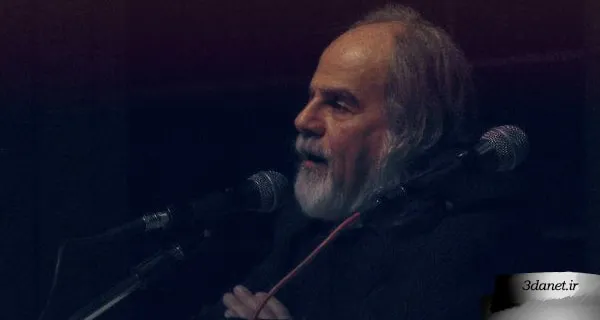


Discussion5 comments
مشکل معرفت حاصل از شهود باطنی و وجودی و مشتقات آن مثل مکاشفه ، وحی و الهام گذشته از مقوله ی تاریخ مندی و امکان خطا این است که در موارد قابل توجهی تجربه هایی شخصی هستند که یا اصولا امکان بیان آن وجود ندارد و یا اگر هم این امکان وجود داشته باشد اموری نه فقط خردگریز و علم گریز بوده که توانایی اثبات آنها به هیچ وجه وجود ندارد که بعضا به هیچ وجه قابل استدلال و توجیه ولو در قالبی غیر از منطق و فلسفه یونانی و علم هم نیستند. ادعای بی دلیل و ادعای ابطال ناپذیر که در منطق نوعی مغالطه محسوب می شود در بهترین حالت اگر نامش را اراجیف و خرافه نگذاریم ادعای شبه علمی است چون ابطال پذیر نیست .چون هیچ روشی وجود ندارد که ثابت کرد ادعای مطرح شده می تواند غلط یا صحیح باشد و یک پژوهشگر علم و فلسفه به این مدعیات نمی تواند کاری داشته باشد . ممکن است دکتر عبدالکریمی و یا آقای هراتی بگویند که تمام حرف ما این بوده است که شما شهود باطنی و معرفت شهودی آن را نباید در قالب عقلانیت منطق محور فلسفی یونانی گنجاند و با آن قضاوت کرد بعد شما این کار را کرده و آن را ملاک قرار می دهید ؟! من هم اتفاقا این ایراد را می پذیرم اما مشکل این است که بخشی از تجربه ها و مقولات برآمده از معرفت شهودی به هیچ وجه امکان استدلال و موجه سازی ولو در چارچوبی خارج از این عقلانیت منطق محور فلسفی و به طرق دیگر هم ندارد . انسان معنوی و عارف وقتی عاشق می شود و احوال اگزیستانسیل خاصی پیدا کرد ، و بعضا به الهامات و شهود و اشراق و مکاشفه می رسد و جهت افکارش از این شهود و نحوه ی بودنش تاثیر می گیرد اما هم از مفهوم استفاده می کند و هم در مقام توجیه و داوری باید از استدلال استفاده کند و در نهایت ما روشی جز استدلال برای تمیز صدق و کذب و تفکر صحیح و معتبر و یا حداقل موجه کردن آن نداریم . استدلال یگانه روش موجه سازی تفکر است خواه مبتنی بر فلسقه ی منطق محور یونانی ، خواه کلام دینی ، خواه علم تجربی ، خواه تجربه و حس و خواه معقول بودن و خواه حتی رویکرد پراگماتیستی و عمل گرایانه و خواه هر منبع دیگر باشد . پس استدلال برای موجه سازی یک باور و ادعا لازم است ولو در چارچوب عقلانیت و فلسفه و منطق برآمده از عقلانیت خاص متافیزیک منطق محور یونانی یا یک عقلانیت خاص نباشد . این در حالی است که بخشی از گزاره های حاصل از عقلانیت شهودی و معرفت برآمده از آن نه فقط در چارچوب عقلانیت و منطق فلسفه یونانی موجود که اصلا قابلیت استدلال و موجه سازی عقلانی ولو در قالب های دیگر را ندارند . لذا این گزاره ها صرفا برای آن شخصی که صاحب این تجربه ها بوده و نهایتا پیروان آنها از منظر ایمانی و تعبدی و پیروی کورکورانه بدون هیچ استدلال و توجیهی معتبر یا شبه معتبر است و قابلیت استدلال و موجه سازی را به هیچ وجه و طریق و امکانی ندارند .
مقوله شهود باطنی و مشتقات آن مثل وحی و الهام و مکاشفات برآمده از این تجلیات علی رغم تاریخ مندی بخشی از آن و احتمال خطا و اشتباه اما نمی توان و نباید نباید تماما رد کرد و صرفا حاصل توهم و وهم و خیال و بدتر جنون و اسکیزوفرنی ( روان گسیختگی ) دانست آن طور که منکران به خصوص از طیف ماتریالیست ها و ماده گرایان مدعی اند و فکر می کنند . همان طور که دکتر بیژن عبدالکریمی به درستی به این حقیقت اشاره کردند همه ی حقایق و معارف حاصل عقل تجربی و مادی و حس نبوده و نباید در آن خلاصه کرد بلکه بخشی از این حفایق و معارف چه تاریخ مند و نسبی و چه فراتاریخی و مطلق حاصل عقلانیت برآمده از این شهود باطنی است که به حداقل برخی انسانها ولو معدود و اندک در طول تاربخ این امکان را داده است که با توجه به محدودیت های انسانی و تاریخی و جهان بینی و علم و وضعیت جسمی و روحی آنها و دوره تاریخی و سنت و فرهنگی که در آن زیست کرده اند علی رغم همه اینها بتوانند با عالم غیب و ماوراء جهان مادی ارتباط پیدا کنند و به این حقایق از طریف مکاشفه ، شهود ، الهام و اشراق دست پیدا کنند و البته این محدودیت های تاریخی و زمانی هم تا حد قابل توجهی بر کمیت و کیفیت این شهود تاثیر می گذارد . چنان چه در تقسیم بندی مکاشفات ما حتی مقوله ای به نام مکاشفات شیطانی را هم داریم . حتی اخیرا از منظر علمی تحقیقات نشان داده است که آن چه حس ششم ، الهام ، شهود یا ندای درون نامیده می شود ابزاری ارزشمند است که در شرایط سخت زندگی ما را می تواند به تصمیم های درست رهنمون می سازد . البته مطابق تحقیقات علمی مکان شکل گیری شهود نه دل و یا جایی میان امحاء و حشای بدن و نه قلب بلکه نقطه ای در مغز است . بنابراین شهود و مکاشفه بر مبنای علم تجربی امری کاملا مادی و به تعبیر دکتر عبدالکریمی سکولاریزه می شود که یک انتقاد دکتر عبدالکریمی در این مصاحبه هم است که اگر بخواهید معنویت را با عقلانیت متافیزیکی و بدتر از آن علمی و تکنولوژیک پیوند دهید روح خود را از دست می دهد . البته مادی کردن و سکولاریزه کردن معنویت و سایر مقولات دیگر اگر ایرادی از علم تجربی باشد تا حد زیادی طبیعی است چون علم تجربی مادی گرا بوده و ابزار و حوزه ی عملش هم در حد ماده است و توانایی فراتر رفتن از آن را ندارد لذا طبیعی است همه ی امور را از منظر مادی و ماتریالیستی بنگرد . بنابراین مقوله ی شهود باطنی و وجودی را علی رغم ملاحظات یاد شده باید به رسمیت شناخت اما یک مشکل در این باب وجود دارد که در مطلب بعد به آن می پردازم .
شهود باطنی و مشتقات برآمده از آن مثل وحی و الهام و مکاشفه اگر چه با مشکل تاریخ مندی بخشی از معارف آنها و خطاپذیری و اینها به دلیل محدودیت های انسانی و بشری رو به رویند و لذا تمام معارف و حقایق برآمده از این معرفت را نمی توان مطلق و ابدی و ازلی دانست چنان چه ما حتی مکاشفات شیطانی هم داریم اما اصل این مقولات و معرفت برآمده از آن یعنی معرفت شهودی و تجربه های دینی و معرفتی برآمده از آن را آن طور که ماتریالیست ها و ماده گرایان مدعی اند نمی توان انکار کرد و صرفا و تماما و همگی حاصل توهم و جنون و روان گسیختگی ( اسکیزوفرنی ) دانست. در خود غرب هم تعداد قابل توجهی از فیلسوفان این واقعیت شهود باطنی را پذیرفته اند . وحی از منظر این فیلسوفان غربی عبارت است از الهاماتی روحی که از داخل وجود بر می خیزد . این فیلسوفان بر این باورند که روحی در پس چشم پیامبران پنهان است ، گاه آشکار می گردد و در خارج مجسم می شود ، به گونه ای که آن را از فرشتگان خداوند می پندارد ؛ در حالی که چیزی جز نمود شخصیت باطنی آنها یا روح است که آن چه را پیش از این نمی دانستند به آنها می آموزد و آنها را به بهترین راهها برای هدایت خود و به کمال رساندن امتشان رهنمون می سازد نه آن که نزول فرشته ای از آسمان باشد و سخنی از سوی خدا را بر آنان القا نماید . آنان معتقدند که شخصیتت باطنی پیامبر ، معلوماتی را به میران درجه تجلی و نبوغ و به مقدار توان مندی او و مخاطب آن به شخص پیامبر ارائه می کند . جان هیک از فیلسوفان معروف قائل به پلورالیسم دینی می گوید که خداوند در کنار دیگر پدیده های طبیعی به صورت مستقل در قالب پدبده ی وحی به ظهور می رسد بلکه معرفت و تاریخ وحیانی جهان در طول و راستای طبیعی آن قرار دارد . به عبارت دیگر معرفت وحیانی که در کتاب مقدس تجلی یافته همان بستر انکشاف وحی خداوند در جهان طبیعت است . پس مکاشفه و شهود باطنی همان طور که بخش قابل توجهی از فیلسوفان غربی اشاره دارند یک واقعیت است و اگر چه نباید معرفت حاصل از آن را به کل و تمام مطلق و تماما فراتاریخی دانست و درباره ی آن غلو کرد و دچار توهم بود اما به کل هم نمی توان و نباید انکار و نفی کرده و حاصل توهم صرف دانست چرا که وجود دارد . در واقع مکاشفه نوعی از معرفت حضوری و ادراک خاصی است که از راه متمرکز کردن توجه به باطن نفس خویش و درون آن ( و نه از راه تجربه حسی یا تحلیل عقلی ) به دست می آید . این شناخت بر انسان سالک واصل و هویدا می شود و پرتو می افکند و کشف می شود و بنابراین علمی که از این طریق تهذیب نفس و عرفان و خودسازی عده ی اندکی از انسانها در طول تاریخ توانسته به دست آید در برخی موارد می تواند درک و دریافتی از واقع و متن هستی باشد .
استاد مصطفی ملکیان بزرگوار: اکنون اگر ما از معنویت یا عقلانیت دست بکشیم و یکی را انتخاب کنیم درواقع تکرار تاریخ گذشته کردهایم؛ اگر از عقلانیت دست برداریم مشابه ادیان شرق میشویم که به لحاظ معنوی در اوج بودن و به لحاظ عقلانی در قعر و اگر از معنویت دست برداریم تکرار تاریخ قرون هجدهم و نوزدهم غرب (نه اکنونِ غرب) میشود که غلبه با عقلانیت بود و معنویت از حریم زندگی انسان بیرون رانده شده بود. ???????? نقد سخنان ایشان، توسط بنده: استاد ملکیان، فقط یک معنا از عقلانیت را به رسمیت میشناسند که آن هم توسط فیلسوفهای بزرگ سنت متافیزیک یونانی ظهور پیدا کرده است. به همین خاطر است که ایشان قرون روشنگری را اوج عقلانیت و حضیض معنویت و دوران ادیان شرقی را، اوج معنویت و حضیض عقلانیت میداند. اما آیا این ترسیمبندی و چارچوببندی جای مناقشه ندارد؟ به اعتقاد من، تاریخ صحنهی جانشینی پارادایمهای عقلانیت متفاوت و البته درهم آمیختنها و تاثیرگذاریها و ادغام شدنها و استقلال یافتن این کلان روایتهاست. به هرحال، من کانت و هگل را از افلاطون و ارسطو، عاقلتر نمیدانم و افلاطون و ارسطو را از مسیح و محمد عاقلتر نمیبینم. همچنین به نظر من ابنسینا عاقلتر از مولانا نیست. استاد ملکیان، همواره دم از استدلال و عدم تعبد میزنند. ولی آیا خود معنای استدلال و برهان واضح و روشن است و احتیاج به تفکر ندارد. استدلال یعنی چه؟ اثبات کردن یعنی چه؟ یک مقدار درباره معنای خود استدلال و اثبات، فکر کنیم. به نظر من، نمیتوان برای وجود (من) و (جهان خارج) و (وجود، حقیقت، خداوند) استدلال به معنای اثبات پوزیتیو و محصل آورد. چرا؟ چون، اینها حقیقتهای استعلایی هستند که فراتر از اثبات یا رد میباشند. به قول کتاب اوپانیشادها، همه چیز را با چشم میتوان مشاهده کرد، اما خود چشمها را با چشم نمیتوان دید. برای وجود جهان خارج نمیتوان اثبات منطقی آورد، اما این به آن معنا نیست که وجود جهان خارج محل شک و تردید است. کاملا برعکس، وجود جهان خارج از شدت هویدایی و ظهور، فراتر از اثبات و رد هر انسانی است. البته، اگر استدلال را به معنای تنبه دادن و گوشزد کردن بدانیم، میتوانیم از استدلال بر حقیقتهای استعلایی صحبت کنیم. واقعیتِ من، را نمیتوان با اثبات منطقی نشان داد، چون این واقعیت فراتر از هر اثبات منطقی است؛ اما به هر حال، میتوان مخاطب را به سمت حقیقت من تذکر داد و توجه اش را معطوف کرد.
ascription نسبت دادن عدم عقلانیت شاید در مورد نسخه تحریف شده catholicism منحرف شده از سادگی و صدق مسیحیت 700 سال پس از ظهور این دین قابل مطالعه باشد اما کپی کردی نگاه و مواضع کاتولیسیزم بر بقیه ادیان حاصل فضای strangulationism و تابعیت محض افراد تحت تأثیر فرنگستان گذشته است. دیگر چه برسد به اساتید ایرانی که متون غربی را نه به فرانسه، نه به انگلیسی و نه به آلمانی و اسپانیایی نمیتوانند بخوانند. در درک جملات دچار اشتباه می شوندو در درک کل متن و فلسفه نیز آنقدر غرق ساختار غیر قابل فهم برای خودشان میشوند، آنقدر حس ناتوانی برا آنان مستولی میشود که فرق مسیحیت کاتولیک را با ادیان شرق نمیتوانند یا جرأت نمیکنند تصور کنند. اگر کلامی از dogma متونی که درک نکردهآند تغییر داده شود دچار رعب و وحشت میشوند. من عربی نمیدانم اما سرتاسر متون دینی شما متکی بر تأکید بر تعقل است. تقلید هم که برای غیر متخصص تجویز شده در اصول الدین مردود مطلق است. ایشان قطعا شرق را نمیشناسد. در عقلانی بودن غرب هم در اشتباه محض است. ایشان از غلو و گزافه گوییها در مورد کانت و ارسطو ترسیده اند، این را از من بشنوید. وگرنه کدام ساده دلی از عقل عقل عقل اسلام شما میتواند عدم عقلانیت اسنتتاج کند؟ من از از عقلامی خواندن فلسفه غرب ایشان متوجه میشوم که مثل اساتید دوره قاجار که شش ماه فرنگستان می رفتند و بخاطر جدی گرفتن فضا دچار وحشت از تفکر میشدند، جرأت پا بیرون گذاشتن از پروژههای ناموفق افلاطون، ارسطو، آگوست کنت، هیوم، ارنست ماخ، و تصورات عجیب فروید، همپل، پاتنم، برج، ویلیامسن و کریپکی را ندارند. اگر به ایشان بگویند که هرمنوتیک رُئال و غیر آن غیر موجه و غیر منسجم و غیر قابل دفاع است اگر گفته شود شلایرماخر درک متون نمیکرده از وحشت دچار فلج میشوند. ٌ It is about time we revised our weltanshauung.