Sociology
Mostafa Malekian: Philosophy for Life; The Rational and Moral Necessity of “Social Reform”
Mostafa Malekian sees life as an unavoidable journey along a rough road, where the rational person must simultaneously work to repair the road and equip themselves with shock absorbers—a necessity that demands both social reform and individual reform to reduce life’s sufferings.

Philosophy for Life[1]
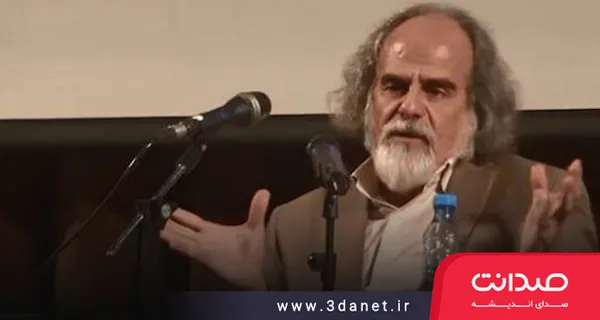
Mostafa Malekian
Edited by: Seyyed Hassan Salehi[2]
Note: In this lecture, Mostafa Malekian likens human life to an “inevitable journey” on a road one has no choice but to traverse; a rocky, perilous, and uneven road. From Malekian’s perspective, by the dictates of rationality, one must undertake two tasks on this journey: both strive, as much as possible, to repair and restore the road, and equip one’s vehicle with strong shock absorbers so that it endures the least pressure from the road. Human life is just the same; a rational person, by the dictates of rationality, bears the two duties of “social reform” and “individual reform,” and cannot ignore either of them. Attending to one of these duties never absolves us of the need to attend to the other. Hence, intellectuals and reformers, each according to their capacity and ability, must strive to fulfill these two duties. Malekian then proceeds, while enumerating the five sources for acquiring life’s teachings and distinguishing between pains and sufferings, to explore some of the capacities of these sources for worldly life, and alongside theological solutions, offers a number of useful philosophical and empirical remedies for making sense of and reducing the inescapable pains and sufferings of life.
A. Introduction: Life as an Uneven Road
In this lecture, I want to raise two interrelated yet independent topics, and due to time constraints, I will try to avoid repetition as much as possible. I will begin the first topic with an example, and after using this example and stating the first claim, I will move on to the second topic.
Suppose I am someone who, for some reason, must always travel back and forth on a road, say, Tehran to Shiraz; I can neither forgo this journey nor take another road. So, since this travel cannot be forgone and only this one road is available to me, if I am a “rational human being” (and “rationality” alone suffices for this purpose), I must do “two things.” From the very beginning, I emphasize “two things”; because I have been repeatedly accused (or my words have been misinterpreted) of supposedly believing in only one of these two things. My emphasis is that if I am a rational human being, I must do “two things”:
1- The first task is that on this journey, if I have no choice or recourse but to travel this road, I must, to the extent of my own ability and as far as I am capable, repair this rocky road; this road full of ups and downs, full of potholes and dangerous ravines, never built according to engineering techniques, and full of defects, flaws, faults, and problems. As much as I can (and a truly fair-minded and aware person would judge that my ability is no more than this), I must help in reforming and restoring this road and not allow this defective and flawed road to remain in this state; this is the first task. And I emphasize that I, as a “rational human being,” must certainly perform this first task, because it is “I” who am using this road; and if I were in the position of a “moral human being,” I would say because “my fellow human beings” also use this road. But for now, I am speaking only from the perspective of “pure rationality.” If we consider pure rationality and have nothing to do with moral precepts, rules, measures, and criteria, I must spend a lifetime traveling on this road, and therefore, rationality dictates that I reform, repair, restore, and correct this road as much as I can, and leave no effort unmade.
2- There is a second task that must be done. The second task is this: no matter how much I (and even my fellow human beings who travel this road) strive, as rationality dictates, to repair this road, there is still no guarantee that this road will ever be completely flawless. In any case, the defects and flaws of this road will, for a long time to come (perhaps until the end of my life, and perhaps until the end of my fellow human beings' lives), still remain. Because no matter how hard we try, our efforts do not guarantee total success, and therefore, the possibility exists that I must make do with this road until the end of my life, and that this road will not reach perfection; and since this is the case, a second task must also be done, and that is to at least equip my own vehicle with very strong and well-designed shock absorbers, so that not all the pressure of the uneven road surface is transferred to my body; since this road is still flawed and puts pressure on the body of the vehicle's occupant, at least with this measure, this pressure is reduced to the minimum possible. Now that I cannot repair and restore the entire road, I must at least provide shock absorbers for the vehicle that transfer the least pressure from the road to my body, not all the pressures; otherwise, my body will become battered and exhausted. So two tasks must be done: one is to direct all my attention to the repair of this road, and the second is to provide strong shock absorbers for my own vehicle so that less pressure is exerted on my body.
B. The Social Duty and the Individual Duty of the Human Being in Life
I will use this example for my own purpose. A rational human being (and a fortiori, if, in addition to "rationality," they also possess "morality") must do two things within the context of their social life:
1- Each person, according to the measure of their inner assets (that is, the measure of their knowledge and abilities), their personality and character traits, their genetic characteristics, what life's events have taught them, and the education and upbringing they have received, and in short, considering all the possibilities they have in life, must, as much as they can, reform and correct their society, reduce its problems and flaws, and be sensitive to the pains and sufferings, corruptions, ill intentions, mismanagements, ignorances, and every kind of disorder present in this society; because even if the individual is not moral, they are at least "rational" and know that they must spend their life in this society, and therefore, the more they bring this society closer to rectitude, the more they themselves benefit. And if the individual is "moral," they want to provide a better situation for their fellow human beings who use this society, live in it, and have no choice but to live in this society; this is the first task that absolutely must be undertaken. My great emphasis on the first task is because there has been much misunderstanding of my speech, as if I pay no attention to this first task; I have said time and time and time again that "the first step on the path of morality (and in the view of some, and even in the view of many thinkers, even up to the last step) is reducing the pain and suffering of others, and others are those who live in this society"; therefore, one can never be insensitive to the oppression, cruelty, injustice, disorder, insecurity, lack of welfare, inequality, lack of freedom, lack of fraternity, lack of compassion, and lack of peace in society. So whatever I can do for order, security, welfare, justice, equality, fraternity, freedom, and peace in this society, I must do.
2- At the same time, even if I devote all my efforts and all other citizens and their fellow citizens in this society do the same, there is still no guarantee that our society will become flawless. Therefore, we need shock absorbers; since we must live in a society that may be incorrect and unhealthy to varying degrees, we must have shock absorbers. And providing these shock absorbers is our second task; that is, we must work so that at least the pains and sufferings caused by living in an unhealthy society put less pressure on ourselves and the citizens of our society. We must reduce this pressure as much as we can. If society is unhealthy, at least we should be able, as far as possible, to reduce the pressure of living in an unhealthy society. In the expression used in Buddhism, even if society is, hypothetically, a swamp, a bog, and a quagmire, we should be able to be the lotus of this swamp and bog. This is the second task. The first task requires that in our activities we pay attention to what happens in the institution of the family, the institution of the economy, the institution of education, the institution of science, technology, and art, the institution of politics, the institution of legislation, the institution of ethics, and the institution of religion and creed; because the defects of these institutions cause the overall defect of society. But for the second task, that is, providing shock absorbers, we must turn to a series of things with which we equip our own person; therefore, "my social role" is the first task, and "my individual role" is the second task; and because despite all the efforts I make, society is still not flawless, I should at least provide shock absorbers for myself, and this is the second task.
A Critique of the Intellectual Tradition: What led me to address this matter was that most of our intellectuals and social reformers greatly value the first task but do not value the second task; that is, on the one hand, in all their writings and all the works we read or hear from them, they greatly value the necessity of reforming the institutions of family, economy, education, science, technology, and art, politics, legislation, ethics, religion, creed, and international relations, but they value the second matter less or not at all. And on the other hand, there are a very small minority who value the second matter but do not value the first; that is, they say, "Equip yourself for life in an unhealthy society, but changing the unhealthy society itself and bringing it closer to health as much as you can is not your concern." That is, for most of our intellectuals and reformers, the "social aspect of reform" is important, and the "individual, personal, and private aspect" is not very important to them, and there are a few intellectuals and reformers for whom the individual aspect is important and the social aspect is not important.
My point is that "both of these aspects must go together," and the emphasis on "both of these aspects going together" is because if you see someone in their teachings and reform efforts in society paying attention, for example, to the teachings of Buddhism (the teachings of Buddha solely as a therapist, and not as the founder of a historical and institutionalized religion and creed) or the teachings of Daoism (for example, the teachings of Lao Tzu) or the Stoics or Spinoza, you should not denounce them and disregard their concern; their concern is that these teachings are useful for the second task. A person who engages in the second task has never said that the first task should not be done, and they can never say such a thing; because these very individuals whose names were mentioned all say, "Even if you were only thinking of your own salvation, you would have no choice but to be sensitive to social affairs and matters." Therefore, to cry out that those who speak of Stoicism or Spinoza or Daoism or Buddhism want to invite people into their own private chambers and say, "Go and engage in self-purification, self-perfection, spiritual elevation, asceticism, self-knowledge, self-exploration, and self-awareness, and have nothing to do with social affairs and matters, and especially have nothing to do with political affairs and matters," is truly an incorrect statement, and in my opinion, an accusation contrary to all existing documents and evidence. These two tasks must be done together. The first does not make us needless of the second, and the second never makes us needless of the first. This was my first point in this lecture.
C. The Five Sources for Acquiring Life Teachings
For the first task, all human sciences and knowledge are needed; that is, in order to provide a healthier and more suitable society for human life, we need all human sciences and knowledge. But for the second task, that is, for building shock absorbers—which everyone must build for themselves so that they can at least endure pains and sufferings more and better (and I emphasize again, after doing everything in their power to reduce social pains and sufferings, during that effort, and parallel to the effort to reduce social pains and sufferings)—each individual, in order to provide these shock absorbers, must draw on five sources. For the first task, all human sciences and knowledge were needed, but for the second task, in my view, only five areas are useful:
1- The first area is psychology, with all its various branches and divisions; and here I also add what we refer to as "psychotherapy" to psychology; meaning we need both the "science of psychology" and the "art of psychotherapy."
2- The second part is philosophy; certain parts of philosophy are beneficial for the second purpose (building shock absorbers). By "certain parts of philosophy," I mean six parts of philosophy, and not even all the discussions within these six parts, but rather "some" of the discussions in these six parts are useful for the second purpose; that is, "some of" the discussions of metaphysics, epistemology, philosophy of language, philosophy of mind, philosophy of action, and moral philosophy. The other branches of philosophy, I suspect, are of no use for the second task and are applicable to the first task. Again, I emphasize that not all discussions within these six parts are necessarily useful for the second task.
3- The third part is world literature; especially the novel and poetry. Much of what we can consider as a shield and protection for ourselves in life, I believe, we obtain from literature in general, and especially from poetry and the novel.
4- The fourth part is some (I emphasize "some") of the points that mystics of all different religions, denominations, and various cultures have expressed throughout history.
5- The fifth part is also some (and again I emphasize "some") of the teachings that the founders of religions and denominations and their subsequent theologians have arrived at concerning humanity.
I believe that for the second task, we must draw on these five sources: all parts of psychology, parts of philosophy, world literature, parts of mysticism, and parts of religion and creed; a kind of "integration," or in a term we should not fear, a kind of "eclectic synthesis," but of course a "coherent" one, from the totality of what we obtain from these five parts. Now the question is: what do these five parts, from which we derive our teachings and with which we want to build our shock absorbers, do for us? The second part of my talk is precisely this subject, which I will now address.
D. The Necessity of Distinguishing Between Pains and Sufferings
It seems that the sufferings we endure in any unhealthy society are of different types (though I agree with the Buddha that as long as humans are human and as long as wanting exists, suffering more or less exists), but in any case, to eliminate and, more accurately, to reduce them, we use the five sources I mentioned:
1- The first task is this: to distinguish among the sufferings I endure as a citizen of society, which of these sufferings are "unavoidable" and which are "avoidable"; that is, to separate avoidable sufferings from unavoidable sufferings. This is the first art, and it is very important for a person to understand which pain and suffering is unavoidable and there is no escape from it, and which pain and suffering is avoidable and can be escaped.
2- The second task is to address the pains and sufferings that are avoidable and see what we can do for ourselves regarding these avoidable pains and sufferings.
E. Types of Avoidable Pains and Sufferings
In a general classification, I believe the avoidable pains and sufferings we have in life are divided into four types; that is, I and each of you, as a citizen (setting aside the first social task, which we have disregarded for now, I now want to emphasize the shock absorbers, meaning the second task), in my view, have four types of avoidable pain and suffering:
1- The first type consists of avoidable pains and sufferings that arise from unhealthy politics, economics, and social affairs; the unhealthy political systems, economic relations, and social bonds that exist in society are the source of many pains and sufferings that are, of course, avoidable. “Avoidable” in the sense that I can eliminate these pains and sufferings and prevent them from putting excessive pressure on me. These pains and sufferings resulting from wrong policies in the realm of politics, economics, and social affairs also have incorrect solutions, which must be understood and one must see what the incorrect ways of confronting these issues are. I consider these incorrect ways to be three:
- The first way is to suppose that these pains and sufferings caused by incorrect political, economic, and social systems can be removed through “prayer.”
- The second incorrect way is that these pains and sufferings can be removed through “submission.”
- The third incorrect way is to “merely sympathize.” Sympathy is necessary, but it is absolutely not sufficient; merely sympathizing with suffering is not important, rather, the suffering and the origin of the suffering must be destroyed. The correct way is to diagnose the origin and source of these pains and sufferings and then to eradicate them.
2- The second type of avoidable pains and sufferings are illnesses, injuries, and bodily harms and damages that afflict humans due to life’s events, which is very clear; there is no doubt that here one must use the help of others to remove one’s pains and sufferings, and these others are especially those who are specialists (for instance, in this example of mine, physicians). One must be careful to distinguish three things from one another in the pains and sufferings resulting from injury, illness, harm, and damage:
When we are afflicted with a pain and suffering, sometimes we suffer from the “pain itself,” sometimes from the “duration of the pain,” and sometimes from the “consequences of the pain”; these are three different things, and each has a different way of being remedied. Suppose I have a toothache. In this case, I suffer three sufferings: one from the very pain that I am experiencing moment by moment and second by second. Another is that I imagine this pain will be with me for another 12 hours, because, for example, I do not have access to a dentist for another 12 hours. The duration of pain and suffering is different from the pain and suffering itself; I suffer both from the pain itself and from the duration of the pain. The third suffering is from the consequences of the pain; I imagine that even if I consult a dentist, the toothache will still have consequences for me, which are not eliminated merely by the cessation of the pain itself, and I may well suffer from them too. All physical pains are like this: the pain itself creates one suffering, the duration and continuance of the pain creates another suffering, and the consequences of the pain create a third suffering.
3- The third part of avoidable sufferings is emotional sufferings. I also endure a series of emotional sufferings that arise from being mistreated, or feeling lonely, or being separated from my gathering, circle, and group of friends and those I care about, or having lost my loved ones, or my social standing having diminished. All of these are sufferings arising from social relationships and situations; any failure in social success may create suffering, but these sufferings are treatable, and if I am afflicted with these sufferings, I can remedy them.
4- The fourth category of pains and sufferings is the torment of conscience; when I look back at my past and see how many moral errors I have committed, the torment of conscience envelops me. This is also a suffering, but this suffering is also avoidable.
I include these four categories of suffering in the section on avoidable sufferings.
V. Unavoidable Pains and Sufferings
There is also a series of sufferings in life from which there seems to be no escape; they afflict me or you as an individual, and it seems I have no way out. These pains and sufferings are called “inescapable” sufferings. Regarding these sufferings, I must clarify one thing for myself: do these inescapable sufferings bring me any benefit, or are they only suffering? Are they a suffering behind which there is a treasure, a profit, and a benefit, or not? Since there is no escape from the suffering itself and it will afflict me in any case, does the suffering we endure bring us any benefit, and will we gain a share? Is this suffering without treasure, or will it also hold a treasure? Every person must clarify this point for themselves, and everyone must provide all these shock absorbers for themselves. If, with all the knowledge, power of thought, depth of understanding, and experiences I have in life, I diagnose these sufferings and understand that they are only suffering and there is no treasure behind them, I must live one kind of life; but sometimes, based on my knowledge, thought, understanding, and experience, I have reached the conclusion that these sufferings themselves are inescapable, but they also have benefits and returns, and there are treasures after these sufferings; I must see what that suffering is and what that treasure is. Here, there are two categories of views; there is a series of views that I express without intending to refute or endorse them, and their evaluation must be left to the individual's own discernment.
G. Otherworldly Solutions for Making Inescapable Pains and Sufferings Meaningful
The first category of these views is sometimes called “theological” solutions and sometimes “transcendental” or “otherworldly” solutions. According to these views, these inescapable sufferings have a benefit, but these benefits are depicted for us through theology and transcendental, otherworldly matters. Two sets of these theological solutions are very famous:
The Solution of Eastern Religions: Eastern solutions are summarized in “reincarnation.” Based on these solutions, the sufferings we endure stem from a previous life we have lived, and in this way, they make sufferings meaningful for you. They say, “No injustice has been done to you, and no cruelty has befallen you; you had a life in a previous reincarnation and engaged in a certain quality of life, the entirely natural result of which is your present life; therefore, accept this as the result of the actions you yourself performed in the previous reincarnation and the previous incarnate form.” Eastern religions generally (meaning, for example, Hinduism, Buddhism, and Jainism) particularly emphasize making inescapable pains and sufferings meaningful through this path, by saying that “your previous life necessitates this kind of life, and if you do not want your situation in your next life to remain this way, you must act so that in the next reincarnation you are not like this reincarnation; in this reincarnation, you are indebted to and dependent on your previous reincarnation; now act so that in the next reincarnation, which is indebted to and dependent on the current reincarnation, your situation improves.” This is the solution of Eastern religions.
The Solutions of Western Religions: Western religions, which are sometimes called “Mosaic religions” or, in our own Iranian culture, “Abrahamic religions” (meaning religions whose birthplace is not the East of the world but the West of the world, i.e., Judaism, Christianity, and Islam), because they do not believe in reincarnation and do not consider our present life as “karma,” make it meaningful in another way, and a theory titled “theodicy” is proposed in the theology of these religions, the comprehensive form of which is what is referred to as the theory of “Divine Justice.” Western religions solve the problem not with reincarnation, but with the theory of Divine Justice. The solutions that Western religions propose are eight solutions. These eight solutions (regardless of our likes and dislikes) are as follows:
1- Sometimes they say these sufferings are for your “trial”; these sufferings occur so that God may test you and see what you do; do you emerge from the crucible of trial triumphant and successful, or defeated, broken-necked, and ashamed?
2- Some say that sufferings are the "worldly retribution" for deeds you committed in earlier years of your life and whose punishment you are now seeing; similar to what Eastern religions say, that you did things in a previous life and are now seeing their retribution, while Western religions say that in the past years of this very life you did things for which these sufferings are the worldly punishment. Interestingly, it is sometimes said in these same three religions that you may also suffer the retribution for your parents' lives; because your parents committed transgressions in their lives, and the pain and suffering that befall you are due to the injustices your parents committed in their lives.
3- The third view says that these sufferings befall you so that you "remain far from sin." If you were perfectly healthy, God knows you would have been drawn into a series of disobediences and sins. This suffering has been inflicted upon you (for example, you have become paralyzed, blind, or deaf) so that you may be exempted from many of the sins that can be committed with the eyes or ears, and this is a kind of benefit you are gaining.
4- The fourth solution says you endure this pain and suffering, but in exchange for them, you will receive "immensely greater good and benefit in the afterlife." That good is so immense that later you will imagine, and even wish, that you had suffered more than this in your worldly life. If for every quantum of suffering I endured in the world, I am to receive thousands of quanta of pleasure, blessing, and felicity here, I wish I had endured more quanta of suffering in my worldly life. The compensation and recompense you are given in the afterlife in exchange for these sufferings is that great.
5- The fifth theory says you have been made to suffer so that through suffering you "draw closer to God." The more your life is filled with suffering, the closer you draw to God; meaning, in fact, these sufferings become the cause for you to draw closer to God. The more suffering increases, the more you will turn toward God.
6- The sixth theory is the exact opposite of the fifth; the fifth theory said that this pain and suffering become the cause for you to draw closer to God and become beloved of God. The sixth theory is the reverse; it says the infliction of pain and suffering is "the effect of having drawn closer to God." When a person draws very close to God, it is God's attribute to provide much suffering for His friends: "al-balā'u lil-wilā'" (affliction is for sainthood); the closer your friendship with God becomes, the more God inflicts pain and suffering upon you.
7- The seventh theory says that through these sufferings you attain "perfection" (istikmāl) and achieve "spiritual transcendence" (isti'lā'-i ma'navī).
8- The eighth theory is that "all these sufferings have a wisdom, even if we are unaware of that wisdom"; but it has a wisdom, because God is the ruler of the world and God is a wise ruler, so it surely has a wisdom; even if I, the theologian and founder of the religion, do not know what that wisdom is, it nonetheless has a wisdom.
All these theories, which are called "theological," "transcendental," and "otherworldly" theories (whether the theories of Eastern religions like "reincarnation" or the theories of Western religions, i.e., the theory of "divine justice"), are all a series of assumptions and presuppositions. If these assumptions and presuppositions seem rational to you, you accept them and make your suffering meaningful. In that case, you will be less harmed by the sufferings that befall you.
H. This-Worldly Solutions for Making Unavoidable Pain and Suffering Meaningful
But there is also a second category of solutions for unavoidable suffering, which are no longer "theological" but "philosophical"; not "transcendental" but "empirical"; and not "otherworldly" but "this-worldly." There is a series of philosophical, empirical, and this-worldly solutions. These solutions do not refer you to "Nirvana" and "exit from the cycle of Samsara"; they do not refer you to "entering paradise" or "not entering hell"; they do not refer you to "attaining divine union, or annihilation in God, or subsistence through God." The second category of solutions are this-worldly; they are philosophical perspectives that have been proposed for making suffering meaningful. From these perspectives, I have gathered seven of the more important ones and will present them to you.
1- The first solution is the saying that “man learns through suffering”; all learning, and not just the learning that children undergo, comes through suffering; just as children in elementary school and adolescents in high school learn many things through suffering; taking exams, doing homework, being forced to sit in class, hearing the reproaches of professors and teachers, spending time and studying, missing out on recreation, television, and football—all of this is suffering. Yet children learn through suffering. All human beings are the same; man learns only through suffering. If you look closely, it is as if all of life in this solution is likened to what we do in childhood and adolescence in schools, high schools, and later in universities; there we learn through suffering, and in the whole of life it is the same: man learns through suffering.
2- The second view says, “Suffering will reform you.” Here life is likened to legal punishments; when you imprison a thief or someone who has committed aggression and transgression in life, that person is reformed through the pain and suffering we inflict upon them. The second view says that all of life is like this: a person is reformed through pain; because we are all more or less sinners, and it is only through pain that we can be reformed.
3- The third view, which is a very famous view in Western culture and originates in the teachings of Aristotle, is that fundamentally “a person’s character[3] (and not personality[4]) is formed, built, and strengthened through suffering.” It is through suffering that we acquire steadfast, upright, and correct character.
4- The fifth view says that through suffering we “acquire the greatest human virtue, which is compassion for other beings.” In suffering, a person becomes compassionate toward the rest of the beings who suffer, and since compassion is the greatest virtue, we are in fact learning compassion through our own suffering. If I did not suffer in life, I would never become aware of those who suffer. Now that I can suffer and have the capacity and capability for suffering, the result is that I put myself in your shoes and understand what you are going through; I enter into your skin and understand what you are enduring, and something called compassion arises in me, which is the greatest human virtue.
5- The sixth view says, “If there were no suffering, man would not attain pleasure and enjoyment”; suffering is the only ladder to reach pleasure and enjoyment; if you want to reach pleasure and enjoyment, you must suffer. If you choose not to climb these rungs, naturally you will not reach the rooftop (I am summarily saying “pleasure” and “enjoyment,” but in reality four things should be mentioned: “pleasure,” “enjoyment,” “happiness,” and “satisfaction”). If you want to reach a rooftop whose name is “pleasure,” “enjoyment,” “happiness,” or “satisfaction,” you have no choice but to climb the ladder of suffering; once you set foot on this ladder and these rungs, then you will reach pleasure, enjoyment, happiness, and satisfaction. Therefore, suffering is the inescapable path to reaching pleasure, enjoyment, happiness, and satisfaction. In simpler terms, if there were no suffering, there would be no pleasure at all.
6- And the final solution says, “Suffering is a necessary condition for the appreciation[5] of pleasure, enjoyment, happiness, and satisfaction.” The previous solution said it is the condition for the emergence of pleasure, enjoyment, happiness, and satisfaction, but this view says that in order to know the value of pleasure, enjoyment, happiness, and satisfaction, you must endure pain and suffering. Here, appreciation depends on enduring pain and suffering; if you do not endure pain and suffer, you may attain pleasure, but you will not appreciate its value. To reach the perception of pleasure, enjoyment, happiness, and satisfaction, you have no choice but to endure pain and suffering.
This is a plan for how I can use these solutions to make meaningful the pain and suffering that I endure, in any case, in an unhealthy social life. Each of these solutions involves a great many profound, sweet, fascinating, and vitally necessary discussions for life; but I neither have the knowledge to speak of them, nor (for the little knowledge I do have) do I really have the time in this setting. I wanted to say why we should not do this second task for ourselves, and why we should not use the teachings of figures like Spinoza, the Stoics, the Existentialists, Daoism, and Buddhism, so that we might at least have something for shock absorbers. Of course, our primary duty, which is the reform of social life, remains in its place.
.
.
[1]. The present text is the transcript of a lecture by Professor Mostafa Malekian on the virtual platform Clubhouse, held on January 12, 2022, hosted by the “Manishko” room (Telegram channel: https://t.me/manishcoo).
[2]. Holder of a Master’s degree in Philosophy, Allameh Tabataba’i University (email: hasansalehi62@gmail.com).
[3]. character
[4]. personality
[5]. appreciation
.
.




Discussion2 comments
سپاس
درود بر شما نویسنده ی گرامی که این سخنرانی را مکتوب کردید. و درود بی پایان به ملکیان بزرگ که الحق استادند.