Philosophy
Introducing Philosophy in Life: Essays on Critical Thinking, Philosophy for Children, and Philosophy
The book Philosophy in Life by Mohammad Reza Vaez Shahrestani has been published by Negah-e Moaser Publications with the aim of popularizing philosophy and critical thinking. The work comprises essays on logic, philosophy for children, and reflections on meaning, ethics, and media.
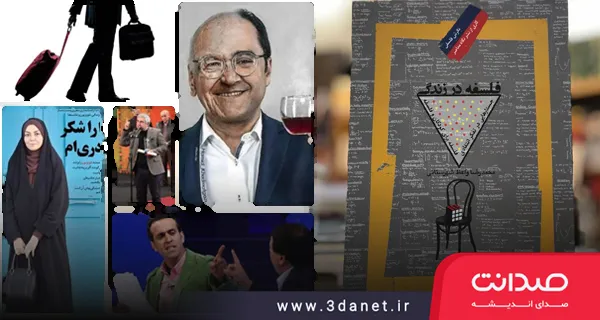
The book Philosophy in Life: Essays on Critical Thinking, Philosophy for Children, and Philosophy by Mohammad Reza Vaez Shahrestani has recently been published by Negah-e Moaser Publishing. The book begins with the aim of simplifying philosophy and making it accessible in everyday life, offering guidance on critical thinking and notes that critique and examine current media issues from a logical perspective. It continues by outlining how the Philosophy for Children program began worldwide and presenting essays on facilitator training and the current state of Philosophy for Children in Iran. Finally, the book concludes with notes from the author in the field of philosophy. This book is intended as a starting point for studying critical thinking and is practical and useful for educators, teachers, and especially facilitators of the Philosophy for Children program, as well as for those generally interested in philosophy. Furthermore, the first, second, and third sections of this book can be effective in familiarizing parents with critical thinking and philosophical inquiry with children and adolescents.
Preface
Socrates believed that philosophy begins with wonder, and if we look at the kinds of questions philosophers have pondered over thousands of years, we will understand that they are questions that have filled human beings with wonder. The question of what philosophy is, is itself an important philosophical question that fills one with wonder; a question that is not easy to answer and on which philosophers have not reached a consensus after centuries.
Philosophy, regardless of any definition we may have of it, deals with theoretical and practical problems, which the human intellect aspires to address, using rational methodology. Questions such as: What is real? How can I be certain of what I know? What is justice? What is beauty? What is the right thing to do? And thousands upon thousands of other questions. Such questions encompass important ideas that are particularly meaningful throughout the world and for most people. In other words, we need ideas such as justice, right and wrong, beauty, knowledge, and reality to make our lives meaningful. If we look at philosophical texts throughout the world from ancient times to the present day, we will notice that philosophers are those who seek truth or meaning.
In the discussion of the meaning of life, human beings face questions such as: Why do I exist, and why should I continue this life? Is life, with all its pain, suffering, and bitterness—though sweet and pleasurable in moments—truly worth living? If we must die, or if there is no predetermined purpose, then what meaning does life have? Can we create our own meaning in life? Does such a meaning, shaped by us for a meaningful existence, possess the necessary capacity to withstand the certain adversities and anxieties of being?
Furthermore, these certain sufferings and anxieties of life are inseparable from human existence. In truth, these sufferings are existentialist (or existential) concerns that will grip us tightly when we look inward and deeply confront existence and our existential situation. For example, death, absurdity, freedom, and loneliness are very important instances of existential concerns or ultimate anxieties. On the other hand, these are not sufferings that we can forget by keeping ourselves busy. Of course, in an everyday life, and especially for a person immersed in daily routines, this kind of existential suffering and pain can be forgotten, albeit temporarily. Another noteworthy point is that philosophical questions are questions of ....
1_ Essays on Logic and Critical Thinking
1-1) A Guide to Critical Thinking
• Introduction • Meaning • Definitions • Necessary and Sufficient Conditions • Linguistic Pitfalls • Basic Logical Concepts • Arguments • Validity and Soundness • Patterns of Valid Arguments • Causality • Ethics • Fallacies • Toward the Future
1-2) Reasoning in Life and the Media
• Marine Le Pen or Emmanuel Macron?! • As long as Bashar al-Assad exists, ISIS exists too! (Barack Obama’s fallacy) • An exercise for peaceful coexistence (A reflection on the purpose of argument) • If Esteghlal and Persepolis are strong, our national team will also be strong! • Structural lies and ambiguity?!
2_ Essays on the Philosophy for Children Program
• On the Institute for the Advancement of Philosophy for Children (IAPC) • A framework for facilitating classroom dialogue (Translation)/ Maughn Gregory • Philosophy for Children in Iran (Interview with Mehr News Agency)
3_ Essays on Philosophy
• Philosophy was born late in Germany but grew rapidly! (Interview with Farhikhtegan newspaper) • Immanuel Kant: An idealist or a realist philosopher?! • Philosophy of Technology: A preface on “The relationship of technology with culture and religion” • Every individual is responsible for all of humanity! (A reflection on the concept of existentialism from the perspective of Jean-Paul Sartre) • Jean-Paul Sartre and our society today • Social passivity (A reflection on “bad faith” from the perspective of Jean-Paul Sartre) • Despite all the absurdity, I am overflowing with you! (A reflection on the meaning of life) • “One must run to the end of being” (A short note on Sepehri’s pre-conceptual view of the world) • Parallel roles: A reflection on the film The Salesman • Revisiting the film “A Separation”
Seven notes on book censorship have been completely removed and are appended below:
۱_ You yourself lit the fire! A reflection on Ebrahim Hatamikia’s complaint to God
۳_ A reflection on an ethical impasse in social media; the case of Azadeh Namdari
۴_ A reflection on demagoguery and appeals to nationalist sentiments
۶_ Migration and responsibility towards the other (A reflection on the recent wave of emigration)





Discussion1 comments
بسیار ممنون خصوصا بابت ضمیمه ها. استفاده کردم