Philosophy
Jean-Paul Sartre and Our Society Today by Mohammad Reza Vaez Shahrestani
Sartre considers man condemned to be free: because his existence precedes his essence, he is responsible for creating himself. An analysis of the missing link of freedom in his thought gauges this concept's relationship with contemporary society.
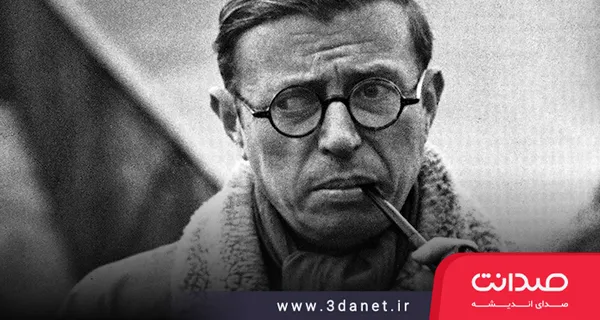
Jean-Paul Sartre and Our Society Today
A Reflection on the Concept of "Freedom"
Mohammad Reza Vaez Shahrestani[1]
Jean-Paul Sartre [2] believed that "man is condemned to be free"; condemned because he did not create himself and was brought into this world by others, and yet, free because as soon as he sets foot in the world, he is responsible for all his actions and words.[3]
Now the question arises: why does responsibility entail freedom? (First question) Because a person is only held responsible for an action when they have freely chosen that action. For example, a murderer who is insane is not sentenced to retribution because the act of murder did not originate from them freely and in a state of mental health; or conversely, I am responsible for every single sentence of this note because I have freely composed these sentences.
If we take a step back, the prior question is: why, as soon as a person sets foot in the world, are they responsible for all their actions? (Second question) To answer this question, Sartre puts forward the central and pivotal principle of existentialism, namely "existence precedes essence." From Sartre's perspective in the school of existentialism, man is at first nothing! That is, there is no conception of man before his coming into existence. In truth, after man exists, he makes himself this or that. As Sartre says, "man is nothing other than what he makes of himself"[4]. In short, "man is nothing else but what he makes of himself."[5] Therefore, the fundamental difference between man and other beings is a difference in the type of being[6]. Other beings "are" and will continue to "be" as they are, but it is man who, by "coming into existence"[7], becomes what he has made of himself. To put it better, man shapes his essence through the sum of his choices in life, whereas other beings do not possess such a possibility for choosing and shaping their essence.[8]
In this context, Sartre also believes that man is like a "project"[9] that lives in his own "interiority." This phrase means that man is a being who is constantly seeking to be ahead of himself. The meaning of "interiority" is that "man is nothing else but what he makes of himself," and this self-making pertains solely to man and his inner world. In other words, the root of this self-making and creation is within man and not in the external world or the outside realm. On the other hand, "project" is the translation of the French word projet; this word is composed of the prefix pro (meaning forward, ahead) and the verb jeter (meaning to throw, to cast). In fact, by using this word, Sartre intended to convey the meaning that "man is, above all, a being who hurls himself toward his future"[10].[11] Thus, by presenting the word "project," he aims to show that human existence is distinct from the being of other entities such as plants, objects, and animals. In summary, it can be said that Sartre believes that man's essence is neither pre-written in his destiny and fate nor determined by a Necessary Being; man "is, above all, what he projects himself to be"[12].
Now that, from Sartre's viewpoint, "existence precedes essence," man is therefore the author, originator, and master of that self whose project he has cast throughout life with his choices. Thus, the complete responsibility for "existence" rests on his own shoulders.[13] This is the answer to the second question that was raised earlier.
If the reader has followed Sartre's arguments carefully and meticulously up to this point in the text, they will realize that Sartre has so far committed a circular argument. If we want to summarize Sartre's arguments briefly, they would be as follows:
1_ Man is condemned to freedom.
2_ He is free because, from the moment he sets foot in the world, he is responsible for all his actions and words.
3_ He is responsible because “existence precedes essence.”
4_ “Existence precedes essence” (Sartre’s central presupposition, taken as true).
The important point is that when we examine the meaning of this presupposition of Sartre’s, we find it pertains to human freedom and the right to choose. Sartre interprets the precedence of existence over essence as follows: “Man first exists, becomes aware of his existence, surges up in the world, and then defines himself; that is, he provides a definition of himself.”[14] In other words, after coming into existence, it is only through freedom that man can shape his essence—including his thought, personality, and life—and create that of which he is the author and originator. Thus, the missing link in Sartre’s chain of reasoning remains “freedom,” and we must continue to search for Sartre’s reasons for possessing “freedom.”
In the first premise at the beginning of this note, it was mentioned that, according to Sartre, “man is condemned to be free”; what Sartre means by this phrase is that in his everyday life, man is faced with a set of options (whether important and vital choices or trivial and simple ones), and by choosing among these options, he moves toward the future. In fact, for Sartre, the only thing we have no choice about is this very “condemnation to freedom.” That is, the only state in which man is not free is if he chooses not to be free.[15]
In order to address the missing link of freedom in Sartre’s chain of reasoning, it is better to examine his more precise definition of freedom. From Sartre’s perspective, freedom means the possibility of choice and selection. As he puts it, even: “To exist is to choose.”[16] Indeed, Sartre believes that in every state and situation, the possibility of choice exists. Although we may find ourselves in circumstances and situations where our range of choices is very small, in his view, there is no external situation in which the possibility of human choice is reduced to zero and rendered impossible. Even in prison or a camp, man is not entirely deprived of the possibility of choice: he can choose whether to cooperate with the prison guards or not, to eat every day or go on a hunger strike, to cooperate with his lawyer and the judge in his case or not. Therefore, even a prisoner has the freedom to choose and act in selecting friends, advisors, methods of resistance and protest, communication with fellow inmates, and his manner of behavior and speech.[17]
Therefore, a person born in Iran between the years 1980 and 1988 during the Iran-Iraq War, although he set foot in this world under the country’s difficult and complex economic, political, social, and educational-cultural conditions, is still condemned to choose; condemned to choose among the options before him. Although this individual did not choose to come into this world—and indeed, for this very reason, Sartre says he is condemned—he has no choice but to choose among the situations, opportunities, and threats of the era and geography into which he was born. Compared to an infant born at the same time into a wealthy English family, he certainly does not have the possibility of choosing among better economic, social, and educational options, but among those very minimal options before him, both quantitatively and qualitatively, he is compelled to choose; in order to step toward the future and shape his essence. Therefore, with all these descriptions and taking into account geographical, political, social, cultural conditions, and genetic and hereditary characteristics, Sartre believes that at every moment, man is responsible for all the actions, words, and options he has chosen up to that point.
On the other hand, Sartre’s belief in human freedom is so fundamental that he considers the right to freedom for human beings to be equivalent to their reality: human reality does not exist except in (and as) freedom.[18] In Notebooks for an Ethics, Sartre even takes the phrase “man is condemned to be free” as the foundation of ethics, because for him individual responsibility does not mean that every human being is responsible for their own individuality, but rather encompasses a broader, more social meaning: “each individual is responsible for all humankind.”[19] In other words, from Sartre’s perspective, “in choosing himself, man chooses all men.”[20] That is, through my choice, I create that image of humanity that I believe humanity in general ought to be.[21] The reason Sartre gives for this claim is that inherent in the act of choosing is the affirmation of the value of what is chosen. That is, when I vote for my preferred candidate in an election, I am in fact affirming the value of voting through this choice. In other words, by voting, I consider participation in elections to be valuable. Sartre also argues that we never intend to choose evil through our choice. Although the result of our choice may ultimately not be valuable, at least at the moment of choosing, our motive is not to choose evil. As Sartre says, “what we choose is always the good, and nothing can be good for us without being good for all.”[22]
Now let us turn to our own Iranian society today. Most of us are living in a society where, in a generally philosophical and specifically Sartrean sense, we not only consider ourselves condemned to existence and to being born, but we are also firmly convinced that many options and choices have been predetermined for us by individuals, organizations, governments, powers, and external or internal forces. A human being who believes, not only on an unconscious level but also on a conscious and aware level, that they do not have a significant share in shaping their own essence and the totality of cultural, social, and political events in their society. Such a belief is precisely contrary to Jean-Paul Sartre’s view. For he believed that human beings are, in every circumstance, condemned to choose among the options before them. After the liberation of France from Nazi occupation, Sartre wrote in an article titled Les Temps Modernes that the French had never been as free as they were during the occupation of their land by the Nazis, the authoritarian Vichy regime, and the Resistance movement. Because the French people were free to choose among options such as joining the Resistance, tolerating and remaining silent, or collaborating with the occupiers.[23] In fact, the possibility of choosing freely among the stated options, in the strict sense of the word, imposed itself upon them. “No one could fail to decide on this matter, and every day this choice, which had to be made freely, confronted the French. Consequently, [in a manner of speaking,] they were constantly aware of their freedom and put it to the test.”[24] In fact, from Sartre’s perspective in The Unburied Dead, even tortured prisoners, upon hearing the news of their execution, still speak of the possibility of their freedom and choice on the threshold of death.[25]
Sartre knows that a human being cannot choose certain powerful alternatives. A prisoner can choose whether or not to whisper to another prisoner during yard time. But he cannot choose to walk out the prison gate and stroll down the street. It is clear that numerous obstacles stand before an individual's freedom. When Sartre spoke of freedom as the ground of human actions, he was not saying that I am free to make two plus two equal five in the decimal counting system, or to overthrow the cultural structure of my country within the next half hour, or to be in two places at this very moment. I cannot act against many social and biological determinisms..... Sartre's point is that when freedom is understood as the ground of my actions, the invalidity of any goal predetermined for my actions becomes apparent. I can organize, or as it were construct, myself according to a goal I choose. I can construct the meaning of my own life. Along with that, I construct a world and give it meaning, a world upon whose ground I myself dwell.[26]
Ultimately, it can be said that freedom is born of limitation.[27] For it is because of his limitations that a human being is compelled to choose one option among many; options that largely delineate the path of his life. In truth, every human choice can be an effort to confront a world whose most significant formative components are evil, injustice, and oppression. In closing, Jean-Paul Sartre's opening sentence in this note, which was that "man is condemned to be free," can be rewritten as follows: the world imposes freedom upon us while simultaneously antagonizing it, and we are compelled to choose.
.
.
[1] Philosophy researcher, University of Bonn, Germany
[2] (Born June 21, 1905, died April 15, 1980)
[3] Jean-Paul Sartre, Existentialism and Humanism, translated by Mostafa Rahimi, Niloufar Publications, Fourteenth Edition, Winter 2013, Tehran, p. 40
[4] Ibid., p. 28
[5] Ibid., p. 29
[6] being
[7] existence
[8] Here, Sartre means by human essence a person's life, thought, personality, and the totality of their psychological and physical states.
[9] project
[10] Jean-Paul Sartre, Existentialism and Humanism, translated by Mostafa Rahimi, Niloufar Publications, Fourteenth Edition, Winter 2013, Tehran, p. 29
[11]Ibid., as cited by the translator: Mostafa Rahimi, footnote p. 29
[12] Ibid., p. 30
[13] Ibid., 31
[14] Ibid., 2. 28
[15] Babak Ahmadi, Sartre Who Wrote, Markaz Publishing, Fourth Edition, 2011, Tehran, p. 225
[16] J. P. Sartre, Being and Nothingness / L'être et le néant (1943), p. 632
[17] Babak Ahmadi, Sartre Who Wrote, Markaz Publishing, Fourth Edition, 2011, Tehran, p. 226.
[18] Quoted in: Babak Ahmadi, Sartre Who Wrote, Markaz Publishing, 4th edition, 2011, Tehran, p. 224.
P. Sartre, Being and Nothingness/ L'être et le néant (1943)
[19] Jean-Paul Sartre, Existentialism and Humanism, translated by Mostafa Rahimi, Niloufar Publications, 14th printing, Winter 2013, Tehran, p. 31
[20] Ibid., p. 31
[21] Ibid., 32
[22] Ibid., p. 32
[23] Quoted in: Babak Ahmadi, Sartre Who Wrote, Markaz Publishing, 4th edition, 2011, Tehran, p. 226
[24] Ibid., p. 226
[25] Quoted in: Ibid., p. 226
[26] Ibid., p. 227
[27] Jean Hyppolite,La Liberte chez Jean-Paul Sartre dans Le Mercure de France,Juillet,l951;
.
.



Discussion3 comments
ما هیچ وقت ازادتر از زمانی نبودیم که تحت اشغال المانیها قرار داشتیم جمیع حقوق خود را ازدست داده بودیم وهرتصمیمی که فرد فرد ما درزندگی خود می گرفت اختیاری اصیل وواقعی بود زیرا در مقابل خطر مرگ گرفته میشد پس مساله اصلی واساسی ازادی درمقابل ما مطرح میشد سارتر جمال پور از این عبارت سارتر باید این توجه حاصل شود که مقصود وی از ازادی ازادی های لیبرالیستی وانچه دموکراتها بدان دعوت می کنند نیست هرچند خود سارتر مدافع ازادی های سیاسی است وشخصا از جمله افرادی است که به طور جدی پشتیبان نهضت های ازادی بخش است ولی او از ازادی معنایی عمیق تر اراده می کند فلسفه های اگزیستانس دکتر علی اصغر مصلح
معنایی را که سارتر از ازادی مراد میکند بسیار عمیقتر از ان است که شما انرا به نمایش گذاشتید وتلاش کردید که انرا مصادر به مطلوب نمایید سارتر هرگز منکر جبر محیط وتاریخ واجتماع نبود وهرگز توصیه به برگزیدن نکرد اتفاقا انتخاب نکرده هم نوعی انتخاب کردن است در وضعیتی انتخاب شما تاثیری ندارد برمیگزینید که انتخاب نکنید سارتر اتفاقا موقعی ازادی را دراوج میدید که انسان هرقدر از نیروهای بیرونی ومحیطی کمتر وکمتر تاثیر پذیرد انسان ازادتر وانتخابش اصیلتر است شما تلاش کردید از یک فیلسوف ملحد تایید بگیرید که او گفته در هر شرایط باید انتخاب کنید ومسولیتش را بپذیرید که البته سارتر هرگز چنین نگفته است
سلام ، عزیز تمام مطالب که شما نوشتید در متن بود و اتفاقا براین مطلب که انتخاب نکردن هم نوعی انتخاب است در مثال دوران اشغال فرانسه اشاره شده