Sociology
An Essay by Mohammad Reza Vaez Shahrestani: “Judgment by What Standard?!”
Judgments about the Karimi–Saket debate were rooted more in preconceived notions of the personalities than in reasoning and evidence, for the debate lacked the very criteria of logic and documentation. Skepticism toward officials should not justify accepting claims without substantiation.

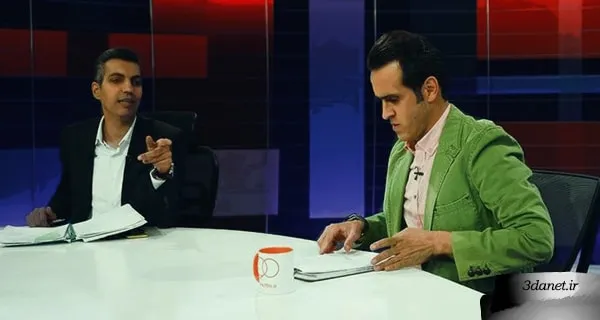
The televised debate between Ali Karimi and Mohammad Reza Saket (video of this debate), the current Secretary-General of the Football Federation, on the television program Navad contained many noteworthy points from the perspective of logic and ethics. Given the reflection of this televised debate in the virtual space and the reactions and stances taken by many individuals and figures towards it, I intend to point out a matter in this regard. The author believes that the public's empathy with Ali Karimi and their greater acceptance of his words and claims compared to the opposing side is rooted more in the public's prior mental image of Ali Karimi's character as a highly popular, courageous, and down-to-earth player, in comparison to Mr. Saket as a representative of a powerful, governmental institution; in other words, the following two factors were highly influential in the type of judgment made by the television viewers of this program:
A. Ali Karimi's popularity;
If we were to briefly and generally evaluate Ali Karimi's personality traits in his sporting and social life, it would be clear to everyone that Ali Karimi, both during his playing days and afterward, has always possessed a free-spirited, independent, outspoken, and courageous character, and in interviews and social behaviors, he has usually tried to react frankly and courageously in pursuit of justice. This approach of Ali Karimi in his social life, in addition to his unique footballing attributes in the past, has further increased his popularity in the public mind.
B. The odiousness of government managers under current conditions;
In general, Mohammad Reza Saket's spoken discourse is the specific discourse of some government managers, resorting to value-laden slogans that each of us has usually encountered either on national media or directly. In this type of spoken discourse, the individual in question, whether in the position of making a claim or defending one, uses their skill in rhetoric and resorts to fallacies such as appeals to emotion, blocking the path of reasoning, demagoguery, denial, resorting to red herrings, etc., to influence the audience and ultimately tries to assert their claim.
This is while, according to ethical principles and the science of logic, the criterion for judging between two individuals in a debate should be the manner of reasoning of each side and the extent to which the evidence and documentation presented support each claim; that is, precisely what was absent both in Ali Karimi's approach to making his claims and criticisms of the Football Federation and in Mohammad Reza Saket's responses.
In fact, in this debate, on one hand, Ali Karimi merely presented his criticisms without providing sufficient documentation and evidence (and this was while Ali Karimi's specific spoken discourse and tone also added to the disarray and non-reasoned nature of his claims), and on the other hand, Mohammad Reza Saket, who, unlike Ali Karimi, both possessed better oratory skills and was more proficient in the knowledge of fallacies, skillfully and masterfully (and with commendable calm in a controversial debate!) tried to evade the barrage of Ali Karimi's critical attacks.
The point I intend to emphasize in this note is that the criterion which should be the basis for judgment between two sides in a debate—namely, a logical approach based on sufficient evidence and documentation—was the great absentee in this debate. Instead, the viewers' prior mental image of each of the two sides, and the political and economic feedback resulting from the performance of managers and officials under such conditions, was the main and determining factor for judgment.
Currently, our Iranian society finds itself in conditions where news heard about astronomical embezzlements and the existence of extensive rent-seeking has made the public mentality worried, astonished, and highly cynical. However, such a reality should not lead to the conclusion that we, upon hearing any claim attributing embezzlement and rent-seeking to an individual, individuals, or institutions, should be quickly convinced and, empathetically and without citing sufficient evidence and documentation, beat the drum of their scandal.
.
.
Judgment by What Standard?!
Author: Mohammad Reza Vaez Shahrestani
Philosophy Researcher, University of Bonn, Germany
.
.





Discussion0 comments
No comments yet; let yours be the first voice.