Philosophy
The Moral Dignity of the Authentic Life
The word 'authenticity' carries a positive emotional charge, and existentialist philosophers regard it as a cardinal human virtue. The common thread across its uses is being honest with oneself, such that the authentic person is wholly committed to their self-chosen ideal.
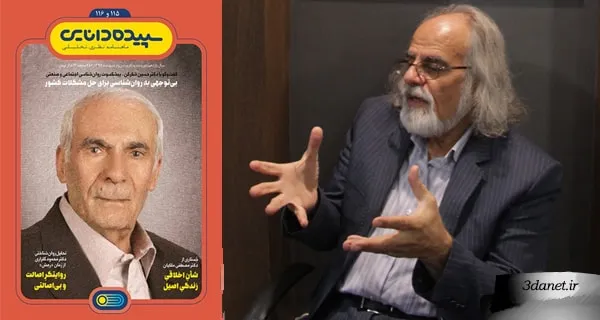
There is no doubt that the two words “authenticity” and “authentic” are, to some extent, marked by both ambiguity in usage and vagueness in usage; but there is also no doubt that both carry a positive emotional charge and are, fundamentally, considered evaluative terms. In this essay, an attempt is made to: first, enumerate and distinguish the most important usages of the word “authenticity” (and, consequently and naturally, the word “authentic”) and to resolve, as far as possible, the vagueness of each of those usages; and second, to show what benefit/s and necessity/ies authenticity possesses in each of its usages that have become the origin of its moral value, to the extent that existentialist philosophers have considered it the sole virtue, or at least the principal virtue of the human being. The term “authenticity,” in philosophical and ethical works, has at least five different usages. One could say that these five usages are five different meanings of this term. However, it might be said that these various usages share a common aspect, in the sense that they are all different types or instances of one thing; and that thing consists of being honest with oneself or being faithful and true to oneself; as if in every human being there is an entity or thing or object or essence, called the “self,” with which a person can be dishonest and deceitful, just as one can be dishonest and deceitful with others, and, just as one betrays others, one can also betray that self. A person’s dealings with their self are not much different from their dealings with other human beings; just as I can behave honestly/dishonestly with you and be faithful/treacherous toward you, I can also behave honestly/dishonestly with my self and be faithful/treacherous toward my self.
On this basis, one who is honest with their self and is faithful and remains faithful to their self possesses authenticity, and they and their life can be considered authentic; conversely, one who is dishonest with their self and is not faithful and does not remain faithful to their self lacks authenticity, and they and their life cannot be considered authentic. In my opinion, it is more accurate to consider the term “authenticity” not as having five meanings, but rather as having one meaning. If this opinion of mine is correct, then one could say that each of the various usages of the term “authenticity” in philosophical and ethical works is, in fact, one type or one instance of the types of instances of authenticity, which one group of philosophers has deemed to be the sole type or sole instance of authenticity. In that case, it must be said that the term “authenticity” has only one, albeit vague, meaning, and that is honesty with oneself or faithfulness to oneself, and this single meaning has many types or instances, of which each group of philosophers considers only one of those types or instances to be the sole type or instance of that single meaning. In any case, whether we consider “authenticity” to have at least five different meanings or consider it to have a single meaning possessing at least five types or instances, it can be said that, in philosophical and ethical works, we encounter at least these five usages of this term. Let me clarify here that these usages are the most important usages, and not all the usages of this term. Although, again, in my opinion, each of the other usages of this term can be subsumed under one of these very five usages. And now, those five usages:
1) Authenticity in the sense of (a strenuous effort at) full-fledged commitment to a self-chosen ideal:
The authentic person is one who, not out of deference to, emulation of, assimilation to, or imitation of another or others, but rather, in a wholly spontaneous manner, has chosen an ideal and, in practice, has in no way relinquished that ideal. That is, no intimidation or threat, no enticement or glad tidings, and no social or external attraction or repulsion has had any effect upon him or prevented him from advancing on the path toward that ideal. Since the ideal is self-chosen, that is, it has emerged in a manner entirely welling up from within, it is a requirement of the person's own essence, and therefore, any disregard for it or opposition to it causes the person to suffer inner division or rupture, and to avoid this division or rupture there is no recourse but resistance against threats, enticements, attractions, and repulsions. The attractiveness of the ideal is such that if the cost of acquiring and/or preserving and/or increasing wealth, power, fame, respect, reputation, and popularity were the relinquishment of the ideal, the authentic person would not bear such a heavy cost and would give up the gift of each of these six social and external attractions and desirables. In the eyes of the authentic person, the worth and value of nothing is as great as the worth and value of attaining the ideal, and therefore, in the calculation of cost and benefit, nothing is equivalent to or equal in weight to attaining the ideal, let alone surpassing it so that attaining the ideal could be sacrificed at its feet. In reality, sacrificing the attainment of the ideal for the sake of reaching anything else is moving away from oneself to draw closer to what is not oneself. Perhaps this is what is meant by
4) Resistance to all obstacles to a full-fledged commitment to one’s self-chosen ideal is desirable or, in a more accessible and explicit formulation, a self-chosen ideal, by the mere fact of being self-chosen, is a correct ideal and enjoys such a degree of correctness that one must fight any obstacle in the way of its attainment. Is every self-chosen ideal correct and right? Or is being self-chosen a necessary condition for the obligatoriness of pursuing an ideal and not a sufficient condition for this obligatoriness, meaning that for the pursuit of an ideal to be obligatory, that ideal must be both self-chosen and also possess another condition or conditions? If these presuppositions are true, one can say that authenticity in this sense possesses moral value and that a human being is morally obliged to live an authentic life, because both existential integrity and honesty are among the deep needs of the human psyche, and satisfying any need—whether physical, mental, or psychological—is morally necessary. (Pay attention to the very important distinction between need and desire: satisfying every need is morally necessary, but satisfying every desire is not morally necessary. Some desires must be satisfied; some may or may not be satisfied; and some must not be satisfied).
2) Authenticity as the exclusive turning of attention inward to discover the real and true self, and complete commitment to the guidance of that “self”:
Proponents of this meaning of authenticity believe that social life—that is, commitment to social conventions, customs, traditions, and habits of society, social roles, and occupation and profession—has a destructive effect on the human individual. These commitments turn the human individual into one of the cogs and gears of society and, for this reason, are, of course, unavoidably necessary for the administration of social life. If these commitments did not exist, the train of social life would undoubtedly come to a halt and the fabric of society would unravel. To the very extent that a person accepts the roles that society assigns to them and performs and executes them in the best possible manner, they keep the structure of society upright and stable and facilitate the functions of social life; but, to the very same extent, they lose or forfeit themselves. The more a person’s membership in society and social groups is consolidated and strengthened, the more their individuality—that is, their selfhood and uniqueness—becomes shakier and weaker. Society gains strength and power from the dissolution and weakness of the individual. Whatever benefits society is to the detriment of the individual; and whatever benefits the individual is to the detriment of society. In this conflict of interests and contradiction of benefits between social life and personal individuation, one must, of course, not abandon the side of personal individuation and must not fear relinquishing social life. To do this, there is no alternative but for the human being to turn their attention exclusively inward and, through honest, diligent, and ceaseless introspection and self-examination, attain self-knowledge—that is, to discover their real and true “self,” which is buried beneath all the fake and false “selves” resulting from social role-playing, and to cherish it as the sole guide and roadmap for life. To ask the way of life from it, and from it alone, and to listen to its guidance, and to its guidance alone. Complete commitment to the promptings and dictates of this true “self” provides the correct human life. The authentic human being is one who turns their back on society, turns toward their interior, attains the discovery of their true “self” through exploration in the inner realm, takes this “self” as a guide, and follows in its wake. Authenticity in this sense borders on individuality and individuation, that is, on the view that instead of trying to resemble and draw near to others and cultivating the aspects of one’s similarity to other human beings, one must strive to find the aspect/aspects of one’s uniqueness, incomparability, and singularity and to actualize all of one’s specific potentialities. According to this view, the universe in general and the human world in particular resemble a puzzle that is so designed and constructed that none of its spaces is exactly like any other space, and each of us human beings is a piece of that puzzle that belongs to one, and only one, of those spaces and must earnestly seek to find their own exclusive space in order to settle and find peace in it; and if they do not seek or find their own specific space, no matter how much they alter, add to, subtract from, refine, and adorn themselves in order to be able to fit into another space and settle and find peace, it is of no use, meaning that they will not attain a life accompanied by peace, contentment, and happiness.
Authenticity, in this sense, has at least seven important presuppositions:
1) There is a real and true “self,” as a single and stable substance, within every human being. What if, in the inner realm, no stable substance exists, or more than one stable substance exists?
2) The real and true “self” is not a product of social life. If the real and true “self” is also among the artifacts and creations of social life, it would be subject to the same pessimism that was extended to all the exigencies of social life. Moreover, in that case, following the guidance of the “self” would in fact be following the promptings of society.
3) The real and true “self” is knowable and discoverable. If this “self” is among those entities that epistemologists deem unknowable and beyond the scope of human knowledge, what are we to do?
4) The way/ways of self-reflection, self-exploration, and self-knowledge are known and accessible. Something may be, theoretically and in principle, knowable, but because the way to know it is not yet known or accessible, it cannot, practically and at present, be known.
5) The guidance of the real and true “self” possesses validity and authority. What reason/reasons do we have that the valuations and recommendations of this “self” are true, correct, and right? And the perhaps more important question: who or what provides us with the reason/reasons adduced for the truth, correctness, and rightness of these valuations and recommendations? That “self” itself, or something other than it? If that “self” itself guarantees the truth, correctness, and rightness of these valuations and recommendations, we apparently face a circularity, like asking someone: “Are you truthful or not?”; and if something other than that “self” is the guarantor, what and who is that other? Could it be from the promptings of social life, which all our striving was aimed at avoiding?
6) Accepting the guidance of the real and true “self” and committing to its dictates will solve all of life’s problems and remove all difficulties. Even if the mere truth, correctness, and rightness of a set of guidance and dictates is a necessary condition for solving all problems and removing all difficulties, it is certainly not a sufficient condition. Besides, solving some problems and removing some difficulties is one thing, and solving all problems and removing all difficulties is another.
7) The exigencies and promptings of social life prevent a person from knowing the real and true “self” / or from actualizing their specific potentialities and talents. It might be said that all that has been said about the virtue and art of knowing the real and true “self” and taking it as a guide is true and right, but what has been said about the flaw and defect of social role-taking is not true and right. In other words, to turn toward the inner realm, it is necessary to turn our back on the outer realms. Among these seven presuppositions, the fifth presupposition, which, in a sense, indicates the goodness, purity, and sanctity of the real and true “self,” is the most worthy of reflection and pause, and is contrary to the views of figures like the philosopher Hobbes and the psychologist Freud. In any case, if these seven presuppositions are accepted, it can be said that a human being, morally speaking, not only has the right, but indeed the duty, to seek guidance from and follow their real and true “self.” Even from a prudential standpoint, when external nature is silent and mute regarding values and duties, and the valuations, recommendations, demands, and exigencies of society are also unacceptable and destructive, and there is a “self” whose promptings are directed only toward goodness and rectitude, what better course of action is there than to refer to this good, pure, and sacred “self”?
3) Authenticity in the sense of (strenuous effort in) acquiring ever greater knowledge and understanding of oneself, accepting one’s limitations, and cultivating one’s talents and capabilities:
According to proponents of this meaning, the cause of causes, or the sole cause, or the greatest cause of human suffering and the infliction of suffering, is self-ignorance. Self-ignorance, here, means not knowing the scope and limits of one's knowledge and abilities. The more and better a person knows themselves, the more and better they know both the scope and the limits of their knowledge and abilities, and, consequently, in interacting with existence/the world/nature, that is, when behaving toward themselves, other humans, and other beings, they both choose their goals appropriately according to the scope and limits of their abilities, and, in order to achieve those goals, resort to means of which they have sufficient and adequate knowledge and know can play the role of means, and do not reach out toward things which, by virtue of the limits of their knowledge, they do not know whether they can be good and useful means for their goals or not. The probability of such a person's success in their interactions with their surrounding environment, that is, the probability of achieving their goals, is naturally very high, because they neither choose goals for which they lack the necessary ability to achieve, nor do they reach for means whose usefulness they lack sufficient knowledge of. Therefore, the probability of such a person's contentment, satisfaction, pleasure, and happiness is high. Conversely, someone who does not know the scope and limits of their abilities, either, because they consider themselves less capable than they are, resigns themselves to small and petty goals and contents themselves, or, because they consider themselves more capable than they are, sets their sights on grand and great goals that they can never achieve. Likewise, someone who does not know the scope and limits of their knowledge, either, because they consider themselves more ignorant than they are, does not reach out for all the means whose usefulness they are, in fact, aware of, or, because they consider themselves more knowledgeable than they are, resorts to things that are, in reality, useless and whose usefulness they are deluded about. It goes without saying that each of these two individuals will, with very high probability, not find a life accompanied by contentment, pleasure, and happiness, let alone someone who combines the flaws of both, that is, is neither aware of the scope and limits of their abilities nor of the scope and limits of their knowledge. In any case, the almost inevitable and certain fate of such people is failure, discontent, and bitterness; and this means suffering. On the other hand, such people, instead of recognizing their self-ignorance as the cause and responsible agent for their failures and sufferings, consider others to be the cause and culprit, and, as a result of this erroneous assumption, become filled with anger, malice, vengefulness, and hatred toward others, and these negative feelings lead to actions that harass and harm others; this means inflicting suffering.
The authentic person is someone who is constantly seeking to know themselves more and to understand themselves more, so that, as a result, they discover and accept their theoretical and practical limitations, that is, they are content with them, and also discover and cultivate the scopes of their knowledge and abilities, that is, they actualize and realize their talents and capabilities. Authenticity, in this sense, is nothing but the exclusive focus on self-actualization or self-realization or self-fulfillment, which is particularly emphasized in existential psychology and humanistic psychology generally, and in the works of Abraham Maslow, the American psychologist, specifically. In more accessible terms, this authenticity is, in fact, a great dedication to self-knowledge so that a person both knows their own worth and does not overstep their bounds; neither stretches their legs beyond their own rug, nor fails to realize that their own rug lacks nothing. Authenticity, in this sense, has at least five important presuppositions:
1) Self-knowledge is possible, meaning the self is something knowable. What if the self is not knowable, either by and for oneself or by and for another, or what if the journey of self-knowledge is an endless journey that never reaches its destination?
2) Self-knowledge is desirable, meaning it is at least a necessary or sufficient condition for a life accompanied by contentment, satisfaction, pleasure, and happiness, if it is not the necessary and sufficient condition for such a life. What if this desirable life can also be attained without self-knowledge, and cannot be attained with it?
3) Either no limitation is removable, or irremovable limitations are distinguishable from removable ones. If a limitation is removable, why should it be accepted? And if removable limitations cannot be distinguished from irremovable ones, which limitation should be accepted and which should be rejected?
4) All talents and capacities must, in principle, be cultivated. If it is the case that human talents and capacities can be divided into positive and negative categories—which entails that one category must be cultivated and developed while the other must be restrained and weakened—if actualizing some of a person's potentialities is not only unhelpful but, indeed, harmful to themselves and/or others, and if morality does not permit the actualization and realization of all human faculties and capabilities, what then? In that case, would not self-actualization, self-realization, and self-flourishing turn a person into a dangerous, terrifying, destructive, and monstrous being?
5) Suffering is a necessary and sufficient condition for inflicting suffering. Is it impossible for someone, in life, not to suffer themselves yet to inflict suffering on others (i.e., suffering is not a necessary condition for inflicting suffering), or to suffer themselves yet not inflict suffering on others (i.e., suffering is not a sufficient condition for inflicting suffering)?
It seems one can say that the endeavor to gain ever greater knowledge and understanding of oneself is our moral right and, indeed, our moral duty. Accepting unavoidable limitations (not all limitations) is also, morally, our right and, indeed, our duty. However, cultivating all talents and capacities and actualizing all potentialities is not only not our moral duty, but it is not our moral right. On the contrary, our moral duty is to distinguish between the two categories of talents, capacities, and potentialities, and to strive to cultivate and actualize one of those categories while withering and preventing the actualization of the other.
4) Authenticity as being solely in one's own thought, both in the direction of self-perfection and in the direction of expressing the self in the process of perfection:
According to the proponents of this meaning of authenticity, a human being, throughout their life, has no commitment to anything except the commitment to the perfection of their own existence/character/personality and the expression of this existence/character/personality in the process of perfection. The individual is never, in any place or under any circumstances, committed (or has been committed) to changing the world or the universe or the course of history, or to changing the beliefs, feelings, emotions, and desires of other human beings, or to reforming society, or to combating the ignorance, error, or delusions of others, or to fighting corruption and oppression, or to struggling against ugliness and filth, or to expounding and proclaiming the truth, or to creating and establishing justice, or to reducing the suffering and diminishing the pain and afflictions of others, or to serving/helping their fellow human beings, or to giving freely to others, or to safeguarding the feelings and emotions of others, or to following public opinion, or to harmonizing with the spirit of the age, or to the value judgments of others, or to confronting the deceptions and violence of rulers and statesmen, or to opposing exploitation or colonialism, or to fighting a corrupt political system or unhealthy economic relations, or to avoiding causing offense to others, or to conforming with the crowd, or to refraining from dissent, or to anything else whatsoever. The individual is only committed (has been committed) to, at every moment and in whatever state and condition they are in, reforming themselves ever more and more deeply and advancing on the path of personal perfection-seeking and perfection-attainment, and, without the slightest attention to anything else, to manifesting and revealing only that 'self' which is in the process of reform and perfection. The human being's goal must be exclusively and purely this. There is no doubt that someone whose sole and unique goal is this self-reform and self-perfection will be led toward a lifestyle and a mode of conduct whose result will be nothing other than the betterment of the affairs, circumstances, conditions, and times of others. But what is important is that this betterment can only be the result of the individual's lifestyle and mode of conduct, and it must never be the goal of their lifestyle and mode of conduct. A human being who is like this is an authentic human being. The authentic human being thinks only of themselves and is preoccupied with their own (inner) affairs, circumstances, conditions, and times. They are constantly in a race with themselves, and, therefore, all their striving and effort is directed toward overtaking themselves, that is, for the 'self' of each moment to be more reformed and more complete than the 'self' of the moment before. Their goal is nothing other than this, and, of course, the closer they come to this goal of self-perfection, the result of this drawing closer is also the bestowal of good upon others. But they themselves do not think of this bestowal of good upon others and are not preoccupied with it. They want to realize and manifest goodness within themselves, not to have done good to others. Being good and living well is their goal, and the betterment and the receipt of good by others is the result of their mode of being and living. As an example, consider a teacher who, in this sense of authenticity, is an authentic human being and thinks only of themselves. Such a teacher considers it contrary to the direction of their personal perfection-seeking to undertake teaching a subject in which they lack mastery and command, or not to perform the teaching they have undertaken as well as they can, or to leave the class session later than scheduled, or to spend, and in fact waste, the students' time on matters other than education, or to be lenient and negligent in the face of students' underperformance or misconduct, or to abandon fairness and justice in teaching, or in administering exams, or in grading, or, when answering a question whose answer they do not know, to spout nonsense and ramble incoherently, or not to seek to learn what they do not know, or to behave arrogantly toward students, or to be insensitive to the students' regression or lack of progress. It goes without saying that from such a teacher, their students directly, and the whole of society indirectly, receive nothing but good and beneficence. The goal of this teacher is only self-reform, but the result of their work, in addition to their own betterment, is also the bestowal of good and beneficence upon others. The authentic human being does not fight evil; they put goodness on display.
در فهم عرفی ما همه ی کارهایی که، در بند پیشین، کارهایی تلقی شدند که انسان اصیل خود را نسبت به آن ها متعهد نمی داند کارهایی اخلاقی محسوب می شوند. از این رو به این اعتبار، می توان گفت که انسان اصیل در پی اخلاقی زیستن نیست، و این گفته البته، فقط به این معنا است که اخلاق اجتماعی یا جنبه اجتماعی اخلاق، یعنی خدمت و/ یا کمک به دیگران، کاستن از درد و رنج دیگران، و ایثار و از خودگذشتگی در قاموس او نیست. انسان اصیل از خودگذشته نیست؛ سهل است؛ فقط پاس خود را می دارد. خود را به هیچ روی، مسئول وضع نابسامان درون و بیرون آدمیان نمی داند تا احساس وظیفه کند که آن را در جهت سامان بخشی تغییر دهد و اصلاح کند. از این گذشته، از توانایی خود، نیز، ارزیابی درست دارد و مید اند که سامان بخشی به کار و بار عالم و آدم از حیطه ی مقدورات او بسی فراتر است. نه به این خودبزرگ بینی دچار است که گمان کند که در نابسامانی عالم و آدم او نقش و سهم داشته است و نه به این خودبزرگ بینی که بر این گمان باشد که می تواند وضع عالم و آدم را بسامان آورد. واقع بین و خوددوست است. برای خود در پهنه بیکران هستی، بیش از حجره ای سراغ ندارد؛ اما به پیراستگی، آراستگی و روشنی همین حجره ی حقیر بیش از هر چیز اهمیت می دهد. برای جهان هیچ است، و برای خود اش همه چیز است. اصالت، به این معنا تعبیر دیگری است از کمال جویی اخلاقی (moral perfectionism)، یعنی نظریه ای اخلاقی دال بر این که آدمی از لحاظ اخلاقی، فقط به استکمال خود اش الزام دارد و باید ملتزم باشد. بر طبق این نظریه، اخلاق فقط ناظر به ارتباط انسان با خود اش است و با ارتباطات انسان با دیگر انسان ها و سایر موجودات کاری ندارد.
اصالت، به این معنا، لااقل پنج پیش فرض مهم دارد:
1) تغییر و اصلاح خود در دایره ی مقدورات آدمی هست. اگر انسان نتواند خود را تغییر دهد و اصلاح کند نمی توان این تغییر و اصلاح را به او توصیه و یا از او مطالبه کرد.
2) تغییر و اصلاح هیچ موجودی غیر خود در وسع آدمی نیست. اگر انسان بتواند غیر خود را تغییر دهد و اصلاح کند توصیه به بی اعتنایی به وضع و حال اغیار، توجیه اخلاقی ای نمی تواند داشت.
3) سمت و سوی صحیح تغییر و اصلاح خود به کمال رساندن خود است، نه به رساندن منفعتی دیگر، مانند لذت، به خود. حتی اگر بپذیریم که آدمی جز در قبال خود وظیفه ای اخلاقی ندارد آیا نمی شود که آن وظیفه اخلاقی استکمال خود نباشد و چیزی دیگر، مانند کاهش درد و رنج یا افزایش لذت یا افزایش معرفت یا افزایش قدرت خود، باشد؟
4) معلوم است که کمال آدمی، مفهوماً چیست و مصداقاً به چیست. اگر کسی مدعی شود که آدمی نه می تواند کمال خود را ایضاح مفهومی کند و نه تشخیص مصداقی دهد چه کنیم؟
5) نتیجه ی زندگی و رفتار کمال جویانه ی آدمی رسیدن خیر و نفع به دیگران است یا، دست کم، ورود شر و ضرر به حیات دیگران نیست.
به گمان نگارنده، پیش فرض های پنج گانه اصالت، به این معنا، پذیرفتنی اند و به تعبیر دیگر، کمال جویی اخلاقی قابل دفاع است. در عین حال می توان هر پنج پیش فرض پیش گفته را پذیرفت ولی از پذیرش انحصار احکام و قواعد اخلاقی در احکام و قواعد ناظر به ارتباط انسان با خود اش سرباز زد و بر این رفت که احکام و قواعد اخلاقی به همه ی انواع ارتباطات آدمی، اعم از ارتباط با خود، ارتباط با انسان های دیگر، و ارتباط با موجودات غیر انسانی، ناظر اند. نهایت آن که وظیفه اخلاقی انسان در قبال خود اش به کمال رساندن خود است و وظیفه اخلاقی اش در قبال سایر موجودات نه به کمال رساندن شان (که مقدور آدمی نیست)، بل، چیزی دیگر مانند کاهش الم و/ یا افزایش لذت آنها است؛ و البته به انجام رساندن وظائف اخلاقی نسبت به سایر موجودات شرط لازم به انجام رساندن وظیفه اخلاقی نسبت به خود است.
5) اصالت، به معنای ترجیح قاطع رضایت درونی بر موفقیت های بیرونی:
The aim of every agent in performing any voluntary act is either to attain an external, social success—such as wealth, power, fame, respect, reputation, and popularity—or to reach a desirable inner, individual state—such as tranquility, happiness, pleasure, and contentment. Needless to say, for most human beings, both external, social successes and desirable inner, individual states are appealing and attractive. However, since these two sets of appealing and attractive things, if taken as goals, often come into conflict with one another, human beings cannot avoid sometimes preferring an external success over a desirable inner state, and at other times, conversely, preferring a desirable inner state over an external success. Now, if someone, as far as possible and always, prefers external successes over desirable inner states, we refer to them as a 'person of success'; and if someone, again as far as possible and always, prefers desirable inner states over external successes, we refer to them as a 'person of contentment.' Those who are people of success, firstly, attach great value to wealth, or power, or fame, or respect, or reputation, or popularity, or two of these, or all of them; secondly, they always see themselves theoretically in a state of comparison and practically in a state of competition with others, and the basis of their comparison and competition with others is nothing but one, two, or several of those aforementioned valuable things; thirdly, they measure the quality of their lives by the criterion of the degree of success or failure in those competitions, and consequently, they do not consider the quality of their lives to be dependent solely on their own deeds and possessions, but also contingent upon the deeds and possessions of others, just as in any competition, the standing and score of a competitor naturally depends not only on what they themselves do and have, but also on what their rivals do and have. Those who are people of contentment, firstly, attach abundant value not to social desirables, but to individual psychological desirables, that is, to inner states such as tranquility, happiness, pleasure, and contentment; secondly, they always find themselves theoretically in a state of comparison and practically in a state of competition with themselves, and more precisely, with their former 'selves,' especially with their 'self' of the previous moment, and the aspect from which they see themselves in comparison or competition with their former self is also only one, two, or several of those individual psychological desirables; and thirdly, they measure the quality of their lives by the criterion of how far ahead or behind they are compared to their former self, that is, by the criterion of their psychological progress or regress, and consequently, they consider the quality of their lives to be dependent on their own deeds, possessions, and especially, their own states of being, and therefore they constantly keep an eye on themselves, rather than having one eye on themselves and one eye on others. People of contentment have no business with others; they neither want to get ahead of anyone nor want to avoid falling behind anyone. They determine their standing and score based on a comparison of their present self with their past self/selves.
The authentic human being, in this sense, is someone who is a person of contentment, not a person of success. They are constantly journeying and wayfaring within themselves; they converse with themselves; they bring themselves to the table of trial and reckoning; they make covenants and pacts with themselves and set rules and principles for themselves; and the ruin or flourishing of their inner world matters to them, not their external appearances, not their social achievements, and not the assessments and value judgments of others about them. Their self-image, that is, the conception they have of themselves, is important and worthy of regard to them, not the conceptions that others have of them.
Authenticity, in this sense, has at least seven important presuppositions:
1) All voluntary human acts are ultimately egoistic. That is, they are performed with the aim of bringing some benefit to the self, whether that benefit is of the type of contentment or of the type of success. Is it not possible for a voluntary act to be altruistic, that is, performed with the aim of bringing benefit to another?
2) Egoistic aims are confined to contentment or success. Is it not possible for a voluntary, egoistic act to be performed neither with the aim of attaining contentment nor with the aim of gaining success? Are egoistic aims necessarily directed either at inner being or at outer appearance?
3) Combining the two aims of attaining contentment and gaining success is not always possible. If this combination were always possible, one could be both a person of contentment and a person of success.
4- Not comparing oneself with others and/or not competing with others is possible. But what if our mental-psychological structure is such that we cannot escape comparison and competition?
5) Not comparing and/or not competing with others is desirable. But what if comparison and competition with others are beneficial or even necessary? Is every comparison and competition undesirable, or is it undesirable only when the aspect of comparison and the direction of competition are wealth, power, fame, respect, reputation, popularity, or combinations thereof, and is it not undesirable when the aspect of comparison and the direction of competition are other things such as truth-seeking, benevolence, the pursuit of beauty, knowledge, well-being, and self-actualization?
6) Comparing and/or competing one's present self with one's former "self"/"selves" is desirable. Could it be that even this comparison and/or competition is not desirable?
7) The desirable aspect of comparison and direction of competition of one's present self with one's former "self"/"selves" is clear: peace, joy, pleasure, and contentment. Why should we not compare and compete with ourselves in other thing/things?
The author of these lines denies the first presupposition of this meaning of authenticity, reflects upon and doubts the second presupposition, and views the other presuppositions with acceptance. However, in any case, there is no conclusive reason for the moral superiority of a contentment-seeking orientation over a success-seeking orientation, even though he himself believes in this superiority. All of this aside, what is beyond doubt for me is the prudential superiority of a contentment orientation over a success orientation. Meaning that those who are after success will never attain a pleasant life, whereas those who are after contentment can most likely attain such a life.
Reflection on the five meanings of "authenticity" (and "authentic") reveals that all these meanings share certain specific requirements; that is, a person who is authentic in any one of these five senses shares commonalities with all those who are authentic in one of the other four senses. The most important of these commonalities are that:
1) They have no unexamined life, meaning they accept nothing without personal thought, reflection, and assessment, and do not consider mere public approval of an opinion or action as justification for it in any way. They consider "Follow the path that the travelers have trod" to be the worst advice one can give to anyone.
2) The attractions, temptations, and seductions of society and social life do not work on them and cannot divert them from their chosen path.
No social encouragement, persuasion, enticement, or glad tidings have the power to overcome their motivational system. Threats, warnings, intimidation, and admonition also lack such power.
3) As a result, they in no way conform to the crowd and do not join the ranks of the human herd that moves along well-trodden and beaten paths; although they are never merely contrarian either, meaning they do not take pleasure in sheer opposition to others.
4) They are completely indifferent to the value judgments of others about themselves; neither positive, laudatory value judgments make them happy, nor do negative, reproachful value judgments make them sorrowful. The value judgments of others have not the slightest influence on changing their destination, course, or path and are of no effect. They do not consider the minds and souls of others as the correct scale for measuring their work and life. Their scale is within themselves.
5) They are not influenced by customs, conventions, and social habits and are fundamentally, if not anti-tradition, at least tradition-averse.
6) They possess a personality and character that is free and liberated from all social constraints, conditions, and bonds. As a result, they enjoy the utmost sincerity in facing others, for it is fear and hope that taint a person's sincerity with impurities. And they have no expectations or demands from anyone, because they assess the cost of having expectations and demands from others as heavy—a cost that is nothing but submitting to the chains and fetters of society.
The value of these very commonalities among all authentic human beings testifies that if authenticity is not the sole moral virtue or the greatest moral virtue of the human being, it is, at any rate, one of the greatest moral virtues. May we not be deprived of this great and rare virtue!
.
.
The Moral Dignity of the Authentic Life
Source: Sepideh Danayi Monthly, Farvardin and Ordibehesht 1397
Typing and editing: Ms. Samira Rahimi
.
.







.webp)


.webp)
Discussion4 comments
با درود خدمت استاد ارجمند با خواندن اين مقاله گران بها متوجه شدم كه استاد ملكيان بيشتر با خوانش چهارم اصالت نسبت بهتري برقرار ميكنند كه من را ياد آن جمله دلوز انداخت كه ميگويد يك زندگي غلط را نميتوان درست زيست. كه بنظر من بهترين نقد اين رويكرد به زندگي اصيل را دارد.
با سلام و عرض سپاسگزاری خدمت استاد بزرگوار که با انتشار مقاله شون که جان و روان ما رو سبز کردند... سوالم این است که آیا انسانهایی که به لحاظ روانشناختی برونگرا هستند هم کشش و ظرفیت این رو دارند که طبق تعاریف گفته شده، اصیل زندگی کنند؟ چون بنظر میاد این افراد از خلوت با خود و درون نگری با خود دچار ناراحتی و خستگی می شوند و به قولی شارژ آنها زود خالی میشود.
بخش غیراکتسابی و غیرفرهنگی هویت ما را ژنگان ما می سازد. اکنون پرسش این است که آیا منظور از اصالت نزد اگزیستانسیالیست ها ، رومانتیک ها و آقای ملکیان ، بیان همه ی آن ژن هاست؟ و اگر منظورشان اینست ، پس چرا به ژن ها باید آری بگوییم ؟ خوب آن ها هم محصول اجبار هستند. چرا باید از اجبار زیستی تقدیر کرد ولی از اجبار فرهنگی خیر؟
ضمن تقدیر و سپاس بسیار از جناب استاد ملکیان؛ به عقیده این بنده، خوبست که استاد در مساعی بلیغ و عالی خود در ایضاح نظری موضوعات اخلاقی و روانشناختی، برای ملموس تر شدن و کاربردی تر شدن موارد/موضوعات مورد بحث خود، اشاراتی به مصادیق عینی بارز در هر مورد/موضوع داشته باشند. همینطور در موارد آزموده از سوی خود راهکارهای عملی و کاربستی و تجویزی خود را نیز ارائه بفرمایند. با این تکمله ها غنای مباحث و حظ مخاطبین ایشان دو چندان خواهد شد.