Philosophy
Mostafa Malekian's Lecture: 'Death and a Reflection on the Concept of Friendship (Love)'
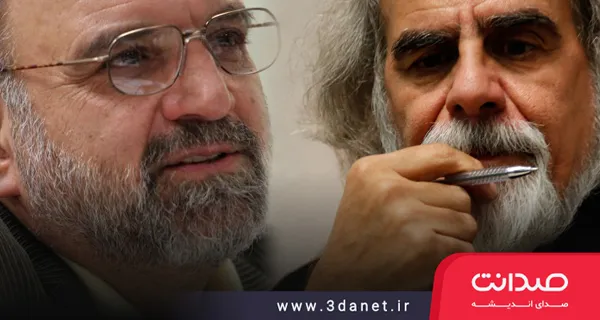
In his lecture “Death and a Reflection on the Concept of Friendship (Love),” Mostafa Malekian enumerates fourteen distinct meanings of friendship, distinguishing cooperation, empathy, and benevolence from one another. A report from his talk at the commemoration ceremony for Mohammad Razavi.

Types of Friendship [Love]: We must distinguish between various phenomena concerning the concept of friendship, even though they are all referred to by a single term in the Persian language.
Different Meanings of the Term "Friendship" [Love]: (14 cases)
1) God's friendship towards all else besides Himself, or towards Himself
2) The love [friendship] of all parts of existence for one another (the view of mystics, especially Stoic-inclined mystics): Love and existence here have a kind of parallelism and coextensiveness. In the view of these mystics, not only does love flow and permeate through existence, but "love is the origin of existence."
3) Cooperation: In "cooperation," you and I are in the service of a single person, a single ideal, or a single goal, and therefore we cooperate with one another.
4) Partnership or shared interests: Here, we actually consider a series of collective or individual social desiderata and partner together so that the desired outcome is achieved. Then, gradually, we realize that had the other person not been there, we would not have attained that desired outcome.
5) Blood friendship: (The least reflective friendship). These friendships are almost instinctual, and we suddenly find ourselves possessing this friendship.
6) Instrumental friendship: Named so because it arises from a psychological reality within us: when we receive a kindness from someone, affection for them naturally falls into our heart. This also applies to the future. That is, if an expectation of goodness towards us from someone in the future arises, to the same extent that this expectation intensifies within us, this friendship also intensifies.
7) Companionship or association: When a person turns inward, they see a series of things within themselves that they wish were in their being, and a series of things that are not in them but they also wish were in their being. As a result of these two characteristics, a person finds a companion or associate for themselves. Of course, companionship and association in this sense also require physical presence.
8) Friendship arising from sexual desire: whose cause and instigator is the satisfaction of the sexual instinct.
9) The combination of empathy and sympathy: If empathy and sympathy come together and we feel both of these towards someone, we say we are their friend. (I have empathy with you when I can put myself in your skin and look at the world through the window of your beliefs, and shape my feelings, emotions, and desires like yours. But in addition to this, if I also suffer pain and anguish from what causes you pain and anguish [sympathy], then to the extent that I have empathy and sympathy with you, I am your friend.)
10) Benevolence: Sometimes I lack the ability to put myself in other people's skin, yet I am nonetheless benevolent towards them, and although I have no conception of their situation, I hope that they attain goodness and well-being.
11) [Being crystalline]: The life experience of each of us tells us that I should not express all the opinions I hold. We only express a part of our opinions and do not convey all our feelings, emotions, and excitements to others. Upon entering society, we wear a mask and a persona. A friend, in this sense, is someone before whom we can be naked.
12) [Uniqueness in the direction of a benefit]: Someone is unique for us in the world. That is, I know someone in the world who is unique to me, and I do not turn my head towards another (in this friendship, there is a direction for substitutability. It is as if you have a benefit for me).
13) [Uniqueness without benefit]: (Close to the previous meaning of friendship) The friend simply "is," meaning it is only their being that matters. This is a very profound meaning in friendship.
14) Love (friendship) for ideals: In the deepest layers of our existence, there are things we pursue, which can be called ideals.
.
.
Mostafa Malekian | Commemoration Ceremony for Mohammad Razavi | 89/2/15 at the Institute for Knowledge and Research
.
.
Mostafa Malekian's Lecture: 'Death and a Reflection on the Concept of Friendship (Love)'
Video of the Lecture (Part One)
Video of the Lecture (Part Two)
Video of the Lecture (Part Three)
Download the audio of this session
.
.





Discussion0 comments
No comments yet; let yours be the first voice.