Philosophy
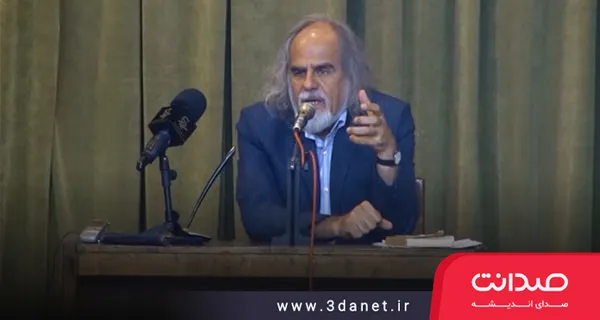
A Lecture by Mostafa Malekian on Medical Ethics
In his lecture “Medical Ethics,” Mostafa Malekian examines the key areas for becoming a specialist in the field. He delineates the boundaries between science, technique, art, and ideology, and clarifies the role of the humanities and research methodology.
At the outset, it must be said that there are two distinguishable categories. In this discussion, the first category will not be addressed.
The first category is: what knowledge and abilities must physicians who wish to observe medical ethics possess? In other words, a physician, in addition to their profession of practicing medicine, desires a theoretical and practical commitment to medical ethics, and to fulfill this desire, what knowledge and abilities must they have?
The second category is: when a person wishes to become a specialist in medical ethics, what knowledge and abilities must they possess? In the second category, there is no requirement that the person necessarily be a physician.
In fact, the aim of this discussion is to present a syllabus for medical ethics. The various topics in this discussion are as follows:
1) Demarcating Science, Technology, and Art:
Sometimes, a human being seeks knowledge for the sake of knowledge, and sometimes they seek to know in order to transform. When a human being pursues knowledge for the sake of knowledge, they are walking in the domain of science. But when a human being pursues knowledge for the sake of transformation, they have crossed the boundary of science. Now, if this human being desires this transformation for utility, they have entered the domain of technology, and if they do it for pleasure, they have stepped into the realm of art.
For example, when a human being builds a road through the middle of a forest, they carry out this transformation for utility. Now, if a human being undertakes change and transformation, not to make the subject useful, but to make it beautiful, their activity is artistic, and this beautification is for the sake of pleasure.
Science, which seeks knowing for the sake of knowing, is divided according to method into various branches, which are:
*The logical-mathematical method
*The philosophical method
*The empirical method (including both natural and human empirical sciences)
*The historical method
*The mystical method
*The literary-artistic method
Some also believe that there is another branch of sciences, called the religious sciences, such as jurisprudence, religious ethics, and theology.
In all these sciences, knowing is undertaken for the sake of knowing.
In technology, this knowledge obtained through the sciences is used to change something. The difference between a physician and a physiologist, anatomist, or neurologist is that the physician knows in order to transform their object, whereas in the other cases, knowledge alone is the aim. Medicine, with philosophical precision, is a technology; that is, it draws upon the knowledge obtained to bring the patient to recovery (transformation). Of course, when it is stated that medicine is a technology, no value judgment is being made. Similarly, the difference between a physicist and an engineer is that the physicist strives to know (knowledge for the sake of knowledge), but it is after this knowing that the engineer's work begins to effect change and transformation.
Management is also a technology. A specialist in management uses psychology, sociology, economics, statistics, and ethics in order to manage.
In art, too, the individual seeks change and transformation, but in the direction of beautification, not utility. Now, if this individual sees the world as ugly, they strive to make the world beautiful, and if they see the world as beautiful, they try to make it more beautiful. And this art itself is divided into written (literature) and non-written (dance, music, painting, sculpture, architecture, photography, theater, and cinema).
2) Demarcating Ideology from Science, Technology, and Art:
Ideology is other than science, technology, and art, and it makes no difference whether this ideology is religious or secular. Note that the word "other" is used, and there is no necessity for ideology to be in contradiction, opposition, or conflict with these three. Science, technology, art, and ideology interact with one another, but in any case, they are other than one another. It was mentioned earlier that the sciences of jurisprudence (fiqh) and theology (kalam) exist. These two are sciences, but religion itself is not a science. Religion is an ideology, and it must be noted that there is no positive or negative value judgment in this proposition.
3) Demarcation of the Human Sciences and Non-Human Sciences:
A human science is a science whose subject is the human being in terms of human specificities. The object of knowledge may be God or the natural world. Neither of these two, theology or natural science, is considered a human science.
If we know the human being in any form, is it a human science? No. Because a science like hematology also deals with the human being but is not among the human sciences, since blood is not specific to humans. The human sciences are sciences whose object of knowledge is the human being from the perspective of human specificities, specificities such as the human mind, the human psyche, human belief, human feelings, emotions, and passions.
The knowledge of the human being is distinguished from the knowledge of other beings due to the serious differences it has with them.
4) Demarcation of the Various Human Sciences
The boundaries of the various human sciences must be carefully considered. The knowledge of the human being is achieved through various methods.
* Philosophical Human Sciences: Looking at the human being from a philosophical perspective
* Empirical Human Sciences: Looking at the human being from an empirical perspective, such as sociology and economics.
* Historical Human Sciences: Looking at the human being from the perspective of history
* Mystical Human Sciences: Looking at the human being from a mystical perspective
* Religious and Faith-Based (Dogmatic) Human Sciences
There is a point here that some consider philosophy to be among the human sciences, and this is a mistake. Because only some branches of philosophy are among the human sciences, not all of philosophy. For example, when the nature of space or the nature of time is discussed in philosophy, the subject is not the human being. The most prominent branch of philosophy that is among the human sciences is epistemology, where the knowledge in question is human knowledge. Other branches such as ethics, philosophy of mind, and philosophy of language are also counted among the human sciences.
5) Methodology of Research in the Human Sciences
In the human sciences, not only research is conducted. In addition to research, there is also critique, defense, collaboration, negotiation, teaching, and creativity, all of which exist in all sciences. Therefore, in this discussion, the methodology of research is referred to, not the other activities carried out in science. The difference between research and other activities is that, at the outset, the answer to the question is not known.
The research method in science is the path we must traverse to find the answer to the question. In other words, the research method is the method of transforming unknowns into knowns.
Today, in Iranian universities, research methodology is not taught, and only a two-credit course titled "Research Writing Methods" is offered, which teaches students how to publish the results of their research in the form of an article, thesis, or book.
6) Philosophy of the Human Sciences
Here, the philosophical issues raised about the human sciences themselves are addressed. For instance, the question of whether the human sciences are possible to come into being or not is discussed. And if they do come into being, is their success possible or not?
If the human being has free will, how can their actions be predicted? How can a free being fundamentally be predicted? Can human behavior be predicted in sociology or psychology?
In the humanities, there are presuppositions that are subject to doubt or denial among philosophers of the humanities.
7) Research Methodology in the Philosophical Sciences
The research methodology in the philosophical sciences is discussed independently of the research methodology in the humanities, because ethics, insofar as it concerns the human being, requires the research methodology of the humanities, and insofar as it seeks to address the human being through a philosophical method, it requires the research methodology of the philosophical sciences.
In the empirical sciences, to find the answer to a question, the term "go and see" is used, in simple terms. In the historical sciences, the term "go and ask" is used. But in the philosophical sciences, one cannot say "go and see" or "go and ask." In the philosophical sciences, they say "sit and think." And here the problem arises of how a human being can, by thinking, speak about the human being in the external world. The researcher in the empirical sciences is in direct contact with the external world and observes, experiments on, and monitors it. In the historical sciences, the researcher proceeds by the method of transmission and ultimately reaches a person who had direct contact with the event in question. But in the philosophical sciences, the problem is how one can sit and think and utter a statement that also corresponds to the real world! This is where the importance of research methodology in the philosophical sciences becomes clear.
8) Philosophy of the Philosophical Sciences
Note that the philosophy of the philosophical sciences differs from the methodology of the philosophical sciences. The philosophy of the philosophical sciences engages in philosophical discussion about philosophy itself. Initially, one might imagine that there is a circularity here. In the philosophy of philosophy, the questions are such as: Does human reason alone have anything to say or not? And when different human beings say different things about the world, which statement should be accepted?
9) History of Ideas
A fundamental difference between the natural empirical sciences and other sciences is that if a specialist in the natural empirical sciences does not know the history and background of their science, no harm comes to their knowledge. For example, a physicist, chemist, and biologist can be ignorant of the history of their science yet still be a specialist in their field. But in the humanities, this is not the case. In the humanities, if the history of the science is not known, the science itself is not well learned either. Therefore, when an idea is addressed in the humanities, its origins, historical developments, opponents, and proponents must also be addressed, because knowing history in the humanities is a necessary condition for learning. For this reason, ideography, or the writing of ideas, has been proposed in the humanities.
10) Critical Thinking
Critical thinking is for weighing and evaluating the ideas learned by a student of the humanities. For if this critical thinking is absent, a person will buckle under the heavy burden of these ideas. Through critical thinking, a person examines the strengths and weaknesses of ideas.
It is said that al-Jahiz—one of the thinkers and Mu'tazilite theologians of Islam—used to pile his books on top of one another on four sides of his room. One day, he intended to pull a book out from under one of the columns of his books. When he pulled the book out, the other books collapsed upon him, and he died under the volume and weight of the books.
The death of al-Jahiz under his books is a historical event, but it can be used symbolically. For a person can also die under the avalanche of ideas. A person may know various opinions about a matter but not know how, or be unable, to take a position. For example, consider a person who is asked about the nature of time, and they recount the sayings of great figures on the nature of time. When they are asked to state their own opinion and cannot, they have, in fact, perished under the weight of these ideas.
In fact, the pruning of the history of ideas is carried out through critical thinking so that human beings can judge among ideas. And one of the most influential factors in the progress of the West has been and continues to be the teaching of critical thinking at various levels and in various disciplines; a human being must be able to judge among ideas and adopt a position.
11) Epistemology (the first philosophical science concerning the human being)
Epistemology is the first philosophical science concerning the human being, and knowing a portion of the discussions in epistemology is essential for a specialist in medical ethics.
12) Philosophy of Language
Language has various functions. The ancients believed that the sole function of language was the expression of one's inner thoughts, or the articulation of what is within the human being. This view of language became obsolete after Berkeley, and subsequently Wittgenstein and the later Wittgensteinians, and it was shown that the functions of language are far more numerous than the expression of inner thoughts. Berkeley, in a statement, says that the number of language's functions is so great that it is uncountable. Wittgenstein also held the view that the functions of language cannot be enumerated, and this uncountability is in a practical sense, not a mathematical one. Two philosophers of language, Austin and Searle (Austin's student), demonstrated some of the functions of language. For example, when a doctor speaks with a patient, they have the informative function in mind, but two other functions of language are also emerging. The role of language (ethical language or non-ethical language) is discussed in the philosophy of language.
13) Philosophy of Action
What causes an action to issue from a human being? What mechanism is activated within a human being that leads them to perform an action?
This action can be of the type of speech, deed, or body language. The question of what happens that a human being performs one of these three actions is discussed in the philosophy of action.
14) Philosophy of Mind
Many discussions in the philosophy of mind are needed in moral philosophy generally, and in medical ethics particularly. The most important discussion in the philosophy of mind arrives at the point that the human being is a psychosomatic unity, meaning the human body, mind, and soul are interwoven, networked into one another, intertwined, and have complex, entangled, and generally inseparable relationships with each other. Discussions concerning the relationship between body and mind, body and soul, mind and soul, beliefs and feelings and emotions, feelings and emotions and desires, are all raised in the philosophy of mind.
15) Philosophy of Medicine
As mentioned, medicine is a technique, a technique that is entirely nourished by the empirical sciences. Therefore, medicine itself is a technique that benefits from the natural empirical sciences. However, although medicine is a nourished technique, it has presuppositions that are subject to discussion and disputation. For example, the difference between the medicine of Galen and Hippocrates and modern Western medicine lies in their respective philosophical presuppositions. Physicians in past eras were, in many respects, in harmony with today's physicians. But the philosophical presuppositions of the ancients differed from those of moderns. The ancients believed that there were four humors within the human being, and from these four humors, temperaments arose, a view that is not accepted today.
Today's medical science has a philosophical presupposition that is still not clearly established as correct or not! And that is that there is a war within the human being. But in the past, they believed that within the human being, there was a cooperation among the four humors, and if this cooperation fell out of balance, the human being would become ill.
Four opposing, rebellious natures
For some days were in harmony
When one of these four becomes dominant
The sweet soul departs from the body
Therefore, the physician sought to maintain this cooperation and balance.
Acupuncture, traditional medicine, and homeopathy each have different presuppositions from one another. Traditional physicians, like today's physicians, also engaged in experimentation; Zakariya al-Razi and Ibn Sina were pioneers of these experiments, and the case studies that Ibn Sina presented in the past are unparalleled.
In the philosophy of medicine, these presuppositions are studied, examined, and tested, and ultimately the impact of these studies manifests in the recommendations and prescriptions made by the physician.
16) General Psychology
A large part of general psychology is necessary for a specialist in medical ethics.
17) Personality Psychology
In personality psychology, human beings are typologized. This typology is very important. When a physician wants to behave ethically with their patient, they must know whether the patient is introverted or extroverted, active or passive, feeling or thinking, sensing or intuitive, perceiving or judging. These terms were introduced based on Jungian typology. Now, if a physician wants to be successful in treating their patient or to observe medical ethics regarding their patient, they need this typology, and one of the weaknesses of medicine today is that it pays no attention at all to the patient's typology.
18) Developmental Psychology (Psychology of Aging or Transformational Psychology)
The behavior a physician exhibits toward a child or an adolescent is very different. In fact, the physician must understand the psychological requirements related to the age of their patient.
19) Motivational Psychology
A physician, by virtue of being a physician, must employ all their scientific and practical abilities to prescribe the best possible treatment for their patient. Here, their duty as a physician ends. But if this physician also wants to be ethical and show compassion, they desire that the patient heeds their prescription and follows their recommendations in order to recover. Therefore, the physician must know the patient's motivational system in order to be able to induce the patient to perform an action (adhere to the prescription).
20) Social Psychology
Social psychology means answering these questions: why do humans perform certain actions and reactions in social life? What causes humans to become prejudiced and dogmatic? Why do they engage in negative prejudice, or become intolerant and wishful thinkers?
Social psychology is very, very important in medical ethics. Sometimes it happens that a patient does not accept the physician's prescription. Why? Because there are ideological obstacles in the patient's path. Here, the knowledge the physician has of social psychology helps them to convince the patient to follow the prescription.
21) Psychology of Social Institutions
Close to social psychology, there is a branch called the psychology of social institutions. In society, there are a series of institutions and foundations that have accompanied societies throughout history, and only their forms have changed. There is disagreement about the number of these social institutions, but seven of them are more widely agreed upon.
1) The institution of family
2) The institution of education
3) Economy
4) Politics
5) Law
6) The institution of ethics
7) Religion and creed
It can be said that throughout history, no society has existed that lacked one of these institutions, and it is, of course, certain that these institutions have also undergone evolutions throughout history.
The psychology of social institutions is important. For example, there are relationships among family members, some of which may concern the physician. For instance, the wife in a family might ask the doctor not to let her husband know about a certain matter. Or, if we consider the influence of the economic institution, the patient might directly or indirectly tell their physician that their economic situation is poor and, if possible, to choose an inexpensive treatment method.
22) Moral Psychology
It is a branch of psychology that deals with a person who intends to live morally and faces issues along this path.
For example, in moral psychology, the question is raised as to why there is a gap between moral knowledge and moral action. Why does a person lie when they know truthfulness is right?
23) Axiology
In life, a person encounters three things:
*Facts
*Values
*Obligations
Every person is always engaged and in contact with these three matters.
The first thing discussed in axiology is the difference between facts, values, and obligations. After that, the types of values are addressed. In fact, a person derives their values from six sources, which are called the sources of social norm-setting.
1) Law and rights: Legal and juridical oughts and ought-nots are among values.
2) Religion and creed: Religion and creed also impart values when, for example, they speak of purity and impurity.
3) Customs and traditions: Matters such as the way of performing the Chaharshanbe Suri ceremony, the Haft-Sin table, and so on belong to this category of valuations.
4) Aesthetics: For example, matters like combing one's hair and ironing one's clothes are norms created by prevailing aesthetics.
5) Prudence: That if we want to achieve something, we must do a certain thing. If we want to be admitted to a specific university major, we must read the books related to that major's entrance exam.
6) Ethics
Axiology teaches a person which side to take when the commands of these sources of norm-issuance come into conflict with one another.
24) Analytic Moral Philosophy (Meta-ethics)
In analytic moral philosophy, the meanings of moral concepts are first determined. For example, it is discussed what is meant by a right action? What is the meaning of virtue and vice? In other words, the meanings of the predicates of moral propositions are explicated.
Next, the subjects of moral propositions are discussed. Some consider only voluntary action as the subject of moral propositions. Others consider optional actions, whether voluntary, coerced, or compelled, as the subject of ethics. Some believe that a person's character, personality, and passions are also subjects of ethics.
In the third stage, analytic ethics teaches how one can argue in favor of a claim. In fact, the discussion is about moral justification. How can moral propositions be reasoned and justified?
25) Normative Moral Philosophy
Normative moral philosophy deals with moral oughts and ought-nots. In normative ethics, three major schools have emerged throughout history, which are:
1) Consequentialist ethics
2) Deontological ethics
3) Virtue ethics
These three schools, in most cases, issue different rulings, and it is important which one a person adheres to.
The division of normative ethics into three schools is based on a rational exclusivity, such that when we deem an action right, it is either by virtue of the action itself, or by virtue of its effects and consequences, or by virtue of its agent.
A person needs ethics in two domains: the domain of decision and the domain of judgment.
Therefore, for a person to decide what action to perform or to evaluate an action, they need one of these three ethical schools.
Kant is one of the greatest proponents of the deontological school. He says that telling the truth is the right thing to do, simply because it is telling the truth. In other words, Kant believed that there exists a list of right actions and a list of wrong actions in this world, and that for decision-making or value judgment, a person must refer to this list and distinguish right from wrong.
The consequentialist school holds that no actions are inherently right or wrong. The rightness or wrongness of an action is due to the effects and consequences that follow from it. If the effects and consequences of an action are more good than bad, we call that action right, and if the effects and consequences of an action are more bad than good, we call that action wrong. Therefore, telling the truth and telling a lie are, in themselves, neither right nor wrong. Rather, it is their effects and consequences that determine whether the action is right or wrong.
The virtue ethics school attributes the validity of an action's rightness or wrongness neither to the consequence of the action nor to the action itself, but rather to the agent of the action. Inner motivations play the primary role in this school.
26) Global Ethics
The three aforementioned ethical schools in normative ethics have many differences with one another, and within each of these schools, many ethical systems have developed, and within each of these ethical systems, many ethical theories have emerged. Despite all these differences, these three schools share common ground in certain areas, and this area of commonality is called Global Ethics.
Adherence to global ethics is an economical way to achieve a minimum level of universally binding ethics in a diverse and pluralistic society where different doctrinal perspectives exist.
In the Declaration of Global Ethics, 23 articles are presented as the shared parts of ethics in the world.
27) Specific Ethics
Professional ethics are one category of specific ethics. There are several other types of specific ethics.
The first type of specific ethics is professional ethics, such as medical ethics, management ethics, nursing ethics, etc.
Professional ethics, for each person, depending on their type of job and profession, articulates the issues related to that profession, and today, business ethics is among the most important parts of professional ethics.
The second type of specific ethics is the ethics of social institutions, such as the ethics of marriage, the ethics of raising children, the ethics of politics, the ethics of art, etc.
The third type of specific ethics pertains to specific situations and circumstances, such as the ethics of dealing with the elderly, the ethics of dealing with the mentally and physically disabled, and the ethics of encountering the rich or the poor.
Imam Ali says in Nahj al-Balagha:
"How excellent is the humility of the rich toward the poor, and more excellent than that is the pride of the poor toward the rich."
How good it is for the rich to be humble before the poor, and better than that is for the poor to show pride before the rich.
Medical ethics, in fact, belongs to the first category of specific ethics.
28) Medical Ethics
Medical ethics differs from other professional ethics, and there are three major differences here, which refer to the three domains of concepts, issues (theoretical), and problems (practical).
29) Moral Education and Training
Medical ethics teaches a person what they ought to do in medicine, but moral education and training teaches a person how to bring physicians to a state where they do what they ought to do.
In fact, medical ethics defines the ideal state of a physician, and moral education and training defines the path to achieving that ideal state.
30) The Place of Literature and Art in Moral Education and Training
Written art (literature) and non-written art can play a very important and effective role in human education and upbringing, and it is for this reason that special attention is paid to the role of art in education departments.
Art influences two things in a physician: the physician's morale and insight.
Art makes a person's morale more compassionate, more loving, and more empathetic.
In addition, the physician's insight increases, and in fact, their understanding of the patient improves, and they can better discern the uniqueness of the patient's personality and mental states.
In other words, morale gives warmth to the physician, and insight gives them light. Written arts, especially poetry, novels, and short stories, increase a person's insight into understanding others and make one more of an anthropologist; moreover, with the help of written arts, a person becomes more compassionate, kinder, and more sympathetic.
31) The Place of the Physician's Imagination
As Simone Weil—the thinker, mystic, and theologian—says, the greatest killer of morality is disillusionment, and the greatest aid to morality is imagination.
Using the faculty of imagination, the physician steps out of their medical position and places themselves in the patient's condition so they can understand and taste what situation the patient is in. This behavior makes a person more ethical. A patient, due to their illness, is in a more fragile state.
Professions can generally be divided into two broad categories:
The first category consists of jobs where both parties are in an equal position. That is, the client and the professional are on the same level, and neither has superiority over the other. For example, when a person goes to a supermarket, they pay money and receive goods. Both parties are in an equal position.
The second category consists of jobs where the professional's position is superior to that of the client. For example, the profession of judging is such that the judge is in a higher position than the accused. The relationship between teacher and student is also like this.
The medical profession belongs to the second category. That is, the physician is in a higher position than the patient. When a person goes to a shoe store to buy shoes, they have a lot of boldness, but if this same person becomes ill and visits a physician, they do not have that previous boldness because the circumstances have placed them in an inferior position. The first position of the physician's superiority over the patient is the physician's health. The second position of the physician's superiority is because the patient has turned to them to recover from their illness and become healthy, and the value of this health is very, very high; it is not like those shoes where if they are not found, nothing much happens. This causes the patient to interact with the physician very cautiously, being careful not to dishearten, anger, or tire the physician.
Using their faculty of imagination, the physician understands these conditions of the patient and realizes what internal pressures the patient is under. In fact, the faculty of imagination gives a person the possibility to temporarily divest themselves of their actual characteristics and apply another's actual characteristics to themselves. The stronger the physician's faculty of imagination, the better they understand the patient's condition, and if the patient is irritable or impatient, the physician copes with them more easily.
A German writer recounts in a short story:
"I was sitting on a bus when a man with three or four children of various ages got on and sat down on a seat, after which the children started being mischievous and making noise. I constantly restrained myself from protesting to this man, asking why he was just sitting there and not controlling his children?
Finally, my patience ran out, and I went up to the man and said: You are the father and have brought your children into a public place, why don't you restrain and control them?
The man replied: I am just bringing these children from the hospital, from their mother's corpse, and under these circumstances, what you are asking is not possible."
When the writer in this story becomes aware of what is happening behind the scenes, so to speak, and understands more of the matter, enduring the noise becomes much easier for him. In fact, the external conditions remain the same, and the children are still making noise, but because certain truths behind the curtain have been revealed to the writer and he has come to know more about the subject, tolerating these mischiefs has become much easier for him.
.
.
Audio of Mostafa Malekian's Lecture Titled Medical Ethics
PDF File of Mostafa Malekian's Lecture Titled Medical Ethics
.
.
Mostafa Malekian's Lecture Titled Medical Ethics
Delivered to Students of Tehran University of Medical Sciences - April 2017
.
.




Discussion0 comments
No comments yet; let yours be the first voice.