Philosophy
Mostafa Malekian's Lecture: “On the Shore of Presence – From the Ethics of Compassion to Democracy”
Mostafa Malekian considers voting a moral duty, arguing that of the five paths to regime change, four are unethical, leaving the ballot box as the only remaining option. He critiques the notion that electoral participation legitimises the system.
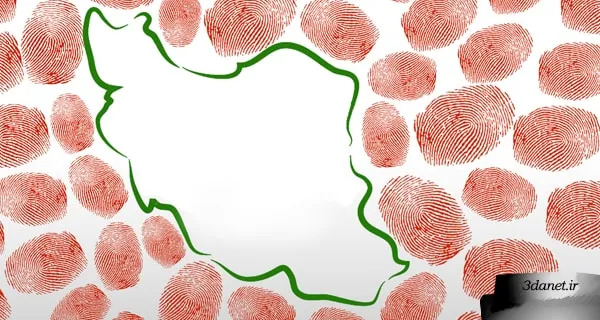
I have spoken several times before about why I consider participating in elections to be my moral duty, the last time being a month and a half ago...
On the Shore of Presence
From the Ethics of Compassion to Democracy
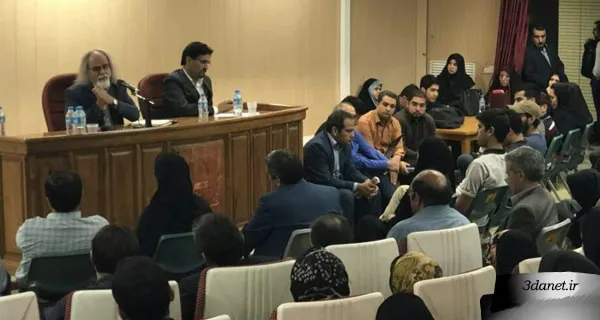
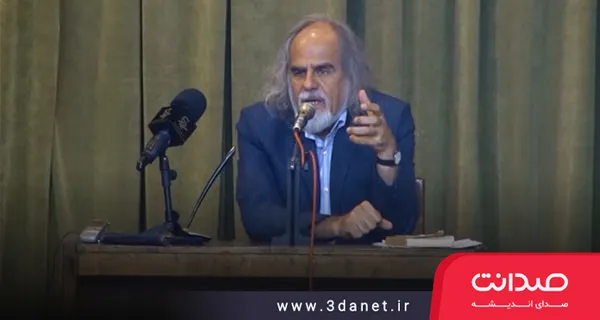
Professor Mostafa Malekian – 9 May 2017 – Holy Mashhad
Discussions concerning:
The moral necessity of participating in elections
Responding to the objections of opponents of participating in elections
An analysis of issues regarding the twelfth presidential election
Elections are the best way to bring about change in the political system
I have spoken several times before about why I consider participating in elections to be my moral duty, the last time being a month and a half ago.
The entire argument I was making for this claim was that, based on induction, there are no more than five approaches to bringing a political regime to its senses; that is, throughout history, when people have wanted to bring a political regime to its senses and, in other words, transform it into a regime more beneficial to the people, they have pursued no more than five paths:
One path is revolution; one path is a coup d'état, which is usually referred to as a palace revolution, which is also a revolution that takes place within the palace itself; the third is internal secessionist movements and rebellions; the fourth is foreign intervention; and the fifth is participating in elections. My argument, then, has been that, on the one hand, we have so far discovered no more than these five paths, and we have not recognized a sixth path for bringing a political regime to its senses—not just us, but humanity has not—and, on the other hand, those four other rivals to participating in elections, namely revolution, coup d'état, internal secessionist movements and rebellions, and foreign intervention, are never advisable, neither from a moral standpoint nor from a pragmatic one.
My argument at the time was that since we have found no more than five paths, and four of these five are neither morally defensible nor defensible on grounds of expediency, then morally and expediently we must participate in the elections—that is, we must actively involve ourselves in the voting process. This in no way means that participating in elections is the only thing one can do to reduce people's pain and suffering, but it is something that, at least ostensibly, has not yet been taken from you and me. We can do many other things to reduce people's pain and suffering; we can form free parties, we can have a free press, we can hold thoughtful, rational, meticulous, and fair-minded dialogues about our issues and each of our problems, and we can do many other things in the realm of theory. However, almost all of these other paths have been blocked; the only path that remains unblocked is this path of participating in elections. Therefore, I by no means wish to conclude from the fact that those four rivals—who are very corrupt rivals, morally and expediently speaking—that there is no flaw or defect in participating in elections, nor do I even wish to conclude that participating in elections is everything I can do for the people of my society, my compatriots. Many other things exist in theory, but those things that are theoretically possible are not practically realizable; that is, unfortunately, our political regime has blocked all other paths. It is then not in our interest to block the sole unblocked path ourselves. It is like a child who expects their father or mother to give them five chocolates, and now they have been given two chocolates, and it seems to me that my right to three chocolates has been violated, so I then come and say, 'Well, instead of five chocolates, you gave me two, meaning you gave me three fewer, so I will take these two you gave me back from myself.' This is not rational. The rational approach is for me to eat the two chocolates my parents have given me and then say that they are giving me three fewer chocolates. Otherwise, it is illogical for me to be entirely angry and cut off my relationship with my parents because they gave me three fewer chocolates, and then also take back from myself the two they did give me. I think that, in this respect, participating in elections is my moral duty, but not my sole moral duty. I have many other moral duties to reduce the pain and suffering of my people, but those other moral duties, now that the power to perform them has been taken from me, are no longer my moral duty in the current situation. However, the power to perform this one has not been taken from me, so it is my current duty. I had said that for this reason, I consider boycotting the ballot box and the voting process to be contrary to moral standards and precepts. Note that I am using a moral expression. I do not look at participating in elections from a political perspective at all. Because if I look at participating in elections from a political perspective, someone might say to me, 'Sir, I have fundamentally decided not to get involved in political matters. What do you want from me? Must I necessarily get involved in political matters as well?' But I look at it from a moral perspective.
Reducing people's pain and suffering is my moral duty, for which there are numerous paths, but among the numerous paths that I believe exist, only one path is practically still open, and I must make use of this one path.
A Critique of an Objection by Opponents of Participating in Elections
اما کسانی در مخالفت با این نکته-نه به تازگی بلکه قبلا هم و از جمله به تازگی- دلیل آورده اند و گفته اند که نه، ما وقتی که در انتخابات شرکت می کنیم مشروعیت می دهیم به نظام سیاسی حاکم بر جامعه و اگر فرض کنید از 85 میلیون ایرانی 50 میلیون پای صندوق های رای حاضر شوند یعنی مشروعیت چشم گیری برای رژیم سیاسی حاکم بر جامعه مان فراهم آورده ایم. ولی اگر به جای 50 میلیون 5 میلیون بروند پای صندوق های رای خب مسلما مشروعیت سیاسی رژیم حاکم بر جامعه مان را در انظار جهانیان طبعاً به صفر رسانده ایم و استدلال این است که خود این که ما از مشروعیت نظام بکاهیم یا مشروعیت نداشتن نظاممان را نشان بدهیم و جلوی چشم مردم جهان بیاوریم این کار مثبتی است وقتی شما در انتخابات شرکت می کنی جلوی این کار مثبت را می گیری. من به نظرم می آید این استدلال به دو جهت عیب دارد. یکی به این جهت که اگر مشروعیت یک نظام کم شد مثلا فرض کنید 5 میلیون بیشتر در یک انتخابات شرکت نکنند و مشروعیت این نظام کم شود آن وقت این نظام می گوید: "عجب پس ما خبر نداشتیم که مشروعیت نداشتیم شما نشان دادید که ما مشروعیت نداریم پس بفرماییم ما برویم دنبال کار و زندگی خودمان و این نظام سیاسی را به دست کسان دیگری بسپریم." ؟ جوری نگاه می کنید که در چنین جهانی داریم زندگی می کنیم که وقتی مشروعیت یک نظام کم شد بعد سردمداران و مسئولان و دست اندرکاران آن نظام بگویند عجب چه غفلتی ما داشته ایم باز خوبه با این رای گیری معلوم شد ما مشروعیت نداریم پس آقا بیایید برویم کاش زودتر به ما خبر داده بودند که ما شروعیت نداریم. شما گمان بر این دارید؟ بر خلاف، رژیم هایی در خلاف جهت مقاصد شهروندان خودشان اند هر چه مشروعیتشان کم می شود خشونتشان بیشتر می شود و سبوعیت و درندگی شان بیشتر می شود. خشونتشان عریان تر می شود بنابراین من خطا می بینم در این استدلال که بگوییم آقا کاستن از مشروعیت این نظام یا نشان دادن کاسته شدن از مشروعیت نظام کاری است که ما می کنیم مثل اینکه تصور بر این است که مثلا ما در سوئد داریم زندگی می کنیم که اگر نظام سیاسی حاکم بر جامعه فهمید دیگر مشروعیت ندارد می رود دنبال کار و زندگی اش. البته واقع بینانه بخواهم بگویم در سوئد هم اینجور نیست اما به هر حال اگر تصور این را داریم که مثل سوئد هستیم هم خب خطاست. این نکته اول
اما نکته دوم این است که خب آیا همه آنچه که شما می کنید برای کاستن از مشروعیت نظام آیا نمی خواهید اینها را وسیله ای قرار بدهید برای کاسته شدن از درد و رنج مردم؟ ما که غرض و مرض شخصی با نظام سیاسی حاکم بر جامعه خودمان نداریم پس اگر می خواهید مشروعیت نظام سیاسی حاکم کم جلوه کند برای این است که فکر می کنیم اگر این مشروعیت کم شود درد و رنج مردم کاسته می وشد ولی آیا این معادله جایی اثبات شده است؟ می شود اثبات کرد که اگر از مشروعیت یک نظام سیاسی حاکم بر جامعه ای کاسته شد آن وقت درد و رنج مردم کم می شود؟ فقط فرقش با قبل این است که قبل رژیم ناسالمی بود یا رژیم دارای سوء مدیریت بود یا رژیم دارای سوء نیت بود یا رژیم دارای جهل بود این اشکالات را داشت یک مشروعیت لا اقل داشت. حالا آن عیب ها را دارد یک بی مشروعیتی هم بر بقیه عیب هایش افزوده شده است. نظامی که پنج تا عیب داشت حالا تعداد عیب هایش رسیده به شش تا چون یک عیب جدید هم بر عیوبش افزوده شد. اگر غرض بر این نیست که من عناد شخصی با کسی داشته باشم و غزض بر این است که کنش ها و واکنش هایم با یک واسطه، دوواسطه، n واسطه سودش به مردم برسد آن وقت آیا اثبات شده است که چنین چیزی سودش بامآل به جیب مردم خواهد رفت یا نه؟ من گمان می کنم که این هم اثبات نشده. اثبات نشده است که وقتی یک عیب بر عیب های نظام سیاسی حاکم بر جامعه افزوده میشود آن وقت ما یک گام نزدیکتر شده ایم به کاستن از درد و رنج های مردم.
شرکت در انتخابات نه تنها حق ما بلکه از منظر اخلاقی وظیفه ماست
But now I want to look at the story from another perspective, which is a purely ethical one. One often hears or reads in the statements or writings of many people, or infers, that they believe participating in elections is my right, and I do not wish to exercise my right. Does a person not forgo several of their rights in life? Do we exercise each and every one of our rights? I can forgo my right to this box of tissues, which belongs to me, and give this tissue to you, or give it to a poor person, or simply leave it here and go. A person can waive a right they have, that is, say it is my right and I want to forgo it. This is the core of my argument: that this reasoning, which is also a purely ethical reasoning, is mistaken.
Legally speaking, participating in elections is our right, but ethically speaking, it is our duty, and these two have two different rulings; we cannot extend one to the other. I have said many times in various places that in every voluntary act we perform—if the act is not involuntary, like the beating of the heart, which is involuntary—immediately before undertaking that act, an 'ought' germinates in the mind. That is, if you see me reach out and pick up this box of tissues, even a billionth of a second before, it has occurred in my mind that I ought to pick up this box from the table. An 'ought' has germinated in my mind. If it is voluntary, and most of our acts are voluntary. It is as if someone inside me tells me, 'Mostafa, you ought to pick up this box from the floor,' or...
But these 'oughts' arise from six sources; they flow from six springs. Every 'ought' that forms in your mind, when you examine it carefully, you see that 'ought' originates from one of these six sources. These are called the sources of social norm-setting. One of these sources is law. It is legislation. For example, when I am driving on the far right side of the street, an 'ought' has formed in my mind: 'Mostafa, you ought to drive on the right side of the street.' So, one of the norm-setting sources is law. Another norm-setting source is ethics. When I speak honestly, humbly, and so on, an 'ought' forms in my mind, which we call a moral 'ought.' A third 'ought' is the ritualistic, ceremonial 'ought,' which we usually call the religious 'ought.' The fourth 'ought' consists of 'oughts' arising from customs, traditions, and social habits; one ought to set the Haft-Seen table, and so on... this is an 'ought' arising from social customs and habits. The fifth 'ought' is the aesthetic 'ought.' Yet another 'ought' is the prudential 'ought.'
For example, if you want to pass the philosophy entrance exam, you ought to read the books of Kant, Spinoza, and so on. An 'ought' applies to the indispensable means of achieving any goal. These are prudential 'oughts.' But if that goal changes to another goal, all those 'oughts' collapse. If I want to be admitted for literature, I ought to read other books.
The problem, then, is that some people think that because legally, participating in elections is our 'right,' then ethically, participating in elections is also our right. But I want to say that legally, participating in elections is our right, but ethically, it is our duty. If someone does not participate in elections, yes, they have forgone one of the rights legally granted to them, and it does not harm their standing as a good citizen. Because a good citizen can forgo the rights the law has given them. But ethically, I have failed to perform a moral duty; I have not performed the moral 'duty.' Now, why is it my moral duty to participate in elections?
The Ethical Argument for the Necessity of Participating in Elections
- The moral duty of every person is to reduce the pain and suffering of others as much as they can. Incidentally, this is one of the common components of all ethical schools. Ethical schools disagree on a thousand and one topics and issues, but they have one common ground on which, despite all their disagreements, they all concur. One of those nine principles—or according to some, ten, or thirteen, or twenty-three—on which they agree is that the duty of every person is to reduce the pain and suffering of others as much as they can.
- One of the sources of human pain and suffering is the political system governing human society. It cannot be said that all of society's problems stem exclusively from the ruling political system, or that the ruling political system is society's greatest problem, or its only problem. This second premise is discussed in a discipline we call the sociology of needs, which examines how human beings, sociologically speaking, need a sound and righteous political system, and if the political system turns toward corruption and ill-health, the pain and suffering of the people also increases.
- So, one of our moral duties is to struggle against the political corruption governing our society.
- To date, humanity has not discovered a political system healthier than democracy. If it discovers one someday, this fourth premise will be taken from me. Of course, the fact that it has not been discovered until today does not mean it will never be discovered for all eternity, but up to now, with roughly three thousand and some years of political thought having passed in the world, a political system healthier than the democratic system (I am not saying liberal democratic, or social democratic, or any other democracy; I am only affirming democracy itself) has not been discovered, or invented, or devised. In this fourth step, I want to reach the conclusion that striving to democratize the political system is my duty—to make the political system governing my society more democratic, and still more democratic. For democratizing a system, the first prerequisite step is participating in elections; there is no other way to democratize the system.
This is our moral duty.
Response to a Criticism of this Argument
Here, an argument might be raised against me, namely: Do you suppose that by participating in elections, the political system in society will be reformed? Not at all, absolutely not. Nothing is reformed; we merely drape a beautiful cover over the political system. It is as if this political system retains the same malformation and deformity, but they dress it in a well-tailored garment so that these defects are not apparent.
Professor Malekian's Responses to this Objection
- Suppose you participated in the elections and the system did not become more democratic, and you participated in the next round and again the system did not become more democratic, and it did not, and it did not, and it did not. (Although these 'did nots' I am saying are never realized. With every election, the system always becomes a tiny bit more democratic. Sir, we have been participating in elections for 38 years now, which... I say, if you had not participated in these 38 years, then you would see what kind of system this was. We do not realize that by participating in elections, epsilon by epsilon, particle by particle, grain by grain, we are making the political system governing our society more democratic. The argument that because we have participated for 38 years we have arrived at this point is not a valid argument; you must consider where we would have arrived if we had not participated in these 38 years.)
But do you know what gradually becomes part of your children's culture? That if a way exists, it is still this very way. Ultimately, they understand that whatever political system wants to come to power, it must still come to power through elections. That we turn participation in elections into a culture, even if we have not achieved a result so far... It is like this: if I went to a bakery once and they did not give me good bread, and the third time they did not give it, and the fourth time they did not give it, but my child saw that I still go to the bakery to buy bread—to buy bread from the bakery; otherwise, my father was not crazy to go buy bread from an auto mechanic. So, despite all the undercooked, burnt, and bad bread he is given, my father still buys bread from the bakery.
So if your child sees that, despite the fact that participating in elections has not made your system more democratic, you still take part in elections, they will understand that reforming society is only possible through this means; they will see that my father and mother, despite failing twenty times, still go to the ballot box for the twenty-first time. Transforming electoral participation from a political activity into a social culture is very important. When our children see that we still go and participate in elections, they will understand that their fathers and mothers are not crazy; so if they keep repeating it and still go to the ballot box, it is because if any healing is to come, it will come from this democracy, it will not come from a shrine. And transforming participation in elections—that is, participation in democratic processes—from a political activity into a social culture, so that fundamentally in society, issues must be resolved through democratic means and problems must be solved through democratic means, this is a great service we can do for our future generations. And pay attention: those who are my age at least know this, that our fathers did not create such a culture in us, but it is good for us to create this culture in our children and grandchildren. If this culture is created, tomorrow every treacherous person, every cunning person, every criminal, every cannibal will still have to enter the game through elections, and this means elections have become a social culture.
- We must pay attention that the very fact that the political systems you say are not reformable have submitted to these elections is itself a democratic element, a democratic component; meaning, they could choose not to submit. If they see that you and I, our public opinion, is not very sensitive, they might gradually—as perhaps friends have already seen the vanguard signs of this—if they see that we are not very fond of elections either, they might gradually push shamelessness to its limit and say, why elections at all? The people themselves do not welcome elections. And you are surely already seeing the vanguard signs of this. If it is not in our country, look at Turkey and see what others can do when the people's sensitivity, for whatever reason, diminishes. But if they see that the people are sensitive to this, meaning it has become part of the sanctities of their social culture, part of the totems of their social culture, then they can no longer take this away from us either. They will take away from us whatever they can. If you see they have not taken this away, it is because they have not been able to so far; otherwise, they would have taken this too. For example, look: in our social custom, rightly or wrongly, they saw that we did not have much interest in party politics. They came and used this very thing as a pretext, and now they have destroyed all parties, and no one stirs. If the sensitivity that you and I had toward participating in elections, we also had toward party politics, party politics could not have been taken from us. And if we had this same sensitivity toward freedom of the press, freedom of the press could not have been taken from us. They can take something from us when they see that we are not very zealous about that thing. If this lack of zeal and lack of fervor toward the ballot box comes into being, gradually, just as they took party politics and freedom of the press and so on from us, they will take it from us. The very fact that we preserve this is itself a democratic facet of the system.
- Very well. I assume that participating in elections, as you rightly say, absolutely does not make the system more democratic. Do you know of another way to make the system democratic? If yes, then let us set that up as an alternative to this. I have said many times that if you come from Tehran to Mashhad and there are ten roads that take you from Tehran to Mashhad, of course any rational person chooses the road that gets them to the destination faster. But if, by impossible supposition, we live in a situation where there is only one road from Tehran to Mashhad, even if this road is rocky and long, we have no choice. If you know of another way to make the system more democratic besides elections, then let us go after that other way. But since the assumption is that we have no other way, we cannot say that because this way is a way that has not brought us much result, or at least its result has not been tangible for us, we will abandon it. If you have another way, abandon it; otherwise, no matter how long, arduous, uncertain, and fraught with consequences this road is, there is no other choice.
The ethics of compassion does not allow us to be indifferent to political activities and the democratization of the political regime. If your ethics is the ethics of justice, then the foundation of your argument will be that I will not wrong anyone by a single dinar, nor will I allow anyone to wrong me by a single dinar, because justice is nothing but safeguarding rights—whether my own rights or the rights of others. But the difference between the ethics of compassion and the ethics of justice is that the ethics of compassion says: I will not take a dinar of your right, but I will give you a portion of my own rights. Psychologically, a mother's behavior toward her child stems from her compassion. The ethics born of compassion is an ethics above the ethics of justice. In the ethics of compassion, we voluntarily give a part of our own right to others. A vast difference emerges between the ethics of justice and the ethics of compassion. The ethics of compassion has been favored by philosophers for nearly 60 years. This ethics asks us to be sensitive to the democratic nature of the political system governing our society. Why? Because when I am compassionate, I do not take a dinar of your right, but I also want to voluntarily give you a portion. There is no doubt that if you engage in political activity to democratize the system, you will lose a part of your own rights. A person who engages in political activity must prepare themselves for numerous deprivations—deprivations in the realm of social status, reputation, and so on. Compassion means I take nothing from you, but I want to give you a part of what I consider my own right for your happiness, or your well-being, or both your happiness and well-being. The ethics of compassion asks of me that if my life proceeds normally within a political system, even if that political system has caused me no harm (of course, these 'even ifs' are not realized, but I assume that this political system has caused me no harm, has taken no right from me, has not violated my life, property, honor, or reputation), it has harmed others. It is good for me to forgo a part of my own right and give it to others, and to say: no pain has come to me, but pain is coming to you, and I want to take this pain away from you. This is what resolves the objection that when it is our right, we want to not exercise our right.
Concluding Points of the Discussion
At the end of my talk, I would like to present three points:
- One should never say that since we have not benefited from a certain phenomenon so far, why should we turn to that same phenomenon again. The first time a person benefits from a phenomenon is the first time they benefit, so it becomes clear that they had not benefited from this phenomenon before, yet their previous lack of benefit did not prevent the current benefit. A phenomenon that occurs for the first time is not occurring for the second time; it is occurring for the first time. If it is occurring for the first time, what does that mean? It means this phenomenon had never occurred before. Nevertheless, the previous non-occurrences could not prevent the current occurrence. This is like saying, 'I did not benefit from so-and-so's first lecture, I did not benefit from so-and-so's second lecture, I did not benefit from their twentieth lecture, so I will give up.' We say, look, you did not benefit from twenty lectures, but if the twenty-first lecture is the first lecture from which you benefit, those twenty previous lectures did not prevent the benefit of this twenty-first lecture. The past of a phenomenon is never a guiding light for the future of that same phenomenon, and therefore, a process can always be unprofitable for a very long time, yet begin to yield benefit for the first time today. Thus, one can never say that in 38 or 39 years, elections have brought us no benefit—even assuming we have not benefited, which I believe we certainly have—this still does not prove that we will not benefit now.
- The idea that since we are a lost cause, future generations should fend for themselves is truly a mistake. Some speak as if, since we are past hope and see no good or benefit in this system, future generations should just handle their own affairs. We seem to forget that future generations can never start their work from zero. We cannot simply abandon matters and then say our descendants will start from scratch on their own. The point from which our descendants stand and want to begin their journey—who placed them there? We have placed them there. In other words, our descendants can never begin to engage with and shape the world from nowhere. Each stands somewhere. Through our current activities, we have determined that place for them. Just as when we wanted to do something for ourselves, from where did we begin our activity? From the place where our fathers and mothers had left us. It is their activities that brought us to a specific point, and from that specific point, we undertook an activity. Therefore, this is a disregard for the fact that no one can start anything from zero. Everyone must start from somewhere, and that place is determined for them by the activities of those who came before. The activities of you and me determine where our descendants must begin.
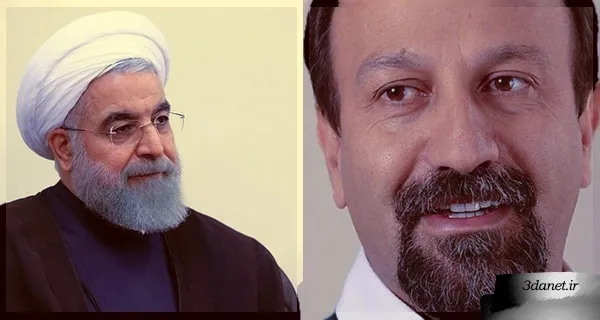
- The claim that the candidates are all the same is truly a great fallacy. If you say that the president in our country—whoever it may be—holds only 25 percent of the country's power in their hands, or 20 percent of the power, and the other 75 or 80 percent is not in the president's hands, I completely accept your point. But if you say that all our presidents use that twenty percent in their hands in the exact same way, I cannot accept that. I truly believe that with the legal and illegal mechanisms at play in our country—whether those legal mechanisms endorsed by the text of the law or those mechanisms not even approved by enacted law—both sets of mechanisms have ultimately reduced a president's power to twenty percent. No president in our country has more than twenty percent of the power. Eighty percent lies elsewhere. However, it does not follow that presidents act identically in using the percentage that is in their hands. Consider the previous administration of Mr. Rouhani; you will notice that Mr. Rouhani's previous government banished the specter of war from our dreams and nightmares. This is no small thing. Look, having social security is no less valuable than social welfare, although in my opinion, social security is even more valuable than social welfare. When you know that war has been postponed until further notice, you gain what sociologists call social hope, which plays a very significant role in ensuring that everything from our family life to our economic life, our legal life, and our moral life is influenced by this social hope. Therefore, this is also, in my opinion, a great fallacy: that because power is not in the president's hands, it makes no difference whether Hassan is president or Hossein. But the second point is that presidents are also effective in increasing or decreasing their own power. It is possible that on the first day I become president, I have 20 percent of the power in my hands, and when I leave this presidency, I have turned that 20 percent into 15 percent, having handed over 5 percent of it myself to those who take power from the president. Another president might take power with twenty percent but hand over twenty-five percent when leaving office. I also cannot accept that presidents have no impact whatsoever on the people's destiny.
And I want to mention another point, which is that presidents also differ greatly in another respect, and that is there is a big difference between someone who is beaten and cries out, "Sir, they are beating me," and someone who is beaten and does not cry out at all that they are beating me, and one who is also doing the beating himself. You see, "crying out in pain" is also an activity. It is possible that I, as president, may not be able to implement many of my desires and intentions in practice, but at least I can shout: Who has stopped me? Who is obstructing my work? Do not underestimate this; I mean to say that raising awareness is also an important dimension of the presidency. That I inform people that my hands are tied, and who has tied them. Which institutions have tied them. Which authorities have tied them. This is no small thing. As opposed to someone whose hands are tied but does not raise awareness, or someone who, even worse, is himself effective in tying hands. I mean to say that we should not always look at activities in the sense of what has a physical realization. In this matter of raising awareness, too, presidents differ, and you cannot deny that during Mr. Khatami's government, we received certain awarenesses that could have not been received. These awarenesses did not mean that a problem was solved, but rather meant that the existence of the problem and the existence of the problem-maker were brought to the people's attention.
It is based on these points that, while all friends know, and I myself have explicitly stated, that in the world of politics we are not given a choice between good and bad—unfortunately, we are usually given a choice between bad and worse, and even worse, and the worst—yet despite all this, it is based on these points that I had said I would vote for Mr. Rouhani, and I truly believe that if someone sets aside their ego and selfishness and truly thinks of humanity, thinks of the people of their society, no matter how distressed they are by a certain activity of the Rouhani government, no matter how slow or inadequate the activities may seem to them, they will ultimately understand that an inadequate activity by someone who intends to act is different from the adequate activity of someone who does not intend to serve but only intends to betray.
And peace.
.
.
Mostafa Malekian's lecture titled "On the Shore of Presence - From the Ethics of Compassion to Democracy" 19 Ordibehesht 96
pdf file of Mostafa Malekian's lecture
audio of Mostafa Malekian's lecture
.
.

Discussion0 comments
No comments yet; let yours be the first voice.