Philosophy
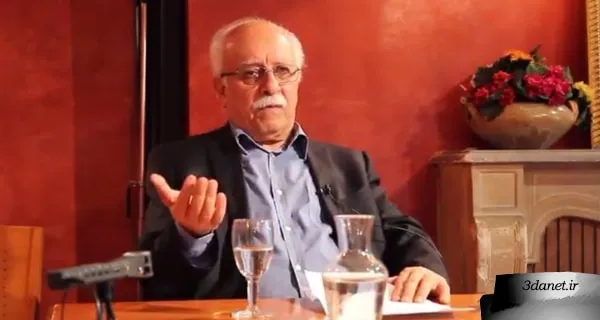
Dariush Shayegan's Lecture: Baudelaire and the Concept of Evil
Dariush Shayegan considers Baudelaire the greatest poet of modernity, one who transformed European and Iranian literature by creating a 'new vibration' in poetry. The talk focuses on the characteristics of his art and his influence on Sadegh Hedayat and French poets.
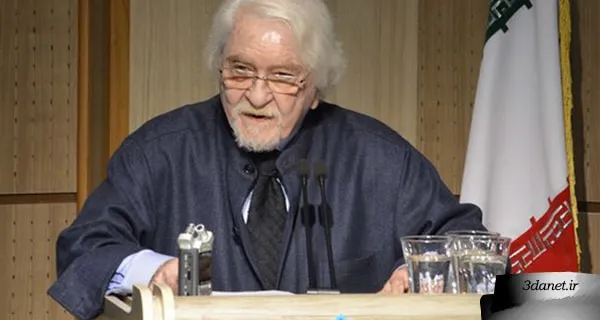
Although my field is not literature and the work I have done relates more to Indian religions and comparative philosophy, I have always been interested in literature since my youth, and after my studies in England and then my residence in Switzerland, I came into contact with French literature and discovered Baudelaire. Of course, I was already familiar with the French classics and was no stranger to the Romantics, figures such as Chateaubriand and Victor Hugo. The first feeling that overwhelmed me upon reading Baudelaire's poems was astonishment; this prodigy did not fit into any of my mental categories. The magic of his language and the classical perfection of his poetic form on the one hand, and themes that had no equivalent in other poets on the other, created a wondrous and enigmatic persona of him in my mind.
Given my understanding of poetry and the poet at that time, all of this seemed new. I realized that this poet was an exceptional individual, completely different from all the great figures I had known before. I knew he had been called the greatest poet of modernity. I knew that when his great masterpiece, Les Fleurs du mal, was first published, it caused a scandal, just like Flaubert's novel Madame Bovary. Two camps immediately formed: one group attacked him, and the other rose to defend him and his masterpiece. Brunetière considered him the epitome of debauchery and immorality, but there were great figures such as Flaubert, Théophile Gautier, Nadar, and Théodore de Banville who called him the most innovative poet of France. Maeterlinck called him the spiritual mentor of his generation. From that time on, I harbored a desire in the back of my mind to one day write something about Baudelaire, but the winding path of my life led me into other realms, and the realization of that youthful dream remained until today and my old age. This was my personal reason for writing this book. But there was another motivation as well, and that is that in Iran and in the Persian language, despite a few valuable works, no extensive and worthy work has yet been done on this preeminent poet of the age. Walter Benjamin, who is rightly one of the greatest Baudelaire scholars of the twentieth century, says that Baudelaire is the only great poet who crossed linguistic boundaries and became a European poet. I asked myself, what unique characteristic turned this figure into a European face? The key to this question can perhaps be found in a letter that Victor Hugo wrote to the creator of these poems after reading some of Baudelaire's verses, which had been dedicated to him:
I do not know with what baleful ray you have illuminated the sky of art. You have brought a new shudder to the world of poetry.
The new shudder to which Victor Hugo refers perhaps arises from a new sensibility that had not existed in the world of poetry until then. Jules Laforgue tried to dissect this famous expression of Victor Hugo and understand why this seasoned wolf of the realm of poetry called Baudelaire a poet who brought a "new shudder" to French poetry. To determine Baudelaire's place and describe the unique characteristics of his art, Laforgue cleverly and astutely uses the concept of "firstness":
Baudelaire was the first to narrate his own story in a moderate, confessional tone, without adopting the pose of one who has been inspired; he was the first to make the accursed soul of a great city like Paris the subject of his art; the first poet who did not speak triumphantly, but reproachfully spoke of the sufferings, wounds, self-indulgence, and the sterile fruitlessness of his ennui in the heart of this industrial age; the first poet to address the melancholy born of pleasure-seeking and its strange scene, the sorrowful bedroom; the first poet who, after the audacities of Romanticism, resorted to crude similes that suddenly appear, unveiled and naked, amidst the harmony governing a sentence (...); the first to sever his relationship with his readers; poets had always addressed readers—the human treasury—he was the first to address himself, because: "The addressees of poetry are only the elite. The common people consider me accursed—very well—then let them not enter this arena"; he was the first poet to create immense similes:
Asleep in oblivion like a shark in the sea
I am that cemetery which the moon abhors
I am an old boudoir
Baudelaire's new gaze upon the world, especially the industrial world of the mid-nineteenth century, led to his vast and profound influence across Europe: his penetration into Germany, which spread rapidly with Stefan George's extraordinary translation of The Flowers of Evil; his influence on a preeminent poet like Rilke, to whom a chapter of this book is dedicated; his influence on Nietzsche, particularly during the latter's mature period late in life, to whom I have also dedicated a chapter of the book; in England, we encounter an influence beyond description, beginning with Swinburne. He first introduced Baudelaire to English speakers in The Spectator magazine, and also composed a lament for the poet titled "Ave Atque Vale." Since then, one can scarcely find a major writer in England who was not in some way connected to the creator of The Flowers of Evil; in this long list, one can mention the names of Aldous Huxley, Walter Pater, Oscar Wilde, and many others, and at their head, T. S. Eliot, whose long poem The Waste Land, especially its first section, is heavily influenced by a collection of Baudelaire's poems called Parisian Tableaux; a chapter of this book is also dedicated to Eliot. Russia was not exempt from this influence, and Russian Symbolism began with Baudelaire's influence; in Italy, one can also point to a great writer like D'Annunzio, who was in some way inspired by Baudelaire. The new vibration of which Victor Hugo speaks also illuminated the literary sky of Iran, leagues away; and it emerged from the works of Sadegh Hedayat, especially his masterpiece The Blind Owl. It is probable that Sadegh Hedayat, who had a complete mastery of Western literature, was not unfamiliar with the works of Baudelaire, which were very popular in France at the time, and the Baudelairean mood, either directly through familiarity with The Flowers of Evil or indirectly through other poets and writers influenced by Baudelaire, also found its way into his works. The influence of Baudelaire the poet on Sadegh Hedayat was far deeper than that of modern Persian poetry.
Given this, it is no wonder how profound Baudelaire's influence was in France, his birthplace; Baudelaire became the starting point of a great transformation in French literature, and it can be said that all poets after him are, in some way, descendants of Baudelaire. Thirty or forty years after his death, Baudelaire was hailed as the greatest French poet. A vast generation of poets was influenced by him: Verlaine, Rimbaud, Mallarmé, and even the Surrealists. While Verlaine and Rimbaud followed Baudelaire's path in the realm of emotion and feeling, Mallarmé, in Valéry's words, was inspired by him in the arena of evolution and pure poetic essence. Verlaine, in defense of Baudelaire's poetry, says:
Whenever you mention Baudelaire's name somewhere, some people immediately say, "The one who spoke of carrion?" One reason for the misunderstanding is perhaps that people expect from art only that which conforms to their own vulgar taste, and of course, Baudelaire does not dole out sweet halva as charity. If he shows us the path of the stars, he first drags us to hell in pursuit of Dante's footsteps. How can one who seeks frivolous pleasures come to terms with such an anxiety-inducing poet?
In Rimbaud's words, "Baudelaire exposes the soul of dead things, he is a seer and the king of poets, a true god."
Apart from poets, French novelists were not exempt from Baudelaire's influence; among them, one can mention a great writer like Marcel Proust, who, in extolling Baudelaire's language, which he considered "the most powerful language that has ever come from the mouth of a human being," says:
These feelings, the sense of pain and death and humble fraternity, make Baudelaire the foremost of poets who have spoken for the people and for the world beyond. Hugo's bombastic words, his conversations with God, all that fuss, have no power to equal what the ailing Baudelaire felt in the painful intimacy of his heart and body.
Another trait of Baudelaire that is truly astonishing is his use of paradox. The dialectic of paradox is part of this unique personality's being, has no pretentious aspect, and is entirely authentic. Marcel Proust says of this paradox:
In The Flowers of Evil, this supreme book, compassion mocks.
But this great man was also very humble; how right André Gide is on this matter when he writes in his preface to the 1917 edition of The Flowers of Evil:
Baudelaire once wrote: “Our neighbors speak of Shakespeare and Goethe and take pride in them; we, in turn, can hold our heads high with the names Victor Hugo and Théophile Gautier.”
Gide, reacting to this statement of Baudelaire, says:
The poet the Germans envy is not Gautier, nor Leconte de Lisle, nor even Victor Hugo; that poet is none other than Charles Baudelaire. Baudelaire was unaware of his own worth. He was mistaken about the very quality that gave him his value and prestige. His private notes, published after his death, are very revealing in this regard. Baudelaire recognized his fundamental innovation but could not define it, and the entire drama of his life lies in this very point. How astonishing that an artist of such incomparable refinement, awareness, and lucidity speaks so clumsily about himself. Baudelaire was incurably without arrogance.
One of the most important themes in Baudelaire’s poetry is the concept of evil. Interestingly, Dostoevsky, in a similar stance, also emphasizes the fundamental role of evil. But Baudelaire’s distinguishing feature is that he strives, with the help of this awareness derived from evil, to confront the Devil.
Charles Baudelaire knows well how to draw the nectar of beauty from horror. Using the tool of words and poetic mastery, he employs ingenious devices to stir the senses of his audience and creates images across the expanse of their minds, a skill that in the realm of poetry has been called ekphrasis (Ekphrasis), or the art of depiction and scene-setting. In many of Baudelaire’s poems, this characteristic is prominently visible; for instance, at the beginning of the poem “The Martyr,” the poet describes the scene of the event and the atmosphere prevailing over it thus:
Amidst scent-bottles and gold-embroidered fabrics,
Voluptuous, colorful, sumptuous furnishings,
Marble statues, colored pictures, and perfumed garments
That trail across the floor in sumptuous folds,
In a room like a hothouse, half-warm and stifling,
Where the air is dangerous and ominous,
Where wilted bouquets in their crystal tombs
Breathe out their final sigh,
A headless corpse spills forth like a river
Red, living blood onto a soaked pillow,
Which drinks it up
With the thirst of a parched field.
Could one sing more beautifully than this: “Where wilted bouquets in their crystal tombs / Breathe out their final sigh,” to show the catastrophe that is about to unfold, and the poet, with the “final sigh” of the symbolic epitome of beauty—the flowers—that perish in their “crystal tombs,” leads his audience to behold the corpse of a beautiful woman from whose severed throat living blood still flows. This is drawing beauty from the heart of the horrific!
I have chosen the title The Madness of Consciousness for the book because it seems to me befitting of someone who so lucidly and insightfully penetrated the madness concealed in the human psyche, and with that same critical gaze that was part of his way of seeing, never feared for a moment being trapped in the illusions arising from this madness, and stood tall against its seductive allure with a merciless lucidity. No one was as aware of evil and its beautiful, creative, and destructive role as Baudelaire. With a critical eye unique to him, he also makes that very madness the subject of his powerful nature’s examination and considers criticism an inseparable part of art. Contradiction and paradox are the foundation of his poetry; everywhere in his poems, pain is intertwined with joy, certainty with doubt, and ecstasy with sorrow.
In conclusion, I would like to end my speech with the same phrases with which I concluded the book The Madness of Consciousness, with a beautiful passage from the elegy by Pierre Jean Jouve, the French poet, in the book On Baudelaire’s Tomb:
The great poet is not confined to himself alone; the poet is a myth, an immense influence. Baudelaire is a beginning and a source. First, because he is the creator of French poetry after centuries of torpor and rhetoric; and second, because his creation expresses a great leap in values — from rationality to beyond rationality, from the monotony of thought to the mystery of creativity.
Baudelaire, this genius of craftsmanship, devoted himself to this long labor. A labor that demanded supreme effort, for in addition to contending with his own spirit, he also had to grapple with language and, in a way, shatter the dialectical institution of the French language — this most domineering of all possible institutions.
The awareness of being a poète maudit (accursed poet) must have had its price: without malediction and execration, no innovation is possible. Thus, he had to pass through this curse to find his way into the subterranean realm of images. A popular proverb says: giving birth is inevitably accompanied by pain. And since the realm the poet was venturing into had no name, he had to take on the form of a monster. It has been said that Baudelaire was not the master of his own creation, but its victim. Perhaps, in this regard, one should speak of a kind of failure concerning Baudelaire: not that his creation was the price of his inner failure — but rather that this inner failure was the result of the intensity and vehemence of his creation.
.
.
Dariush Shayegan | Baudelaire and the Concept of Evil
Text of a lecture at the Charles Baudelaire Night | 21 October 2015 | Persian Language Center
Text source: Quoted from Bukhara Magazine, Issue 109, November–December 2015
.
.


Discussion1 comments
ممنون