Political Science
Dariush Ashouri's Lecture: 'The Concept of Westoxification'
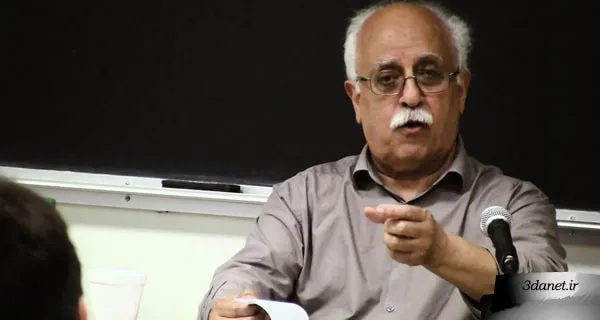
At a Cafe Lit session, Dariush Ashouri described Jalal Al-e Ahmad's Gharbzadegi as a superficial work borrowed from the ideas of Seyyed Ahmad Fardid; in his view, Gharbzadegi is not a critique of the West, but a pathology of our relationship with the West and a critique of dependency.
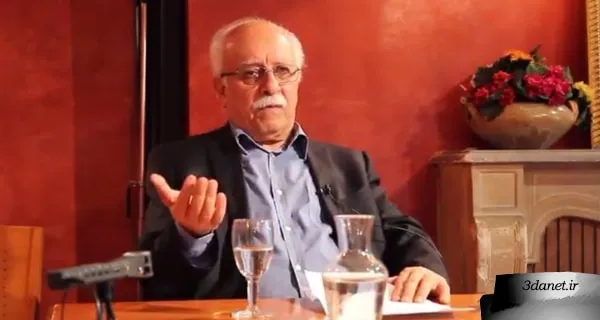
The description for this program states: Awareness of history and delving into its events to understand the logic of its movement and direction is one of the most fundamental occurrences in the world of modern thought. In fact, with the withdrawal of divine will and divine omniscience from the realm of nature and human life—that is, the end of the Middle Ages—human knowledge and will, in order to expand the scope of their cognition and capability, first established the natural sciences and then the human sciences (historical sciences or cultural sciences).
The knowledge of history and the understanding of history on the basis of modern humanism (humanism) signified humanity's liberation from the bonds of medieval faith and servitude and its stepping into the world of freedom and autonomy. In this sense, historical consciousness is the main pillar upholding modern Enlightenment and intellectualism, which was developed from the eighteenth century onward, first in France and then on a much higher philosophical plane in Germany. However, when this Enlightenment and intellectualism radiates from its original home in Western Europe, through various channels, to other lands and cultures, it finds its indigenous forms, created by native, West-struck intellectuals (a more respectful epithet in place of "Westoxified"). Historical consciousness in the history of Iranian Enlightenment and intellectualism also emerged under the influence of the West and its humanistic ideas and ideals. The theory of Westoxification, as a critique of the history of "our" relationship with the "West" and a pathology of it, is one of the forms of our "historical consciousness" in the modern era. In this week's gathering of Café Lit, together with Dariush Ashouri, we will delve into the concept of Westoxification and historical consciousness in Iran.
Dariush Ashouri is a prominent contemporary Iranian writer and translator in the fields of political science, sociology, rhetoric, philosophy, and linguistics. He graduated from Dar ul-Funun in 1958 and entered the Faculty of Law and Political and Economic Sciences at the University of Tehran, where he received his bachelor's degree in economics in 1963. He began authoring books, translating, and writing articles during this period. His first book, entitled Political Culture, was published while he was a student; it remains a reference work in the field of political science in Iran, now under the title Political Encyclopedia, and has been reprinted over thirty times. He was one of the founders of the Writers' Association of Iran and an elected member of its first board of secretaries. He has taught at the Faculty of Law and Political Science, the Faculty of Social Sciences, and the Faculty of Fine Arts at the University of Tehran, at the Oriental Institute of the University of Oxford in Britain, and at the Tokyo University of Foreign Studies. He has been a member of the editorial board of the Persian Dictionary at the Dehkhoda Dictionary Institute (affiliated with the University of Tehran), a member of the editorial board of the Encyclopædia Iranica (Columbia University, New York), and one of its contributors. He has also served as the editor-in-chief of several literary journals and the Journal of Social Sciences at the Institute for Social Studies and Research (affiliated with the University of Tehran).
In the realm of social sciences and modern philosophy, Dariush Ashouri has greatly contributed to the development of the Persian language in terms of its lexical range and the improvement of writing style. In his works, he has employed newly coined terms such as discourse (گفتمان), referendum (همهپرسی), utopia (آرمانشهر), approach (رهیافت), pornography (هرزهنگاری), lecture (درسگفتار), and the like, for which no equivalent existed in Persian. His Dictionary of the Humanities includes hundreds of new compounds and derivative terms for expanding the Persian language in the fields of the humanities and philosophy. Among his works, one can mention Rethinking the Persian Language, Poetry and Thought, and Definitions and the Concept of Culture. We and Modernity is a collection of his essays in which he analyzes the cultural crisis of Iranian society in the face of modernity. He is the author of Mysticism and Rogueishness in the Poetry of Hafez, which is a hermeneutic interpretation of the intellectual foundations of Hafez's Divan based on historical-textual research.
.
.
Dariush Ashouri, the guest speaker at the event examining theories of Westoxification in Iran, referred to Jalal Al-e Ahmad's book Gharbzadegi (Westoxification), calling it superficial, and stated: "Regarding Al-e Ahmad, I must say that Jalal gradually became anti-West. He had a nostalgia for tradition and believed that our appearance and our thinking should not originate from the West. A nativist perspective lay behind Al-e Ahmad's thoughts, which he also addressed in the book Westoxification. For instance, the question of why I am the object of the Western world and the Western world is not my object? And for Jalal, this was considered a humiliation."
Mr. Ashouri said of Jalal Al-e Ahmad: "I believe that Al-e Ahmad's book Westoxification was not a critique of the West, but rather, according to him, the Westoxification of the West and the East, before being geographical concepts, are two political concepts, and how should we, as intellectuals of the Third World and people under this domination, confront it technologically and culturally? Can it be said that Al-e Ahmad was not anti-West but anti-dependency? And my other question is this: you experienced the period before and after the coup of 28 Mordad, you experienced the revolution, you have been living in the West for about 30 years, what is your view of the West? Is your view a critical one? Is your view not an individual one? Another part of Al-e Ahmad's criticisms stemmed from resentment and power; in the first generations of our intellectuals, everyone wanted to become a Fardidian, and for this reason, Al-e Ahmad was drawn to Fardid's concept of Westoxification without realizing that Fardid himself did not strongly believe in the things he said."
Mr. Ashouri believes the roots of the thought and the term Westoxification must be sought in the thoughts and ideas of Seyyed Ahmad Fardid, and says: "Fardid's theory lacked a solid foundation and was incoherent. With the occurrence of the revolution, Fardid found a large platform; sometimes he defended the Shah and sometimes Heidegger. Meanwhile, the anti-Western revolutionary generation gathered around Fardid; some became fascinated by him, because he spoke with energy and with his own particular reasoning. Those with a religious background supported him. His speeches were a middle ground between Western culture and Islamic mysticism, and on this basis, his speeches were published in Kayhan newspaper of that era. In the process, some of his disciples, like Mirshakak, reached madness. He was considered a fierce critic of Bazargan, Bani-Sadr, and Abdolkarim Soroush."
In the continuation of his speech, Mr. Ashouri referred to the relationship between Fardid and Al-e Ahmad, considering the book Westoxification the fruit of this connection, and added: "Fardid spoke well but lacked the literacy to write. Lacking the knowledge and ability to write was one of Fardid's problems. He knew Heidegger's existential philosophy, he knew Plato and Aristotle, but he did not know how to write, and at the time when he used the term Westoxification in some of his gatherings, Jalal Al-e Ahmad became acquainted with this concept and wrote the book Westoxification, which was welcomed by Fardid."
.
.
Download the audio of Dariush Ashouri's lecture titled "The Concept of Westoxification"
Watch Dariush Ashouri's lecture titled "The Concept of Westoxification" on YouTube
.
.

Discussion0 comments
No comments yet; let yours be the first voice.