Philosophy
Mostafa Malekian on the Scholarly Standing of the Late Dariush Shayegan
Mostafa Malekian outlines the features of modern civilisation and the new rationality, analysing how traditional civilisations encounter modernity; he situates the spiritual intellectual Dariush Shayegan among four distinct stances, from embrace to rejection of modernism.
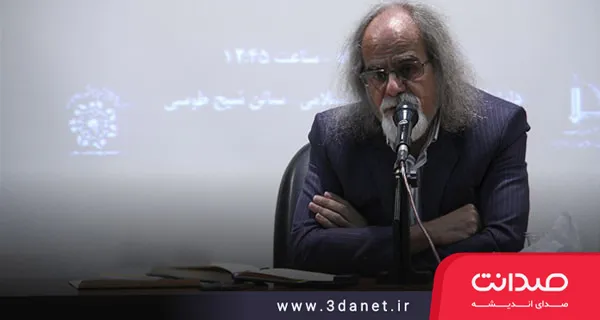
Mostafa Malekian
SpeakerThe subject of my talk, as its title suggests, is the scholarly legacy of the late Dr. Dariush Shayegan, the renowned intellectual and thinker of our time. To demonstrate the standing of Dariush Shayegan, whom I refer to as a spiritual intellectual, I must first address a preliminary point.
The truth of the matter is that, for nearly four centuries, the world has witnessed the emergence of an unprecedented and unique civilization and culture that we call modernity and modernism. A phenomenon that possessed both a civilizational (external) aspect and a cultural (internal) aspect. The civilizational aspect in that it made an objective, external entry into the world, and the cultural aspect in the sense that a series of internal states of being within Western man caused this external manifestation. Personally, I interpret the civilizational aspect of this phenomenon as modernity, and the cultural aspect as modernism. This civilization has characteristics that, by virtue of those characteristics, are incomparable to other cultures and civilizations before it; here, I will address only one of these characteristics.
Modern culture and civilization is the only culture and civilization that has become global and has cast its shadow over the entire planet, whereas before modernity and modernism, no other culture or civilization had such dominance and sway. One of the characteristics of this culture and civilization is rationality, and one could say it is the most important of these characteristics. From within this new rationality, which is a rationality in the sense of full-fledged, absolute, and exceptionless reasoning, a series of individual phenomena emerged, all of which we must consider the children and offspring of this rationality. One of these phenomena is modern philosophy, and it is called new for this reason: in this philosophy, only rational argument holds validity, and nothing other than rational argument is valid. In philosophies prior to modern philosophy, rational argumentation existed, but these rational and philosophical arguments were generally accompanied by other matters such as unveiling, intuition, and dogmatic beliefs, and were not purely rational argumentation. That is, in the past, philosophers sometimes, alongside their rational, philosophical, and a priori arguments, also drew upon unveiling and intuition—whether personal unveiling or the mystical revelations of other gnostics—as well as the sacred scriptures of religions and sects, and also resorted to dogmatic beliefs. Therefore, the fundamental difference between modern philosophy and pre-modern philosophies is that in modern philosophy, reason alone is the criterion for negation and affirmation, rejection and acceptance, criticism and correction, etc., and the acceptance of a theory depends on its appeal to reason; appealing to a non-rational judgment, whether to the sacred texts of religions and sects or to mystical unveiling and intuition, has no place in this modern philosophy.
Another fruit, or one might say child, of modern rationality was the growth of the empirical sciences. Whether the natural empirical sciences like physics, chemistry, and biology, or the human empirical sciences like psychology, sociology, and so on.
When the empirical sciences (especially the natural empirical sciences) developed, in this process of the growth of the empirical sciences, another fruit called technology and industry emerged from modern rationality, which was unprecedented in both quality and quantity (in this discussion, we consider technology and industry in one sense, although they are two different things). In fact, modern philosophy, the empirical sciences and their unprecedented growth, and technology and industry are the most prominent offspring of modern rationality. These three phenomena together created a globalizing culture and civilization, such that one can no longer find any point in the world untouched by the effects of this culture and civilization. The difference between modern culture and civilization and other cultures and civilizations called traditional—such as Confucian, Hindu, Buddhist, Islamic, and so on—is that modern culture and civilization was able, for the first time in the world, to take the lead and encompass the entire globe, whereas no other civilization or culture has ever had such a precedent. Therefore, human beings across the world today, whether they want to or not, are modern humans to varying degrees, and all are subsumed under the titles of modernity and modernism. Now, considering this situation, the question arises: how should we encounter modernity and modernism? Should we accept it willingly and go along with it, or should we regard it as evil and confront it? And what is our reasoning for these different approaches? To answer this question, four different solutions have been offered, and the late Shayegan falls within one of these solutions, which I will address.
The first encounter of traditional civilizations, especially Islamic civilization, with modernity and the solution to this problem is that modernity and modernism are potentially a complete and capable culture and civilization, and over time, their potentiality becomes actualized. In this approach, modernism is considered a culture and civilization that has no inherent flaws, defects, or blights and can potentially resolve all of humanity's issues and problems. Consequently, all previous and traditional cultures and civilizations must be set aside, and all human beings must become entirely modern. Among those in Iran who adopted this approach, one can mention the late Taqizadeh in the first period of his thought. Taqizadeh believed that Iranians must become completely Western (modern) for their issues and problems to be solved. (Of course, later, in the second period of his thought, he abandoned this extreme view).
The second approach to encountering modernism is entirely contrary to the first. That is to say, in this approach, modernity and modernism are considered entirely evil, wretchedness, and misfortune, bringing humanity nothing but ruin, and in fact, modernism is spoken of as an evil from which one must flee as much as possible and return to the past, that is, to the early days of Islam. For example, in the Islamic world, one can point to Muhammad Qutb and Sayyid Qutb in Egypt, who belong to the Islamic fundamentalist group. Another group in the Islamic world that holds this approach are the Islamic traditionalists, such as René Guénon, Martin Lings, and Seyyed Hossein Nasr. The difference between Islamic fundamentalists and Islamic traditionalists is that while both groups advocate a return to the past, fundamentalists seek the realization of a jurisprudential life from this return, while traditionalists seek a mystical and prophetic life from the return to early Islam. But both groups decree a withdrawal from modernism. A point that must be noted is that fundamentalists and traditionalists also believe that one cannot withdraw from modernity (modern civilization—technology and industry) and must accept it, but one must distance oneself from and avoid modernism (modern culture—its internal, subjective, and psychological aspects). The second view, contrary to the first, believes that what is potentially complete is one's own culture, such as Islam, and it must be preserved.
The third view holds that there is no escape or alternative to modernity and modernism, and that modernization is a desirable matter. According to this approach, our own culture, despite its benefits and strengths, has flaws and deficiencies that can be remedied through modernity and modernism. Therefore, while preserving the virtues of our own culture, we must use modernity and modernism to reform it. For instance, modernity and modernism place an unparalleled value on rationality, universal ethics, human rights, democracy, constitutional governments, and social ideals such as freedom, social justice, and welfare—things unprecedented in our own culture, which has been deficient in this regard, and these desirable matters are the achievements of modernism. According to the third approach, by accepting these aspects of modernity, our own culture will also evolve, and its weaknesses will be eliminated and resolved. Thus, we should welcome what this culture offers. In fact, the third approach, which we interpret as religious intellectualism, firstly accepts that our own culture is not complete and flawless, and secondly accepts that modern culture lacks the deficiencies of our own culture and that modernism can play a complementary and perfecting role for our own culture.
The fourth view, in which Dr. Shayegan is situated, is a view that advocates a kind of return to the East and a return to the past. This view in the West is attributed to the idealists of the 18th and 19th centuries, who are referred to as the German Romanticists. The German Romanticists, among whom figures like Kant and Schelling can be named, believed in a return to the past and held that modernity and modernism have fulfilled the rights of three valuable matters—rationality, philosophy, and the material dimension of human existence—but at the cost of extinguishing the rights of three other matters. Therefore, now that this culture is expanding and penetrating human life, we are obliged to refer people back to these three important matters that have been neglected in modernism and strive to revive these three matters, which include imagination, poetry, and spirituality.
1_ Rationality and Poetry: In this view, the Romanticists held that modern culture has fulfilled the right of rationality but has been inattentive to and neglectful of the faculty of imagination. Therefore, we must fulfill the share of imagination in our lives. Indeed, according to the German Romanticists, if modern culture takes hold, humanity will make full use of its five senses and the faculty of reason, but will be deprived of a major part of human life that arises from employing the power of imagination and the faculty of fantasy, as if rationality has constricted the arena for the imagination and its actualization.
2_ Philosophy and Poetry: This view also held that poetry has been neglected in modern culture. Modernism has attended to philosophy but has not fulfilled the share of poetry. In a sense, this culture has acted like the words of Plato, who said that poets must be expelled from the ideal city. Thus, in modern culture, we will have first-rate philosophers but will have no poets, and poetry and the entirety of what we express through the faculty of imagination and within the medium of poetry will vanish.
3_ Materiality and Spirituality: According to this view, a very important matter that has not been considered in this culture is the spiritual and inner dimension of human existence. The crucial point is that this culture provides for human materiality but will not provide for spirituality and inwardness. That is, modern culture has the ability to answer human problems in the realm of political, economic, and legislative issues, but in the realm of spirituality and the human interior, and in confronting issues such as loneliness, death, meaninglessness, and worthlessness, it has no answer, and modernism is incapable of solving these problems. In other words, two dimensions in the human being must be separated, and even if one does not hold philosophically (in the philosophy of mind) to this separation—that the body is composed of two substances, a corporeal substance called the body and a spiritual substance called the soul—the point that humans have two sets of needs in life is undeniable: one set of needs pertains to the betterment of the exterior, and the other to the betterment of the interior. The Romanticists stated that modernity and modernism will improve the exterior but cannot improve the interior. Hence, modernity answers material needs but leaves spiritual needs unanswered, and one cannot expect anything from modernism in this regard.
In differentiating the views of religious intellectuals and the German Romantics, it can be noted that religious intellectuals seem to be more concerned with materiality and see spirituality as already provided through their own culture, whereas the German Romantics are concerned with spirituality and see the right of materiality as having been fulfilled.
The solution that the German Romantics offered for this issue was that spirituality must be sought from the East; there is no spirituality in the West, and one must return to Buddha, Confucius, Islam, medieval Christianity, and Hinduism (Eastern religions). The East is incapable of addressing material problems, but in the realm of spiritual matters such as meaning, contentment, and goodness, it is strong, responsive, and remedial. Some Romantics saw the return to the East solely in terms of attention to medieval Christianity, while a significant majority believed that a complete return to the East was necessary and did not consider even medieval Christianity to be complete. Among these thinkers, Henry Corbin, who is considered the last German Romantic, strongly believed that among Eastern spiritualities, one must return to Islamic spirituality. Henry Corbin advocated a return to the East and pointed out that within the East, spirituality exists only among the Indo-Europeans, and these Indo-Europeans themselves comprise three groups: 1. Indians 2. Iranians 3. Germans. He believed that among these three groups, priority belongs to the philosophical-mystical reading of the Iranians.
Henry Corbin greatly influenced Shayegan, and Shayegan was deeply affected by him; in this respect, all of Shayegan's works call for reclaiming the right of the spirit. He uses the interpretation that the right of matter has been fulfilled and continues to be fulfilled, but the right of the spirit has been lost, and for this reason, he believed we must return to the clime of the spirit and fulfill the lost right of the spirit. Therefore, Shayegan actually falls into the fourth group. Since the primary audience of the fourth group, and Shayegan's primary and essential audience, is among Westerners who are not concerned with materiality but are afflicted with a spiritual problem, the late Shayegan wrote his works in French. As a Corbinian thinker, Shayegan agreed that a major part of the spiritual realm of Westerners has been deprived, but he did not agree with Corbin on the instance of this spirituality. Corbin considered the main instance of universal spirituality to be Islam with an Iranian reading, but Shayegan, as a spiritual intellectual, did not pursue this spirituality solely through a specific historical and institutionalized religion; rather, he sought to realize spirituality without commitment to any specific religion, denomination, or particular path. It is because of Shayegan's lack of commitment to a specific religion or path that I refer to him as a spiritual intellectual.
Now, with the explanations provided, two questions arise.
1_ Is the proposed solution of returning to the East realizable or not? Can we live a modern life and be modernists, with our materiality provided through modernity and modernism, while also attending to imaginative, poetic, spiritual, and numinous factors? Is this achievable? In fact, this approach is noteworthy in theory, but one must consider to what extent this view is practically executable. To what extent can modern man, with his commitment to rationality, universal ethics, and human rights, practically become spiritual at the same time, or revive and cultivate his spirituality? I have not observed in Dariush Shayegan's works that he demonstrated the practical feasibility of his view. In Shayegan's works, and even in an interview previously conducted with him, in my opinion, he did not offer any practical recommendations and merely presented a general trajectory, suggesting that one must proceed along this path, although it seems he did not examine this path thoroughly either. In any case, the question remains for us, citing the ethical principle that no one can be tasked beyond their capacity: to what extent can today's modern man, with the psychological and mental ability and capacity he possesses, while preserving rationality, step onto the path of spirituality and fulfill the right of the spirit.
2_ The second point is whether the German Romantics' assertion of a spiritual void in Western man has been accepted, and whether their call to spirituality has been welcomed among Westerners and has found serious adherents or not. It seems the answer to this question is positive, and a great many people over the last century and a half have paid attention to this view and accompanied it. Of course, with the caveat that this multitude has not acted uniformly in choosing a method, and has used various ways including yoga, meditation, seclusion, and so on, which are not similar in terms of depth and breadth.
.
Lecture by Mostafa Malekian on the Scholarly Standing of the Late Dariush Shayegan
.
Watch the lecture on YouTube
.
Watch the Q&A on YouTube
.
Download the audio of the full session
.

Discussion5 comments
همیشه استاد ملکیان سلامت بماند و تا بتوانیم بیشتر از داشته هایش استفاده کنیم.
سلام دوباره ببخشید در جای دیگری هم قرار می دهید؟ یوتیوب به سبب فیلتر بودن دردسر خود را دارد. آپارات یا مدیافایر، به مانند سایر فایل ها قرار نمی دهید؟
سلام ببخشید اگه امکانش توی آپارات هم بارگذاری کنید کلیپ ها رو ممنونم
من سخنرانی ایشون رو در دانشگاه شنیدم و توفیق داشتم از نزدیک استاد رو ببینم.سخنان پایانی ایشون در مورد دیدگاه مرحوم شایگان بسیار برایم جالب بود.و دلم میخاست بیشتر در مورد راهکارهای گرفتن سهم روح یا خیال از شرق صحبت میکردن. امیدوارم استاد ملکیان عزیز سلامت و برقرار باشند.
لطفا فایل های تصویری را، در یک سرور هم بارگذاری نمایید. با سپاس از زحمات شما