Philosophy
A Lecture by Dr. Mousa Akrami on Physics and Metaphysics, with Q&A
A lecture by Mousa Akrami tracing the evolution of physics and metaphysics from Aristotle to Kant. Centered on Hume's challenges to causality and Kant's attempt to awaken metaphysics from its dogmatic slumber, this talk examines the relationship between natural science and first philosophy.
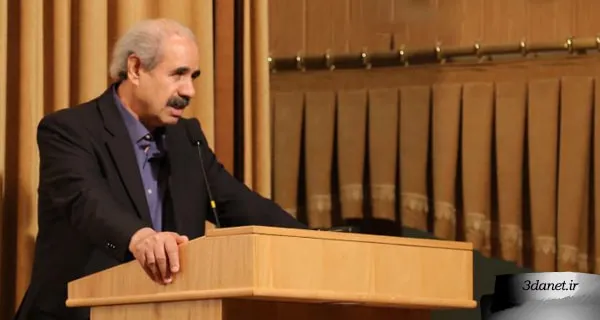
Topics of Discussion: 1- What is the relationship between physics and metaphysics? 2- Are philosophical principles such as causality accepted by quantum mechanics? 3- What change does modern physics bring to our understanding of God? 4- What is the role of physics and metaphysics in understanding and explaining religious truths?
.
.
Physics and Metaphysics
These two words refer us back, more than anyone else, to Aristotle. Aristotle divided theoretical wisdom into three parts: the highest wisdom (metaphysics), the middle wisdom (mathematics), and the lowest wisdom (physics). The Greeks used the word "physis" to mean nature, and "Physica" is a book written by Aristotle, which deals with the study of nature. Aristotle has a book that today is called ta meta ta physika. Aristotelian scholars say that when Andronicus of Rhodes wanted to categorize Aristotle's books, there was no name for this collection of topics that we know today as metaphysics. These were probably scattered writings, but they had related subjects. Andronicus of Rhodes placed these, in terms of location, after the book Physica and then named it ta meta ta physika—that is, the book that, in terms of its physical position (on the shelf where it was placed), comes after the book on physics. However, the word "metaphysics" stuck to it, but later it seemed how precisely these had been named, and it is simplistic if we say it was named metaphysics solely for this reason. In one place, Aristotle says the subject of this science is the first principles and causes. In another place, he says this science is responsible for investigating the primary ousia (substance). In the readings of some modern Aristotelian scholars, it has been said that we should not translate this ousia as "substance" but rather as "being"; if we accept this, then this science deals with primary being or primary existence. In yet another place, Aristotle says the subject of metaphysics is in fact the first cause. From this very point, he also wants to choose a name, and he names this knowledge "theology," because in a sense it is going to talk about the prime mover (the first cause). Another name he chooses is "first philosophy," as opposed to lower philosophy and middle philosophy. But when he wants to enumerate the subjects, he says the subject of this science is being as being. Its Persian translation also depends on how we translate "being." If we translate "being" as "existence," it becomes "existence qua existence"—existence insofar as it is existence. In fact, the general discussions about what characteristics and properties existence has (regardless of what kind of existence it is). This, in a sense, became the axis of all metaphysics, especially as inherited from Aristotle. You see that in Aristotle's division, mathematics is an intermediary between physics and metaphysics, and therefore metaphysics and physics are linked, and all of them are part of philosophy. Physics is natural philosophy; it is the thinking of philosophers about nature; it is the understanding of nature from a philosophical perspective. The exchange between physics and metaphysics was, in a sense, accepted, just as Newton also named his book Mathematical Principles of Natural Philosophy. And this exchange and link between metaphysics and physics continued until Leibniz and Wolff—Wolff, of course, takes a more precise look at metaphysics, a look that also considers the Islamic world and Avicenna, and divides metaphysics, based on both the Aristotelian tradition and everything that had reached him, into two parts: general metaphysics and special metaphysics. General metaphysics is what in the Islamic world is called al-umūr al-ʿāmma (general matters), theology in the broader sense (in fact, the meaning of theology that Aristotle spoke of still preserved itself). Theology in the broader sense is, in fact, the general discussions and the general laws and principles governing the universe and existents. Theology in the narrower sense, however, is that part which deals with specific beings, three of which become very prominent and are inherited by Kant: the world, the soul, and God. Kant says metaphysics was the beloved of his entire life. Kant suddenly becomes acquainted with the achievements of someone in the Anglo-Saxon world named David Hume. David Hume divides all propositions into two types: analytic and empirical. An analytic proposition, in the Kantian account, is one whose truth we can discover through the analysis of the concept of the subject and the predicate—whether the concept of the predicate is contained within the concept of the subject or not. If it is, the proposition is analytic. And if it is analytic, we do not need to refer to the outside world to determine its truth or falsehood; we discern its truth or falsehood from within itself. According to Hume, all propositions of mathematics and logic are analytic propositions. Synthetic propositions, however, are propositions that refer to the world of experience and, in a sense, as Kant says, these are synthetic propositions. According to Hume, these propositions are the only ones that have the competence to remain.
Any other kind of proposition that neither fits within the framework of the empirical sciences nor is an analytic proposition must, according to Hume, be consigned to the flames. Among them, metaphysical propositions—these too, in Hume's view, must be consigned to the flames. For Hume, all metaphysical propositions, being neither empirical nor analytic, must be consigned to the flames. Like the principle of causality. If you say that every effect has a cause, this is true and it is an analytic proposition because the concept of the predicate is implicit within the subject. So this proposition is analytic and true. But if you say that every event has a cause, where did you get this proposition from? This proposition is metaphysical and has no value whatsoever. This achievement of Hume reaches Kant. Kant is awakened from his dogmatic slumber through acquaintance with Hume's thoughts (as Kant himself says). Kant says the metaphysics that has come down to me is a dogmatic metaphysics that makes extravagant claims without having discussed its own competence. Without asking: do I even have the competence to examine these things? Reason says: I can obtain all universal and fundamental principles. But has reason asked itself whether it has this ability or not? Kant says, look at history: we have all these achievements in physics and mathematics. But what do we have from metaphysics? Can you find two metaphysicians who do not quarrel with one another? If someone tells me, show me metaphysics, what am I to point to? Which book can I show about which no one has a difference of opinion? Then Kant says, metaphysics, which was once the queen of all the sciences (the supreme science), this queen has today become a homeless old woman at whom everyone throws stones from every side. On the other hand, metaphysics is Kant's beloved, and he wants to offer a way out. Well, certainly by stopping at Hume you reach a dead end (even empirical science runs into trouble). In the Critique of Pure Reason, Kant tries to show that general metaphysics—all of this—is possible. And we can speak of being qua being, but special metaphysics is not possible. A huge part of the Critique of Pure Reason, under the title of Transcendental Dialectic, discusses the possibility of rational psychology, rational cosmology, and rational theology, and Kant tries to show that these three are impossible. Special metaphysics, which discusses particular beings such as the soul, the world, and God, is not possible, and one must think otherwise. In any case, he tries to save metaphysics. But how? By introducing a new kind of proposition. To analytic propositions and empirical propositions, he defines a new kind of proposition under the title of synthetic a priori propositions. These propositions are propositions that are both a priori (that is, prior to experience and the condition for any experience) and at the same time refer to the external world. And he shows that all metaphysical propositions, all physical propositions, and all mathematical propositions are synthetic a priori. Kant dies in 1804. The idealist part of Kantian thought is transformed by Hegel, Fichte, Schelling, and others into the grand German Idealism, which goes its own way, while on one side, science—physics, mathematics, etc.—faces tremendous achievements. In physics, Maxwell comes and unifies magnetism and electricity, and we reach the late nineteenth century when crises emerge within physics. These two crises, in a sense, threaten the existence of classical physics, and two proposals are put forward that lead to quantum theory and relativity. These two form the foundation of modern physics. But what is the state of philosophy and metaphysics? Positivist ideas are influential, and in 1907, three followers of Ernst Mach (Otto Neurath, Hans Hahn, Philipp Frank) form the Vienna Circle. And this becomes the foundation of logical positivism. And this begins to work as a strong current in philosophy. What is the relationship between physics and metaphysics? This Kantian concern still exists for physicists in the 19th century. Specifically, the logical positivist movement draws a clear line against metaphysics. And it returns metaphysics entirely back to the Humean tradition. That is, it negates it. We only have analytic and empirical propositions. Philosophy is at most useful for discussing concepts. And it is mostly used for the analysis of concepts. And as Wittgenstein says in the Tractatus, it is at most a ladder that gets us to the rooftop, and after that it is of no use. Philosophy is just that. Metaphysics is of no use to us at all. This negation of metaphysics becomes one of the theses of the logical positivist manifesto.In the philosophy of science, however, there was one person who continued to stand against these currents and say that metaphysics has meaning, and not only does it have meaning but it is inescapable, and it has even played a very important role in the history of science and is still necessary for science. That person is Karl Popper. Popper consistently and explicitly stands against that anti-metaphysical current in the discussion of metaphysics (in my view, of course, what Popper calls metaphysics falls under proto-science, not metaphysics in the sense of the science of being qua being. Proto-science, in my opinion, is of the same kind as science, like Democritus's atomic theory). Popper stands alone and defends metaphysics. Figures like Rudolf Carnap (who can be called the sheikh of logical positivism) are seriously against metaphysics. In short, we have a period of 60 or 70 years that stands seriously against metaphysics, and metaphysics is, in a way, rejected. Look at Ayer's book Language, Truth and Logic, which some call the bible of the logical positivists; you see the stances against metaphysics there, and the title of the first chapter is, in fact, the elimination of metaphysics. Until the 1970s, when, with the serious work begun by people like Dretske, Tooley, and Armstrong, metaphysical discussions gradually come back to life. The idea that we need metaphysics, and that there are discussions in physics that are inescapable. Should we talk about causality or not? Should we talk about whether our world is unique or not? Hume said we should remain silent, but we cannot remain silent. Where, after all, should we discuss the very, very ordinary topics that philosophers of science have talked about, such as explanation and the like? In short, what is the philosophy of science, and what is its nature? Does it have no metaphysical elements at all? They gradually came to the conclusion that yes, not only do they have metaphysical elements, but we must also go back and talk about much of what was discussed in the metaphysical tradition. We must talk about time, space, causality, the continuity of the body over time, and so on. Gradually, a very strong current emerges that revives those metaphysical discussions once again—which I, of course, call analytic metaphysics. Within analytic philosophy, most of whose practitioners are scientists, a huge volume of books and articles on various metaphysical topics emerges.
.
.
Physics and Metaphysics
An Examination of the Philosophical Foundations of Modern Physics with the Faculty of the Philosophy and Physics Departments
Speaker: Dr. Mousa Akrami
Followed by a Q&A Session with Professors:
Dr. Mousa Akrami Dr. Rasoul Roknizadeh Dr. Mehdi Dehbashi Dr. Amir Ehsan Karbasizadeh
Monday, 20 Ordibehesht | University of Isfahan, Faculty of Literature, Saeb Hall
.
.
Audio of Dr. Mousa Akrami's Lecture on Physics and Metaphysics
.
.
Audio of the Professors' Q&A (Dr. Rasoul Roknizadeh, Dr. Mousa Akrami, Dr. Ehsan Karbasizadeh, and Dr. Mehdi Dehbashi)
.
.



Discussion2 comments
سلام ممنون از زحماتتون نمیدونم چرا هرچی سعی میکنم صوت سخنرانی و همچنین پرسش و پاسخ دانلود نمیشه با سیستم های مختلف و سرعت بالا هم امتحان کردم نشدع ضروری این بحثو لازم دارم خواهش میکنم راهنمایی کنید چطو میتونم تهیه کنم امکان ایمیلش براتون نیست ?
سلام. کار خیلی خوبی کردید. هرچند نمیدونم مفید باشه یا نه، نگران بودم یا کلاً این صوتها را نیابید و نگذارید و یا پرسش و پاسخ را نگذارید. ولی خیلی سپاسگذارم. تشکر تنها کاری بود که از دستم برمیومد برای گردانندگان این سایت انجام بدم.