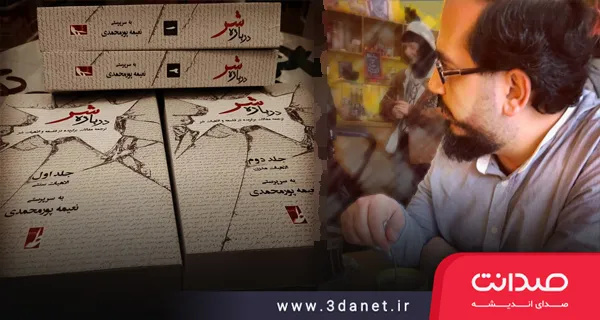
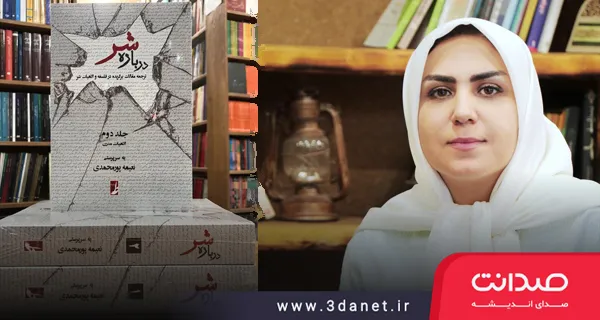
در نوشتار «"مسأله شر" ایرانی؛ خدا کجا بود ...؟»، یاسر میردامادی -پژوهشگر فلسفه و دین- با اشاره به انتشار کتابی درباره "مسئله شر" به زبان فارسی به "شر" در ادبیات دینی مسیحیت و یهودیت و اسلام پرداخته است.
گرچه مسأله شرّ در فلسفه و الهیّات اسلامی معاصر، به هر دلیل یا علّتی، چندان مسألهای محوری نبوده است با این حال تعداد پژوهشگران ایرانی یا ایرانیتباری که مسأله شرّ را جدّی گرفتهاند رو به افزایش است...
۱- مسأله شر در مسیحیت و یهودیت
مسأله شر، مطابق یک صورتبندی ساده، از این قرار است:در جهان، شرور بیهوده بسیاری وجود دارد از شرور طبیعی گرفته که دخالت انسانها در پدید آمدن آن نقشی ندارد مانند سیل، زلزله و آتشفشان، تا شرور اخلاقی مانند بردهداری، جنگ، نسلکشی و استبداد. اگر خدا قادر مطلق است میتواند این شرور را از میان بردارد، اگر خیرخواه محض است میخواهد چنین کند. از آنجا که شرور بیهوده بسیاری وجود دارد پس خدا وجود ندارد.
در برهههایی از تاریخ اندیشه، از عهد باستان گرفته تا کنون، اینگونه به نظر میرسیده که مسأله شرّ یک بار برای همیشه به سود خداباوران یا خداناباوران حلّ شده است؛ اما آزمون تاریخ کموبیش نشان داده که مسأله شرّ از مسألههای جاودانه تاریخ دین و فلسفه است و اگر اصولا حلّپذیر باشد تا حلّ آن فاصله بسیار وجود دارد.
در الهیّات مسیحی، مسأله شرّ، از قدیم تا کنون، بحث و نقد بسیار برانگیخته و همچنان به قوّت برمیانگیزد. اینکه چرا مسأله شرّ چنین جایگاه ویژهای در فلسفه و الهیّات قدیم و جدید مسیحی یافته خود موضوع بحث مورّخان و فیلسوفان بوده است و اجماعی بر سر آن وجود ندارد. با این حال، یک دلیل شاید این باشد که، به روایت دو انجیل از انجیلهای چهارگانه، مسیح ـــ که از دیدگاه مسیحی خودِ خدا در قالب متجسّد است ـــ بر فراز صلیب و در حال جان دادن، از خدا به خدا اینچنین شکایت بُرد: "خدای من چرا رهایم کردی؟" (انجیل مَتّی باب ۲۷ آیه ۴۶، انجیل مَرقُس باب ۱۵ آیه ۳۴).
از مسیحیّت که بگذریم مسأله شرّ جایگاه ویژهای در یهودیّت قدیم نداشته است. با این حال، پس از حادثه هولوکاست (نسلکشی یهودیان از ۱۹۴۱ تا ۱۹۴۵ میلادی به دست نازیها) مسأله شرّ در فلسفه و الهیات یهودی اهمیّت ویژهای یافت. بر اثر هولوکاست، دو سومّ جمعیّت یهودیان اروپا و روی هم رفته یک سوّم جمعیّت کلّ یهودیان جهان صرفاً از آن رو که یهودی بودند کشته شدند. اغراق نیست اگر بگوییم که هولوکاست فاجعه انسانی منحصر به فردی در کلّ تاریخ بشر است و بحران ایمانی ژرفی در میان بخش قابل توجّهی از یهودیانِ باقی مانده پدید آورد. این بحران را میتوان در این جمله مشهورِ یکی از بازماندگان هولوکاست به خوبی دریافت: "اگر خدا وجود داشته باشد برای اینکه او را ببخشم باید به پایم بیفتد". تأمّل در این باب که چرا خدا اجازه داد "قوم برگزیده"اش گرفتار چنین بلای عظیمی شود موجب شکلگیری شاخهای جدید در الهیّات یهودی معاصر با عنوان "الهیّات هولوکاست" شد.
۲- غیبت مسأله شرّ در اسلام
در الهیّات اسلامی (چه الهیّات قدیم و چه الهیّات جدید و معاصر) امّا مسأله شرّ جایگاهی محوری نداشته است.
در قرآن یا سیره پیامبر سخنانی شبیه سخنان عیسی بر فراز صلیب روایت نشده است. البتّه روایاتی وجود دارد که میگوید پیامبر اسلامی در برههای که سخن گفتن خداوند با او برای مدّتی قطع شده بود قصد خودکشی داشته است. امّا صحّت این روایات مورد تأیید عموم مسلمانان نیست. مسلمانان نیز نسلکشیای را در قیاس با آنچه در هولوکاست بر سر یهودیان آمد تجربه نکردهاند.
Other tragedies that have occurred in Islamic history have not caused the problem of evil to become a widespread theological problem among Muslims. For instance, the killing of the Prophet's grandson, Husayn ibn Ali, along with his companions and part of his family, is mourned annually by Shiites. The event of Ashura also holds a special place in Shiite thought, yet it has not led to the problem of evil being taken seriously among—if not all Muslims, at least—Shiites, who have a sorrowful history.
Nevertheless, some statements attributed to Husayn are not unlike the words attributed to Jesus on the cross. It is narrated in various ways, both by Shiites and Sunnis, that on the night of Ashura, when Imam Husayn was in his tent preparing his sword for battle, he recited a poem three times, a Persian translation of part of which is: "O Time (dahr)! Woe upon you! What a bad friend you are / Whether at dawn or at dusk / You have slain lovers and seekers / Time has never been content with anything else."
If we place this complaint about the cruelty and misbehavior of time, and specifically the cursing of time (sabb al-dahr), alongside a hadith attributed to the Prophet that says: "Do not curse time, for time is God" (la tasubbu al-dahr fa-inna al-dahr huwa Allah), then perhaps one could say that the potential for the problem of evil to become a problem also existed in Islam. This potential, however, has rarely been realized because Muslim theologians generally did not formulate these conflicts in the form of the problem of evil, but rather, through reinterpretation, erased the problem from the outset. Among the theologians who perceived the possible conflict between Imam Husayn's poem and the Prophet's hadith and sought to resolve this conflict was Morteza Motahhari. Motahhari says that Imam Husayn's meaning is that if someone takes the world as their friend, the world will not be faithful to them; otherwise, time, insofar as it is a creature of God, is not evil.
Why has the problem of evil not been a very serious problem in Islamic theology? Detailed research has not been conducted on this matter, but some speculations on the subject can be listed as follows:
1. The problem of evil has not gained importance in Islam because theology is not central to Islam in principle. In contrast to Christianity, where theology (specifically Christology) is central, in Islam it is practice that is central, not belief. Hence, in Islam, jurisprudence (fiqh) is important, not theology, and the discussion of the problem of evil is not a jurisprudential discussion.
2. Since in Christianity God clothed Himself in human form, came among humans, lived among them, and was ultimately crucified by them, the problem of evil has gained central importance for Christianity. In a sense, in Christianity, God was martyred, and what evil is greater than this? In Islam, however, God did not descend from His throne, did not clothe Himself in human form, did not live among humans, and no harm from humans befell Him; therefore, for Muslims, evil has not become a central problem.
3. The story of Adam and Eve eating the forbidden fruit exists in both Christianity and Islam. Both religions accept that this sin caused the fall of Adam and Eve from Paradise and their dwelling on earth. However, Christians believe that the evil resulting from the original sin of Adam and Eve has spread to all of humanity until the Day of Judgment and clings to every human being until the Day of Judgment, but in Islam, such a belief does not exist, and the original sin of Adam and Eve did not spread to the human race; apart from the fall, this sin only affected Adam and Eve themselves and is not written against all of humanity. Hence, the evil of original sin is important for Christian theology but not for Islamic theology.
4. The problem of evil has not gained importance in modern and contemporary Islamic theology because the confrontation of Muslims with colonial and post-colonial West has caused Muslims to fall into an "identity lock" and engage in the "identity idealization" of Islam in opposition to the West, consequently becoming trapped in the binary of the "authentic Eastern self" versus the "degenerate Western other." Thus, even issues that were among the permissible and thinkable matters in classical Islamic theology (especially the first three centuries of Islam) have now become taboo and unthinkable matters; the problem of evil is one of them. (The Islamic "Problem of Evil"; Islamic Reactions to the Problem of Evil, Yaser Mirdamadi, 42 Magazine, No. 11, Mehr 1398, pp. 80-87).
3- The Iranian “Problem of Evil”
Although the problem of evil has not, for whatever reason or cause, been a very central issue in contemporary Islamic philosophy and theology, the number of Iranian or Iranian-origin researchers who have taken the problem of evil seriously is on the rise. A work in Persian on this subject has recently been published. This work is titled On Evil, and in it, various articles on the philosophy and theology of evil have been translated into Persian. Na‘imeh Pourmohammadi, Assistant Professor of Philosophy of Religion at the University of Religions and Denominations in Qom, selected these articles, served as the chief editor of the translations—which were carried out by a group of translators, including herself—wrote a 110-page introduction to the entire work, and composed an abstract for each of the 61 articles in this collection. In addition to the introduction, two original articles by her are also included in the book. This work, in two volumes totaling 1,500 pages, was published by Taha Publications in Qom in the summer of 2019.
The importance of this work lies in its comprehensiveness and the nature of its article selection. This work can be called a comprehensive encyclopedia of evil. Not only in Persian, but even in English, where numerous research works on the problem of evil are published every year, no single work so comprehensive on the problem of evil has been published to date. Therefore, this work has the potential to be translated into other languages, especially Arabic. In recent years, the intellectual interest of Arab countries (especially Lebanon and Iraq) in the works of Iranian philosophers and researchers has been increasing. The Arabic translations of the works of Abdolkarim Soroush, Mohammad Mojtahed Shabestari, and Mostafa Malekian, as well as the perennial popularity of Arabic translations of Ali Shariati’s works, are examples of such interests.
In her introduction, Pourmohammadi maps out the philosophical and theological discussion of the problem of evil. In this map, she attends not only to Islam or the Abrahamic religions but also to East Asian religions such as Hinduism. She also attends not only to religions but also to atheistic approaches. She first explains the various classifications of evil (natural and moral evil, existential evil, horrendous evil, and structural evil). She then sets forth the types of the problem of evil (the logical problem of evil, the evidential problem of evil, and the existential problem of evil). She also addresses traditional defenses and theodicies to the problem of evil, that is, she deals with the ways believers respond to the problem of evil. These responses serve to argue that evil is not incompatible with the existence of God, and also to suggest what God’s motivation might be for creating a world full of evils.
The main traditional responses to the problem of evil are of this kind: 1. Evil is illusory, 2. Evil is a privation, 3. Evil is relative, 4. The necessity of the existence of a being whose good outweighs its evil, 5. The material world is the source of evil, 6. Evil is necessary for the realization of good, 7. Evil is necessary for the perception of good, 8. Evil results from a partial view, 9. Evil results from the human perspective, and 10. Evil results from human free will.
Pourmohammadi then presents various critiques of the traditional responses to the problem of evil; the central point of many of these critiques is that the various responses of believers to the problem of evil carry the risk of not taking evil seriously. If people are convinced that evil is a prelude to good, they may then become indifferent or less attentive to human suffering, because they believe that individuals’ suffering is a prelude to good for themselves and/or others. According to this critique, tolerance of evil can lead to a kind of callousness for believers.
After reviewing traditional responses to the problem of evil and critiquing them, the author turns to the responses of modern theologies to the problem of evil. This section is particularly fascinating because, in the Persian-speaking world, there are few works on the response of new theologies to the problem of evil. In “process theology,” God is not omnipotent and cannot compel even the natural world (let alone the world of human free will) to behave according to His desire; rather, God’s power is merely “persuasive” and not “controlling,” meaning God tries to persuade existence to behave in the right way but cannot force existence to do so. A part of the world is not persuaded, and evil takes shape, but God is constantly engaged in persuading the world.
In “open theism,” God, in order to respect human free will, has limited His own knowledge and power to make room for human will and choice. The similarity between “open theism” and “process theology” is that in both, God does not appear in the world as omnipotent, but their difference is that in “process theology,” God fundamentally cannot be omnipotent, whereas in “open theism,” God voluntarily relinquishes His omnipotence for the sake of human free will. If God does not appear as omnipotent, the problem of evil is resolved, without theism being abandoned altogether.
Among the distinctive new theological approaches to the problem of evil is “protest theology.” “Protest theology” offers no justification for evil, neither traditional nor modern. Nevertheless, it does not abandon belief in God fundamentally; rather, like a child who rebels against their father, it rises in rebellion against God and, like Jesus on the cross, protests against God to God. In “protest theology,” God remains omnipotent, but for reasons not apparent to us, He does not wish to eliminate evil from the world; however, this situation is unacceptable to “protest theology,” and the result is a kind of authentic faith of protest. The faith of protest has its roots in the “Book of Job” in the Old Testament and also in Jesus’ words on the cross in the New Testament. In Jewish protest theology, it is said that after the Holocaust, “to protest is the only fitting stance of faith before God.” (On Evil, Vol. 1, p. 82).
An interesting point here is that Islamic theology is not devoid of a kind of “protest theology.” Setting aside the Quranic account of the angels’ protest to God over the creation of humankind, Navid Kermani, the German-Iranian Islamic studies scholar, in his book “The Terror of God,” addresses the Iranian mystic Attar of Nishapur. In his poem “Musibat-nama” (The Book of Affliction), Attar speaks of mystics who feigned madness and considered themselves so intimate with God that they dared to protest against God.
Another modern theological approach in response to the problem of evil is “skeptical theism.” In this theology, the unknowability of God is emphasized: we cannot know God’s reasons for creating evil, but this does not mean that no reasons exist.
Another theological approach is “narrative theology.” This type of theology opposes general and abstract theorizing in response to the problem of evil; instead, it emphasizes the concrete narratives of individuals in their encounter with evil. “Narrative theology” assumes that there is no universal answer to the problem of evil applicable to everyone. The task of theology is merely the story-like, particularistic narration of believers’ grappling with the evils of the world, without attempting to extract an abstract prescription for everyone from these narratives.
Another response to the problem of evil is “death of God theology.” In a specific type of “death of God theology,” it is said that God annihilated Himself on the cross to transform from a metaphysical reality into a reality incarnate within each and every human being. In this type of theology, there is no longer a metaphysical God, separate and distinct from humans; rather, only humans exist as micro-gods who, hand in hand, reduce the intensity of the world’s evils.
In response to the problem of evil, other types of theology have also been proposed, such as “theology of God’s weakness,” “Reformed epistemology theology,” “feminist theology,” “disability theology,” and “existential theology.”
For each of these responses to the problem of evil, an article by one of its proponents has been translated. However, this book does not only address theistic responses to the problem of evil; writings by Richard Dawkins and Charles Darwin also appear in these two volumes. The first volume deals with classical philosophies and the traditional theology of religions, and the second volume with contemporary approaches to the problem of evil.
At the end of her introduction, Na'imeh Pourmohammadi points to the personal motivation behind compiling this work: "First of all, I kiss the forehead of my nine-year-old son Amir Ali, whose birth, along with Bardet-Biedl syndrome, awakened me from the slumber of dogmatism. In the maternal fever behind the doors of operating rooms, in the waiting halls of mental rehabilitation, physical occupational therapy, and speech therapy, in mourning for the inevitable fate of low vision and blindness and the short lifespan he would have due to kidney failure, I always struggled to find an answer, an answer that could convince and console a mother to endure this exorbitant suffering. This struggle continues, and this work, which I have selected from dozens of books, translated, and present, is part of what I have read and learned along this path." (On Evil, Vol. 1, p. 118).
.
.
Details of the book "On Evil":
Author: Na'imeh Pourmohammadi
Subject: Mysticism, Religion and Faith
Publisher: Ketab-e Taha
Age Range: Adults
Format: Octavo
Binding Type: Hardcover (Cellophane)
Publication Year: 2018
Edition: 1st
.
.


Discussion0 comments
No comments yet; let yours be the first voice.