Religion
IRNA Interview with Naeimeh Pourmohammadi on the Publication of 'On Evil'
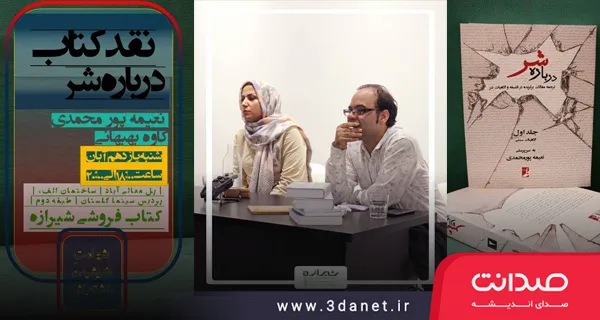
The two-volume On Evil, edited by Naeimeh Pourmohammadi, is the most comprehensive Persian-language resource on the philosophy of evil. This conversation explores the distinction between the emotional and logical forms of the problem of evil, and how real suffering—beyond philosophical arguments—threatens the faith of ordinary people.

The problem of evil is one of the most formidable and ancient topics in philosophy, theology, and divinity, a subject whose heat of debate and lively marketplace of ideas has never cooled. Recently, Taha Publications has released a two-volume, 1,500-page book in this field titled On Evil: A Translation of Selected Articles in the Philosophy and Theology of Evil. The first volume addresses traditional theology, and the second volume deals with modern theology. Given the scarcity of translated Persian sources in this area and the novelty of translating works on this subject, the book On Evil can be considered the most comprehensive translated work and a reference in this field to date.
The thematic breadth and the multitude of translated articles (61 articles by renowned philosophers and theologians in this field), along with the book's reception among professors and experts in this area in the short time since its publication, corroborate this claim. A critique and review of this pioneering and landmark book could be an auspicious beginning for the translation of other works and the creation of rich indigenous writings in this field.
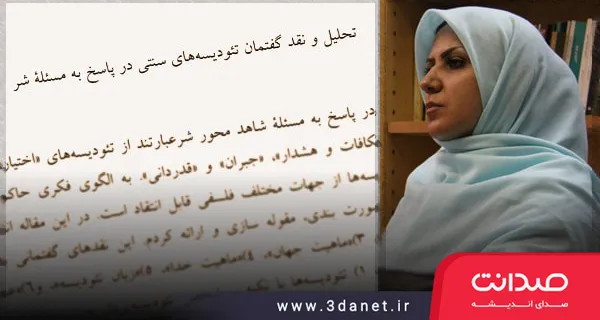
This book was prepared under the supervision of Naeimeh Pourmohammadi, Assistant Professor of Philosophy of Religion at the University of Religions and Denominations in Qom. She is the author of the book's detailed and comprehensive introduction, the translator of 21 articles, and the writer of the initial abstracts for all the articles in the book. On this occasion, we sat down with her to discuss the problem of evil and the content of her book.
IRNA: As a first question, for a general audience less familiar with theological and philosophical discussions and who lacks a clear definition of the term "problem of evil," if we wanted to offer a definition that also references a part of their own life and lived experience, what brief and simple definition could we provide?
Pourmohammadi: The definition that people usually have of God is an absolutely omniscient, absolutely omnipotent, and purely benevolent and kind God. Naturally, when these people suffer in life and encounter evil, they cannot reconcile this situation with their definition of God, and an incompatibility arises between faith in a God with those attributes and suffering. In this situation, people very simply and commonly ask: why would an omniscient, omnipotent, and benevolent God allow me to suffer? This is the personal form of the problem. But the problem also has a philosophical and logical form, which is more specialized and is discussed among theologians and philosophers. However, the simple form that people actually experience in reality and about which they ask personal questions is that first form. This form of the problem is also called the existential, emotional, affective, or personal problem of evil.
IRNA: Please provide a very brief and simple explanation of the logical and philosophical problem of evil as well.
Pourmohammadi: The problem of evil in its logical and philosophical form is more technical and academic. The logical form of the problem is as follows: the first premise states that God is absolutely omniscient, absolutely omnipotent, and purely good. The second premise states that an absolutely omniscient, absolutely omnipotent, and purely good God can prevent evils, and the third premise is that evil exists in the world. Therefore, according to proponents of this form of the problem, God [probably] does not exist. In this form of the problem, the logical incompatibility between the claim of God's existence and the existence of evils in the world is discussed. But in the philosophical form, it is stated that no matter how much we search, we find no reason or justification for evils. The goods we know are not so great as to warrant these diverse, numerous, and disproportionately distributed evils. So, there is no good that justifies evils. Therefore, [probably] here too, God does not exist. The philosophical problem of evil questions the philosophy of justifying and warranting evils.
IRNA: Do you think that ordinary people in society, who are less familiar with this mode of expressing philosophical discussions and the forms of the problem of evil, firstly, find the problem of evil and their life's sufferings expressed in the same way as in theological and philosophical discussions, and secondly, when it comes to untangling and digesting evils and coming to terms with their own suffering and life's calamities, do they cope with suffering and affliction according to these philosophical and theological models?
Pourmohammadi: In my previous answer, I said that ordinary people encounter the problem of evil only in a real, existential, emotional, and affective way, and for example, they say, "I cannot reconcile my faith with suffering." In this situation, a state of meaninglessness of faith arises for the person, and faith in God is threatened. Evil has the power to cause a loss of faith. Ordinary people encounter this model of the problem in a real way. In the first stage, they cannot find any meaning for evil, and evil seems absurd and gratuitous to them. For example, they say, "Why should my sick child suffer?" or "Why should I lose my loved one?" In the second stage, this meaninglessness spreads to faith, and the person can no longer have faith, hope, and trust in God as before. In the third stage, all of life becomes meaningless, and through suffering, the person loses the value of living and enduring. Indeed, all people engage with the problem in this way, and the two philosophical and logical forms are academic and technical discussions that occur for anyone with an agile, sharp, and philosophical mind to satisfy their intellect. These questions and inquiries are specific to philosophy classrooms. It is rare for ordinary people's lives and faith to be affected from this rational and logical perspective. Rather, they grapple with the shame from the angle of emotional and affective meaninglessness. This emotional and affective form of evil has great psychological power, and even if a person has previously lined up a multitude of philosophical and logical answers for themselves, the problem enters emotionally and affectively and, like a storm, uproots and destroys all the straw-like rational and philosophical arguments.
IRNA: So, with this description, we at least claim that from the emotional, affective, existential, and personal angle, all individuals encounter evil. The question is, to what extent does this specific formulation of the problem of evil correspond with the situation of the general public before, during, and after encountering evil, and is this the very thing that has appeared in philosophy books and been conceived and affirmed by philosophers? In other words, to what extent does the philosophical and theological narrative of the emotional and affective reality of evil correspond to the real lives of human beings, and not the imposition and subjectivity of the philosophers themselves? Do ordinary people go through the same stages you mentioned when encountering evil? For example, isn't it the case that, as history testifies, the calamity and suffering of life do not cause so many ups and downs in the faithful and real lives of ordinary believers, and they can preserve their faith life by giving faith-based meaning to suffering?
Pourmohammadi: In confronting the problem of evil, before the narrative, first-person perspective and the lived experience of sufferers were brought up, philosophers and theologians were going to the wrong address and truly dealt with the problem of evil in an ahistorical, subject-centered way, without paying attention to who is suffering and where. That is, evil was formulated in the philosopher's mind without looking at history. At least the history of the twentieth century, what catastrophes occurred in this century, who the executioner was and who the victim is. People like Plantinga and John Hick (two prominent and famous contemporary Christian philosophers) speak in this ahistorical way. But thanks to certain historicist currents and postmodern philosophies, the historical and existential narrative of evil received attention. That is, in what time, in what place, and with which victim or aggressor evil occurs. In this view, anything said outside of this historical and objective approach is not evil, but a semblance of evil. One of these individuals is Kenneth Surin (philosopher and professor at Duke University in America) who, in 1960 and especially after the Holocaust, had a great influence in organizing a concrete post-Holocaust theology. From this point on, evil took on a concrete, historical, and human form, and the answers were oriented toward the victim and the responses of the individuals themselves in the midst of suffering. How suffering individuals preserved their faith in the midst of suffering. In this new approach, attention was paid to lived experiences and people who are suffering. The phrase "The people who are suffering" became a key phrase in philosophical books. How those who suffer preserved their faith alongside suffering. Today, in this new approach, the primary focus is on the narrative and formulation of the individuals themselves, and abstract, ahistorical forms and essentialist views are less adopted. The discourse on the problem of evil in theology and philosophy has moved toward the first-person narratives of the individuals themselves, both in posing the problem and in providing answers. This correction follows the general line of philosophy, and the problem of evil in this context follows the general turn and dominant current of philosophy.
IRNA: Considering your points in describing the new approach of philosophers and theologians in paying attention to the objective, first-person narrative of suffering people themselves, both in posing the problem and in expressing solutions, what difference would there be between a philosopher of religion and theologian and a social science researcher? Can they not be considered the same as a social science researcher? What is the distinction between these two groups?
Pourmohammadi: No. They do not become a social science researcher. Despite this new approach in theology and philosophy, it is still theology and a theological matter is still at the center. This theological discussion is the compatibility or incompatibility of faith and suffering. Therefore, the theological origin of the subject does not disappear. If the discussion of suffering and evil is raised in the social sciences, there is no mention of God. In the social sciences, the triangle of human, suffering, and human justice is discussed. But in theology, God is at the apex of this triangle, and the three components of God, evil, and divine justice are at issue. Whether in traditional theology or in the forms and varieties of modern and newer theology. But in the social sciences, the discussion is about suffering, human, and human justice.
Soltani: Given your triangle in theology, the discussion is still about evil and justice, and these two other sides somehow open a common field between philosophy and the social sciences. By pursuing the new human-centered approach, the theologian and philosopher do not only have a philosophical standing and, in a way, also do sociological and non-philosophical work. Is this not correct?
Pourmohammadi: Yes, your point is correct, and this state is an ideal state that we are moving toward, where the boundary between philosopher and sociologist and their precise demarcation is removed, and there is talk of the interdisciplinary field. In the problem of evil, very new works of this kind propose a union between the philosopher of religion and the sociologist. Just as they say that we should no longer speak of theodicy (theories of divine justice) and instead offer anthropodicy (theories of human justice).
In the introduction to On Evil, I have noted that, in the view of some thinkers, the era of theodicy—meaning theories of divine justice—has ended, and the era of anthropodicy—meaning theories of human justice—has begun. Here you might again ask, what relevance does this field then have for the theologian? The answer is that the theologian can also seek anthropodicy in religious texts within theories of human justice. For example, they can search the Holy Quran and sacred scriptures, draw inspiration from passages that call upon human beings to establish justice among themselves, to spread it, and not to be indifferent to injustice, and offer theories aimed at improving human justice. In this way, they can make people more sensitive to evil, especially structural and moral evil.
Thus, we can offer a religious anthropodicy in this capacity. This state is precisely what you refer to as moving gradually toward, where the boundary between theology and the social sciences is being removed. Of course, this approach is not yet the dominant one, and God-centered theology still pursues theories of divine justice.
IRNA: Simultaneously with, or prior to, the purely rational efforts of theologians and philosophers in responding to the problem of evil, we know that there have been and are human beings who, within a religious life and culture derived from the teachings of religious leaders, find suffering and calamities meaningful and justified, and continue their faithful lives. Are the efforts that philosophers have employed in purely rational theology (natural theology) of any use to these believers? Are these theories a rival to the religious reconciliation of suffering and faith in the lives of the devout? Or are these answers solely for those for whom that mode of religious life and those answers to the problem of evil were insufficient, and who have now placed their hope in reason? What is the relationship between these two approaches?
Pourmohammadi: One of the criticisms leveled against rational theology is why its approaches are so non-scriptural. By scripture, I mean religious texts. Why do rational theologians insist so much on being secular, when within the sacred text itself there are figures like Joseph, Jacob, and Job, who lived lives filled with intense suffering? These can be deeply inspiring. The criticism is raised: why do you distance yourselves so much from these models in the sacred text and religious culture within purely rational theology? In Shia culture, there are influential figures such as Aba Abd Allah al-Hussein (AS), Zaynab al-Kubra, and Christian saints whom people talk about and model their lives upon. Why does rational theology insist so much on being secular? This has been criticized.
Hence, through discursive critique, modern theology is meant to pivot toward being scripture-centered and to refer to first-hand experiences. For instance, Job in the Bible and the Holy Quran, and the authors of the Psalms in the holy books, from whose narratives responses to the problem of evil can be extracted.
I should also add this: it is not the case that every answer proposed in rational and natural theology differs from all the answers on this side in the sacred texts and bears no relation to them. We observe that sometimes there is common ground between these two domains, and this is due to the proximity of reason and revelation; after all, the centers of human knowledge are close to one another. For example, the theodicy (theory of divine justice) response of "warning or retribution" (page 43 of the book) is worth mentioning.
در اینکه شخص غفلت و گناهی کرده است که به واسطه رنج او به او هشدار داده میشود. این هم در الهیات عقلی و هم در الهیات نقلی وجود دارد. یا تئودیسه خلوص راستیآزمایی ایمان است که در کتاب «درباره شر» در مقدمه و در صفحه ۴۶ از آن بحث شده است. این را هم در الهیات عقلی داریم. با این تعبیر که آیا شخص حاضر است با وجود سختی و مصیبت به خدا عشق ورزد، به او اعتماد بکند و ایمان خود را حفظ کند؟ این آزمون و راستیآزمایی در سختیها مشخص میشود. در کتب مقدس هم به این نکته اشاره شده است. مثلا با حضرت ایوب مواجهیم که رنج میکشد تا خلوصش نسبت به خدا آزموده شود. همچنین تئودیسه «پرورش روح» که آیات قرآن کریم آکنده از آن است. اینکه ما شما را به رنج مبتلا کردیم تا رشد و پیشرفت روحی کنید. این در الهیات عقلی هم توسط صاحبنظران وجود دارد. به طور کلی پیشنهاد و ایده این است که در هر دو حوزه رویکرد از شخص رنج کشیده آغاز شود و حتی اگر به پاسخهای مشترکی میرسیم تحلیل را از این طرف شروع کنیم و پاسخ ما از زاویه شخص رنج کشیده باشد. در آن صورت پاسخ ما اصیل است که نمونه واقعی جمع بین رنج و ایمان است. فیلسوف و الهیدان باید دنبال شخص رنج کشیده بروند، پاسخ او را بررسی کنند و بعد از آن همان را به نظریه تبدیل کنند.
ایرنا: با توجه به توضیحات شما درباره توجه به روایت مردمان رنج کشیده در فلسفه و الهیات مدرن، فیلسوف به کار و بار روشنفکری نزدیک میشود. چرا که روشنفکر به انسدادها، ضرورت ها و رنج های اجتماعی اهتمام دارد. اما معمولا دیدهایم که آکادمیسینها تعهد و اهتمام اجتماعی کمتری دارند. به علاوه ما می دانیم در این بحث رنج، صنف دیگری از آکادمسینها یعنی روانشناسان در رفع و تقلیل رنجهای روحی فعالیت میکنند و عموم مردمان رنجدیده در دنیای مدرن به طور معمول به آنان مراجعه میکنند. با همه این اوصاف گویی ما داریم یک وظیفه جدید «روشنفکری و روانشناسانه» برای فیلسوف تعریف میکنیم. این وضعیت و وظیفه را چگونه می بینید؟ اگر این طور است چرا در واقعیت، فیلسوفان دانشگاهی حرفها و ایدههایشان را برای اجتماع نمیزنند و کمتر کاری به انسانِ انضمامی گوشت و پوست و استخواندار (به قول میگل داونامونو) حاضر در جامعه و مسایلش دارند؟
پورمحمدی: این چیزی که می فرمایید در فضای مسیحیت اتفاق افتاده، اما در الهیات اسلامی هنوز روی نداده است. البته نه اینکه در متن نباشد، بلکه توجه الهیدانان به آن جلب نشده است. همچنان که من در مقدمه کتاب آوردهام که اگر به قرآن کریم مراجعه کنیم بسیار با رویکرد اگزیستانسیال و شخصی و عاطفی مواجه میشویم. در فقرات زیادی افراد رنج کشیده و احساس و روابط شخصی آنها با خدا مطرح است. گویی قرآن کتابی در رابطه با ارتباط شخصی انسان و خداست و خیلی بحث از مباحث فلسفی مطرح نمیشود. خدا در آیات قرآن دلنگران رابطه انسان با اوست. من آیات متناسب با این نکته را در مقدمه کتاب آوردهام. اما الهیدانان اسلامی کمتر به آن پرداخته اند و بیشتر درباره مسئله منطقی و عقلی رنج حرف زدهاند. در حالیکه اتفاقا سنت عرفان اسلامی هم درباره مسئله عاطفی حرف زده است. امثال کسانی نظیر مولانا حافظ و عطار. اما سنت عقلی و فلسفی اسلامی به آن توجهی نداشته است.
در حالی که در الهیات مسیحی این اتفاق افتاده است. مثلا در الهیات شبانی که به اشتباه برخی آن را الهیات مهربانی ترجمه کردند، مباحث بهگونهای نوشته شده است که مردم عادی آثارشان را بخوانند. در الهیات شبانی راجع به شیوه ها و رویکردهای عملی حفظ و ترمیم رابطه انسان و خدا حرف زده میشود. اینکه شخص چه کارهایی بکند، دیگران، پرستاران، کشیشان و سایر افرادی که با شخص ارتباط دارند چه کارهایی برایش بکنند. در همه این رهنمودها در این الهیات هم همه چیز به این عیسیمسیح (ع) نسبت داده میشود. همچنین میتوانم به الهیات صلیب که مبتنی بر رنج خود عیسی مسیح، همراه با انسانها و برای انسانهاست اشاره کنم. و نیز الهیات اعتراض. همه این الهیاتها الهیاتهای عملیای هستند که از الهیات نظری فاصله گرفتند و دقیقا دستورالعمل برای زندگی عملی میدهند که برای حفظ و ترمیم رابطه شخصی با خدا چه کارهایی انجام دهیم. در جلد دوم کتاب درباره شر از این رویکردها و مباحث آنها سخن به میان آمده است. البته این را هم اضافه کنم که همچنان الهیدانان نظریای هستند که شأن الهیدان و فیلسوف را ورود به این مسائل نمیدانند و این مباحث را دور از شأن خود میپندارند. کسانی نظیر الوین پلانتینگا و جانهیک دو تن از فیلسوفان دین شهیر معاصر می گویند می دانیم که مسئله عاطفی و شخصی شر وجود دارد، اما خوب است آن را به کشیش محلی و روانشناس بسپاریم. این دسته از الهیدانان و فیلسوفان نوعی موضع ایدئولوژیک و اصرار بر تداوم کار نظری در این بحث دارند. به خاطر همین در الهیات های مدرن که الهیاتهای تحلیلی هستند، میبینیم که اصلاً به سطح نظری وارد نمیشوند. الهیاتهایی نظیر الهیات پویشی، الهیات گشوده و الهیات شکاکانه.
ایرنا: اگر الهیاتهای مدرن به توصیف شما به سمت رویکردهای عملی و کاربردی رفتهاند میشود آیندهای را متصور شد که مردم در مواجه با رنج و بلا دستکم کنار رجوع به روانشناس - و نه لزوماً به جای آن- به فیلسوف و الهیدان هم مراجعه کنند؟
پورمحمدی: این مسئله همین الان هم وجود دارد. به عنوان مثال خود من مدام مراجعهکنندگانی از این دست دارم، البته نمیدانم این موضوع به این خاطر است که مولف کتاب و صاحب تحقیق در این بحث هستم یا اینکه افراد میدانند که شخصاً با یک شر سهمناک در زندگی شخصی مواجه شدم. ولی به هر حال دفتر کسانی نظیر من به طور مکرر میزبان افرادی است که مباحث شخصی شان را مطرح میکنند. ما امروزه مشاهده میکنیم که گروه گروه به جای یا در کنار رجوع به روانشناس به سخنرانیهای روشنفکران معاصری و مشاور از قبیل مصطفی ملکیان مراجعه میکنند. یا به جای رجوع به عالم دینی محله خود به عالمان و الهیدانان دانشگاهی مراجعه میکنند. کاوه بهبهانی نقل میکند که موسسه فلسفی ثبت شدهشان در شیراز همیشه مملو از افرادی است که با این دست مسائل به آنجا مراجعه میکنند. موسسه فرهنگی از قبیل سروش مولانا و مشابه آن از نمونههای دیگر است که افراد به آنجا مراجعه می کنند و از سخنران پرسش دارند. این نشاندهنده رجوع به فیلسوفان است. در آینده نزدیک چه بسا در داخل کشور هم کلینیکهای فلسفی در این زمینه همچون غرب راه بیفتد.
ایرنا: در تقسیم بندی شرور، صاحبنظران همچنان که در کتاب شما هم به آن اشاره شده است بخشی از شرور را شرور ساختاری مینامند. وضعیتی که انسان ها تحت ظلم و ستم سیستماتیک ساختارهای سیاسی اجتماعی اقتصادی، مواجهه با رنج و شر میشوند. به نظرتان با ورود فیلسوفان به این حوزه و انجام فعالیت های روشنفکرانه که به درگیری با این ساختارهای غیراخلاقی و ناعادلانه میانجامد، آنها جامه تازه ای نمیپوشند و در جایگاه روشنفکر نمینشینند؟ در آینده با ادامه این رویکرد فیلسوفانِ آینده فعال دغدغهمند در شر ساختاری، کار روشنفکری را بر خود فرض نخواهند دید؟
Pourmohammadi: I think this is what has happened. For example, regarding women, Black people, or people with disabilities, the work began first with philosophy. With feminist philosophy. It began with thought and culture and then took on social dimensions. Of course, historically, it seems the social aspect came first, but in any case, philosophy is the backbone of any social movement. Let me use myself as an example: after years of working on the problem of evil, I came to the conclusion that I had to enter one of the tangible spaces of evil, and due to a personal issue, I chose the field of disability studies. For this reason, I am constantly in dialogue with people with disabilities and their families in this field. Either I seek them out or they come to me. This is very promising.
Awareness in these areas is growing very rapidly. In fields like disability, the environment, and women's rights. For instance, a few years ago, we rarely encountered environmental awareness as widespread as it is today. This is something that, with the help of social media—which is very pervasive in Iran—has taken on great dimensions and caused this awareness to spread. I myself clearly see that the results of my brief activities in the field of disability are plainly visible. I see that the atmosphere is changing. Both from those who observe my personal life living with a child with a disability, and from those who see something I have written anywhere. I started with theoretical work and was then drawn into the public sphere.
IRNA: In the introduction to the book 'On Evil,' you mentioned a maternal encounter with the event of your child's disability and specifically wrote that this issue brought you out of dogmatism. Please explain this further: did this personal and family event lead you toward research work in this field?
Pourmohammadi: What I meant by dogmatism was that we get by with a few ready-made answers that we think are justified and responsive to all discussions and problems. But when we personally encounter evil on a large scale, those pre-existing answers seem utterly insignificant and trivial to us. In a way, [it seems] our hands become empty, and we struggle to preserve our faith. For years, I grappled with the texts and sources I could access. I wanted to see what answers thinkers have offered in this field so far and whether these answers could alleviate any of my pain. The book is certainly not complete from this perspective, but it is a good compilation. An example of this is C.S. Lewis, who presents very coherent theories and narratives of Christianity and himself claims to have written good books through which many people became Christians over the years. But when he personally faces the death of his wife, this becomes completely evident in his works, and in the book A Grief Observed, he writes that he himself abandoned all those answers given in his previous books on the problem of suffering and was confronted with new questions.
IRNA: Had you worked on the subject of evil before, or was the encounter with the family issue and a child with a disability the personal starting point for your research activity in this field?
Pourmohammadi: No, I had not worked on it before. After that family event, the subject began with a series of scattered articles, mostly about the emotional and affective problem of evil. As you can see in the book's table of contents, the overall approach is still an emotional and personal one. That is, you do not see much trace of theoretical philosophers.
IRNA: Please provide a brief report on the method and process of compiling the book. Something that is not already in the introduction, of course. Such as the duration of the compilation, the collaborators and the team of translators for the book, the method of collecting the articles, the editing of the book, and so on.
Pourmohammadi: The very motivation for compiling the book was the inadequacy of traditional theology. Each of the answers, whether theodicies (theories of divine justice) or defenses, could soothe me for a short while. The sequence of discussions in the book is shaped exactly in accordance with my personal life. First, the answers of traditional theology, then their problems, and then modern theologies are presented. The first volume deals with traditional theology and the second with modern theology. Before entering into an examination of traditional theology, it was necessary to provide a clear exposition of the problem of evil in the realm of the logical and philosophical problem. Before entering into traditional and modern theology, I also deemed it necessary to examine the things said in classical philosophy and by metaphysical philosophers, including David Hume, Immanuel Kant, and Martin Heidegger—who have been less addressed in Iran in discussions of the problem of evil. Then, to critique traditional theology, we needed to see what these theologies say. For this reason, as the head of the translators, I addressed the responses of Jewish, Christian, Islamic, and Indian theology in the discussion of the problem of evil. Then I presented the problems with these answers in three categories: discursive problems, ethical problems, and existential problems.
IRNA: Please explain these three categories of problems.
Pourmohammadi: The discursive problem concerns the abstract, theoretical, philosophical, and subject-centered treatment of the problem of evil. The ethical problem says that there is an instrumental use of human beings and a violation of human autonomy in such answers. For example, in the theory of all evils turning out for the good, we arrive at human passivity, and humans suffer the loss of moral sensitivity and moral blindness. That all evils are in the divine plan, so there is no need for our reaction. The existential problem concerns the lack of attention and reference to the personal and emotional problem of evil and the sufficiency of discussing the logical and philosophical problem. After that, the book enters into modern theology, and the translators and I myself have explicated 11 types of modern theology. Some of these theologies were proposed in the analytic space and others in the continental space.
IRNA: As a final question, please tell us, is the book 'On Evil' a book for academics, specialists, and university professors, or for intermediary thinkers and mediators, or the general public and believers afflicted with suffering, or even suffering atheists? Which of these groups is the highest-priority audience for the book?
Pourmohammadi: The book On Evil is a specialized book and may not be deeply understood without basic knowledge of philosophy and theology. Therefore, it requires at least a minimal knowledge of philosophy. Parts of the book's content are more accessible, and some are heavier. The introduction I wrote was with this very aim, in which I tried to present the entire content of the book in 127 pages in an accessible and clear manner. Another effort I made to make the book more readable was that I wrote an initial abstract for each of the 60 articles so that someone who cannot read the whole article can see the abstract and understand the gist of the article. Overall, the book's audience is specialists in this field.
.
.
IRNA's Conversation with Naeimeh Pourmohammadi on the Occasion of the Publication of the Book 'On Evil'
This conversation was conducted by IRNA in two parts:
Part One | Part Two
.
.
Details of the Book 'On Evil':
Author: Naeimeh Pourmohammadi
Subject: Mysticism, Religion and Faith
Publisher: Ketab-e Taha
Age Range: Adults
Format: Octavo
Binding: Hardcover (Cellophane)
Publication Year: 2018
Edition: 1st
.
.

Discussion2 comments
بحث خانم دکتر پور محمدی ، نه منطقی بود و نه فلسفی . ایشون فقط دغدعه ی حفظ ایمان مردم مبتلا شده به رنج را داشتند . صحبت های ایشون از جایگاه یک متکلم دینی بود . و به هیچ عنوان پاسخی مستدل ، متطقی و فلسفی ، برای پدیده ی شر ، نتوانستند ارائه بدهند تا از این طریق ذهن مخاطب خود را برای حتی حفظ یا تقویت ایمانشان ، اقناع عقلی بنمایند . با احترام .
این مطلب ایشان را هم بخوانید: تحلیل و نقد گفتمان تئودیسههای سنتی در پاسخ به مسئلۀ شر http://localhost:8080/pourmohammadi-theodicy-evil/ و پایاننامه زیر: خسروی سرشکی، مهدی، «تبیین دیدگاه کِنِث سورین در نقد گفتمانی تئودیسهها»، پایاننامه کارشناسی ارشد فلسفه دین، استاد راهنما: نعیمه پورمحمدی، دانشگاه ادیان و مذاهب (قم)، ۱۳۹۶ش.