Religion
Zuhair Mir-Karimi: A Summary of Kevin van Bladel’s “Heavenly Cords and Prophetic Authority in the Quran and Its Late Antique Context”
Kevin van Bladel interprets the Qurʾānic term sabab not as “means” but as “celestial ropes”—a concept from late antique cosmology denoting the means of ascending to God’s abode and bringing back a message that confirmed prophetic authority.
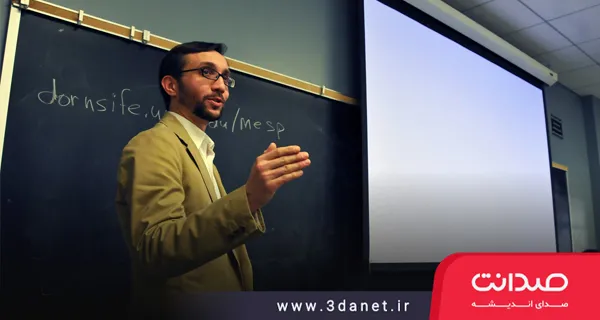
A summary of Kevin van Bladel's article “Heavenly Cords and Prophetic Authority in the Quran and Its Late Antique Context”
Kevin van Bladel[1], in his article “Heavenly Cords and Prophetic Authority in the Quran and Its Late Antique Context,” has sought to demonstrate that, contrary to the view of the majority of Muslim exegetes who have taken the word sabab in the Quran to mean means, path, or way, this word has a specific meaning in Quranic cosmology and, in Late Antiquity during the sixth and seventh centuries CE, meant “heavenly cords.” In the cosmological beliefs of the peoples who lived in the lands of the Eastern Mediterranean and Arabia during Late Antiquity, one could, by means of heavenly cords, ascend physically or spiritually to the roof of the dome of heaven and the highest point of the universe, that is, the abode of God and the angels, and bring a message from the supernal realm. To prove his claim in this article, he has particularly drawn upon the Syriac text of the “Alexander Legend,” which is recounted in the Quran in the story of Dhu al-Qarnayn.
Introduction
According to van Bladel's claim, this belief, namely the existence of asbāb or heavenly cords, though it may seem strange at first glance, is one of the features of the Quran's cosmology. According to what is mentioned in the Quran, true messengers and purified human beings can, by God's permission, ascend to heaven by means of cords and reach the top of the domed roof that is the abode of God, and from there bring a message to the people. The function of such a meaning for heavenly cords not only justified the way some humans communicated with God to bring a message, but also played a role in establishing authority for the Prophet and confirming the truthfulness of his words in the face of skeptics.
Such a conception of ascending to the dome of heaven and reaching the abode of God and the angels can be found among the Egyptians, Zoroastrians, Greek and Latin philosophical traditions, Jews, Christians, Manichaeans, Mandaeans, and even in the Upanishads in Sanskrit and in other traditions of those regions; therefore, the existence of such a belief in the Quran and among Muslims (including the belief in Muhammad's physical and/or spiritual journey to heaven, i.e., the Mi'raj) would not be a new matter outside the cosmological tradition of that era. Furthermore, because this belief was so widespread in that era and in those lands, scholars have conducted many studies on it, especially in Jewish and Christian texts. However, regarding the Quran, the meaning of this word (sabab or asbāb) in Muslim exegeses has, for various reasons, drifted away from its original and primary meaning, whereas an understanding of Quranic cosmology will reveal a meaning of this word that was understood at the time of the Quran's emergence.
Cosmology Based on Jewish and Christian Sacred Texts in the Sixth Century CE
According to Judeo-Christian cosmology, which is also consistent with the propositions found in biblical texts and has its roots in Akkadian and Babylonian creation myths, the heavens are arranged in layers above a flat (and not spherical) earth, like a dome or a tent. Opposing this view was Aristotelian-Ptolemaic (Greco-Roman) cosmology, in which the earth is the center of the universe and the heavens surround it like concentric spheres.
Although Aristotelian cosmology, through a historical process with the works of Ptolemy after the second century CE, gradually gained ascendancy over Judeo-Christian cosmology, still at the time of the Quran's emergence in the early seventh century CE, Christians in the lands of the Eastern Mediterranean were arguing over which of these two cosmologies was correct and in accordance with religious texts. On the one hand, some Christians, relying on rational and scientific interpretations of biblical texts, sought to replace Judeo-Christian cosmology with Aristotelian-Ptolemaic cosmology, and on the other hand, some Christians emphasized a literalist understanding of biblical texts. From the surviving works, it is understood that Aristotelian-Ptolemaic cosmology had not become widespread even by the seventh century CE in the Aramaic-speaking lands of West Asia, and the disputes between these two rival cosmologies were still ongoing.
The Quran, which emerged in the era of those very controversies, makes no mention of rival cosmologies, but by examining and analyzing the text and content of what appears in the Quran, it can be shown that the cosmology accepted by the Quran generally corresponds to Judeo-Christian cosmology.
In the cosmology of the Quran, the earth is flat; the seven heavens are placed like a dome above the earth; the sky is a protected roof; the sky is built and made firm with invisible pillars; fragments of the sky, if not held back, could fall upon people's heads; the stars are located in a place closer to the earth than the sun and the moon; the stars are apertures in the roof of the lowest heaven (al-samāʾ al-dunyā) and are near the earth; there are waters in the sky and rain descends from the gates of heaven, the waters of the sky and the earth (the sweet sea of the sky and the salty, bitter sea of the earth) meet at a certain place; the cosmos consists of the earth, the sky, and what is between the earth and the sky; God directs His command from the sky toward the earth, and then it ascends from the earth toward Him (in the sky) in a day whose measure is a thousand years; and the angels traverse the distance from the earth to the sky in a day whose measure is fifty thousand years. These examples and others that express the Quran's cosmology all have similar instances in biblical and post-biblical texts, and Quranic scholars have shown that they correspond to the biblical Judeo-Christian cosmology and the beliefs of the people in those lands during the sixth century CE.
Sabab and Asbāb in the Quran
The Arabic word "sabab" or "asbāb" appears in five Quranic passages:
Sūrat al-Kahf, verse 84: "Innā makkannā lahu fī al-arḍi wa ātaynāhu min kulli shayʾin sababā" (Indeed, We established him in the land and gave him a means to everything), and verses 85, 89, and 92 of the same surah with the recurring phrase "thumma atbaʿa sababā" (Then he followed a means);
Sūrat Ghāfir, verses 36 and 37: "Wa qāla Firʿawnu yā Hāmānu ibni lī ṣarḥan laʿallī ablughu al-asbāb. Asbāba al-samāwāti fa-aṭṭaliʿa ilā ilāhi Mūsā wa innī la-aẓunnuhu kādhiban wa kadhālika zuyyina li-Firʿawna sūʾu ʿamalihi wa ṣudda ʿani al-sabīli wa mā kaydu Firʿawna illā fī tabāb" (And Pharaoh said, "O Hāmān, build for me a tower that I might reach the means—the means to the heavens—so that I may look upon the God of Moses; and indeed, I think he is a liar." And thus the evil of his deed was made fair-seeming to Pharaoh, and he was averted from the path; and the plot of Pharaoh was not but in ruin);
Sūrat Ṣād, verse 10: "Am lahum mulku al-samāwāti wa al-arḍi wa mā baynahumā fa-l-yartaqū fī al-asbāb" (Or do they have the dominion of the heavens and the earth and whatever is between them? Then let them ascend through the means);
Sūrat al-Ḥajj, verse 15: "Man kāna yaẓunnu an lan yanṣurahu Allāhu fī al-dunyā wa al-ākhirati fa-l-yamdud bi-sababin ilā al-samāʾi thumma l-yaqṭaʿ fa-l-yanẓur hal yudhhibanna kayduhu mā yaghīẓ" (Whoever thinks that Allah will never help him in this world and the Hereafter, let him stretch a rope to the sky, then cut it off, and see if his plan will remove that which enrages him); and
Sūrat al-Baqarah, verse 166: "Idh tabarraʾa alladhīna ittubiʿū mina alladhīna ittabaʿū wa raʾaw al-ʿadhāba wa taqaṭṭaʿat bihim al-asbāb" (When those who were followed disown those who followed, and they see the punishment, and all means of escape are cut off from them).
The words "sabab" and "asbāb" among Muslim exegetes, as Van Bladel shows in his article, have been strained and traditionally interpreted as "way," "means," or "rope." But Van Bladel, in his article, by citing the Syriac narrative of the "Alexander Legend"—which is retold in the Quran under the name Dhū al-Qarnayn in verses 83 to 102 of Sūrat al-Kahf with the same events and in the exact same order—and also by using Arabic poetry contemporary with the emergence of the Quran, demonstrates that the Quran intended a more precise meaning for this word: asbāb means the heavenly cords or celestial pathways that are stretched between the sky and the earth, by which a person can, with God's permission, ascend to the top of the heavenly dome and reach the abode of God and the angels.
The Syriac Alexander Legend and the Arabic Account of Dhū al-Qarnayn
In another article, Van Bladel explains in detail and demonstrates how verses 83 to 102 of Surah al-Kahf are adapted and retold from a Syriac text written at the time of the Qur'an's emergence (examining the relationship between the Qur'anic text and this text and its adaptation requires another occasion. To access Van Bladel's article on this matter, see the second footnote in this note). But in summary, the "Alexander Legend" is an apocalyptic text written with political aims and in the service of religious propaganda against the Sasanian Empire (Khosrow II) and after the victory of Heraclius, the Christian Roman (Byzantine) emperor, over the Persians and the recapture of Jerusalem in 629 or 630 CE.
The "Alexander Legend," in the form of recounting Alexander's journeys and putting forth his prophecies, which seeks to evoke the era of Heraclius in the mind of its audience, intends to fashion Heraclius into a figure like Alexander, but a Roman and Christian Alexander who, before the imminent return of the Messiah, brings the world under the dominion of the Christian empire. In the Alexander Legend, the hero of the story (Alexander) travels to the West, then goes to the East, then goes to the North, and then returns to the South, a route that clearly traces a cross upon the inhabited geography.
Heraclius, for whom the "Alexander Legend" and its religious and political propaganda were written, takes the name Dhul-Qarnayn in the Qur'an and is retold verbatim in verses 83 to 102 of Surah al-Kahf. The very precise and numerous similarities between the Qur'anic text in these verses and the "Alexander Legend," whether in the story, the narrative sequence, or the details and components of the tale, leave no doubt that the Qur'an, in response to the questions of its audience (who had heard about this widespread story and wanted to know the relation of this apocalyptic tale to Muhammad's message), retold a part of the narrative verbatim in Arabic that was consistent with the aims of the Qur'an and its author (And they ask you about Dhul-Qarnayn. Say, "I will recite to you a mention of him"), although the Qur'an omitted some details and did not mention the final part of the prophecy present in the "Alexander Legend."
Hence, Van Bladel considers the examination of the "Alexander Legend" text essential for a better understanding of the meaning of verses 83 to 102 of Surah al-Kahf, and especially the meaning of "sabab." In these verses, Dhul-Qarnayn follows the "sabab" three times: first to the West, then to the East, and then to a place between two mountains (corresponding to the North in the "Alexander Legend" text). But as is understood from the narrative of the "Alexander Legend," sabab does not only mean "path" or "way," but rather a "heavenly conduit" through which Alexander follows the sun via a heavenly aperture and conduit. This interpretation is not unique to the Syriac text of the Alexander Legend, but also appears in some Muslim exegetical texts, including in the Tafsir of al-Tabari and in the book "Futuh Misr wa Akhbaruha" by Ibn Abd al-Hakam (d. 257 AH). In interpreting these verses, these two books considered Dhul-Qarnayn's journey to be a journey to heaven, where an angel was his guide and caused him to ascend (araja bihi).
An examination of four other Qur'anic passages where the words "sabab" and "asbab" appear confirms this meaning, i.e., "heavenly cords." In the passage found in Surah Ghafir, the word sabab clearly indicates material conduits through which Pharaoh wants to reach God above the heavens, so he orders the construction of a lofty tower so that he might reach those cords and conduits.
"Asbab" in verse 10 of Surah Sad can also be understood in light of this same meaning. In this verse, God challenges His opponents, saying that if they have the power, they can ascend through the asbab (heavenly cords and conduits), but they cannot. The clear implication of this verse is that, according to the Qur'an's claim, no one can ascend through these heavenly cords and apertures to the top of the celestial dome and the abode of God and the angels without God's permission.
Another passage containing “sabab” is verse 15 of Surah al-Hajj, whose existing translations and commentaries betray considerable strain in making the verse meaningful. The phrase “fal-yamdud bi-sababin ilā al-samāʾ” (فَلْيَمْدُدْ بِسَبَبٍ إِلَى السَّمَاءِ), both in its apparent wording and according to what has been said earlier, clearly means ascending to heaven by means of heavenly cords or apertures. Yet in translations and commentaries, through a strained expansion of the meaning of “samāʾ” to “ceiling of a house,” it has been rendered as “[Say,] then let him stretch a rope to the ceiling [and hang himself]” (Fooladvand) or “let him hang a rope from the ceiling of his house, and hang himself and cut off his breath” (Makarem Shirazi)! In light of the new meaning, which is the correct meaning of this word in its Quranic context, the implication of the verse would be that if anyone believes he can ascend to the roof of the sky by means of heavenly cords and apertures without God’s permission, let him know that his scheme and cunning will not avail him. Verse 166 of Surah al-Baqarah will be interpreted similarly.
Based on what he has said about the five passages in which “sabab” and “asbāb” occur, Van Bladel concludes that in the Quran, only in the case of Dhu al-Qarnayn does God grant him permission to ascend via the heavenly cords and passages; in the four other instances, no one can reach the roof of the sky, where, according to Quranic and Biblical cosmology, God truly dwells, and the gates of heaven will not be opened to them (al-Aʿrāf: 40, “Indeed, those who deny Our signs and are arrogant toward them – the gates of Heaven will not be opened for them”). Similar allusions can also be found in Surah al-Raḥmān, verses 33 and 34.
The Quranic cosmology, which, like Judeo-Christian cosmology, conceives of the world as a tent or a constructed edifice, is confirmed and complemented by a philological examination of “sabab” in the Arabic language and in surviving pre-Islamic Arabic poetry. Philologists show that the word “sabab” was used to mean “rope,” a rope by which one ascends (climbing a date palm) or descends (reaching water). It also meant a part of the tent’s structure: the rope with which the tent is tied and which is attached to the tent’s main pole. In the final section of the article, Van Bladel, drawing on numerous sources, provides further explanations about the nature of these heavenly cords and their role in Quranic cosmology.
He also discusses how the claim of ascending to God’s abode above the heavens via heavenly cords and passages established religious authority for prophets (whether Hebrew prophets, Christian apostles, or the Prophet of Islam). This role is traceable not only in the Quran, Judaism, and Christianity, but also in Zoroastrian texts.
Conclusion
The cosmology of the Quran was consistent with the cosmology of the peoples of the Eastern Mediterranean and Judeo-Christian cosmology. In this cosmology, God truly resides upon the roof of the heavenly dome or tent, and only those can claim prophethood who are able, by God’s leave, to pass through the heavenly cords and the gates of heaven, behold the heavens, reach God’s abode, and bring back tidings from there. This is only possible by God’s permission, and in the Quran, this permission is narrated only for Dhu al-Qarnayn (and, of course, as a confirmation of Muhammad’s prophetic authority). Other human beings have no way to the roof of the heavenly dome.
Examining the apocalyptic text “The Legend of Alexander,” which was composed with political and religious aims following the triumph of Heraclius, the Christian emperor of Eastern Rome, over the Sasanian Persians, has been illuminating for a better understanding of the original meaning of the word “sabab” in the Quran, because verses 83 to 102 of Surah al-Kahf are an adaptation and retelling of that same apocalyptic and prophetic legend in Arabic. In this examination, the precise meaning of “sabab” is indeed “heavenly cords” or “heavenly passages.” An examination of the other occurrences of “sabab” and “asbāb” in the Quran confirms this meaning.
After the conquests and the Muslims’ encounter with a rival and superior cosmology, namely the Aristotelian-Ptolemaic (Greco-Roman) cosmology, in order to harmonize the Quranic cosmology with that cosmology, the word “sabab” was distanced from its original and primary meaning and was strained to be interpreted as “path,” “route,” or “means.”
Footnote
? For access to the full text of the article, see:
van Bladel, Kevin. "Heavenly Cords and Prophetic Authority in the Qur’an and Its Late Antique Context." Bulletin of the School of Oriental and African Studies 70 (2007): 223–46 .
? For access to the full text of another article by van Bladel on the "Alexander Legend" and the story of Dhu al-Qarnayn in the Quran, see:
van Bladel, Kevin. "The Legend of Alexander the Great in the Qur’an 18:83–102." in The Qur’an in Its Historical Context, ed. G. S. Reynolds (London: Routledge, 2008), 175–203 .
? For access to the translated text of the "Alexander Legend" from Syriac into English, see:
Budge, Ernest A Wallis. The History of Alexander the Great, Being the Syriac Version of the Pseudo-Callisthenes. London: Cambridge University Press Warehouse, 1989 .
.
.
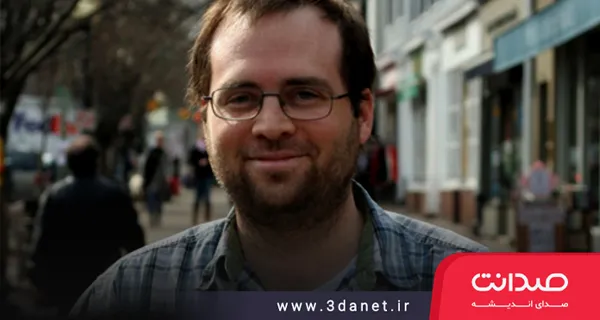
[1] Kevin van Bladel received his doctorate in Greek-Arabic Studies from Yale University in 2004. He currently teaches and researches classical texts at the University of Southern California.
.
.
Discussion2 comments
با سلام و احترام جناب بلدل توضیح نداند ماهیت این «طناب های آسمانی» چیست؟ مادیند؟ از جنس انرژی هستن؟ این آویختگی مادیه؟آویختگی معنوی؟ این عبارت خودش اصلا واکاوی و معناشناسی نشده و وجود و ماهیتش مشخص نیست
ان هی الا اساطیر الاولین