Religion
Sacred Scripture and the Modern Age
Despite the differences between modern and traditional humanity, rationality dictates that sacred texts should not be dismissed until their futility is proven; in the modern era, however, the defense of these texts rests more on the 'truth of their content' than on their 'divine origin'.
Although modern human beings differ from traditional human beings in various existential domains (beliefs, feelings and emotions, desires, and behavior), they also share commonalities, and despite the fact that all sacred scriptures of religions and denominations emerged in the age of tradition, these commonalities mean we cannot say that these sacred texts are of no use to modern human beings. On the other hand, the essence of modern humanity is rationality, and the requirement of rationality is that we should not abandon a phenomenon until it has been proven that we can no longer make any use of it. Therefore, until it is proven that sacred texts are of no benefit to human beings, we should not abandon them, and this has not yet been proven; thus, we must pay attention to sacred texts, although after paying attention, one may reject or accept them. Moreover, there are claimants who say they have been inspired by sacred texts in certain matters or have made use of them in existential issues, and rationality dictates that we should not disregard this until we have established a reason to refute it. Hence, there are reasons why we cannot disregard sacred scripture in the modern age.
To prove that sacred scripture is beneficial and therefore usable (moving from the possibility of benefit to actual benefit), there are difficulties, which, following two conceptions of scripture, are divided into two categories:
The first category of difficulties pertains to the claim that "the text is from the Truth (= God)." If it is proven to be from the Truth, it is certainly true as well. To prove this claim, three steps must be taken: First, proving the epistemological authority (hujjiyyat) of revelation using the methodology of the rational and philosophical sciences. Second, proving that the existing text itself is the revelation; in other words, proving the historical reliability of the text and its freedom from distortion (addition or omission) using the methodology of the historical sciences. Third, demonstrating that our understanding and interpretation of this text is the correct understanding.
The second category of difficulties pertains to the claim that: "What is in the sacred text is true." Before addressing the solution to this difficulty, it must be said that all propositions, including those found in sacred texts, are, by rational limitation, of three types: 1. Propositions concerning facts and realities (x exists or x does not exist, x has property p or x does not have property p, x and y have relation r or x and y do not have relation r). 2. Propositions concerning values (= intrinsic desirables). 3. Propositions concerning obligations. To prove the "truth" of sacred texts, we must prove that what is in the text is reasonable; that is, regarding propositions of the first type, you must prove that it contains no reason-defying propositions, and if it contains reason-transcending propositions, the reason-transcending one is preponderant (the reasons for accepting it outweigh the reasons for denying it, even if they do not prove it conclusively). And regarding propositions of the second and third types (values and obligations), we must prove they have practical efficacy (utility) in our lives. The domain of our life in which this utility and practical efficacy must lie depends on our expectation of religion.
In the modern era, the "truth" of sacred texts is defended more often than their being "from the Truth." This has two main reasons: 1. The expansion of communications and our awareness of other religions and sacred texts has made us understand that sacred texts other than those of Islam, Judaism, and parts of Christianity claim to be true, rather than claiming to be from the Truth. 2. Pragmatism, which values the usefulness or practical benefit of things in life. This view has become widespread, and it is also the requirement of instrumental rationality.
.
.
Abstract of this lecture (pdf): Download pdf
Audio of this lecture: Part One - Part Two
.
.
Title: Sacred Scripture and the Modern Age
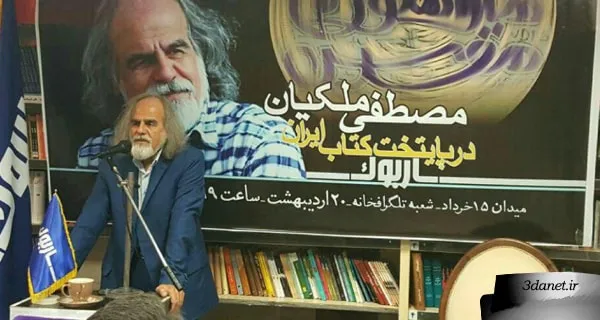
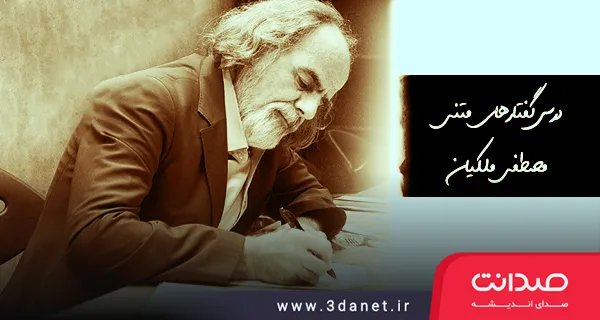
Speaker: Mostafa Malekian
Date: October 2, 2004
Hosted by: The Center for Quranic Activities of Iranian Students, Mashhad Branch
At the Assembly Hall of the Faculty of Engineering, Ferdowsi University of Mashhad
.
.

Discussion0 comments
No comments yet; let yours be the first voice.