اندیشهفلسفهخردگفتگوحکمتمعناپرسشفرهنگ
Religion
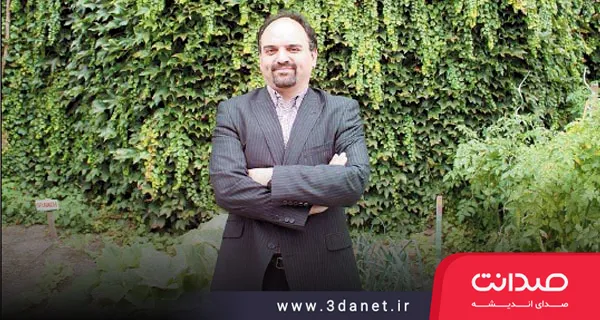
Religious Intellectualism, Sacred Text and Violence: An Essay by Soroush Dabbagh
In his critique of Nikfar, Soroush Dabbagh rejects essentialism in the analysis of Islam and, drawing on the concept of 'family resemblance,' argues for the necessity of a plurality of Islamic readings. He considers attributing evil to the essence of religion and reducing Islam to a violent narrative to be a fallacy.
Some time ago, I read the article “Religious Intellectualism and the Problem of Evil,” written by Mohammad Reza Nikfar, on the “Radio Zamaneh” website. In my view, several errors appear in his analysis of the scope and limits of the intellectual and religious-philosophical inquiries of the community known as religious neo-thinkers and religious intellectuals. In the following lines, I will first attempt to formulate my understanding of Mr. Nikfar’s claims, and then proceed to critique them. To clarify my account of his statements, it is best to first review some passages from his article:
“Justice demands that we ask about the cause; and when we radically pursue the crime, we arrive at a culprit named Islam or within Islam… Can contemporary Islamic political theology be criticized without engaging with its origin and source in early Islam? — considering that the ‘early period’ in Islam is not a historical era on par with other periods. Authentic Islam means its early period: the early period is the source of Islam, and what is taken as the early period is an eternal paradigm… Religious intellectualism in Islam is born against the backdrop of the tradition of critical views toward the clergy. The tradition of pessimism toward the clergy simplifies the work of religious intellectuals: Islam in its essence has no flaw; whatever flaw there is comes from its legalists… From the promise of salvation in Islam, two interpretations arise: one is the jurisprudential interpretation, which considers the condition of salvation to be the performance of religious duties, and the other is the mystical interpretation, which emphasizes divine regard and grace. Both interpretations are evil, for the reason that they are false promises that victimize human beings.”
“Religious intellectualism is a kind of theodicy in the form of deeming religion exonerated. The religious intellectual sees the filth in the history of religion and tries to convince others that this filth is far from the essence of religion and arises from accidents, most importantly from the tribe of clergy… In this discourse, greater courage was demanded of religious intellectuals; they were asked to see evil not in the accidents, but in the essentials of religion. Showing such courage and audacity is a requirement of the current situation. But is such a demand of the religious intellectual logical? Can one see evil in the essence of religion and still remain religious? This is a Kierkegaardian question, meaning it belongs to the category of that paradox of faith with which Kierkegaard, the most earnest believer in history, found the audacity to engage.”
IslamicText_Question
Nikfar believes that an “authentic Islam” exists, which can be found in early Islam. In his view, the filth, ugliness, and evil belong to the early period and the essence of Islam, an Islam that is an “eternal paradigm” from which there is no escape. He then turns to the religious intellectuals; neo-thinkers who, in his opinion, seek to “deem religion exonerated” and believe that Islam in its essence has no flaw, and that the filth bears no relation to the essence of religion; rather, whatever flaw there is originates from our own Muslimness. At the end of the article, he asks religious intellectuals to show greater courage and see evil not in the accidents, but in the essentials of religion, and, following Kierkegaard, to engage with the paradox of faith and offer a new account of faith.
As I see it, Nikfar commits three significant errors in presenting his claims: he goes astray in the philosophical analysis of social phenomena such as “religion” and “religiosity,” he errs in formulating the outlook and views of religious intellectuals, and, at the end of the article, he seeks to establish an unwarranted connection between the project of Kierkegaard and the project of religious intellectualism. Below, I will attempt to adduce several arguments in favor of my claims and justify them. Among Nikfar’s presuppositions in analyzing phenomena such as “religion” and “Islam,” which, in the parlance of philosophers of language, are counted among “social constructs”[1], is “essentialism”[2]. In his view, categories like Islam possess an “essence,” an essence composed of inviolable and predetermined components. The logical corollary of this statement is that phenomena such as modernity, liberalism, secularism…, which are among social constructs, also possess essences, and one can only find a single type of objective and social manifestation of them. To critique this claim, one can adduce both empirical-historical reasons and semantic arguments.[3] John Gray rightly spoke of and sought out “liberalisms”[4] instead of liberalism; a philosopher and historian such as Ernst Cassirer also distinguished different readings of modernity and the Enlightenment from one another and recognized the French narrative of the Age of Enlightenment, known through the Encyclopedists like Diderot and d’Alembert, from its German-Dutch-English narrative, which has heroes such as Erasmus, Leibniz, Kant, and Hegel.[5] The implication of Cassirer’s statement is that, when analyzing a formidable phenomenon like modernity and the Enlightenment, we are confronted with an irreducible plurality; a plurality that is indelible and stems from the exigencies of a social phenomenon’s unfolding in the course of history. In the same vein, one can undertake an analysis of the phenomenon of religion in general, and the religion of Islam in particular. An empirical-historical look at the Iranian-Islamic tradition over the past fourteen centuries depicts the plurality of different narratives of Islam: juristic Islam, philosophical Islam, mystical Islam, and theological Islam.[6] In the last fifty years as well, one can formulate the irreducible plurality in the Islamic world and distinguish traditional Islam[7], traditionalist Islam[8], fundamentalist Islam[9], and intellectual Islam[10] from one another.[11] Failing to see this diversity and plurality and reducing this colorful spectrum to a single narrative of Islam (fundamentalist Islam and Daeshism) is an instance of the “fallacy of essence and aspect,” reducing a multifaceted entity to one of its facets. It must be noted that the present discussion has a descriptive and explanatory character, not a normative one[12]; in fact, after acknowledging this plurality in Islamic societies, one can examine the arguments of each of the proponents of these narratives, speculate about the truth content and degree of their epistemic value, adopt one, and deem other narratives unjustified and set them aside. In any case, elevating one reading and deeming other readings unjustified, or deeming all these readings unjustified, comes after acknowledging this plurality and diversity.
In addition to the empirical-a posteriori reason, one can also adduce a semantic argument and critique the essentialism presupposed in Nikfar’s claims. “Family resemblance”[13], a concept constructed by the later Wittgenstein, has a nominalist character and serves to critique Aristotelian essentialism. As I understand it, the arguments advanced by Wittgenstein on this matter in Philosophical Investigations[14] are convincing;[15] the implication of this statement is that the list of components and constitutive elements of categories and concepts such as religion, liberalism, democracy, modernity… is open[16] and not predetermined or fixed. Thus, just as, in Wittgenstein’s terms, we do not have “game” but “games”; we do not have “secularism,” “religion,” and “Islam,” but rather “religions,” “Islams,” and “secularisms”; religions, Islams, and secularisms that have unfolded and emerged in the course of history. Given Mr. Nikfar’s serious familiarity with the teachings of continental philosophers, it is a cause for wonder that, in analyzing a category such as Islam, he has not taken into account or considered the concept of “historicity”[17], which has a Hegelian lineage and emphasizes context-dependence[18], plurality, and the manifestation of social phenomena in the course of history.
Setting aside Nikfar's unwarranted analysis of social phenomena, it seems to me that he has also gone entirely astray in analyzing the direction of the religious intellectualism project, at least over the past three decades. Contrary to his view, the emphasis on the idea that Islam has an essence and that essence is flawless, and that any flaw lies in our being Muslim, is miles away from the teachings of religious intellectuals in recent decades. For instance, in his article "Belief and Trial," published about twenty-five years ago, Abdolkarim Soroush explicitly spoke of religious beliefs being tested in the context of history and stressed that one cannot ignore this crucial point in religious studies and merely engage in theological-philosophical discussion and examination of religious beliefs; rather, they must be seen in the mirror of history and examined from this perspective as well.[19] As it happens, one of the fine and path-opening insights of the later religious intellectualism movement is the foregrounding of historical thinking and taking into account the historical context of the genesis of the sacred text in its religious studies.[20] Religious intellectualism, as I recount it, is by no means of the view that: Islam in its essence has no flaw, and any flaw that exists is in our being Muslim; rather, by recognizing the various interpretations and narratives that have grown within the context of the Islamic faith—a matter necessitated by the unfolding of any social phenomenon as it moves from a state of brevity to elaboration—in addition to critiquing the traditional reading, it critiques the fundamentalist reading of Islam that has emerged in recent decades and is some forty to forty-five years old, offering a humane-ethical narrative of the religious tradition. A narrative that entails ijtihad in principles and provides an alternative theological system, and is as bold as human capacity allows; for, in the words of Iqbal Lahori, it involves a re-examination of the "entire apparatus of Muslimness" and offers a new, unorthodox reading of categories such as tawhid, prophethood, jurisprudence, ethics, the relationship between science and religion… and speaks of the separation of the institution of religion from the institution of government, and seeks to analyze the context and time of the emergence of the sacred text and the relationship of this text with categories such as violence and evil, without, in the process, speaking of "religion's exemption from knowledge" and a "theology of torture," or "seeing evil in the essence of religion," abandoning historical perspective, and resorting to misleading essentialist concepts like "the essence of religion."[21] Religious intellectuals are neither seeking to ignore and deny the matters that occurred under the Iranian-Islamic civilization over the past fourteen centuries, nor to whitewash them and provide a contrived and artificial explanation of these matters; rather, by borrowing methods such as "historical phenomenology" and the methodical identification of "accidental matters" that have found their way into the sacred text, they seek a critical re-reading of the tradition behind them and an understanding of the spirit and message contained within the sacred text and religious tradition, and their formulation and re-creation in the present day; an approach that, although vastly distant from the traditional reading and the fundamentalist narrative of Islam, nonetheless still falls within this thick tradition. Nikfar asks at the end of his article: Can one see evil in the essence of religion and still remain a believer? He considers this a Kierkegaardian question and seeks it in the category of the paradox of faith with which this Danish philosopher of the first half of the nineteenth century grappled. Setting aside expressions like "the essence of religion," which have an essentialist and unwarranted character, it seems to me that Mr. Nikfar has erred in assessing the relationship between Kierkegaard's question and the project of religious intellectualism, and the expectations one should have of this group. Kierkegaard had a problem with the "primacy of reason"[22] and from this perspective tangled with Kant and Hegel, and by distinguishing between "Socratic truth"[23] and "eternal truth"[24], spoke of openness to the matter of faith and the "subjectivity of truth."[25] For him, faith, which in itself is something fluid, fleeting, and elusive, and arrives through an existential leap, as soon as it takes the form of conceptions and assertions and is formulated, becomes another category; something discussed in theological and philosophical discussions of religion, possessing an intersubjective and objective aspect; whereas, for Kierkegaard, the matter of faith has a subjective character and is realized when doubt is cast upon the primacy of reason. Apart from these noteworthy points, and also the profound philosophical sparks seen in the design of the three stages of the "aesthetic," the "ethical," and the "religious," particularly in the two works Either/Or[27] and Philosophical Fragments[28], Kierkegaard's conception of the opposition between "Socratic truth" and "eternal truth" differs significantly from the central concern in the project of religious intellectualism.
عموم نواندیشان دینیِ متاخر، به رغم نظر کیر که گارد، تقابلی میان « حقیقت سقراطی » و « حقیقت ابدی» ندیده، نسبت به فراوردههای معرفتیِ جهان جدید در سدههای اخیر، از جمله آثار فیلسوفان جدید، علی الاصول گشودهاند و در اندیشۀ برقراری تناسب و تلائم میان فراوردههای شاخههای مختلف معارف بشری با معرفت دینی؛ نه از تقابل میان « حقیقت سقراطی» و « حقیقت ابدی» سراغ گرفتن و حقیقت سقراطی را که نمادی از عقل فلسفی است به زیر کشیدن. از اینرو، پروژۀ نواندیشی دینی با آموزۀ روش شناختیِ «موازنه متاملانۀ»[29] جان رالز که در اندیشۀ برقراری تناسب و سازگاری میان شاخههای مختلف معرفتی است و در فراوردههای عقلانی و فلسفی نیز به دیده عنایت مینگرد، قرابتی بسی بیشتر دارد تا کیر که گاردی که دغدغههایی از لونی دیگر دارد..
.
Notes
[1] socially- constructed
[2] essentialism
[3] semantic
I have previously employed such arguments in two articles, “Ta‘abbud va Modern Budan” (Devotion and Being Modern) and “Rowshanfekri-ye Dini va Abghureh-ye Felezi?!” (Religious Intellectualism and Metallic Verjuice?!), to critique the claims of Mr. Mostafa Malekian regarding the connection and relationship between religiosity and devotion, as well as to defend the internal coherence of the term “religious intellectualism.” (See here.)
“Ta‘abbud va Modern Budan” (Devotion and Being Modern), Amr-e Akhlaqi, Amr-e Mote‘ali, Jostar-ha-ye Falsafi (The Ethical, The Transcendental: Philosophical Essays), Tehran, Parseh Publishing, 2013, second edition, pp. 93-106.
[4] liberalisms
[5] For a more detailed elaboration of this point, see the following scholarly and meticulously researched work:
Ernst Cassirer, The Philosophy of the Enlightenment, translated by Yadollah Moqan, Tehran, 1991.
[6] In his works on religious studies, Abdolkarim Soroush has recognized this plurality by distinguishing between different types of religiosity. In his view, one can differentiate between “livelihood-oriented religiosity,” “knowledge-oriented religiosity,” and “experience-oriented religiosity.” Furthermore, he divides livelihood-oriented religiosity into two types: “scholarly livelihood-oriented religiosity” and “popular livelihood-oriented religiosity”; in the next step, he considers “scholarly livelihood-oriented religiosity” to be divided into worldly and otherworldly types. Such divisions are among the requirements of recognizing a colorful spectrum of different narratives of religiosity. For a more detailed elaboration of these classifications, see:
Abdolkarim Soroush, “Din va Donya-ye Jadid” (Religion and the New World), Sonnat va Secularism (Tradition and Secularism), Tehran, Serat, fifth edition, 2012. Also, see: Soroush Dabbagh, A‘in dar A‘ineh: Moruri bar Ara‘-e Dinshenasan-e Abdolkarim Soroush (The Religion in the Mirror: A Review of Abdolkarim Soroush’s Religious Thought), Tehran, Serat, 2015, fourth edition, entry five.
[7] traditional Islam
[8] traditionalist Islam
[9] fundamentalist Islam
[10] reformist Islam [11] A few months ago, I gave a lecture titled “Islam and Violence” at a seminar on “Multiculturalism” at the Catholic University of “UPAEP” in Mexico. For a methodical and comprehensive examination of this topic, at the beginning of my discussion, I stated that when the question of the relationship between Islam and violence arises, this overarching question must be broken down into smaller questions concerning the connection and relationship between which narrative of Islam and violence. Subsequently, by distinguishing between four narratives of Islam under the titles “Traditional Islam,” “Traditionalist Islam,” “Fundamentalist Islam,” and “Reformist Islam,” I formulated the connection and relationship between each of these readings of Islam and the category of violence. To read a report on this seminar, see here.
[12] evaluative
[13] family resemblance
[14] Philosophical Investigations
[15] For instance, in the article “Kavosh-ha-ye Falsafi va Mafhum-e ‘Shabahat-e Khanvadegi’” (Philosophical Investigations and the Concept of “Family Resemblance”), from the series of articles “Falsafeh-ye Wittgenstein-e Mote‘akher” (The Philosophy of the Later Wittgenstein) previously published on the “Radio Zamaneh” website, I have examined the connection and relationship between the concept of “family resemblance” and “Aristotelian essentialism.” See here.
[16] open-ended
[17] historicity
[18] context-dependency
[19] For a more detailed elaboration of this point, see:
Abdolkarim Soroush, “Aqideh va Azmoun” (Belief and Trial), Farbatar az Ideology (Fatter than Ideology), Tehran, Serat, 1994.
[20] Works such as The Expansion of the Prophetic Experience, written by Abdolkarim Soroush, and A Critique of the Official Reading of Religion, written by Mohammad Mojtahed Shabestari, are notable works in this regard; the incorporation of the component of historicity into religious studies is one of the valuable and illuminating teachings of these two works in the recent literature of religious new-thinking.
[21] Late religious intellectualism does not seek, for instance, to conceal the emergence of "ISIS" in Islamic lands and deny its attribution to the Islamic tradition; rather, by observing this current and tracing components such as "literalism" and "ahistoricism" within it, it has devoted itself to its explicit critique. As a member of the family of religious intellectualism, in two articles, "Islam and Violence" and "The Prophet of Islam, Violence and Justice," drawing on some of the important essays in the work A Critique of the Official Reading of Religion, written by Mohammad Mojtahed Shabestari, such as "Political jurisprudence has lost its rational foundation," as well as by analyzing the concept of "violence," which is among socially constructed concepts, and considering the context and temporality of the realization of events in early Islam and avoiding the fallacy of "anachronism," I have addressed the understanding and evaluation of what are called "violent matters" in early Islam. See here and here.
[22] Primacy of reason
[23] Socratic Truth
[24] Eternal Truth
[25] Truth is subjectivity
[26] To become acquainted with the core teachings of Kierkegaard's philosophy, see, for example, the following readable work:
Peter Vardy (2008) An Introduction to Kierkegaard, ( USA: Hendrickson Publisher).
[27] Either/Or
[28] Philosophical Fragments
[29] reflective equilibrium
.
.
Religious Intellectualism, Sacred Text and Violence
An Essay by Soroush Dabbagh
.
.

Discussion2 comments
مرگ هميشگي روشنفكري ديني با تئوري "كلام محمدي" دكتر سروش نام اصلي وي حسین حاج فرج الله دبّاغ متولد ۱۳۲۴ در تهران است از دانشگاه تهران لیسانس داروسازى گرفت در سال های 1354 هجری شمسی عازم انگلیس شد و در رشته شیمی تجزیه فوق ليسانس گرفت و در رشته فلسفه علم در دوره دكتري مشغول شد و همين زمان نام خود را به عبدالكريم سروش تغيير داد . وي در حال گذراندن دوره بود که مواجه با انقلاب اسلامی شد و او بدون اخذ مدرک دکتری، تحصیل را رها کرد و به ایران آمد و هیچگاه مدرک دکتری دریافت نکرد ولي دكتري معادل دارد. وي كه بيان ادبي بسيار قوي داشت از عمق وغناي معارف اسلامي بهره اي نداشت و با بيان شيواي افكار ضدماركسيستي پوپر و تلفيق آن با شرائط انقلاب در كتاب "تضاد ديالكتيكي " ، "ايدئولوژي شيطاني" وشركت در مناظره هاي شهيد بهشتي و سران ماركسيست و انقلاب فرهنگي محبوبيت بدست آورد . سروش مقلد شريعتي بود. شريعتي با تقليد اشتباه از مارتين لوتر و الهيات پروتستان نوعي تركيب اسلام وليبراليست را ارائه داد كه درواقع ناكجاآباد و بيراهه رفتن بود. مهندس بازرگان نيز با سواد پائينش در فلسفه و دين همان افكار التقاطي را داشت. سروش با ادبياتي قوي وفيلسوف نمايانه در كتابهاي "قبض وبسط تئوريك شريعت" و "مدارا و مديريت" و "صراطهاي مستقيم " و "پلوراليسم ديني " تلفيقي از افكار "هيوم، كانت، و پوپر، لوتر و شريعتي " را بازگو ميكند. كه در واقع نوعي نسبي پنداشتن درك و فهم ديني است كه همان هرمنوتيك "كارل پوپر" بود. لازم به ذكر است كه وي تئوريسين اصلي جريان اصلاحات محسوب شده كه محمد خاتمي از آن بهره برد. تا اينجاي قضيه با توجه به تقيدهاي مذهبي وي و همچنين تفسيرهاي زيباي نهج البلاغه وعرفان در"اوصاف پارسايان " ، "حكمت و معيشت" ، "قصه ارباب معرفت " وي ...ميتوان او را برمسير روشنفكري يا دگرانديشي ديني حساب كرد . اما وي در"بسط تجربه نبوي " تئوري كلام محمدي را كه دقيقا" افكار" نصرحامد ابوزيد " مصري بود بازگو كرد اما غافل از آنكه كلام عيسوي بودن انجيل كنوني مايه اصلي اين انديشه بود كتابي تحريف شده كه سخنان و داستان زندگي عيسي مسيح است. اما اين "قياس مع الفارق " : مقايسه نادرست ، بطور كامل خط بطلان بر اين مسير كشيد و براي هميشه چراغ خيالي روشنفكري ديني را خاموش نمود و سراب بودن آنرا به اثبات رساند .چرا كه قرآن بسيار متفاوت است و با نص صريح آن بارها و بارها بر كلام الهي بودن آن تاكيد شده است و برخلاف نظريه سروش ، پيامبر هيچگونه نقشي در آن نداشته است و عينا" به زبان عربي توسط جبرئيل وحي شده است و معجزه الهي است. "تنزيل الكتاب لا ريب فيه من رب العالمين" "تنزيل الكتاب من الله العزيز الحكيم" "كتاب فصلت اياته قرانا" عربيا" لقوم يعلمون" "انا انزلناه قرانا" عربيا" لعلكم تعقلون" "انا نحن نزلنا الذكر و انا له لحافظون"
من با نظر هر دو مشکل دارم اگر نظر جناب دباغ را صحیح پنداریم که البته به غیر از پدرشان روشنفکر دینی دیگری را قبول ندارند ووملکیان و بازرگان و شریعتی را یکتنه در درسهای خود شستند و گذاشتند کنار )سلسله درسهای سیره فکری بازرگان . شریعتی و و و ( نباید توحید را معاد را و نبوت را از پایه ها و که ذات اسلام هستند بدانیم و مثلا عذاداری های مضحک صفویه را هم جزو اسلام تلقی کنیم و البته بشکلی هم که آقایرنیکفر اسلام رو خلاصه کردند نیز قابلدپذیرش نیست