Religion
A Conversation with Alireza Alavitabar: “New Factions in Religious Intellectualism”
Kadivar's classification of religious intellectuals into neo-thinkers and revisionists provoked a sharp reaction from Soroush. Alavitabar examines the epistemological roots of the disagreement and the shift from realism to constructivism.
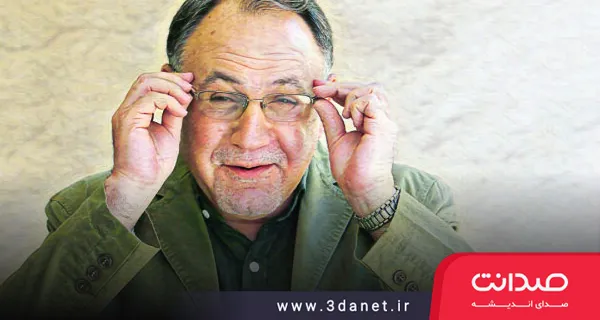
New Factions in Religious Intellectualism
A Conversation with Alireza Alavitabar
Ham-Mihan Newspaper 1 August 2022 / Farzad Nemati (Culture Desk Reporter)
The intellectual disagreements between Abdolkarim Soroush and Mohsen Kadivar in recent years are no secret to anyone. For serious audiences of religious intellectuals, the history of this disagreement, of course, dates back not to recent years but to the 1990s; a time when the publication of “Straight Paths” prompted Kadivar’s debate with Soroush and the publication of the book “On Religious Pluralism.” Later, the publication of “The Expansion of the Prophetic Experience” added to the disagreements, but in the 2010s, Soroush’s theories of the “Prophetic Dream” and “Religion and Power” led to Kadivar’s unrestrained criticism of him. In his latest stance, Soroush has deemed the position of the “aforementioned cleric” as a form of “excommunication” of himself, and, referring to what happened to Nasr Hamid Abu Zayd in Egypt, has spoken in condemnation of such an act. Beyond the verbal barbs exchanged between the two sides, a tale unfortunately recurrent among Iranian intellectuals, we sat down for a conversation with Dr. Alireza Alavitabar about the epistemological roots and consequences of this intellectual disagreement.
In the 1990s, the general understanding of Iranian society was that figures such as Mohsen Kadivar, Abdolkarim Soroush, Mohammad Mojtahed Shabestari, and others belonged to a single group under the title of religious intellectualism, and their views could be assessed as similar. Now, however, the relations among these thinkers have reached a quasi-excommunicative state. What are the main reasons for the situation that has now arisen between Soroush and Kadivar? Does this stem from Soroush’s proposal of new theories (the Prophetic Dream and the theory of Religion and Power), or does it have deeper roots?
The root of the current discussion between Soroush and Kadivar goes back to Kadivar’s recent article titled “New Islamic Spectrums in Contemporary Iran.” In this article, Kadivar distinguishes two main spectrums: the traditional spectrum and the modernist spectrum. In this article, the concept of religious intellectuals corresponds to the concept of religious modernists, and they are still positioned against traditionalists. My opinion on this matter, of course, differs slightly from some others, because I believe that religious intellectualism had two aspects from the very beginning: one political and social aspect, and the other a theological aspect. What is presented under the name of religious modernism refers more to this theological aspect. For now, this distinction is not the subject of our discussion. Regarding Kadivar’s article, it must be said that in terms of the general classification of Islamic currents into traditionalist and modernist, and equating modernist with religious intellectual, nothing new has occurred. The disagreement is over the categorization Kadivar has made regarding religious modernists. There, Kadivar divides traditionalists into three categories: traditional, neo-traditional, and extremist (fundamentalist), and divides the modernist current into two categories: new-thinking and revisionist. Kadivar’s article provoked various reactions, but the sharpest reaction to the article and Kadivar’s subsequent oral explanations about it was the reaction of Soroush and his friends regarding the division of modernists into the two categories of new-thinking and revisionist, and placing Soroush, Shabestari, and others in the revisionist category. In a meeting, an audience member asked Soroush about Kadivar’s view, and as it appears from that question and answer, it seems that both the audience member and Soroush believe Kadivar has excommunicated Soroush. In fact, they have equated Kadivar’s new classification with excommunication.
Nevertheless, it should be noted that the title of the article is “New Islamic Spectrums in Contemporary Iran,” and no group in it is called non-Islamic; from Kadivar’s perspective, all these spectrums are Islamic. This is an important point. The second point is that Kadivar is not the first to categorize new thinkers, modernists, or intellectuals. Before him, many tried to distinguish the various tendencies among religious intellectuals, and this is not a new undertaking. The roots of these divisions go back to before the revolution. Ali Shariati made a distinction among religious new thinkers and differentiated between two types of Islamology: adaptive Islamology and comparative Islamology. Shariati considered Bazargan an adaptive Islamologist but introduced his own Islamology as comparative. Others have also had such classifications and, for example, have spoken of critical Islamology, Islamology influenced by analytic philosophy and minimal rationalism, and Islamology influenced by maximal rationalism. In any case, these distinctions are not new, and it is possible and necessary to carry out a kind of classification among the various types of modern religious studies. Therefore, it is probably the term “revisionist” that has provoked Soroush’s sharp reaction.
Beyond this article, where does the theoretical foundation of this disagreement lead back to?
This disagreement has epistemological roots and goes back to the question of whether we are realists in religious studies or not. Are we realists or not? Realists believe that a reality exists independent of human perception. In the case of religion, religion consists of a set of symbols and signs that contain God’s message and call addressed to humanity. Now the question arises: independent of our understanding, interpretation, and comprehension, is there a message and call from God within the authentic religious sources or not? Realism means believing in such a message; otherwise, and in the absence of realism, the notion is that this message is constructed by us. This means there is no message to be discovered, but rather this message is constructed by humans in the process of understanding and categorizing the text. By departing from realism, we move towards a kind of constructivism which, in general, considers human perceptions and conceptions to be influenced by the time, place, and culture of the era, and regards humans not as discoverers and knowers of reality, but as constructors of concepts and reality. The continuation of constructivism leads to relativism; whether ontological relativism, which leads to the denial of such a message and call, or epistemological relativism, which claims that even if such a message and call exists, humans are incapable of understanding it. Of course, realists also have various tendencies. Naive (simple) realism differs from complex and critical realism. In simple realism, the mind is imagined as a mirror that, provided it operates methodically, reflects reality, but in complex realism, the human mind is active and plays a role in constructing the final image that it perceives.
This, of course, does not mean denying the existence of reality. Many religious scholars are not essentialists. Essentialism is the notion that there is a fixed and definite concept within religion from which fixed and immutable knowledge can be obtained, and this fixed knowledge is not influenced by the conditions of the knowing subject and their cultural circumstances. A group of these opponents of religious essentialism, in order to escape essentialism, also denied any kind of objectivism and distanced themselves from realism. Soroush’s early works, especially “The Theoretical Contraction and Expansion of the Sharia,” indicate his movement from simple realism towards complex realism, in which the role of the mind and the knowing subject (their knowledge, values, and livelihood system) is considered in the outcome of cognition, but his recent works represent a distancing from realism and move towards a kind of constructivism, from the heart of which a kind of relativism can ultimately be inferred. Of course, Soroush provides explanations and tries to defend that this is not the case, but the inference of most of his audience is that his recent works have distanced themselves from realism. In that article, Kadivar critiques Soroush’s works from a realist position close to complex realism.
How do you evaluate the evolution of Soroush’s and Kadivar’s thought over the past three decades? Which of these thinkers has undergone more intellectual transformation?
A preliminary point must be made in this regard. Various currents are active in the field of religious studies, and therefore we have different approaches to religious studies, all of which claim to understand religion and believe they have been able to unveil and reveal the meaning of religious texts and sources. For a methodical study of these currents, we need a theoretical framework. In my opinion, the most useful theoretical framework in this area is the Research Program, first employed in the philosophy of science by the Hungarian philosopher of science Imre Lakatos, but this analytical framework has capacities that can also be used for religious studies, and this theoretical framework is also very helpful in understanding the intellectual developments of individuals.
According to this view, there are various research programs in the field of religious studies. According to Lakatos, humans do not begin to understand matters with an empty mind; rather, a framework exists that is predetermined, steps are defined within it, and there are limitations and guidelines. Every research program has a Hard Core, a Protective Belt, positive heuristics, and negative heuristics. As long as you preserve the hard core of the research program, you are within the framework of that program, but as soon as you abandon that hard core, you have abandoned that research program and entered another. The protective belt, however, is changeable and flexible, and when instances are observed that you are unable to explain, by changing and evolving the protective belt, it is possible to empower the framework to explain and clarify reality.
In the field of religious studies, there are three levels of research programs; one is at the level of the principle of theism; that is, whether you are considered among the religious or not? Another level is belonging to a specific religion such as Islam, Christianity, etc., and under which religion individuals fall. There is also a third level, which refers to the specific orientation an individual has within a particular religious framework in the field of religious studies. For example, an individual’s type of Islamic studies is, in Shariati’s terms, comparative or conformist, or in Kadivar’s terms, traditional or modernist, and so on. Therefore, the hard core can be discussed at three levels; a hard core which, if preserved, the individual remains within that framework, and if denied, the individual exits that framework. In my opinion, at the first level, the main issue is that, firstly, a God who is omniscient, omnipotent, and pure goodness exists. Secondly, this God invites humanity to have a specific view of the world and to adopt a specific way and practice in accordance with that specific view. Thirdly, God conveys His message and invitation addressed to humanity to people through prophets. Prophets have a direct, unmediated, and non-inferential experience of the divine command, which is referred to as revelation. Answering this invitation is the condition of faith, and denying any of these three pillars is tantamount to leaving the circle of religiosity.
At the second level, where an individual falls under a specific religion, the issue is that the prophet presents God’s message to humanity in the form of the culture and livelihood system of his time, and the product of this presentation by the prophet becomes the revealed text or holy scripture and the speech and behavioral model of the prophet of that religion (the Prophet’s Sirah); meaning, God’s transtemporal and translocational message is poured into the vessel of the language (culture) of a specific people and presented to humans. All religions have sources for understanding themselves. The basis for individuals pursuing religious studies is connection with God, and if the existence of the message is denied, the revealed text or the speech and behavioral model of the prophet will be no different from the writings of others. It is their relation to God that gives them value and makes them important for the religious scholar. Now, if an individual believes that God’s invitation and message are sufficiently present in the religious sources in the form of the holy scripture and the Prophet’s Sirah, and there is no need for a new religion and new revelation, they fall within the framework of a specific religion. A Christian believes that in the Gospels and the behavioral and speech model of Jesus Christ (PBUH), God’s message has been sufficiently conveyed, but as soon as they doubt the sufficiency of these sources and turn to other sources, they exit this research program and enter another.
After this second level, at the third level, an individual may find a hard core that is Shiite, Sunni, modernist, traditionalist, and so on. The main point, however, is that an individual remains within a research program as long as they adhere to that hard core. Kadivar's point is that in his recent works, Soroush has denied some of the pillars of the hard core of the level-one and level-two research program, and this is a serious transformation, a transformation that other observers also believe has occurred in Soroush's research program. Soroush and proponents of his view explain that this is not the case, but the external observer suspects that a new research program is emerging. Therefore, it seems that a major transformation has occurred in Abdolkarim Soroush's perspective, not Mohsen Kadivar's. These disagreements should be analyzed under such discussions and as staying within or exiting from a predetermined research program, not under accusations such as excommunication.
To what extent are these intellectual transformations influenced by the failure of the "Reform" project?
The running aground of the reform ship may have psychologically and mentally raised questions and paved the way for these separations and divergences, but in fact, the core of these differences has a theoretical foundation and goes back elsewhere. I think even without these political developments, such distinctions might have emerged sooner or later.
Given the intellectual divergences that have occurred within the religious intellectualism circle in recent decades, can one still speak of an institution called "religious intellectualism"? Can such an institution still have a political and social function?
Religious intellectualism had two different aspects from the very beginning. The first aspect was its political and social dimension, and the other was its theological dimension. What distinguishes religious intellectualism from other intellectual currents is its theological dimension, which is specific to religious intellectualism and strives to engage in new thinking and find a modern perspective on religion. But in its political and social dimension, religious intellectualism largely follows the dominant paradigm of its time and is greatly influenced by it. Here, a serious and important question arises: beyond religious intellectualism, does intellectualism in general still have a function in Iranian society, or has it lost its functions? And have we reached another stage in the life of intellectualism? In my view, the theological dimension of religious intellectualism, because it is theoretical and more of a scholarly and academic nature, remains in place and may have social consequences within the specific circles of experts, but political and social role-playing depends on numerous other factors, which are not exclusive to religious intellectuals and can be extended to the entire intellectual community. In recent years, it seems the social role of cinema actors or music singers is far greater than that of an intellectual. These phenomena have other causes that should be discussed independently in their proper place, but religious intellectualism in this aspect moves with the dominant paradigm of its time, and its fate largely depends on the fate of intellectuals and the people's relationship with this group. Therefore, the extent to which people listen to the words of intellectuals and consider them as a credible authority or not is not exclusive to religious intellectuals and has happened for the entire intellectual current.
Do you consider the increase and revelation of intellectual differences among religious intellectuals a positive matter, or do you assess its negative consequences as more significant?
The divergence of views and the emergence of new factions and groupings within religious modernism is a completely natural occurrence and a sign of the deepening of questions, indicating that deeper questions are being posed today. In this context, the main issue is finding a solution for a healthy confrontation of these ideas. At present, given the existing restrictions, a large number of religious modernists have emigrated abroad, and within the country, the possibility of presenting their views and opinions in the media and books is limited. These discussions, however, find meaning within the Iranian space, with collective participation and a larger audience and other thinkers. Now, however, such discussions have been detached from their original context. In the 1990s and 2000s, when these discussions were raised in Iran, widespread participation took shape, and all religious intellectuals and traditional currents would critique and examine the views. Today, however, such a possibility does not exist, and this absence deprives intellectual currents of maturity and intellectual deepening. The blame for this, of course, does not lie with religious intellectuals; the blame lies with our political and social atmosphere, which has unfortunately created this context. If we were living under normal conditions, these discussions would be raised domestically. Individuals would express their opinions, publications would present these different perspectives, the discussions would reach the stage of written dialogue, and views would become more refined. These restrictions affect this thought and its social functions and have a detrimental effect. Alongside this, raising these discussions also requires an ethical framework. Becoming angry, humiliating the other, and speaking about one another as if the other person knows nothing or has started from zero naturally intensifies reactions and has destructive consequences. Tolerance is also an important category; unfortunately, sometimes the closer individuals become to one another, the less tolerance they have for each other. The language and tone of expressing issues are also very important in this regard. Therefore, on one hand, the unfavorable political context, and on the other hand, the ethical weaknesses of intellectuals, have caused these natural differences to be driven toward this unfortunate situation. Of course, these intellectual differences do not necessarily signify political differences, and it is possible that religious new-thinkers, despite such differences, may be in the same political camp and current politically and defend a single political position. In any case, separating those intellectual differences from these political positions is a more useful practice.
What is the relationship of today's society, with all the differences it has from Iranian society of the late 1990s and early 2000s, to these debates and controversies? Do these discussions fundamentally have a social function as well?
Not only this discussion but many other theoretical discussions as well find little resonance in our society. The reason for this lack of resonance is the condition of the people. The general public is disappointed, tired, desperate, and angry, and such theoretical discussions naturally do not attract such people. People in this situation mostly want you to curse and take verbal revenge on the existing state of affairs. Theoretical dialogues are not of this kind. Therefore, one cannot expect the general public to welcome these discussions under such circumstances. Intellectuals and people of thought have also, to a large extent, aligned themselves with the people. This means that intellectuals have not been able to demonstrate and highlight a distinct behavioral model. The same atmosphere of despair, desperation, anger, and fatigue is seen in intellectual circles as well, and fundamentally, the atmosphere of our society is now very unfavorable for theoretical discussions. In the current climate, people's lives have become unpredictable, and every day they are thinking about what will happen tomorrow. It is natural that in this situation, theoretical discussions are not much taken up and do not gain depth. This is a serious problem in our society today. In addition to these, these currents also lack a platform. In the 70s and 80s [1990s and 2000s], during the months of Ramadan and Muharram, a series of sessions were held in which religious new-thinkers put forward their views. Now that possibility has disappeared. The opportunity to hold seminars at Hosseiniyeh Ershad, or the Tawhid Center, or universities has also been lost. The publications that disseminated those thoughts also do not exist at present. The closing of the space and the removal of currents from the media arena, alongside the general condition of the people and intellectuals who have not been able to exhibit a behavioral model distinct from the people, has created such conditions. Therefore, the atmosphere is a different one, and one should not expect those widespread resonances. Of course, some groups are professionally trying to use this atmosphere to intensify internal contradictions and conflicts and to polarize the situation, but in my opinion, they are of secondary importance. In principle, the general atmosphere of society is not favorable for such discourses.
In Kadivar's discussion, there is a special attention to fundamentals and, so to speak, the essentials of religion. In your opinion, what is the relationship between Kadivar's discussions and the essentialist view?
Kadivar is by no means an essentialist in the sense that was mentioned. In Kadivar's conception, it is not the case that in religiosity we are faced with a set of assumed, predetermined, and fixed essences. Kadivar's main emphasis and concern is that we accept complex realism in understanding religion and remain in this position. Others also defend this position. Therefore, the core of Kadivar's argument is to avoid relativism and to avoid the idea that there is no such thing as God's message and invitation, or that even if it exists, it is fundamentally inaccessible to humans and there is no way to understand it. Such ideas entail the acceptance of relativism. Furthermore, Kadivar's main emphasis is that the hard core of the research program be preserved and that it be stated within the framework of which research program the new studies and discussions are taking place. One cannot deny the hard core of the research program and still place oneself under it. In my opinion, Kadivar's analysis of the situation can be better interpreted with regard to the two categories of complex realism and the emphasis on the hard core of the research program in religious studies, rather than by attributing the characteristic of essentialism to it. Therefore, there is no contradiction between Kadivar's view and religious intellectualism or religious new-thinking, because in religious new-thinking as well, one must speak within the framework of a research program, even if this research program is not traditional but modern. However, liberation from any kind of research program does not mean new-thinking; on the contrary, adherence to research programs and their hard cores, or even the denial of those cores, exiting that research program and defining a new research program, helps with greater mutual understanding.
Discussion9 comments
با سلام خدمت آقای نیکویی عزیز در مورد سوالات شما؛ البته خود آقای علوی تبار می بایست پاسخ دهند، ولی اگر قابل باشم "چند نکته به عنوان پیش نیاز این مباحث" به ذهن این برادر کوچک رسید که گفتم برای شما بفرستم: 1- رویکرد کلی شما نسبت به سنت و مخصوصا دین نگاه نقادانه و شاید بدبینانه باشد که البته مهم نیست منشاء آن چیست (آشنایی با نظر روشنفکران و یا عوامل سیاسی و یا عوامل احساسی و عاطفی و یا ...) که شاید در برخی مواقع انسان را از دایره انصاف بیرون بیاندازد. 2- اگر فضای ذهنی و دستگاه نظری شما روی بنیان های مدرنیته (مثل اومانیسم، سکولاریسم و ...) استوار شده باشد، همانطور که خود بهتر می دانید؛ این نوع جهان بینی علاوه بر اینکه بر نوع خاصی از انسان شناسی استوار است، بر پایه "شک گرایی به همه چیز و همه کس" تعریف شده است که البته شک خوب و مفید است اما نه به شکل منزل و ماندن در آن، بلکه نقطه شروع و آغاز و پرسش که به تحقیق و پژوهش بیانجامد، ولی شک گرایی افراطی خطایی راهبردی است. 3- اگر برای مطلوب بودن زندگی، در همه چیز تعادل لازم است، (مثلاً: رویکرد عقلانی صرف و خالی از احساس و عواطف باعث خشکی و بی روح بودن آن می شود) عقل و ایمان را هم باید به صورت متعادل پذیرفت و به کار گرفت، بنابراین اگر نحوه مواجهه ما با قرآن و پدیده هایی مثل روح، وحی، ملائکه، خدا و آخرت (غیب) فقط بر اساس رویکرد عقل پوزیتیویستی باشد از قبل مشخص و معلوم است که نتیجه چیست و قرار است به کجا برسیم، این مباحث از جنس ایمان است و نه عقل خشک پوزیتیویستی 4- درباره وثاقت تاریخی قرآن (ویا هر کتاب تاریخی دیگر) سوال اینجاست که : چرا می بایست از روشنفکران سوال کنیم؟ چرا نباید به متخصص آن رشته رجوع کنیم؟ درباره این پرسش به کارهای آقای دکتر مرتضی کریمی نیا (مثل نسخه و مصحف های پیدا شده صنعا و کتاب جدید ایشان) و مقاله "نقدی بر موضوع "تحریف قرآن" از دکترحسن انصاری و یا مقاله "کند و کاوری در مسئله وثاقت تاریخی قرآن" از نانسی ساکی و محمدکاظم شاکر رجوع کنید که پاسخ های علمی خوبی دارند، نه به سروش و ملکیان و .... برای شما آرزوی موفیت می کنم. 26/5/1401
پوزیتیویسم موضعی بود که اعتراض به ایده آلیسم آأمانی پیش از آن سر برآورد. اصولا لااقل با ؛عقل گرایی؛ سازگار نیست. اما مخالفت با عقل را نمی توانم در فرصت کم تبیین کنم. اما لااقل عقل گرایی نبود. ضمنا اوان گاردها و پیشروان پوزیتیویسم تقریبا پس از 1940 که نقدها بیرون آمد و شکستها پشت سر هم رخ اد تضعیف شد و به یأس گرایید و در 1955 تا 1960 دیگر کاملا شکست قطعی خورد. رادلف کارنپ در 1947 فکر کنم از دنیا رفت و با شکست پروژه استقراء وی و سخن گفتن از درجات استقراء پوزیتیوسم پس از او تبدیل به یک اهانت شد. علت نگاشتن این نظر در پاسخ شما جلب توجه شما به این است کهوزیتیویسم دیگر با عقل مترادف نیست بلکه یک بی عقلی شاید بتوان آن را نامید زیرا نشان از عدم آگاهی از متافیزیک و اهمیت نظریه، فرضیه و عناصری شبیه به اینهادر مکانیسم شناخت علمی است. با وجود این شکست و این ماهیت غیر علمی ، دانشمندان و کتب مرجع در پس سخنان و مواضع خود پوزیتیویسم پنهان است و بله شکل مکنون حضور دارد اما برخی که با فلسفه علم و فلسفه تحلیلی آشنا نیستند اما در رشته علمی متخصصند تصور می کنند پوزیتیوسم فلسفه علم جدید است که در اشتباهند.
جناب کدیور می فرمایند که دکتر سروش و مجتهد شبستری، دین تازهای آورده اند!(نه قرائت تازهای).اگر این سخن تکفیر نیست، پس چه معنایی دارد؟. در باب نحله روشنفکری یا نواندیشی دینی هم امثال کدیور چه سخن نو یا افق تازه ای نشان داده اند؟ جز اینکه فقه اسلامی میتواند پویا شود بدون تغییر در فهم و قرائت از توحید، معاد و نبوت و بطور کلی معرفت دینی
از آقای علوی تبار میخواهم به نامه ام به روشنفکران و نواندیشان دینی جواب دهند متن نامه سلام و عرض ادب و ارادت خدمت همه ی سروران گرامی سالهاست که پرسشی مهم ذهن مرا به خود مشغول کرده و آن اینکه آیا نواندیشان دینی که از سویی قائل به جمع میان عقلانیت و دینداری هستند، و از سویی نیز به وحی و نبوت و کلام الله بودن قرآن باور دارند، استدلالی برای پشتیبانی از این باور یا عقیده ی خود دارند یا نه. اگر ندارند، اولا چرا اعتراف نمیکنند، و ثانیا چگونه میتوانند بدون استدلال چنین باورهای مهم و حساس و سرنوشت سازی را بپذیرند و به آنها التزام نظری و عملی داشته باشند؟ اما اگر استدلال دارند، چرا دربرابر مطالبه ی دلیل سکوت میکنند و استدلال خود را مطرح نمیکنند؟ مخاطب من در این یادداشت به ویژه آقایان محسن کدیور، ابوالقاسم فنایی، آرش نراقی، محمود مروارید، محسن آرمین و نواندیشان دینی دیگری است که در حوزه مباحث اسلامی بسیار فعال هستند. اما تاکنون حتی یک مقاله ی کوتاه در این مورد ننوشته و یک سخنرانی مختصر ارائه نداده اند. بسیاری از روشنفکران غیردینی و مخالفان و منتقدان اسلام نیز در موضوع وحی و نبوت و کلام الله بودن قرآن و وثاقت تاریخی متن قرآن بارها از شما مطالبه دلیل کرده اند اما هیچ پاسخی از سوی شما ارائه نشده است. اکنون این حقیر با کمال ادب و احترام نسبت به همه ی عزیزان نواندیش دینی عاجزانه درخواست میکنم چنانچه دلیلی، شاهدی، قرینه ای، استدلالی، برهانی یا هرچیزی که دارید عرضه کنید و نشان دهید که باور و عقيده شما به نبوت پیامبر اسلام و کلام الله بودن قرآن و به ویژه وثاقت تاریخی متن قرآن تقلیدی و ارثی و خالی از پشتوانه های عقلی و منطقی نیست تاکید میکنم که این درخواست در واقع به نمایندگی و از سوی بسیاری از دانشجویان، طلاب، پژوهشگران و علاقمندان مباحث دینی و اسلامی مطرح میشود و به هیچ وجه صبغه شخصی ندارد. ارادتمند شما حجت الله نیکویی
از شما هم این پرسش را داریم: آیا ساینتیسم (باور به معرفت بخشی علم تجربی الحادی) عقلانی است؟ ظاهرا شما سانتیسم (که مبنای پرسش شما و فلاسفه کشور شما ست) را کاملا توجه ندارید. سانتیسم نیز معتقد به عقلانی بودن ( ای پرایورای پیشینی بودن) علم نیست. لطفا بفرمایید تصور این افراد و تصور کم دقت شما و موضعی که نام بردید چه تفاوتی از این بابت دارند؟
مسأله فلسفی را در نهادهای فلسفی ، در منابع فلسفی پاسخ می دهند نه در فضای مجازی. جای پرسش در دانشگاه است و در منابع دانشگاهی و یا در کشور شما در حوزه علمیه. صدانت با احترام به ایشان و تشکر از آنان که محل طرح این سؤال نیست. اگر دانشگاهی نیستید طبعا بایست بدانید که آثار این افراد را بایست بخونید و مقالات و در کنفرانس ها شرکت بفرمایید. در گوشه یک نظر در پاسخ به یک مدخل صدانت سؤال را مطرح می فرمایید!!؟؟ محل این سؤال در کلاس دانشگاه ، یا کنفرانس و سمینار، در سطح مقدمات است. ضمنا افرادی را کنار هم گذاشته اید که نشان می دهد مطالعه نکرده اید. مثل این می ماند که کسی در محل خود در مسابقه گل کوچک ببرد و بگوید چرا لیونل مسی نمی آید پاسخ من را بدهد.
با سلام خدمت آقای نیکویی عزیز در مورد سوالات شما خود آقای علوی تبار می بایست پاسخ دهند. ولی اگر قابل باشم "چند نکته به عنوان پیش نیاز این مباحث" به ذهن این برادر کوچک رسید که گفتم برای شما بفرستم: 1- رویکرد کلی شما به سنت و مخصوصا دین نگاه نقادانه و شاید بدبینانه باشد که البته مهم نیست منشاء آن چیست
اقای علوی تبار گویا عمدا فراموش کرده اند که کدیور رسما سروش و شبستری را اسلام ستیز می خواندو میگوید انها در ادعای مسلمانی هم صادق نیستند و توریه و تقیه می کنند.
دوست عزیزم،وقت بخیر، ممکنه مستند دقیق این فرمایش رو هم ذکر کنید.