Religion
Sedanet Exclusive Interview with Soroush Dabbagh: “Islamophobia, Historicity, and Religious New-Thinking”
To paint a fair portrait of Islam, Soroush Dabbagh insists on attending to the claims of both reason and the heart. Critiquing fundamentalist readings, he calls for a critical re-examination of juridical rulings in the light of ethics and their historical context.
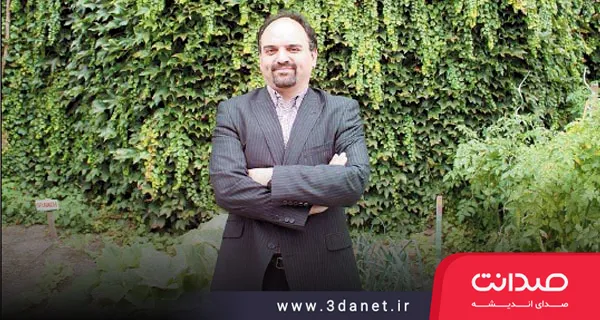
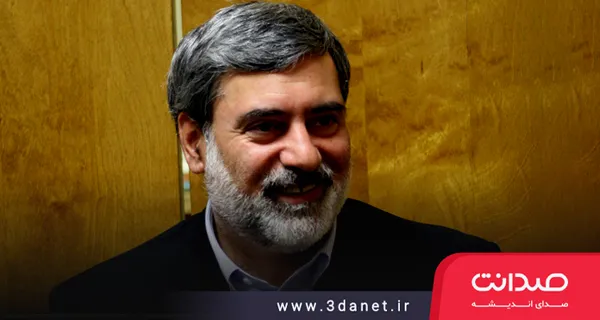
Alireza Shahin Mehr: In mid-January 2016, I spoke with Dr. Soroush Dabbagh about the topics Dr. Mohsen Kadivar had addressed in his interview with the Sedanet website. It was a very engaging discussion, though it did run long. It was agreed that I would send the transcript of the conversation to him after it was typed up so he could apply his comments before publication. However, due to various preoccupations and intervening tasks, this was delayed for several months. It seems it was destined for this conversation to be published on the eve of the anniversary of the Prophet Muhammad's (PBUH) Mab'ath.
Dr. Soroush Dabbagh is a researcher of religion, philosophy, and literature who has published numerous works on religious intellectualism and is currently conducting research at the Department of History at the University of Toronto. Among his published works in recent years are the translation and commentary of the Tractatus Logico-Philosophicus, In Sepehri's Sphere, and Sepehri's Azure Philosophy. The book The Melodious Rhythm of Sorrow is also among the works he has published in recent years and is available to those interested.
I hope that the publication of this interview will make an acceptable contribution to further opening the door to discussion and dialogue among religious new-thinkers and to the critique and examination of each other's views.
Thank you for the time you have dedicated to this interview. As a first question, I would like to ask you: if you were to paint a realistic and fair picture of Islam for a non-Muslim who is either unfamiliar with the religion of Islam or has been exposed to negative propaganda against Islam and Muslims, what components would you emphasize most, and how would you present the face of Islam to them?
I am pleased that another opportunity has arisen for dialogue on religious and epistemic issues. Regarding the image—or, as you put it, the realistic picture—that must be presented today, I speak as someone who has an affinity for the school of religious new-thinking and considers himself a minor member of this community. Naturally, those with other concerns and beliefs, such as traditionalists or fundamentalists, speak from their own perspective. I believe that in the present day, a religious tradition such as the Islamic tradition must be introduced with regard to two important categories: attending to the share of the heart and attending to the share of reason. In attending to the share of reason, I mean offering a humane, ethical, and rational reading and interpretation of the religious tradition. A group, particularly in recent decades, has been active across the globe under the name of fundamentalists. From al-Qaeda to Boko Haram to its latest narrative and version that has emerged in the last few years and captured the attention of the entire world; I am referring to ISIS, which is now established in present-day Syria and Iraq. I believe that an issue such as the emergence and appearance of extremist groups must also be analyzed epistemically. These extremist groups do not have only socio-political dimensions. Socio-political components are certainly central to them, and some people have approached or joined these groups out of economic, political, and identity-based concerns. Yet one cannot deny that both the self-proclaimed caliph of this faction and some of those counted among the ranks of ISIS consider themselves Muslims and, at least ostensibly, lay claim to following the Islamic tradition; even though they are very, very few in comparison to the vast majority of Muslims. At the same time, I think that the teachings of this faction, and by extension those who believe in Islamic violence, must be subjected to critical reexamination. As I mentioned, the story does not have only a socio-political aspect; in this regard, I believe that social jurisprudential rulings must be weighed on the scales of ethics, and a humane, ethical, and rational reading and interpretation of them must be offered. This is perhaps the most important task to be undertaken in this matter; by adopting methods that have a historical and phenomenological character; methods that take into account the context and era of the emergence and appearance of these rulings, do not take a literal approach to the sacred text, and take context-dependency seriously. Following sayings such as “I was sent to perfect the nobility of character” and as exemplified by what Rumi said: “Take its wheat, for the measure is rejected,” one must strive to recreate that spirit and message in the present day. Mr. Mujtahid Shabestari, in his work A Critique of the Official Reading of Religion, has a discussion entitled “Political Jurisprudence Has Lost Its Rational Foundation.” If I were to express his words in my own language, I would say: weighing social jurisprudential rulings on the scales of ethics and offering a humane reading that is commensurate with our conventional moral intuitions yields a rational and reason-friendly reading of the religious tradition. Bear in mind that the aim of this is not to whitewash religion. Nor is the aim an apologetic confrontation; rather, it is to understand the logic governing the genesis of the sacred text and jurisprudential rulings, and to move beyond a literal confrontation and take hermeneutical rules seriously and elevate them. In recent years, I have had the opportunity to reflect, at various times, on different surahs of the Quran and to expound upon their ethical and spiritual components. Leaving aside the Meccan verses, in the Medinan verses, one must understand and take into account the logic governing them and the context and era of their revelation. At the same time, it must be noted that some well-known social jurisprudential rulings have their roots and foundations in narrations and leave no trace in the Quran. Rulings such as stoning, taking the life of one who insults the Prophet, and the apostate leave no trace in the Quran; yet they appear in the narrations and are believed in by a multitude of jurists. I believe that taking seriously the cultural coordinates and the context and era in which we live entails a critical reexamination and the setting aside of at least some of these rulings. That was the share of reason, in brief and concisely. As for the share of the heart, reconstructing dove-like experiences in the present day and seeking out pleasant spiritual states is an important matter. In this regard, the mystical tradition has rendered great service to Islamic civilization; the service rendered by the mystics must be safeguarded and honored; meaning that a person, by following that tradition, gives meaning to their own spiritual experiences and finds themselves possessed of pleasant states in this world. I am not saying it is an easy task, but in any case, a kind of giving meaning to life under the umbrella of this mystical tradition, by reexamining it and giving meaning to one's own states, can constitute the share of the heart.
In recent years, with the publication of the series of articles “A Schema of Modern Mysticism” and by introducing and borrowing concepts such as “the modern wayfarer,” “thin metaphysics,” “faith born of tranquility,” and “wishful faith,” I have tried, from my own perspective, to explain what components spiritual wayfaring in today’s disenchanted world entails for someone who is, on the one hand, a modernist and, on the other, possesses strong and vivid spiritual states and concerns. Attending to the share of reason and attending to the share of the heart are like the two wings of a bird, and it is by possessing and simultaneously turning one’s attention to these two wings that one can arrive at a humane, rational, ethical, and soul-nourishing reading and interpretation of the religious tradition.So, according to these interpretations, should we reduce the share of jurisprudence in religion and focus more on spiritualities? In other words, should we reduce the share of jurists and increase the share of mystics in the realm of religiosity?
I did not say we should reduce their share; rather, I emphasized that we must reread that jurisprudential tradition and place social jurisprudential rulings on the scales of ethics. The religion of Islam is a ritualistic religion; its history also demonstrates this. We cannot imagine or expect that jurisprudential practices will vanish entirely from among Muslims; this is neither a correct expectation nor a feasible one. A great many people who are among conventional believers perform religious rituals; they pray, fast, perform the Hajj, give alms, and the like. In its proper place, this is very good. That is, that part of the religious tradition which serves as the shell and outer layer that many believers are engaged with. What I mean by rereading jurisprudential rulings is weighing them on the scales of ethics and providing a refined and correct reading of social rulings such as commanding the good and forbidding the evil. In a speech I gave in Toronto on the occasion of Tasua and Ashura last year, I tried to explain that many of us have understood commanding the good and forbidding the evil in a distorted way. In those days, something like the "Guidance Patrol" and the like, which is prevalent in our society today and comes to mind from "commanding the good," was not found and was not at all intended. The words of Husayn ibn Ali also show that opposing tyranny and centering justice were the main constituents of the event of Karbala. He counts the secret of his movement and uprising as "I proceed according to the conduct of my grandfather and my father, Ali ibn Abi Talib" and considers it an instance of commanding the good and forbidding the evil. Categories and concepts such as justice and oppression have numerous components and constituents. Today, if, for example, women's rights are violated and discriminatory rulings are issued and enforced against them, confronting these and protesting the oppression against women is an instance of commanding the good and forbidding the evil. The requirement of this is that jurisprudential rulings must be reread and redefined in light of contemporary conventional moral intuitions; otherwise, the religious community has no escape from jurisprudence; in this respect, Islam is essentially different from Christianity.
On the other hand, for organizing spiritual conduct, fortunately, a robust literary tradition and several mystical schools that have flourished within the Iranian-Islamic civilization exist: the Baghdad school, which has champions like Junayd of Baghdad, Shibli, and Mansur al-Hallaj; the Khorasan school, which has great figures like Bayazid Bastami, Abul-Hasan Kharaqani, Attar of Nishapur, and Jalal al-Din Rumi; and the Shiraz school, known through Saadi and Hafez Shirazi. My perception is that for giving meaning to life and tasting spiritual experiences, especially in an era when, in Max Weber's terms, the world has been disenchanted and God and the sacred no longer pour from every wall and door as in the past, reviving this tradition and rereading it critically is path-opening. As I said in response to the previous question, by adopting a balanced and comprehensive view, one must attend to both the share of the heart and the share of reason.
One of the problems of Islam and Muslims in the Western world is the issue of Islamophobia. The crimes of terrorist groups claiming Islamism are all attributed to the religion of Islam, and the media also play a major role in shaping public opinion in this regard. In your view, what is the state of Islamophobia in the Western world? What views do intellectuals and ordinary people hold regarding the religion of Islam in the West?
The point you raised is correct. That is, the media has played a very significant role here, and the groups we discussed, from Al-Qaeda to ISIS, who have identified themselves as Muslims, have played an important part in constructing this image. I have been living in Canada for over four and a half years; previously, I was in England for four and a half years, from 2002 to 2006, and beyond academic circles, I interacted with ordinary people on the street. The media in Europe and North America are very prominent; in North America, because of these very terrorist acts, many people have unfortunately formed this image and become fearful of Islam. You should have been here to see how much news coverage an event like the massacre of the writers at the 'Charlie Hebdo' magazine in Paris and the massacre last November received here, and to what extent they were talked about. My point is that many people who, so to speak, only believe what they see and only watch certain media outlets, have such an image of Islam and Muslims, but fortunately, the educated elite do not; politicians like Obama, fortunately, do not pour oil on this fire. The new Prime Minister of Canada, Justin Trudeau, unlike some other politicians, is not a promoter of Islamophobia. The phenomenon of Islamophobia is multi-dimensional; for this reason, I refer to the educated elite, ordinary people, the media, and politicians, each playing their own role. Academics and intellectuals know well that terrorist groups are a minority group and the vast majority of Muslims do not think this way. Some media outlets promote Islamophobia and incorporate and fuel it in their policies. Ordinary people look to both the media and politicians. I think that compared to 2001 and the events of September 11th and the incidents that followed, our situation is better overall now. At the academic level, Islamophobia does not have much purchase. Those in universities who promote or believe in Islamophobia are very much in the minority. Politicians are also of two kinds; you can find both kinds. But fortunately, the consensus among politicians is that fundamentalists should at most be considered a minority group, and the vast majority of Muslims are not like this. Ordinary people are pulled this way and that; the more the media and politicians beat the drum that extremist groups are a minority of Muslims and nothing more, the more influential they will be on the people on the street.
In addition to the above points, I would also like to mention that we must, at the same time, understand the logic of these matters. Why do these events happen? This phenomenon does not have a single cause. Our position is clear, and we absolutely and utterly do not defend this heinous act and the killing of innocent people. However, historically speaking, the events that occur in Paris cannot be considered unrelated to what happened in Algeria in previous decades. My point is that the phenomenon of "colonialism," for which European countries were the primary cause, has produced effects and consequences. I hope Western countries will reconsider their policies and realize what effects and consequences adopting such policies has brought about. In any case, we cannot deny or ignore that something called colonialism existed. Iran was not colonized, but India was colonized by England, and some Islamic countries were entangled with colonialism for years. Those accumulated resentments and hatreds erupt somewhere. This statement is in no way an endorsement of those events but is merely an attempt to understand them. One can understand that an event like 9/11 in America is not unrelated to what previously occurred in the Middle East. This is not my view alone; I have read several articles in recent years by some Western analysts who believe these incidents do not have a single culprit and that one must see their various dimensions. This act is certainly heinous; at the same time, its roots must be examined. After all, the West has, for years and decades, treated the Islamic world in a way that is indefensible. On the other hand, many of the good things and modern institutions that have risen to prominence here and are products of modernization have certainly had good effects and blessings on a national level; at the same time, we are now witnessing double standards in the arena of international politics. When you monitor certain media outlets, you see that an event like the one in Paris receives extensive coverage, but when a similar terrorist incident occurs in Lebanon around the same time, that incident receives far less coverage. In any case, one cannot fail to see these things and not take them into account in one's judgment; a kind of double standard, or focusing on one issue excessively while ignoring certain people and a community, is distressing. I hope all these matters will lead to an understanding of the roots of Islamophobia—that is, why some people engage in these acts—and then, accordingly, conclusions be drawn and policies be made; otherwise, the problem will not be solved by merely seeing one side and not the other. I emphasize again that the killing of innocent people is in no way defensible, and the fundamentalists have committed a profoundly wrong act morally, rationally, and religiously. At the same time, so that these events occur less frequently in the future, it is better to also pay attention to these matters in order to have a comprehensive picture of the issue. I hope the story of Islamophobia does not continue and that the region in the Middle East, which is unfortunately burning in the fire of hostility and enmity, will be freed from the scourge of war in the not-too-distant future.
In an interview with the Sedanet website a few months ago, Mohsen Kadivar noted "the absence of investment by Twelver Shiites in Western universities, research centers, and publishing houses, including the establishment of chairs for the teachings of the Ahl al-Bayt and Shiism," and in one of his speeches, he also warned about Islamic propagation in the Western world being monopolized by Wahhabis. From your perspective, to what extent have Muslims living in non-Muslim countries, especially European and American countries, been able to present a merciful image of Islam to non-Muslim residents of Western countries? Particularly, to what extent have Iranians residing in European countries been able to establish organized and cohesive institutions for this purpose?
As far as I know and have seen, the landscape of Islamic propagation has not been monopolized solely by Wahhabi Islam; the Ismailis have also done a great deal of work. I have visited the Ismaili Centre in London. The Ismaili community in Toronto also engages in extensive activities; I have attended some of their seminars and have given lectures there twice. Moreover, some academic scholars of Islam also have an affinity for reformist Islam; for instance, Liyakat Takim, who holds a teaching chair at McMaster University in Canada, fully believes in reformist Islam and a tolerance-oriented Islam. Regarding the Ahl al-Bayt and Shi‘a in North America, academic chairs are, of course, far fewer, because establishing such chairs requires several million dollars. Iranians abroad have mostly invested in establishing Iranian Studies centers, such as the chair held by Dr. Abbas Milani at Stanford University. Another chair was in the field of Islamic philosophy, formerly held by the late Dr. Ziai. At the same time, Islamic Studies, and specifically Shi‘i Studies, among Iranians abroad—if you mean the establishment of chairs—does not have many advocates; one can draw this conclusion from the works and outputs. I hope this happens and chairs of this kind are established so that we encounter the humanistic reading of the Islamic tradition and reformist Islam more frequently.
Unfortunately, within the Iranian diaspora, we also encounter Islamophobia. I have personally seen many times that beneath articles published by Yousefi Eshkevari, Abdolkarim Soroush, Mojtahed Shabestari, Abdolali Bazargan, myself, and other friends and dear colleagues, sharp and harsh comments are posted; mostly arising from hostility toward Islam. I do not know how many they are, particularly those who left the country in the last 30-40 years and, due to considerations regarding the current political situation in Iran, attribute this matter to religion and write these sharp and harsh statements; at the same time, these people are Iranians and our compatriots. One of the reasons that wealthy Iranians residing abroad, if they are to provide assistance, contribute to Iranian Studies centers is precisely this. Unlike those who are of Arab descent or live in Middle Eastern countries, who establish these chairs either to propagate Wahhabi ideas or for other purposes. Among Iranians abroad, whether in the Middle East, Europe, or North America, there is less inclination for this. One must not be discouraged by the blowing of unfavorable winds, which are truly many; rather, one should note that "There is no prescription here but to knock at the door / Except hope in God, who knows best what is right." I hope the number of chairs, centers, and institutions that seek to expand the humanistic, ethical, and tolerance-oriented reading of the Islamic tradition increases. In this very city of Toronto, a foundation called the "Suhrawardi Foundation" was established two years ago, where both our Iranian-Islamic heritage is discussed by professors and speakers, and rational, tolerance-oriented Islam and openness toward Iranian-Islamic culture are promoted. The name of the great Iranian philosopher, the martyred Shaykh, Shihab al-Din Suhrawardi, who worked on linking Iranianness and Islam, is an apt name and has been chosen with care, and this foundation has been registered in his name. I hope that both small-scale centers of this kind and broader, larger centers that work toward expanding and institutionalizing tolerance-oriented ideas and readings of the Iranian-Islamic tradition will, in the medium term, gain the upper hand and achieve greater emergence, manifestation, and flourishing.
It seems that most religious intellectuals, in their works, pay little attention to the intellectual and practical heritage of the Shi‘a Imams, and this has caused traditionalists to become the sole interpreters and promoters of the intellectual and practical conduct of the Shi‘a Imams, while extremists have also found the opportunity to hold sway on platforms and pulpits. Currently, the focus of religious intellectuals is mostly on extra-religious studies, in the hope of deriving intra-religious conclusions from them. Why do religious intellectuals pay little attention to the hadiths and the conduct of the Shi‘a Imams?
I would like to mention a few points regarding what you said. Firstly, the traditionalists' encounter with the Shia-Iranian tradition is esoteric-mystical, not theological. For instance, if we consider Corbin as the exemplar of the traditionalists, his works indicate this. The same is true of Seyyed Hossein Nasr and others who operate under the banner of traditionalism. They are, in a sense, thinking of a lost glory and feel a nostalgia for a certain period of our Iranian-Islamic culture, and when they speak of "Perennial Wisdom," they yearn for a return to a bygone era. At the same time, the theological teachings of Shiism are not prominent in their works. I have read numerous writings by traditionalists; I do not sympathize with them and believe their lack of openness to modernist teachings is unjustified and invalid. At the same time, I do not think they are intent on highlighting Shia teachings in the theological sense of the word. Secondly, regarding the relationship between the inside and outside of religion, I saw this point emphasized in the interview you conducted with Mr. Kadivar as well. It seems to me that this error had also crept into his remarks; as if a kind of demarcation and unbridgeable gap exists between these two categories. Methodologically, this conception of the approach and creed of religious new-thinkers is incorrect and unjustified. The relationship between the inside and outside of religion is, so to speak, an interactive, two-way, and dialectical matter. It is not the case that when we speak of the inside and outside of religion, they are like two islands with a river between them creating an unbridgeable distance. This relationship is entirely interactive and two-way. That is, you read the sacred text and interact with the religious tradition in light of your assumptions, teachings, and your educational and epistemic background. When we speak of the inside and outside of religion, we should not think that these are two things that never meet, or if they do, they can be mechanically separated from one another. In our interaction with the sacred text—just as when we read a text like Hafez's poems—we cannot escape or avoid applying our epistemic and educational background. The broader our world and the richer our epistemic background, the deeper our interaction with both the sacred text and the religious tradition. As I have discussed in the article "The Theology of Religious Intellectualism: Assessing the Relationship between Religious Experience, Religious Knowledge, and Religious Action" and tried to explain under a model, religious new-thinking has been reflecting on religious knowledge for 25 years and has sought to explain the relationship between various forms of human knowledge. Incidentally, unlike the pre-revolution era, when a kind of purist discourse and a discourse of indigenization—in the sense of: "For years the heart sought the Cup of Jamshid from us / And what it itself possessed, it begged from strangers"—held sway, and in the works of figures like Jalal Al-e Ahmad, and for a period in Ali Shariati and Ehsan Naraqi, concepts like purism and the return to self were central; in the atmosphere following the developments of the 1980s and in the latter half of that decade, with works like Abdolkarim Soroush's "The Theoretical Contraction and Expansion of the Sharia" and Mojtahed Shabestari's "Hermeneutics, the Book, and Tradition," we witness a kind of openness to various forms of human knowledge and the theorization of their interaction. In my own account in that same article, "The Theology of Religious Intellectualism," I have formulated this interactive and dialectical relationship between the outside and inside of religion using Rawls's account of "reflective equilibrium" and by borrowing the epistemological position of "modest foundationalism." My point is that there is no escape or avoidance from this organic and firm connection between different branches of knowledge. The more serious and multidimensional this interaction, the stronger and more mature our understanding of the sacred text becomes. In my view, in Mr. Kadivar's interview with the "Sedanet" website, the relationship between the sacred text and non-religious knowledge has been formulated in an unjustified manner; an account in which a kind of lack of openness to the influence of non-religious knowledge on religious knowledge is visible.
Regarding the approach to the Shia tradition in the works of religious new-thinkers, as you mentioned, while the theological engagement with Shia teachings in their works may be limited, the ethical, mystical, and spiritual applications are nonetheless significant. In any case, religious new-thinking (especially later religious new-thinking) elevates and centralizes prophethood; there is no denying this. This means that in their works, prophethood is the pillar of the tent, and other theological teachings are understood under the rubric of prophethood, which is the firm cornerstone and prominent document of being a Muslim. At the same time, in their works, the teachings of the Shia and what is found in Shia traditions are also utilized; a utilization that leans more towards the ethical and mystical dimension. For example, the commentary on the Nahj al-Balagha that you see in the works of Abdolkarim Soroush; for a period, Mr. Malekian also did this. In the works of other religious new-thinkers, there is also a kind of ethical and spiritual engagement with the Shia heritage. However, theologically, a greater volume of the work of religious new-thinkers has been focused on refining and formulating the relationship between Islam and its essentials and accidentals, the study of revelation, the relationship between reason and revelation, and the relationship between science and religion. Thus, the works of the religious new-thinking community have not been unrelated to the Shia tradition, but the emphasis has been more on the ethical and spiritual aspect of this tradition. In recent years, I have had the opportunity to speak several times in Toronto about Amir al-Mu'minin. In these lectures, I have discussed his contemplation of death, the piety that was his focus, and his advice regarding the temporary and fleeting nature of this world. So, considering the explanations given, one can conclude that religious new-thinkers have not been inattentive to the Shia tradition in their works.
The nature and mechanism of revelation has been one of the topics that religious intellectuals have extensively addressed in recent years, arriving at different conclusions, and the introduction of these discussions, especially by Abdolkarim Soroush, has sometimes provoked sharp reactions and controversies. Some religious intellectuals, like Arash Naraghi, believe that "the views expressed by Messrs. Abdolkarim Soroush and Mohammad Mojtahed Shabestari regarding revelation arise from their political and social concerns." On the other hand, Abdolkarim Soroush, in "Bashar va Bashir" (Humanity and the Harbinger), cites the incompatibility of the apparent meanings of some Quranic verses with human sciences and the attempt to resolve this conflict as one of the most important reasons for proposing his new views on revelation. Meanwhile, Arash Naraghi, in his article "Truth and Falsehood in Revelatory Speech" (published in the book Hadith-e Hazer va Ghayeb), has resolved a kind of conflict between science and religion without altering the traditional view of revelation. After all, how many verses of the Quran are in conflict with modern human sciences that we need to go to all this trouble to resolve these conflicts? With this preamble, I want to ask you this question: what truly is the reason for religious intellectuals, especially Abdolkarim Soroush and Mohammad Mojtahed Shabestari, addressing novel views on the mechanism of revelation, and can this same traditional model of revelation not be reconstructed in a rationally acceptable way based on contemporary epistemologies?
I disagree with the analysis of my dear friend Mr. Naraghi. First, motive-reading generally leads nowhere. One can engage in motive-reading for anyone in any matter, but the question of motive—and, in Clifford’s terms in “The Ethics of Belief,” the reasons and motives for which a certain idea takes shape in the mind and conscience of a given speaker and the reasons and factors for which they mention them—is separate from epistemological evaluation and the examination of its truth or falsehood. My response is that, first, I do not think such motives were at play, and second, motive- and cause-finding gets us nowhere at all. Naḥnu abnāʾ al-dalīl (We are the sons of reason). One must examine the arguments that every thinker and every theorist has put forward. So I am neither in sympathy with his approach nor do I think his judgment in motive-reading is correct. Everyone has impulses and motives that lead them to do or refrain from a certain action. But as to why these two individuals have specifically addressed these matters, my impression is that the story is not merely about the incompatibility of certain verses and rulings and the conflict between science and religion. The aim is to provide a reasonable explanation of the relationship between God—that is, the supernatural—and nature; the story originates from how we can justify God’s speaking to human beings and understand it in a meaningful way. The conflict between science and religion is one of the instances of rationalizing the relationship between physics and metaphysics. You know that one of the reasons ʿilm al-kalām (theology) was given this name by early theologians was to explain the manner of God’s speech with human beings; God has no throat, larynx, or voice, so in what sense did He speak to the prophets? How did Gabriel descend upon the Prophet? Through what means did he bring a message from God? As I understand it, the main issue here has been to provide a reasonable explanation of the manner of God’s speaking to human beings. The implication of this statement is that the discussion is initially a theological one, not a philosophical one. That is, those who believe, in general, in the relationship between physics and metaphysics and believe that God has spoken to human beings in some way have invoked these theories to explain its mechanism. The main motive and cause, as I understand it, is this. And then, in light of that, to transform jurisprudence. Both Soroush and Shabestari believe that we must devise a new theological system. In light of this new theological system, jurisprudence, which is nourished by theology, will also be reconstructed. So the reason for proposing these theories is both a more reasonable explanation of the manner of God’s speech, the provision of a new theological system, and, at the same time, an analysis of the relationship between science and religion and the incompatibilities mentioned. The story is far more than the common incompatibilities between science and religion in some verses of the Quran, as was said; the issue is devising and laying the foundations of a new theological system. So far, this has been an explanation of the issue. But regarding their evaluation, in the article “From Prophetic Experience to Prophetic Dreams,” I have tried to explain the components and constituents of Abdolkarim Soroush’s theory of revelation. In the field of epistemology, if we believe in the research program, like Lakatos, its implication is that we are not situated between a true theory and a false one. Each of the theories that have been put forward has a set of evidence and confirmations and a set of counterexamples and falsifications. Bear in mind that the theories of “The Expansion of Prophetic Experience,” “The Prophetic Reading of the World,” and “Prophetic Dreams” are theories for better understanding the mechanism of revelation. Soroush and Shabestari have presented several arguments and pieces of evidence in their works. From the critics’ perspective, these claims and attestations have counterexamples. Very well! We must see which of these theories, supported by evidence and arguments, has more force. Whichever of these theories has more evidence and confirmations is more justified. I think the issue should be seen this way; it should not be seen in black and white. Initially, one must formulate the traditional theory of revelation and explain and formulate its ontological, epistemological, and anthropological components and constituents. As I mentioned in response to the previous question, this type of encounter is a dialectical and interactive encounter; in light of the theories, the evidence presented must be evaluated. Then, if, on the whole, a theory is seen to have more attestations and evidence compared to the alternative position, we adopt it and set the other aside. This process has no stopping point. As it has been in the past, and numerous, plural, and diverse scientific and religious theories have been in dialogue with one another. This is how I look at the issue; in truth, the component of historicity is very important to me, something I have learned from studying the history of philosophy and the studies I have undertaken in the field of the history of religion.
Unorthodox views have existed in both the Christian and Islamic worlds. These views are still being advanced today; some people believe in them and some do not. Arguments for and against each are presented and examined. A hundred or two hundred years from now, these discussions will become part of the history of the religious and theological tradition, just as we speak today, for example, about the legacy of Suhrawardi, Mulla Sadra, and numerous other philosophers and theologians. Among the topics raised in recent years, the reconstruction of the theology of revelation based on contemporary epistemologies is also one position; I have seen the works of Plantinga and Alston on this matter, as well as the account Naraghi gives of it, but I have not yet been convinced that they are more justified than the models proposed by Soroush and Shabestari. At the same time, I think the traditional model is insufficient for explaining fundamental theological issues such as how God speaks to human beings.I emphasize once again. Each of the theological theories put forward concerning the nature of the Transcendent and the limits and boundaries of the revelatory matter—including the traditional model, the Soroush and Shabestari model, and the model based on reformed epistemology—has its own components, foundations, and evidence; one must consider and weigh the claims, arguments, and evidence of each, and perhaps speculate about their relative merits. As I understand it, the traditional theological model does not have a relative advantage here; that is, it cannot adequately explain certain matters. For a more justified explanation of those subjects, devising an alternative theological model is more helpful to us.
As it appears, Abdolkarim Soroush's expansion of the prophetic experience not only failed to attract the main proponents of the traditional conception of revelation, namely the clergy and seminary scholars, but it could not even convince prominent religious intellectuals. This fate has also befallen the theory of the Qur'an as a dream. This is while the theory of prophetic dreams entails a paradigm shift and a fundamental change of model, the acceptance of which leads, in a way, to setting aside all interpretations of the Qur'an made up to now. Are the prophetic dreams the logical outcome of the expansion of the prophetic experience, or were they meant to complement it and remedy its shortcomings? Is not this lack of acceptance itself a sign of the necessity for Abdolkarim Soroush to change his method of presenting the Qur'an as human speech?
It was never meant from the outset that all religious new-thinkers would be in accord with it. Is every theory that is put forward supposed to be met with the accord of the multitude? I take issue with your very initial assumption, so to speak. For instance, when the "Theoretical Contraction and Expansion of the Sharia" was introduced, did everyone agree with it? Many of those who agree with it today were, at that time, staunch opponents of Contraction and Expansion. Now let us go further back than the contemporary era. Did many of the things Mulla Sadra said have an impact at the time? That poor man was also forced to leave his homeland, migrate to Kahak in Qom, and write his works there. Were Spinoza's words initially accepted within the heart of the Jewish tradition in the 17th century? He too, after harsh treatment from the rabbis, was forced to leave the Jewish community residing in Amsterdam, wrote and published his books in exile, and after his death, his works gained influence and had an impact, being considered one of the reasons for the emergence of the "Age of Enlightenment" in 18th-century Europe; these occurrences are among the historical exigencies and components of matters. I was not at all taken aback, nor did I expect that many clerics would agree with it or will do so in the future. As Rumi says: "Hark, speak, for the Speaking Faculty is seeking / So that water may reach a generation after us." Because I see matters historically, and for years a historical perspective on phenomena has occupied and organized my mind and consciousness, I have not seen anything strange or unexpected in this. Certainly, as you said, these theories have opponents, whether among religious new-thinkers or among well-known or lesser-known seminary scholars, and at the same time, they also have proponents. I do not think that many proponents or many opponents should cause a person to abandon this or that opinion. If Mr. Soroush still considers the arguments he has put forward to be justified, he should proceed on that same path. If he does not consider the critics' objections valid, why should he set it aside? Whether there are 100 opponents or a million. In the words of Avicenna: "We are the sons of proof." You might say that, in my opinion, Mr. Soroush's arguments are not justified. If he, or those like him, or anyone else reaches that conclusion, they must reconsider their approach. But as long as they still consider their speech justified—diligently and sincerely—and believe that this analysis and explanation is more justified, why should they set it aside? Or even his rivals, meaning those who hold a different opinion, as long as they think their judgment is correct, why should they set it aside? I think here, more than anything, one must look at the arguments, see what arguments are put forward, and evaluate them. Mr. Naraghi, for example, has written several articles on this matter and stated his critical opinion. As mentioned, I too have written an article refining and organizing the various components and arguments of this theory. I intend in the future, in an article citing different conceptions of the Transcendent and the sacred dimension of existence, to address this topic from another perspective as well. If we see the issue in this way, its coordinates change. If we adopt the historical view, we realize that this subject is not a strange and novel matter in the history of thought; both the study of the history of Western thought tells us this, and reflection on the history of Iranian-Islamic thought in our own culture. I recently had the opportunity to teach a course on "Enlightenment and Kant's Philosophy" at the Suhrawardi Foundation in Toronto. There, I clearly saw the evolution and transformation of ideas in the works of Cassirer and other specialists of the "Age of Enlightenment"; how some ideas that were once controversial and for which blood was shed seem self-evident today. The course of evolution and transformation of human opinions, both in the West and in our Iranian-Islamic tradition, has been like this. Seeing matters as context-dependent and historical tells us this. Whether the opinions of Soroush and Shabestari or the opinions of their critics and opponents, they will all become part of our intellectual history in the future; none of these discussions will be erased and all will remain. Both Soroush and Shabestari, and their critics, as long as they find their position justified, should not set it aside; even if some friends do not approve of these opinions. The account of ideas is separate from the account of friendly and personal relationships, and the rulings of these two should not be conflated. As far as I have seen, Mohsen Armin and Arash Naraghi have written criticisms of these statements and discussions and laid out their arguments. Announcing that I disagree with this opinion is different from someone writing a critique and explaining their reasons. These two differ. I too may disagree with this or that statement, but until I write down my reasons and publish them, it carries no weight on the scales of inquiry.
Apart from Messrs. Armin and Naraghi, the rest have not gone beyond merely expressing opposition and disagreement. If they too enter this arena, they will help enrich the literature of the discussion. Some time ago, Mr. Kadivar published remarks criticizing religious new-thinkers; criticisms such as that the majority of works by religious intellectuals have been published in oral form. In response to this criticism, one can explain that the works of some of the great figures in the history of philosophy were also oral; this statement involves a confusion between speaking orally and speaking rhetorically. Much oral speech is also argumentative. In any case, if you consult the history of philosophy, you will see that many of Plato's statements were also oral. In the contemporary era as well, some of the important works of Saul Kripke and Hilary Putnam, the famous analytic philosophers, were originally oral and later published in written form; or Wittgenstein's famous lecture at Cambridge University in 1929, entitledDo you accept the proposition that Mohammad Mojtahed Shabestari’s “Prophetic Reading of the World,” and Abdolkarim Soroush’s theories of the “Expansion of Prophetic Experience” and the “Dreamlike Nature of the Qur’an” all lead to the same conclusion, namely that the Qur’an is the word of the Prophet? If so, what is the main difference between Abdolkarim Soroush’s theories and Mojtahed Shabestari’s theory, about which you have said: “His claims and arguments in the series of articles on the Prophetic Reading of the World are not very clear and suffer from several ambiguities”?
Yes, a noteworthy affinity can be seen among these theories. In fact, the theological outcomes of the “Prophetic Reading of the World,” the “Expansion of Prophetic Experience,” and the “Prophetic Dreams” are more or less the same; at the same time, the ways of arriving at these outcomes differ from one another. In other words, the “product” of these discussions is similar, but the “process” of reaching it is different. As I have noted in the article “From Prophetic Experience to Prophetic Dreams,” Soroush, in articulating his claims and arguments, has borrowed concepts and doctrines from Islamic philosophy and formulated his own metaphysical foundations and the manner of the relationship between nature and the supernatural, physics and metaphysics, and based on that, has articulated his own claims and arguments concerning the epistemology of revelation. Shabestari, in the fifteen articles of “A Prophetic Reading of the World,” seeks to articulate his linguistic and semiotic arguments; at the same time, I believe the ontological and metaphysical foundations of his discussions are not very clear. Furthermore, I think he places too great a burden on linguistic discussions, and the conclusions and implications he seeks to draw from proposing certain discussions are not logically extracted from them. I have elaborated further on this matter in the sixteen-session series “Understanding Shabestari”; the audio files of these sessions are available on my website.
As a final question, in your opinion, what topics have been the focus of religious intellectuals so far, and what topics have been raised in the past that religious intellectuals have not adequately addressed or done justice to, even though they should have received more attention?
I believe that religious new-thinkers, especially over the past twenty-five years, have been largely successful in presenting their discussions; at the same time, unlike religious pluralism, they have paid less attention to cultural and social pluralism and the multiplicity of ways of living in society. Also, the discussion of minorities, both ethnic and religious, has been less a subject of their discussion and emphasis. Moreover, it would be good for the manner of giving meaning to life in the present era and the explication of the components and the boundaries of ethical and spiritual conduct to be further developed in the works of religious new-thinkers.
.
.
PDF of the Interview Islamophobia, Historicity, and Religious New-Thinking "Sedanet Exclusive Interview with Soroush Dabbagh Critiquing Mohsen Kadivar"
.
.
Islamophobia, Historicity, and Religious New-Thinking
Sedanet Exclusive Interview with Soroush Dabbagh Critiquing Mohsen Kadivar
April/May 2016
.
.
Discussion0 comments
No comments yet; let yours be the first voice.