Philosophy
Sedanet's Exclusive Interview with Dr. Soroush and Hossein Dabbagh
'Continental philosophy is good for the academy, not for the intellectual sphere': a Sedanet conversation with Soroush and Hossein Dabbagh on the state of philosophy abroad and the fading conflict between the analytic and continental traditions in the West.
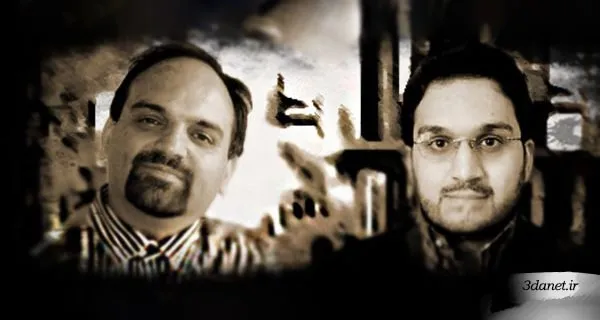
Sedanet's Exclusive Interview with Dr. Soroush and Dr. Hossein Dabbagh on the Occasion of World Philosophy Day Continental Philosophy is Good for the Academy, Not the Intellectual Sphere!
Majid Khani: When I proposed the idea of an interview with Dr. Soroush Dabbagh and Hossein Dabbagh to these two brothers, one of whom is engaged in research, study, and teaching in Canada and the other in England, they accepted with open arms and "with affection," proving to me that if they have studied moral philosophy in the realm of theory, they also possess a gracious character in practice.
Hossein answered the questions in writing, but I sat down with Soroush on Skype for an oral conversation—a conversation that, despite that dear man's indisposition, lasted more than two and a half hours, and the low quality of Iran's internet and its repeated disconnections made me feel ashamed before him. Yet he patiently and with composure listened to my questions and answered them calmly, deliberately, at length, and comprehensively. The questions began with the state of philosophy abroad, and in the midst of the discussion, turned to Davari, Seyyed Javad Tabatabai, and Fardid; finally, our conversation ended with the unkindnesses of Mehrnameh, although our affection for them remains "the same seal and mark as it was."
The questions in this interview have three parts: one part of the questions pertains to the atmosphere of philosophy and philosophizing abroad; the second part of the questions is dedicated to philosophy in Iran, with an emphasis on the analytic-continental dispute—in these two parts, both brothers have answered similar questions; but the third part consists of questions related to the work and intellectual concerns of Dr. Soroush Dabbagh, which naturally only he has answered. I hope to have the opportunity at another time to converse with Hossein about his activities.
- It seems that the intellectual and philosophical atmosphere inside the country has become polarized, influenced by the confrontation between the two analytic and continental traditions. What is this dispute like abroad, particularly in England and Canada, where you have had the experience of living?
Soroush: Before traveling to England to continue my studies, I had this same image, meaning the dispute between analytic and continental philosophers, which at times took on hostile dimensions, was prominent for me. After arriving in England and beginning my studies, I realized that, at least for some philosophers, the issue is not like this and is not formulated in this way. It can be understood that in the West, this dispute really did exist, particularly in the atmosphere between the two World Wars, that is, in the 1930s, 40s, and 50s. The reason for it was twofold: one was what happened to the Vienna Circle[1], that is, when the story of anti-Semitism resonated in Europe, to the extent that some of these philosophers, like Carnap[2] and other members of the Vienna Circle, were forced to leave their homeland. Second, the topics that analytic philosophers addressed in that era—the discussions of analytic philosophers, whether members of the Vienna Circle, or Oxford philosophers like John Austin[3], or Quine[4], who was philosophizing in America—were mostly centered around meaningfulness and logic, and unlike continental philosophers, categories such as ethics, politics, existential concerns, and a historical perspective were less apparent among them; hence, a confrontation between these two groups was seen in that period of time.
But when we reach the 1970s and 80s, the story becomes somewhat different. For several reasons: one is that some analytic philosophers began to address categories like politics and ethics more seriously. John Rawls's[6] famous book "A Theory of Justice[5]" has been thought-provoking and influential in this regard; in addition, some books written about the history of analytic philosophy, and the attention and mindfulness toward the history of this philosophical school, became a subject of discourse and consideration for analytic philosophers. Among the most important books written about the history of analytic philosophy is "Origins of Analytical Philosophy[7]" by Michael Dummett[8], the greatest Frege scholar of the twentieth century, and works published in this field by philosophers such as Hans Glock[9], like "What is Analytic Philosophy?[10]".
In other words, one could imagine that this disagreement existed among the founding fathers of analytic philosophy and those working in the field during the first decades of the twentieth century; it also still exists among those who remain from that generation, but among the newer generations, the story is different. For example, when I was studying at the University of Warwick[11], David Miller[12], a student of Popper[13], was also teaching there and had not yet retired. I attended his classes on formal logic[14] and the philosophy of science. I would sometimes go to his office and we would talk. I remember that Miller had no fondness whatsoever for Heidegger and the Heideggerians, and he leveled rather sharp criticisms at them; one could tell that this conflict and disagreement was deep and deep-rooted. But setting aside the old quarrels, the story has changed today. For instance, in the branch of phenomenology, some of the work done today by certain analytic philosophers shares common ground with the work of some continental philosophers. As an example, when I was writing my doctoral dissertation, another of my supervisor's students was working on the works of Merleau-Ponty[15] and the later Wittgenstein[16]. Although my supervisor was a student of Michael Dummett and a thoroughgoing analytic philosopher, he was open to and reflected upon some of the discussions raised in the continental tradition. On the whole, it seems that today the opposition and occasional animosity that existed between these two philosophical schools in past decades has faded.
Hossein: As you might guess, universities in England, unlike in America, with a few exceptions (such as Sussex, Warwick, Kingston, and to some extent Birkbeck and Oxford), only recognize analytic philosophy and encourage students to study and teach in this field. Of course, this does not mean that the conflict between analytic and continental philosophy has completely died down in England. In fact, such a conflict is clearly found among undergraduate students. At the universities of Oxford and Reading, where I have had the experience of studying, undergraduate students were always seeking to organize meetings, conferences, and seminars to highlight this conflict, inviting various professors from different branches to fan the flames of this quarrel. I remember that in one of these meetings, students set ... and ... against each other, and indeed a fierce debate ensued. The important point here is that the analytic-continental conflict in England, as far as I have experienced, unlike what happens in Iran, is not about the "philosophers" themselves. That is, it is not the case that one quarrels with another over why, for example, they teach Hegel[17], Marx[18], Nietzsche[19], Heidegger[20], and so on. The quarrel is over the subjects and methodology of these philosophers. Even analytic philosophers draw upon Hegel or Heidegger in their teaching or are obliged to make use of these philosophers' texts. The point is that analytic philosophers engage critically with the texts of continental philosophers as an example of philosophical reasoning (strong or weak). What a certain philosopher said is not important; how they said it is important. I remember that when I sat in on Heidegger classes at Oxford, there was no narration or recounting of what Heidegger had said. Everything was critique and the dissection of Being and Time[21]. Similarly, when I sat in on a class on ethics from Nietzsche's perspective, the professor first tried to reconstruct Nietzsche's argument, then proceeded to critique it.
Another point I should mention here is that analytic and continental philosophy have drawn very close to each other in recent years in terms of subject matter (and not method). For example, if continental philosophers used to write more about existential themes (death, loneliness, the meaning of life, etc.), now analytic philosophers are also publishing books on these same themes, albeit with a different method.
- Mr. Soroush Dabbagh! Your view is that, like many academic and intellectual debates, this Continental–Analytic confrontation has also reached Iran very late, and while this conflict has faded in the West, it has only just flared up here. Have I understood correctly?
Soroush: More or less, one could say that, but there are other explanations as well. Even today, in some philosophy departments in England, Australia, or America, many philosophers and philosophy students are not familiar with Continental philosophy, meaning they do not work in that area, but not that there is any hostility or enmity. Let me give an example from the University of Toronto, where I am currently conducting research. Here in the philosophy department, especially at the undergraduate level, students take numerous courses through which they become acquainted with both analytic philosophy and Continental philosophy. For instance, a course titled “Introduction to Existentialism[22]” is offered, which deals with Nietzsche, Heidegger, Sartre[23], Jaspers[24], and Frankl[25], and students also take courses in “Philosophy of Mind”[26] or “Early Analytic Philosophy[27],” where the latter focuses more on the works of Russell[28], Wittgenstein, Frege[29], and Moore[30]. I want to emphasize that faculty members trained in the two traditions, analytic and Continental, have moved past the stage of hostility toward one another, and despite the disagreement (in the sense of difference) that exists in their research areas—for example, existential discussions are still stronger in Continental philosophy—philosophers interested in either of these schools work alongside each other, and there is no bitterness or enmity among them. I had the good fortune that in the philosophy department at the University of Warwick, half of the faculty were deeply engaged in Continental philosophy and the other half specialized in analytic philosophy. I would sit in on the classes of both groups, attending courses on Nietzsche, Heidegger, and Husserl’s phenomenology and conversing with their professors. In England, analytic philosophy is dominant in philosophy departments, but at the University of Warwick and one or two other philosophy departments, Continental philosophy and analytic philosophy proceed side by side. I remember attending the class of a professor who taught Being and Time. Although he was a Heidegger scholar and had a great affinity for his philosophy, he would say explicitly: Heidegger made major political mistakes, such as accepting the rectorship of the University of Freiburg or denouncing Jewish students, etc., the documents of which have been published; but this does not diminish his philosophical greatness. I recounted this memory to emphasize that a Heidegger specialist’s encounter with what remains of Heidegger was an objective and non-ideological encounter; he did not want to be contrived and try to whitewash Heidegger. He believed that political and historical discussions have their own place, and philosophical discussions have theirs. One should not conflate the two and extend the judgments of one to the other.
Therefore, the conflict that occurred in the early decades of the twentieth century must be considered and understood in its own context. As I perceive it, today we have distanced ourselves from that atmosphere, and the discussions have taken a more specialized and epistemic direction.
- It is sometimes said that the philosophers and thinkers who become prominent in Iran are obscure and unimportant in Europe and their own countries. For example, Mr. Rasoul Namazi, a PhD student in political philosophy in France, recently stated on his blog that certain thinkers like Foucault[31] and Deleuze[32], who are very important in Iran, receive no attention in France. Or, Javad Tabatabai, at an event held last year (2013) at the Porsesh Institute on the occasion of World Philosophy Day, in his customary manner, in a barb directed at a leftist intellectual, deemed philosophers such as Agamben[33] and Badiou[34] to be insignificant. In your own experience, when you went abroad to continue your studies, did you observe such a phenomenon—where, for example, many books by a second-rate philosopher are translated and well-received in Iran, while a philosopher of great importance in Western universities and academic and intellectual circles is neglected in Iran? What about issues and topics?
Soroush: In Iran, philosophical ideas and the views of new philosophers sometimes become fashionable. It is as if the latest words and ideas must enter the market as soon as possible because they are more fashionable[35], like the latest models of cars or mobile phones that come onto the market, and one had better keep oneself up to date. Some people mistakenly have this impression. Those who are captivated by appearances and pursue philosophical fashion may become ecstatic upon hearing new words, but people of insight know that in the realm of philosophy, what matters is the reasoning offered in support of claims, not the temporal or spatial novelty of the claim and the reasoning.
Regarding Agamben and Deleuze, whom you mentioned, I do not know about France, but at the University of Toronto, I have seen that in master's and doctoral courses where "political theory" is taught, several sessions are devoted to Agamben and Deleuze; I have occasionally sat in on some of these classes. But naturally, philosophically speaking, they do not have the importance of great philosophers like Kant[36], Hegel, Heidegger, and Wittgenstein.
Another point is that, fortunately, numerous works by classical philosophers have been translated into Persian to date. One can discuss the quality of the translations and critically evaluate some of them. I hope this practice becomes more common among us, so that we may see with our own eyes that the world of philosophy is not the world of fashion. If one or several philosophers are read well, and good primary[37] and secondary[38] literature is produced around them, our burden will be lightened. For instance, some classical works, such as those of Hegel, have been rendered into Persian; there are also three translations available of Heidegger's Being and Time[39]. Fortunately, Wittgenstein has also been fortunate in this regard; my translation of the Tractatus Logico-Philosophicus[40], which will be published soon, God willing, the Philosophical Investigations[41] has a relatively acceptable translation, and the other works of Wittgenstein published by Malek Hosseini are very good translations. Several translations of the works of classical empiricist philosophers[42] such as Locke[43] and Hume[44] have recently come to market. I do not think it is necessary to speak of Žižek[45], Agamben, and the like, keeping pace with the emergence of new philosophers; especially if one considers oneself to have an intellectual mission. As I have written in some of my works, since we live in a society where modern institutions have not yet been established, we must, above all, move in this direction and strive for these institutions to take root. In truth, I do not consider the propagation of postmodernist ideas and problems to be a way forward. I am not saying they should not be discussed in academies, nor am I saying they should not be raised in universities; but if someone considers themselves to have an intellectual mission and is not a mere academic, I do not think any benefit can be derived from raising these topics. The reason for this is clear; all that is called the "unfinished project of modernity," all the critiques leveled at modern reason, pertain to societies where modern institutions are established and critical reason holds sway; whether its eighteenth-century Enlightenment version or its nineteenth and twentieth-century versions. But our society, which is a society in transition, needs, more than anything, the establishment of modern institutions. If someone considers themselves to have an intellectual mission and is thinking of disseminating postmodernist ideas, they are on the wrong path:
The master thinks he is performing obedience, unaware he is committing sin.
Our problem in the country is the non-institutionalization of parliament, the non-institutionalization of law, the non-institutionalization of democratic mechanisms, and certain other matters that are requisites of modern society. I have been living in North America for nearly four years, and previously lived for several years in Europe and England; in these years I have seen with my own eyes that the coordinates of these societies are miles apart from our own; we must think about formulating our own problems and providing solutions for them, not pseudo-problems.[46] In societies like England and Canada, which are, firstly, vastly distant from us in economic and livelihood terms and, secondly, where the fundamental rights of human beings are largely preserved and institutionalized, some thinkers do of course have critiques of rationality and modern institutions, which is very good in its proper place. But we, who lack the preliminaries, must place our emphasis on these very matters. The problems of societies like Canada, England, Germany, Sweden, Denmark, etc., where welfare and the minimums of life are institutionalized and fundamental rights are secured, are not comparable to our problems. Let us remember that the formation of these institutions was all the product of modern reason; now that these have taken shape, shortcomings and problems have of course emerged, and what dictation has ever been written without mistakes? The articulation of the predicaments and shortcomings of ideas such as the universality[47] of modern reason and, as Habermas[48] puts it, the unfinished project of modernity, etc., has been directed at the problems of those societies. Incidentally, Western thinkers did not come to take up the problems of African or East Asian countries; rather, they grew within their own tradition and at the same time saw its flaws; we too must solve our own problems. I emphasize again that our fundamental problem is the non-institutionalization of the basics; once these basics take shape and these institutions grow, they can then be criticized. We must value our own indigenous problems. Engaging with and re-reading our own tradition must be placed on the agenda, not imported problems. Some of the points raised in recent years by borrowing postmodernist ideas, if intended as an exposition of intellectual ideas, lead nowhere. Our problems are the problems of our own here and now, not the destructive critique of modern reason.
Hossein: Look, the expression obscure and unimportant is somewhat vague to me. I know many philosophers who are not obscure in Europe and are even somewhat prominent, but in my belief they are unimportant. Consider Slavoj Žižek, for example. In my belief, he is a thoroughly unimportant philosopher, yet he has been prominent for some time in Europe (though not in England). It may sting a little for some, but in my belief it is difficult to apply the term philosopher to him. As I understand it, some of his works have been translated in Iran. On the other hand, there are philosophers who are prominent in Iran and whose works have been translated, yet they receive little attention in the West. Don Cupitt, for instance, is a philosopher of this sort.
But if you ask about important and prominent philosophers whose works have not yet had an echo in Iran, I must say many fall under this description. Naturally, I cannot introduce all of these philosophers. Among those who have played a particularly prominent role in the fields of ethics, religion, and politics, and whom I have had the honor of studying under (directly and indirectly), I can mention Derek Parfit, Tim Scanlon, John Broome, Joseph Raz, Jonathan Dancy, John Cottingham, Robert Audi, and others. It is true that some works of these eminent figures have been translated in Iran, but they have by no means resonated within philosophy departments.
Regarding problems and topics, in my opinion, we are very far behind in epistemology (especially of religion and ethics), philosophy of religion (especially theological discussions), and moral philosophy (especially moral psychology and applied ethics). That is, there is an astronomical gap between what our students learn in Iran and what is taught in, for example, England. Our philosophy students, during their studies (especially at the undergraduate level), only read the history of philosophy. There is no doubt that reading the history of philosophy is extraordinarily important, but unfortunately, many universities in Iran stop at just that. Even at the master's level, professors generally only present the history of philosophy in a thematic form.
Our universities, in teaching philosophy, are not only very backward in articulating problems but are also extremely weak in the methodology of teaching philosophy. Most philosophy professors have forgotten that philosophy is for empowering one's way of thinking and logical reasoning. Many of them regard philosophy as mere memorization. If you ask an undergraduate or master's student, for example at Shahid Beheshti University, to give their view on the mind-body problem, they will express almost nothing but a Cartesian reading of it. It is as if they have not been taught that Descartes's view is one view and may be absolutely false. Repeating the views of philosophers has no effect on the truth or falsity of those philosophers' opinions. Just like some of our clerics who, when faced with a question, imagine that expressing a quotation in Arabic counts as proof. Whereas a quotation or the narration of a philosopher's view can be entirely erroneous. What has the upper hand is the individual's own reasoning. Philosophy departments must encourage students to construct an argument in their own minds and, after presenting it among the students, to engage in its critique, modification, and refinement. This is the work of philosophizing.
- At present, which issues in the field of analytic philosophy receive the most attention from philosophers and thinkers?
Soroush: If I may give an example from technical terms, nowadays the term normativity[49] is used a great deal in new analytic philosophy; this term did not exist before. Today, moreover, it is not only used in the field of moral philosophy, but is also applied in the philosophy of mind, philosophy of language, and so on. I also recall David Miller complaining a lot about this term, saying that Wittgenstein never used it even once, yet his commentators sprinkle it like confetti in every context. In fact, some of these new philosophical terms are constructed as a result of the progress and expansion that occurs in ideas and concepts.
As for topics, the field is vast, and I cannot say precisely which problem or topic is most prominent right now, because we have various branches of philosophy. Naturally, moral philosophers deal with certain subjects, philosophers of language with other issues, and so on. But in the field of moral philosophy, in which I have worked, I can say that applied areas[50] have become much more serious, such as environmental ethics[51], medical ethics[52], and joint projects in which a philosopher, a psychologist, and a medical specialist participate. Various institutions are also active in this field; for instance, at the University of Toronto, a center for ethics studies has been established. I participate in some of its sessions; both purely philosophical topics are discussed there, such as "Why be moral?", as well as applied issues. On the whole, it seems that in these areas, greater enthusiasm and interest are seen in concrete and applied discussions.
Some people also work in a specialized manner on philosophical topics and issues. For example, someone is a researcher of Heidegger or Wittgenstein and constantly follows the literature of this discussion and participates and contributes to its advancement. The last time I attended the annual Wittgenstein conference was in 2012 in Vienna. There, I saw some of these important and prominent scholars of Wittgenstein's philosophy, who had gathered from all over the world, carefully monitoring what material was being produced in their field of study and paying no attention to what lay outside that domain. They read them, are specialists in this area, and publish new works in this field, for instance, on the status of logic, ethics, and mathematics in the Tractatus, or historical works such as how the early texts were formed from Wittgenstein's manuscripts, and so on. These are among the activities carried out by researchers in these fields.
Hossein: If I am to report on what is happening at Oxford, I must say that in the area of religious epistemology, special attention has recently been paid to the category of Vagueness and justification through Pragmatic Encroachment. Also, in moral philosophy, special attention is given to discussions of Neuroethics, Human Enhancement, Well-Being, and Animal Ethics. The discussion of the meaning of life, which is discussed both under moral philosophy and philosophy of religion, has also gained many adherents.
- It seems that analytic philosophers are in a way opposed to philosophy, and their philosophy is for the justification of science, and they even consider some genuine philosophical questions to be meaningless[53]. Is this perception correct?
Soroush: Firstly, what you are referring to pertains to the early twentieth century, and even then, not all analytic philosophers were like this. You are specifically referring to the Vienna Circle, who adhered to the principle of verifiability[54] and had a particular understanding of the relationship between science and philosophy. Among the founding fathers of analytic philosophy, Frege and the early Wittgenstein also held this view about the relationship between science and philosophy. But in that same era, Russell was not like this and saw science and philosophy as being on a continuum. After Russell, Quine in the mid-twentieth century also proceeded along the same path.
Secondly, in recent decades the story has completely changed; the basin of logical positivism[55] has fallen from the roof, and a multitude of analytic philosophers no longer think this way. From Quine's 1950 article "Two Dogmas of Empiricism[56]," written in critique of logical positivism, to the later works produced by philosophers of religion. Therefore, the meaninglessness of metaphysical and religious claims is a position that has numerous opponents and critics. Today you see that in the field of philosophy of religion, many philosophers have emerged, such as John Hick[57], Richard Swinburne[58], Alvin Plantinga[59], or William Alston[60], who are theistic[61] philosophers of religion and advance their philosophical discussions. My point is that philosophical discussions on this matter are heated; regarding religious experience, the justification of religious experiences, the relationship between religious knowledge and religious faith, discussions of various conceptions of God, and so on. These are topics that are discussed in detail in this literature, and numerous works are published in this field. These matters are fully underway, and the discussions do not revolve around the meaninglessness of religious claims and the meaninglessness of metaphysical claims that you mentioned. These issues belong to the early twentieth century and are no longer central. There are those who still hold such beliefs, but as far as I know, this attitude does not hold centrality or focus.
Hossein: This interpretation that analytic philosophers seek to justify science is, in my opinion, not correct at all. How does the fact that a multitude of analytic philosophers in religion, ethics, and politics seek to establish arguments relate to the justification of science! Of course, many analytic philosophers pay no heed to the type of philosophy in which argumentation has no place, and to some extent do not consider it philosophy. However, they are not even opposed to such philosophies; rather, they see them as a form of story, and sometimes even draw assistance from these stories.
Analytic philosophers, in my belief, are those who have, incidentally, made the greatest effort towards making genuine philosophical questions more meaningful. Even the arguments of positivists and emotivists regarding the meaninglessness of religion and ethics (such as the propositions "God exists" or "fidelity is a good thing"), inadvertently made the market for making such fundamental questions more meaningful even more prosperous.
- What is your view on the analytic–Continental confrontation and conflict within the country? Was the Soroush–Davari confrontation in the 60s and 70s influenced by the analytic–Continental confrontation?
Soroush: In the 1980s there was a difference of philosophical opinion, in the sense that these two thinkers were trained in two different philosophical traditions, but I think politics completely overshadowed philosophy and the issue became very political. Some people came out, particularly out of animosity and contentiousness, against Popper, regarding him as a symbol of liberalism and democracy and perhaps the West and categories of that sort. This story persisted until the late 1990s. From the 2000s onward, the issue took on a different complexion because classical works by continental philosophers were translated; for instance, Heidegger’s Being and Time entered the market in the 2000s with three translations, or works by philosophers of the Frankfurt School, and so on, and fortunately the direction of the discussions became more philosophical. But in the 1980s and 1990s, the debates were entirely politically tinged. You are aware that political work has two meanings. If you ask people like Morad Farhadpour, following Adorno and the Frankfurt School, they see the sphere of “the political” broadly in human actions and consider many human actions political. But this meaning of the political differs from the political I have in mind here, meaning day-to-day politics[62]. In the 1980s, the issue was day-to-day politics for eliminating a faction and a way of thinking. Some newspapers and organs, such as the Kayhan newspaper, got behind these statements, and these ideas were co-opted to disparage the democratic mechanism and to curse the West, considering it a symbol or a locus of humanism, permissiveness, and carnality. These are terms that the late Fardid coined, and some of his students, like Reza Davari, borrowed them and beat that drum. This conflict, as far as I understand, was primarily and essentially political, not epistemic. It is truly still incomprehensible to me how a person can harbor animosity toward a philosopher who is neither his compatriot nor has anything to do with him. When you read some of the insults and abuse that Davari hurled at Popper, you are astonished. One can ultimately have a difference of opinion with a philosopher, but why the insults and abuse? He has also said in several places that Popper is not an important philosopher. Not sympathizing with a certain philosopher’s ideas or not according much stature to a particular philosopher is understandable, but I cannot digest insulting a philosopher.
Fortunately, today these matters have fallen into obscurity, and such debates and inquiries no longer find a market, and more path-breaking discussions have been put forward. The numerous works translated and written in recent years, both in the analytic tradition and in the continental tradition, have helped discussions to be raised at a more serious level, not in an ideological and political manner.
Hossein: Let me state my own view plainly. In my belief, philosophizing is not possible except through recourse to analytic philosophy. What makes continental philosophy attractive are the themes and insights that philosophers in this field employ. But if these themes and insights are not reasoned, they are worth nothing. Continental philosophers do not actually philosophize. It is not without reason that some consider continental philosophy a kind of literary philosophy. Let me give an example from Wittgenstein, who has captivated the hearts of both analytic and continental philosophers. In the book Philosophical Investigations, Wittgenstein sometimes expresses propositions in a detached manner. Continental philosophers have become enamored of his thoughts and quote him here and there. But analytic philosophers have tried to reason those same quotations to make them believable. When Wittgenstein says “Don’t think, but look!”, it is of course an attractive proposition, but what does it mean? Until a determinate meaning can be found for this proposition, merely quoting it will solve no problem.
The confrontation between Soroush and Davari, in my belief, had nothing to do with the philosophizing of these two esteemed figures. It is an injustice to philosophy if we consider the Soroush-Davari confrontation a confrontation between two views of philosophy. If we can, with forbearance, consider Soroush a representative of analytic philosophy, Davari can in no way be considered a representative of continental philosophy. In that ill-fated conflict, Davari was in fact the illogical representative of the existing regime, ready to resort to any kind of verbal violence to eliminate his opponent. With all due respect to Dr. Davari, apart from a few translations, few works by him are found aimed at expanding and promoting continental philosophy.
- To what extent do you see the current confrontation between Seyyed Javad Tabatabai (who is educated in the continental tradition) and religious intellectualism (which leans more toward analytic philosophy), especially with Dr. Soroush, as influenced by the analytic-continental divide?
Soroush: In fairness, Seyyed Javad Tabatabai has published numerous works and has taken great pains; although, as I noted in the article “A Second Fardid?[63],” he has a harsh tongue and greatly disparages this or that person. Unfortunately, some of his disciples follow the same path and manner; after that article was published, they launched fierce attacks on me. Dariush Ashouri told me some time ago that he was astonished when he read those writings; he thought the era of such things had passed, but it seems that in the world of ideas and intellectualism, some individuals enter the arena like the ruffian apprentices of old, and rash, frivolous behavior emanates from them. Tabatabai is a researcher and a scholar; at the same time, not much has been published by him on Hegel’s philosophy, specifically and concretely; that is why I wrote in that article “acquainted with Hegel’s philosophy.” He is famously known as a Hegelian; he has found much fault with this person and that, but has done less constructive work on Hegel. Compared to Mr. Davari, however, Davari’s works are more serious and scholarly. Moreover, in the 1980s and 1990s, while Dr. Davari enjoyed such beneficent speech, Dr. Tabatabai was expelled from the university.
But as for his problem with religious intellectualism and the religious reform movement; he has a problem not only with Soroush, but also with Bazargan and Shariati, and believes that these inquiries lead nowhere. He also has a biting, bitter tongue, which is not at all pleasant. As I also wrote in the article “A Second Fardid?,” I do not think his project is path-breaking or will lead anywhere. As far as I have seen, the gist of his speech is ultimately that we have not become Western, a calamity has occurred in that we have not become Western, and we cannot become Western either. I truly do not understand how one can get anywhere without a re-reading of tradition. I do not understand concepts like “the ossification of tradition” and “the impossibility of thought.” As I understand it, a critical re-reading of the Iranian-Islamic tradition lightens our burden in this context. Yes, every system of thought has shortcomings and limitations, it has some unthought elements, but the claim that a tradition becomes entirely ossified and does not advance, or that thinking within it becomes impossible, seems unjustified to me. Therefore, the project of religious reform depends on a critical re-reading of the religious tradition; it thinks within the heart of the tradition, behind its back, does not believe in the ossification of tradition, and draws upon all epistemic components and tools to accomplish this important task.
Hossein: The conflict between Soroush and Tabatabai, like the conflict between Soroush and Davari, does not arise from the type of philosophizing these two engage in. For example, which of Tabatabai’s critiques of Soroush is influenced by his continental perspective? That he calls Soroush a reciter of the Masnavi!? None of them. Moreover, as evidenced by Javad Tabatabai’s works, one can hardly call him a continental philosopher. One does not become a continental philosopher by teaching Hegel. The conflict between Tabatabai and Soroush has other psychological causes, the discussion of which lies outside a scholarly debate.
- Popper has less influence and importance in the analytic philosophical tradition than Wittgenstein; in other words, Wittgenstein is Heidegger’s counterpart in the analytic tradition. But why was this highly influential philosopher given less importance in the 1980s [in Iran]?
Hossein: There is no doubt that in the West, Wittgenstein is more important than Popper. The reason is clear: Popper wrote only in the branches of philosophy of science and politics, whereas Wittgenstein spoke in almost all domains, from ethics and religion to mind, epistemology, and science. But why Popper became so important in the 1980s [in Iran] must be examined from a sociological-psychological perspective, which I am incapable of doing. Perhaps one reason is the linking of Popper’s name with Soroush and the Marxist-saturated atmosphere of that time.
- Mr. Morteza Mardiha, Yadollah Mowqen, and to some extent Ali Mirsepassi are openly opposed to the continental philosophical tradition, especially Heidegger's philosophy, and consider it harmful for contemporary Iran. What is your view on the intellectual project of these individuals? What is your opinion on the promotion of continental philosophy, particularly Heidegger, in Iran?
Soroush: Mr. Mowqen is, of course, more of a translator, and I have seen nothing from him other than the promotion of Cassirer's ideas through translation, and I have seen little original work from him. Regarding Dr. Mirsepassi, yes, he is influenced by the pragmatist philosophy[64] of Richard Rorty[65]. I have also read his latest work published in English in 2014, which is written in the field of the Islamic world and is focused on critiquing figures like Talal Asad. He has no problem with continental philosophy; he is opposed to ideological readings of continental philosophy in the Orient, particularly in Iran. He also believes that we have intellectuals who are narrators of despair and intellectuals who are narrators of hope. He thinks we must move towards the institutionalization of modern institutions; there is not supposed to be much philosophical debate and inquiry on this matter. In this respect, he clashes with and critiques Tabatabai, Aramesh Doustdar, and some other figures in philosophy who view peripheral issues as strongly philosophical. On this matter, as I mentioned earlier in this conversation, I share Dr. Mirsepassi's sentiment; meaning that our main problem is the non-realization of modern institutions. At the same time, I do not see a prominent clash with continental philosophy in his works; he is more opposed to the indigenous readings of these philosophies.
Regarding Dr. Mardiha, since I have not read the book "Psychedelic Philosophies," I cannot comment. Mirsepassi is more fascinated by American pragmatism; meanwhile, Mardiha is more interested in the British empirical tradition.
Personally, I am not in the position of disparaging and antagonizing continental philosophy; I rather prefer the peaceful coexistence of these two philosophical schools with one another; there is no benefit in entering into conflict. There are subtle points to be found in the works of continental philosophers, just as there are in the works of analytic philosophers. Just as analytic philosophy cannot be reduced to the Vienna Circle, continental philosophy cannot be reduced to the fascist ideas emerging from Heidegger's philosophy. Levinas[66], for whom I have great fondness, is a French thinker from the continental tradition. There are also some subtle points in Heidegger's works. I believe we should not fall into the fallacy of essence and aspect and reduce all dimensions of an issue to one of its aspects. One can critique Marxism culminating in Leninism, but good insights can be found in Marx's works, especially the young Marx, particularly the discussion of alienation. I recently read a book by Fromm on the young Marx and saw there are many insights in his works. Stalinism has failed, but socialist ideas have not yet been discarded and have been reproduced in the social democracy system. As it happens, I am not in favor of unbridled liberalism intertwined with capitalism. In countries where the welfare state[67] is in power, such as the Scandinavian countries, an acceptable reconciliation has been achieved between individual freedom and social welfare.
Hossein: I agree with the conclusion these esteemed individuals have reached. However, I am unaware of their reasoning. My belief is that where reasoning ceases, that is where danger arises. Whether it is continental philosophy or medicine. There is no doubt that one can present an interpretation of continental philosophy that incorporates reasoning. I have no problem with that account. But unfortunately, most continental philosophers do not see themselves as needing to reason, and this means the death of philosophy. Some leftist postmodernists have even gone so far as to claim that reasoning belongs to the capitalist system and employing it is grist to the enemy's mill. This illusion, in my opinion, is truly lamentable.
- Fardid and the Fardidians, despite being among the first to introduce Heidegger to Iranians (through Henry Corbin), have translated almost none of his books and articles. However, during the 2000s, figures such as Siavash Jamadi, Bijan Abdolkarimi, and recently Parviz Zia Shahabi have been translating and promoting Heidegger's philosophy in Iran. What is your opinion on this?
Soroush: In my view, they are serving the expansion, promotion, and institutionalization of Heidegger's ideas, which is good and path-breaking in its own right. You forgot to mention Dr. Rashidian; he has also worked and toiled extensively in the field of phenomenology, both in translation and authorship; likewise, our dear friend Dr. Masoud Olya, who has taken great pains in translating and editing some of these works. The more this work is done, the further we distance ourselves from that ideological atmosphere.
Hossein: Translating the classic works of great philosophers is truly an admirable and, of course, difficult task. I have heard that reading groups for *Being and Time* are also held in Iran. But I must confess this is only the beginning. As long as we merely translate texts, read them, and do not ask ourselves why a certain philosopher said something, philosophizing has not yet begun. Let me give an example to speak more clearly. I have occasionally followed Dr. Abdolkarimi's works on Heidegger. He repeatedly quotes Heidegger as saying that Kant thought wrongly. Why? Because Kant did not think like Heidegger! Look, this is the result of the Continental style of philosophizing. Why Kant thought wrongly is what matters, not that Kant did not think like Heidegger.
- How do you assess the state of teaching analytic philosophy in Iran today and the reception it receives?
Soroush: I have not been in Iran for nearly four years, and most of what I say is based on my experience during five years of teaching in Iran and the connections I have had over these four years through various means with students and colleagues, listening to their conversations and reading their writings. Fortunately, the teaching of analytic philosophy has become more serious, and some of our colleagues who have returned from abroad and are graduates in these fields are working very seriously in these areas; the numerous works being published help expand and institutionalize the ideas of analytic philosophy. Personally, I have taken small steps on this path; the articles in the two books *Silence and Meaning* and *Language and the Image of the World* were written concerning various components of Wittgenstein's philosophy. Also, the works *The Ethical, the Transcendental*, *Lectures on Moral Philosophy*, and *The General and the Particular in Ethics* are focused on discussions in moral philosophy, philosophy of language, and philosophy of religion within the analytic tradition. I hope that in a few weeks, as the officials at Hermes Publishing have written to me, after three and a half years, my translation and commentary on Wittgenstein's *Tractatus Logico-Philosophicus* will be published, which is also a small service to the philosophical community in Iran.
On the other hand, since I see a number of people seriously active in the field of philosophizing, I am optimistic about the future. At the same time, we must be careful not to become philosophy-struck. In the humanities, we also need sociology, psychology, economics, and so on. Likewise, there must be a balance in society between graduates of the humanities and other fields, and those interested in these disciplines should be told from the outset that the job market in them is not very favorable or is not as easy as in other fields, especially medical sciences and engineering. Over these years, many people have asked me: we are doctors, pharmacists, engineers, etc., and we wish to study in the humanities. What is your opinion? I have always advised them to take the matter of livelihood and employment seriously, because finding a job in these fields is no simple task. I have tried to explain to them the difficulty of work and livelihood in these disciplines, both inside and outside the country. At the same time, those who have a passion in their heads and an abundant love in their hearts do not make such calculations and set out to realize their "personal legend" and engage in philosophizing.
Hossein: I constantly hear that analytic philosophy is not particularly welcomed in Iran. If it were otherwise, I would be surprised. In my view, reading analytic philosophy and applying it is truly a difficult and strenuous task. To train your mind and strive to provide arguments for your claims is a complex undertaking, something almost absent in continental philosophy. For continental philosophers, philosophy means the history of philosophy. On the other hand, continental philosophy has fascinating subjects and draws many people after it. Especially since many of its themes suit the conditions of Iran's politicized society, where emotions prevail over reason. This is why some of our thinkers and politicians, seeing no need to provide reasons, ride the wave of emotions and advance their aims. Nevertheless, as I mentioned above, the subjects of analytic and continental philosophy are gradually converging, and this is a welcome development.
- Well! Let us from this point on focus on your work (Soroush Dabbagh). As you mentioned, after several years, God willing, we will soon witness the publication of your translation of Wittgenstein's Tractatus Logico-Philosophicus. Could you elaborate on this translation, and do you plan to undertake translations of primary works by analytic philosophers, especially Wittgenstein, in the future?
While I was translating the Tractatus Logico-Philosophicus, I was also engaged in writing a commentary; a commentary that was the product of five years of teaching the Tractatus and also participating in numerous philosophical conferences in England and Austria. I had thirty to forty sessions with my dear friend Malek Hosseini, and in these sessions, my translation from the English text was compared against the German text. I hope this philosophical work will be published soon and be of use to philosophy researchers in general and Wittgenstein scholars in particular. I currently have no other work in translation; in terms of authorship, I have another book titled Lectures on Analytic Philosophy awaiting a permit; the book has been held up at Ershad for over three years. This book is a revised version of lessons I taught at Mofid University in Qom at the master's level. I should take this opportunity to thank two very good students who worked very hard to finalize this book. These days, I have another writing project in hand; whenever it reaches a conclusion, I might undertake the translation of another book.
- In the preface you wrote for Navvab Moqarrabi's translation of Russell's My Philosophical Development, you mentioned that the Marefat va Pajouhesh Institute intended to translate works of analytic philosophy. What has become of this project?
As you are aware, I have not been in Iran for several years; during this time, the project has not been pursued. When I was there, Hilary Putnam's Ethics without Ontology[68], translated by Dr. Masoud Olya, as well as a book in the field of philosophy of mind by Dr. Hossein Sheykhrezaee and a book on the meaning of life by Dr. Azam Pouya, were translated and published. God willing, if there is an opportunity, and life permits, and fortune favors, and I return to Iran, the Marefat va Pajouhesh Institute will resume this project.
- Mr. Fardid, who has no translations from Heidegger, but the representative of analytic and contemporary philosophy contemporary with Mr. Fardid, namely Manouchehr Bozorgmehr, produced translations of some works by analytic philosophers, such as Russell's The Problems of Philosophy or Ayer's Language, Truth and Logic. How do you evaluate Mr. Bozorgmehr's translations? Mr. Zia Movahed once pointed out that wherever the discussion becomes slightly complex, he falls into error.
I haven't collated them, but the translations read fluently; however, Dr. Movahed's point could also be justified. After all, he hadn't studied philosophy; in some pages of the text where the discussion becomes technical, if someone is not seriously familiar with the issues and has not been educated in these fields, they can, in principle, slip up. Never mind Mr. Bozorgmehr, who certainly rendered a service by translating works into Persian and was among the pioneers of translation in this field; even a philosophy graduate like the late Mahmoud Ebadian, when he undertook the translation of the Tractatus Logico-Philosophicus, because he had not studied in the field of analytic philosophy and was not familiar with technical philosophical terminology, rendered the word 'object' as 'mowzu' (subject), which is an incorrect translation and a neglect of the ontological status[69] of this term and its relation to 'thing', 'state of affairs', 'totality of fact', and categories of this kind in the philosophical system of the Tractatus. When we step into classical texts, and even secondary works written about these texts, in places where the discussion becomes specialized, if someone lacks the necessary epistemic background, they may slip. Regarding the late Bozorgmehr, since I have not personally collated the texts, I do not know whether he slipped or not; but I have seen numerous instances where errors were made because they lacked sufficient skill and the necessary familiarity in this area. The late Sohrab Alavinia is a successful example in this regard; he both knew English well and had studied in the field of philosophy. He translated two very good works on Wittgenstein's philosophy. I hope more works of this kind will be published; works in which the translator knows how to write Persian at a good level and, at the same time, has sufficient familiarity with these categories and technical discussions and has been educated in these fields; especially when they want to undertake the translation of classical texts.
- For the past two years, you have been engaged in rereading the works and intellectual legacy of contemporary thinkers and intellectuals such as Shariati, Soroush, Shayegan, and Motahhari. In your opinion, what is the necessity of addressing these thinkers and intellectuals and rereading their works for Iran today? Is this work useful for the new generation living in America and Canada, or can it also be beneficial for Iranians inside the country?
These activities are not exclusive to audiences residing in North America. I receive many emails and messages from inside the country regarding these audio files. A critical rereading of the works of thinkers is path-opening, instructive, and wisdom-imparting. For two or three years now, I have defined this project for myself: alongside my research and writing in the fields of philosophy, religion, and mysticism, in the area of contemporary thought, to devote myself to rereading the weighty legacy left behind; hence, I have placed this matter on my agenda. Rereading what has occurred so far is a lamp for the path ahead and shows us which roads we have traveled, which roads we are not meant to travel, and, by standing on the shoulders of giants, to traverse the rest of the way. As I understand it, there is no escape or alternative to this work; and the path forward is not clarified and smoothed except through a sympathetic and critical rereading of the past legacy. This work is a kind of appreciation for the great figures who stepped onto this path before us, and it is also a lesson-learning from the road that has been traveled. We must see to what extent our problems today were their problems; if the answer they gave is path-opening, we should adopt it; otherwise, we should set it aside and offer a new response.
I have paid attention to all these components. Both with the intention of learning lessons, and tracing the evolution of ideas throughout history, and utilizing them so as not to travel the path already taken. For this reason, I have selected figures whom I think have been important and influential. I have devoted sixteen sessions to Ali Shariati, twenty sessions to Abdolkarim Soroush, and twelve sessions to Dariush Shayegan. As for the Motahhari studies sessions, ten have been held so far, and they are planned to continue up to sixteen sessions. After that, I will address the late Bazargan, and subsequently, Mojtahed Shabestari.
In the realm of poetry, I have also engaged with Sohrab Sepehri and Forough Farrokhzad; I am not a specialist in literature, although I am deeply familiar with both classical and contemporary literature and have been reading Sepehri and Farrokhzad repeatedly for over twenty years. Likewise, classical Persian works such as the Masnavi, the Divan of Shams, the Divan of Hafez, Saadi's Bustan and Golestan, and Attar's Conference of the Birds. My engagement with Sepehri and Farrokhzad is not purely literary; rather, I approach these two poets, who are indeed beloved to me, from an existential perspective. In the recently published book “In Sepehri’s Sphere,” I have dealt with the existential themes present in Sohrab’s poetry, such as sorrow, death, the transcendent, wind, rain... and the mystical and spiritual requisites and concomitants attached to them. The project “A Schema of Modern Mysticism,” which I have been occupied with for the past 2-3 years, is influenced by Sepehri’s ideas and poems. In any case, my engagement with these two contemporary poets is in line with a part of my intellectual project, which is the formulation of spiritual conduct in the current disenchanted world. Of course, my world is far closer to Sohrab’s world than to Forough’s, and I feel a greater existential empathy with Sepehri; at the same time, I also love Forough, both in literary terms and because of the profound human concerns that surge through her poems. The article “The Impotence of Concrete Hands: A Reflection on the Poems and States of Forough Farrokhzad[70],” which was published last year, is the product of my long-standing reflection on her poetry. I took the title of the article I wrote on the varieties of faith from Forough Farrokhzad: “The Purity of the Sound of Waters[71].” I have also cited the poems of Forough’s collection “Another Birth” as one of the instances of the fourth type of faith, which I have called “wishful faith.” I explained this to say that my engagement with these two poets also falls under my intellectual activities.
- Do you and your like-minded colleagues in the religious intellectualism movement intend to publish a journal like Kiyan or Madreseh under the new government? And in your opinion, has the space for such an endeavor been provided under the new government or not?
It does not seem that the space for publishing such a journal is currently available. If the opportunity arises under the new government, we will certainly endeavor to publish it.
- Tell us about the unkindnesses of Mehrnameh and Mr. Quchani personally towards religious intellectualism?
I have previously written two pieces on this matter: “Where to, in Such Haste” and “In Our Path, Taking Offense is Blasphemy.” The points I need to make, I have made there; in an interview recently published under the title “Re-reading the Religious Intellectualism Project[72]” on one of the domestic websites, I reiterated those points. I hope these friends of ours will turn back from the course they have adopted. When I read the interview of Mr. Quchani and Ebrahim Fayyaz with one of the news agencies[73], I was truly saddened for Quchani. I did not think it would come to this, that they would compare religious reform and intellectual movements to ISIS and the like. I hope they will not persist further in this false path and will not proceed. It is not a condition of fairness and chivalry to publish every attack on someone when their hands are tied and they have no possibility of responding. Fairness must be given; some good works are also published in “Mehrnameh”; since its electronic version reaches me and I read its various sections. I hope such biased and insulting content will no longer be published in this journal. You know you cannot publish the responses of religious new-thinkers, yet you publish harsh epistemic and non-epistemic attacks on them?!! This is not a condition of upholding journalistic ethics. I hope the “Mehrnameh” group will abandon this approach and engage with their intellectual critics in a scholarly and non-political manner. None of our friends and like-minded colleagues are opposed to critique; it is clear that our words are not divine revelation, but the account of critique is separate from the account of disparagement, insult, and dossier-building. A political confrontation may serve certain purposes but has no epistemic value as a rule; it may serve to please this or that person, but it carries no weight on the scales of inquiry and finds no purchase among people of knowledge. I have received numerous messages over the past two years objecting to the approach and creed of Mehrnameh’s managers. It reached a point where even the esteemed Mr. Mojtahed Shabestari, who is a gentle and patient man, spoke out and became angry. I hope this group will adopt a different approach when confronting critics.
[1] Vienna circle
[2] Rudolf Carnap (1891 – 1970)
[3] J.L Austin (1911 - 1960)
[4] Willard Van Orman Quine (1908 – 2000)
[5] A theory of Justice (1971)
[6] John Rawlz (1921 - 2002)
[7] The origins of analytic philosophy
This book has recently been translated with these specifications: Dummett, Michael. Origins of Analytical Philosophy, translated by: Abdollah Niksirat, Tehran: Hekmat.
[8] Michael Dummett
[9] Hans Juhann Glock (1960 - )
[10] What is Analytic Philosophy (2008)
[11] University of Warwick
[12] David Miller (1942 - )
[13] Karl Popper (1902 - 1994)
[14] Formal logic
[15] Maurice Merleau-Ponty (1908 – 1961)
[16] Ludwig Wittgenstein (1889 – 1951)
[17] Georg Wilhelm Friedrich Hegel (1770 - 1831)
[18] Karl Marx (1818 - 1883)
[19] Friedrich Nietzsche (1844 - 1900)
[20] Martin Heidegger (1889 - 1900)
[21] Being and Time (1927)
[22] Introduction to existentialism
[23] Jean-Paul Sartre (1905 - 1980)
[24] Karl Jaspers (1983 - 1969)
[25] Viktor Frankl (1905 - 1997)
[26] Philosophy of mind
[27] Early analytic philosophy
[28] Bertrand Russell (1872 - 1970)
[29] Gottlob Frege (1848 – 1925)
[30] G. E. Moore (1873 - 1958)
[31] Michel Foucault (1926 - 1984)
[32] Gilles Deleuze (1925 - 1995)
[33] Giorgio Agamben (1942 - )
[34] Alain Badiou (1937 - )
[35] fashionable
[36] Immanuel Kant (1724 - 1804)
[37] Primary literature
[38] Secondary literature
[39] Translations by Messrs. Navali, Abdolkarim Rashidian, and Siavash Jamadi.
[40] Tractatus Logico-Philosophicus
[41] Philosophical investigations
[42] Empiricist
[43] John Locke (1632 - 1704)
[44] David Hume (1711 - 1776)
[45] Slavoj Žižek (1949 - )
[46] Pseudo-problems
[47] Universality
[48] Jürgen Habermas (1929 - )
[49] Normativity
[50] Apply
[51] Environmental ethics
[52] Medical ethic
[53] Non-sense
[54] Verifiability principle/verificationism
[55] Logical positivism
[56] Two Dogmas of Empiricism
[57] John Hick (1922 - 2012)
[58] Richard Swinburne (1934 - )
[59] Alvin Plantinga (1932 - )
[60] William Alston (1921 - 2009)
[61] Theist
[62] Daily politics
[63] This article is accessible at the following link:
http://www.begin.soroushdabagh.com/pdf/358.pdf
[64] Pragmatism
[65] Richard Rorty (1931 - 2007)
[66] Emmanuel Levinas (1906 - 1995)
[67] Welfare state
[68] Hilary Putnam (1926 - )
[69] Ontological
[70] This article is accessible at the following link:
http://www.begin.soroushdabagh.com/pdf/215.pdf
[71] This article is accessible at the following link:
http://www.begin.soroushdabagh.com/pdf/207.pdf
[72] The three articles mentioned are accessible at the following links:
http://www.begin.soroushdabagh.com/pdf/245.pdf
http://www.begin.soroushdabagh.com/pdf/222.pdf
http://www.begin.soroushdabagh.com/pdf/322.pdf
[73] The interview mentioned is accessible at the following link:
.
.




Discussion0 comments
No comments yet; let yours be the first voice.