Religion
Exclusive Sedanet Interview with Alireza Alavitabar: Equality Will Be the Future Concern of Religious Intellectuals
Alireza Alavitabar sees the shift from epistemology to ethics as religious intellectualism's entry into a new phase of critiquing traditional jurisprudence. He believes that, after this stage, equality will become the central concern of religious intellectuals due to the social crisis.
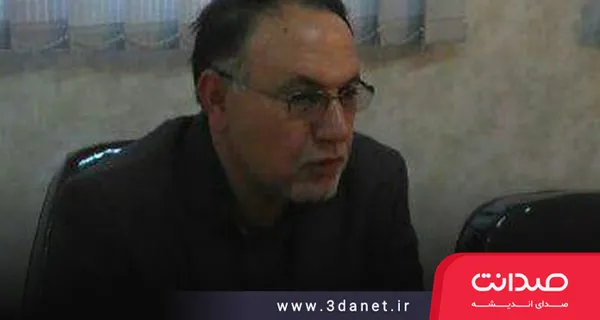
One of the differences between intellectualism—whether religious or non-religious—and academic currents is its sensitivity to the issues afflicting society. When society's problems and sensitivities change, since intellectuals feel a sense of responsibility, they address the subject and the problems of society.
Equality Will Be the Future Concern of Religious Intellectuals
As you are well aware, the atmosphere of religious intellectualism of the 1990s—in which you yourself were one of the experts—has ended, and the current of religious intellectualism no longer possesses those elements, figures, and discussions; instead, we are witnessing new discussions and new figures. Individuals such as Mr. Fanaei and Naraghi have introduced new discussions, particularly in the field of ethics. Can we interpret this change as the passing of an era and say that religious intellectualism has new concerns?
One of the differences between intellectualism—whether religious or non-religious—and academic currents is its sensitivity to the issues afflicting society. When society's problems and sensitivities change, since intellectuals feel a sense of responsibility, they address the subject and the problems of society.
In the 1990s, the discussions of religious intellectualism were primarily in the field of epistemology. It seems that religious intellectualism has come to believe that it has managed to establish this discussion. That is, the main rivals of this current, who operated within the dominant paradigm or traditional model of religious studies, have accepted some of the foundations of religious intellectualism. For example, at one time, Dr. Soroush's theory of the "Theoretical Contraction and Expansion of the Sharia" provoked a sharp reaction among opponents, but now, if we follow the course of the critiques leveled against this theory to the end, we observe that gradually, one of the theory's main claims has been accepted by its critics. This can also be demonstrated regarding other discussions. For this reason, religious intellectualism has come to believe that it has, to some extent, established this topic and answered certain questions. Then it is confronted with a social crisis in which, as many believe, a kind of systematic immorality has come to dominate our society, and people have distanced themselves from traditional ethics but have not found modern ethics either, and society has fallen into a kind of bewilderment. This issue has led them to raise ethical discussions. On the other hand, religious intellectuals are, in fact, opening a new window for critiquing the traditional perspective. If you pay attention, in the previous period, the critique of the traditional perspective was conducted from the angle of epistemology. It was also mostly focused on theoretical discussions or theology. But religious intellectuals gradually felt that the powerful part of the traditional perspective is its practical teachings, not its theoretical ones. Especially jurisprudence, which continuously reproduces itself and, in a political form, tries to impose itself on society. The new discussions are also another kind of critique of tradition, albeit from the angle of ethics. In the West, Hegel was the first to carry out this critique in relation to Christianity. The claim that jurisprudence can be critiqued and evaluated from the perspective of ethics. In recent years, the individuals you mentioned have tried both to help rescue society from an ethical bewilderment and to provide appropriate answers to social problems, and each has tried to open a window from an ethical perspective to critique jurisprudential rulings. In fact, these discussions are a continuation of the same overall process of the fundamental critique of the traditional paradigm of religious studies, but from a new perspective, and in this sense, it is a new era. But my impression is that after we have brought these discussions to a conclusion—of course, you know that intellectual discussions never end, but this is a subjective-objective judgment that you reach the conclusion that you have presented your discussions and provided adequate answers to the questions—we will also move past this stage and enter a kind of social critique, and the subject of "equality," which we neglected for some time, will once again occupy the mind of religious intellectualism. For the same reasons I mentioned: the social crisis resulting from inequality and the critique of the dominant paradigm of the traditional perspective, this time through the lens of the subject of social equality. My impression is that sooner or later we will enter this new period.
We also observe a rupture in the approach of intellectuals. The intellectuals of the seventies were, in a sense, minimalist intellectuals and mostly raised criticisms. But now, the positive discussions of intellectuals have increased, and they try to speak within a general ideological system and clarify the overall atmosphere of the discussion. Efforts have also been made in this regard. For example, Mr. Dabbagh wrote the manifesto of religious intellectualism; although it was very rudimentary, it seemed to be a response to the need for an intellectual system. Also, Mr. Naraghi raised the issue of intra-religious and extra-religious rationality and tried to create a framework for rationality in the field of religious intellectualism. In your opinion, what is the reason for this change in approach?
I think this new approach is a response to a criticism that has long been leveled at religious intellectualism. Critics would say that if you consider religion a necessary condition for human happiness (which is the common ground between religious intellectuals and defenders of tradition), now that you have managed to show that the traditional paradigm is incapable of providing us with a justified understanding of religion, what alternative do you have for it?
Moreover, you know that all religions, in addition to theoretical teachings—known in Iran as worldview—also have practical teachings. It is true that ethics is independent of and prior to religion, but in some places, religion can be an aid and support to ethics, strengthen moral motivations, or even, for some people, religion is the source of ethics. The same applies to jurisprudence. Jurisprudence gives shape and form to the behavior of believers.
This new approach, although very rudimentary, is a reaction to previous criticisms. Of course, we must remember that a dominant paradigm is not easily abandoned. This paradigm must be confronted with many unanswered questions; as long as the paradigm has the capacity, answers are extracted from it. For this reason, many religious people and even some religious intellectuals are still concerned with creating a jurisprudential system that organizes their behavior. Religious intellectualism still has a deficiency in this area as well. People like Mr. Kadivar try to solve this deficiency from their own perspective and, in fact, provide more positive and concrete answers than others. For example, to go one step beyond the general question of what constitutes ethical clothing and, for instance, to state the ruling on shaking hands with a non-mahram with a new approach.
I think this approach requires much more specific proponents. If we overlook Mr. Fanaei, who has studied seminary courses thoroughly, others, with a general familiarity with seminary teachings, are not very capable in the field of jurisprudence. I think it requires individuals who are both familiar with the discussions and methods of reasoning in the seminary and have been exposed to the questions of new religious thinking and are constantly subjected to criticism. For example, when you look at the evolution of Mr. Kadivar, you see that initially, he tries to answer questions within the previous framework, but after encountering criticisms, he is somehow forced to change his perspective and arrives at new conclusions, and then he himself feels that, due to the criticisms made, he must revise these views. Now, it seems to me that some of his works are paving the way. He has reached a point that I think will soon yield very important fruits, but well, he is very much alone in this field. The reason for this solitude, I think, is the severance of communications. Previously, there was a constant dialogue between religious intellectuals and the new thinkers of Qom. Unfortunately, in recent years, for political reasons, all these dialogues have been cut off, and private conversations are also interpreted with other intentions and become troublesome. If the atmosphere opens up a little, I feel a new transformation will occur. Its sprouts can be seen in the new thinkers of the seminary. Recently, books are coming out of Qom that, in my opinion, are noteworthy for an outside observer. Some figures who are sometimes the flag-bearers of traditional thought have published works that cannot be easily dismissed.
Centers have emerged in the seminary that were entirely aimed at offering a new defense of tradition, but something else has come out of them. For example, the Qom Islamic Culture and Sciences Research Institute has published thought-provoking books. In epistemology, they had done work on Alston's views that drew his own attention late in his life, and in a reply letter they had written, he stated that he accepted the criticisms and would try to address them in future works—though his life did not suffice. These examples show that a movement is taking place there, and if the possibility of dialogue is provided, we will face a new arena in religious studies that differs from previous currents.
.
.
Exclusive Sedanet Interview with Alireza Alavitabar
Equality Will Be the Future Concern of Religious Intellectuals
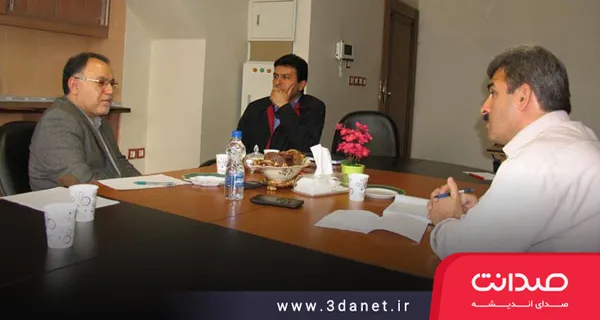
This interview was conducted by Soheil Izadi.
.
.

Discussion0 comments
No comments yet; let yours be the first voice.