Religion
Alireza Alavitabar's Lecture: 'Revisiting the Religious Intellectualism Project'
By distinguishing faith from religious knowledge and minimal from maximal rationality, Alireza Alavitabar argues that religious commitment and rational critique can be reconciled, and sees religious intellectualism as a re-reading of tradition from the standpoint of modern reason.
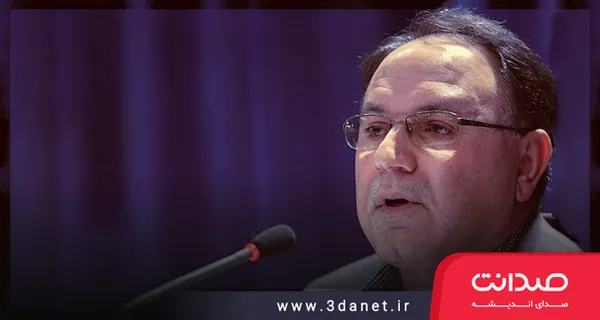
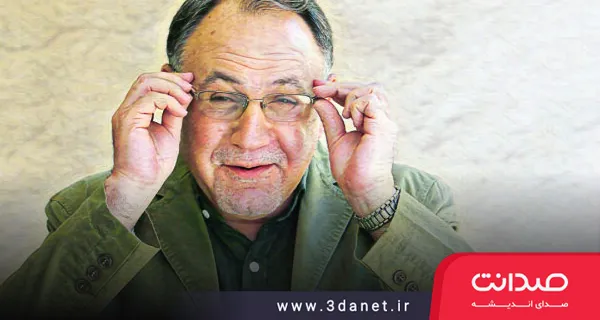
Alireza Alavitabar, political activist, Iranian journalist, and editor-in-chief of the Sobh-e Emrooz newspaper, in his lecture 'Revisiting the Religious Intellectualism Project,' after an introduction and explanation regarding religious intellectualism, elaborates on the main points and outlines of his discussion in detail.
.
The points addressed in this lecture can be summarized as follows:
We can have four types of discussion regarding religious intellectualism: A) A priori discussion: 1) On the possibility of such a concept and whether its components are contradictory or not. B) A posteriori discussion: 1) Non-intellectual and non-religious foundations from a historical perspective. 2) Reconstructing the history of religious intellectualism. 3) Compiling the psychology and sociology of religious intellectuals.
But the first discussion. Can we even have a religious intellectualism project? We can answer this question when we understand the two concepts of "intellectualism" and "religion." This current in other countries is distinguished from other currents by four characteristics. An intellectual is someone who, firstly, is committed to modern rationality; secondly, plays the role of a critic in society; thirdly, is a humanist (meaning human needs, rights, and desires matter to them); and fourthly, has a social commitment and is not merely a scientist. Now, how can this intellectualism be reconciled with religion? Probably the greatest doubt concerns the first characteristic, namely commitment to modern rationality alongside religious belief. Can these two be combined? My answer, of course, is yes. Soroush's distinction is important in this regard. The distinction between religious knowledge and religious faith. What we recognize as religious faith is a kind of trust in a person. And this is what separates it from knowledge. Faith has three aspects: a cognitive aspect, an emotional aspect, and a volitional aspect (the will to live faithfully, which can be combined with that belief and emotion). If we do not consider this volitional aspect, we are no longer dealing with faith but merely with a form of knowledge. Faith is an act of will and a specific existential state that encompasses the entire being of a person and transforms and transfigures them. And in fact, the realization of faith occurs in a realm broader than reason and knowledge. Any kind of faith is, in reality, a trust accompanied by risk-taking. In any case, God manifests in the world in a somewhat ambiguous way. And indeed, there is a kind of veiled allure in the relationship between humans and God that gives faith a kind of risky character. But the conception we have of religion is, in fact, the external, collective, and historical aspect of that faith relationship. That faith relationship which can occur in the personal, collective, trans-historical, and inner realms. Religion is a collection of those beliefs, practices, and feelings of ours that are realized around the axis of God and the faith relationship between humans and God. In explaining religious knowledge as well, we consider the methodical and rule-governed understanding of humans from religion to be religious understanding. It is clear that from a realist perspective, the first step is distinguishing the object from our knowledge of the object. The first step is distinguishing religion from religious knowledge. This is a requirement of realism. Religious knowledge is a completely human knowledge. What we recognize as religion is a human, collective, and historical knowledge. With all the characteristics that human, collective, and historical knowledge can have. Just as we do not have solitary science, we also do not have solitary religious knowledge. Whereas we can have solitary faith (the essence of religion also seems to be human. Because it is at a historical juncture and in a specific place, as well as in the form of a personal experience, and in the relationship and dialectic of the person with those around them and the needs of the surroundings, etc.). We must distinguish between maximal rationality and minimal rationality. Maximal rationality assumes a belief is correct only when a justified argument can be made for it. But minimal rationality is considered correct as long as it can resolve contradictions and objections raised against it. Also, maximal rationality assumes it can arrange arguments to which all the rational people of the world can submit. Whereas minimal rationality believes we can reach a conclusion with those who more or less agree with us on the premises. Also, in maximal rationality, it is assumed that reason is an impartial judge, but in minimal (critical) rationality, reason is by no means impartial. Reason is influenced by our beliefs about the issues at hand and the view we have of the world. In any case, minimal (critical) rationality has a more modest and limited claim about the capabilities of reason. While the maximal conception is very optimistic. I believe the maximal conception of reason is not defensible. It seems to me that that conception of religiosity and this conception of rationality can perfectly coexist. What causes some to doubt the possibility of this combination is the commitment of religiosity. That is, religion demands a kind of commitment from us. In fact, religion is coupled with a commitment and submission, while rationality is accompanied by a kind of experimentalism, non-finality, and tentativeness. How can that commitment be combined with this non-finality and tentativeness? This is a question that must be reflected upon. It seems that the combination of these two has occurred historically (meaning we have had thinkers who combined this commitment and this tentativeness), especially if you consider the essence of religiosity to be faith and not religious knowledge.
If you consider that core to be faith, the possibility of bringing them together increases. Moreover, on the one hand, our understanding of religion deepens when we engage with it in some way. Commitment without doubt and uncertainty turns into a kind of dogmatism, rigidity, and fanaticism. Not only is combining these two possible, but it should also be recommended. The critical perspective is, in fact, a kind of religious invitation to tear away those veils we have constructed around God, who is the essence. A religious invitation to further purify the image we have of God. In reality, it is a monotheistic duty of ours. With these considerations, it seems to me that religious intellectualism can only be considered internally contradictory if we do not believe in the rationality of religious beliefs.
And further, Mr. Alavitabar addressed the a posteriori discussion of religious intellectualism: In my view, religious intellectualism is a research program. It is distinguished from others by several characteristics. The first characteristic is the critique of the traditional reading of religion from the perspective of modern reason. This is the negative aspect. The second characteristic is the attempt to reread and reconstruct tradition by presenting a modern reading of religion. This is the positive aspect, and it is in this characteristic that the religious intellectual is distinguished from the non-religious intellectual. The third characteristic is social critique. Critique of social institutions and behaviors. This critique was conducted with two criteria: first, it critiqued with modern reason, and on the other hand, it critiqued with the modern interpretation it had of religion. That is, its critique is not merely a rational critique but is also a religious critique. At the end, Mr. Alavitabar also addressed the issue of secularization.
.


Discussion0 comments
No comments yet; let yours be the first voice.