Religion
Lecture by Alireza Alavitabar: “Pathology of Religious Thought”
Alireza Alavitabar considers the understanding of religion to be a human endeavor and labels the attribution of divine qualities to it as shirk. Examining the traditional paradigms of both Shia and Sunni Islam, he diagnoses the potential for extremism and fundamentalism within them.
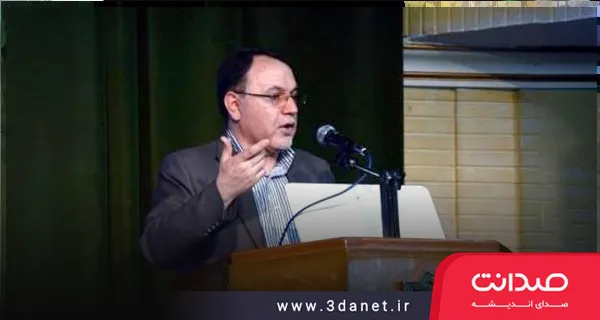
Audio and text of Alireza Alavitabar's lecture on: “Pathology of Religious Thought”
Religion has a divine origin, but the understanding of religion does not have a divine origin and is a human matter / If we think that our understanding of religion possesses exactly the same characteristics as religion itself and attribute to this understanding the qualities we attribute to God, we have certainly fallen into a form of polytheism, and this is also a kind of idolatry / If I were to state our criteria for pathology briefly: almost all religious reformists offer two criteria: 1) Authenticity and purity 2) Capability and dynamism / If the Quran were revealed in 21st-century Sweden, how would it differ from the current Quran? And in what respects would it be the same? This question helps us gain a deeper understanding of Islam / If you do not separate the container from the contained, you have stripped the message of its trans-temporal and trans-spatial quality / They pose the question as: What did the Prophet and his companions say and how did they live? Whereas the question should be posed as: What would the Prophet and his companions say and do if they were in today's world? / If you want to answer the questions of the age, and if you want to solve the problems of people's religiosity, facilitate religiosity, and help people become more religious, you must master the problems that hinder religiosity / The dominant paradigm of Shi'ism has a capacity for exaggeration (ghuluw), and the dominant paradigm of Sunnism has a capacity for fundamentalism. Both are great afflictions; one is incompatible with monotheism, and the other is incompatible with the trans-temporal and trans-spatial message of religion.
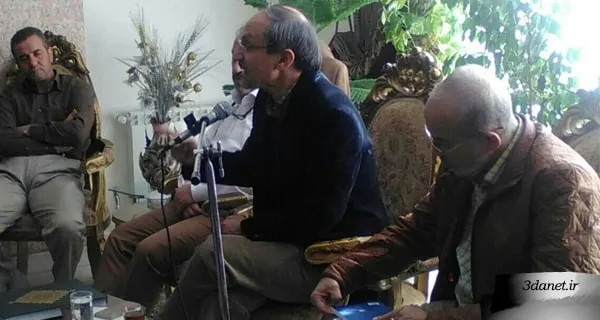
This lecture by Alireza Alavitabar was delivered at the Ghadir Charity Association
In epistemological discussions, we have a tendency called realism. Realists are those who believe that the goal of our efforts to understand this world is to know reality and to achieve an understanding that corresponds to reality. These realists usually distinguish between the object and the knowledge of the object. That is, for example, they say this glass is one thing, and the knowledge of this glass is another thing, and these two should not be considered one. Almost most of our religious scholars are, in fact, realists. That is, in their view, one can distinguish between objects and our knowledge of those objects. Therefore, it is obvious that they must also accept a distinction between religion and the study of religion. Religion is one thing, and our understanding of religion is another. This very distinction is, in fact, the starting point of our discussion. From a believer's perspective, religion is a divine matter, perfect, without contradiction or inconsistency, trans-temporal and trans-spatial, etc. Of course, one must be careful that these are the characteristics of religion, not the characteristics of our understanding of religion. Our understanding of religion (religious thought) is other than religion itself. It is true that religion itself is sacred, but the understanding of religion is not sacred. It is true that religion has a divine origin, but the understanding of religion does not have a divine origin and is a human matter; our understanding of religion is an entirely human matter, with all the weaknesses, flaws, and deficiencies that exist in humans, which naturally also exist in our understanding of religion. This point, which seems obvious, can, if accepted, create a revolution in our way of looking at religion. No one has the right to say that their understanding of religion is absolute and divine, and basically, understanding itself is today said to be a human construct, a human fabrication. Depending on our sensitivity, knowledge, understanding, and the degree of our mastery of religious sources, we try to understand religion, but we can never claim that this understanding of ours possesses the characteristics we attribute to God. We must, in fact, avoid idolatry in a sense. When you attribute qualities that belong exclusively to God to a human construct (a human product), you have fallen into a form of idolatry. If we think that our understanding of religion possesses exactly the same characteristics as religion itself and attribute to this understanding the qualities we attribute to God, we have certainly fallen into a form of polytheism, and this is also a kind of idolatry. So, our study of religion is not identical to religion itself. I want to tell you that your pathologizing of religious thought is in no way in conflict with your being a believer. One can be a believer in religion itself, yet completely critique existing understandings of religion and question their validity and authority, and these two are in no way in conflict with each other.
Another point is that in every era, the dominant paradigms or exemplars can change. Religious studies also follows its own paradigms and in each period adheres to a dominant exemplar. A dominant exemplar that tries to answer questions it considers more important than other issues and prioritizes them. When paradigms encounter questions—meaning at points where they are no longer able to explain—they initially engage in patching up, but gradually these patches become so numerous that at a certain stage they are forced to change the entire framework. And this is where a new paradigm actually emerges, as if the world has become a new world. While the subject is the same as before, sensitivities change, and everything transforms accordingly. In the Islamic world, within the realm of religion, we had two dominant traditional paradigms. At a certain point, Muslims were divided into two main currents. We will, of course, ignore the socio-political dimensions of these currents for now and focus solely on their religious-studies dimension. After the Prophet passed away, differences arose among Muslims regarding the interpretation and understanding of the Prophet's message. The Shiites were a group of Muslims who believed that Ali ibn Abi Talib's understanding of the Prophet's message was more authoritative than other understandings, and moreover, that Ali ibn Abi Talib's behavioral model was more similar and closer to the Prophet himself than that of all other companions. Later, of course, some differences and variations also emerged among the Shiites regarding the understanding of Ali ibn Abi Talib himself. On the other hand, the Sunnis believe that the understanding and interpretation of Islam by other companions of the Prophet is also valid, and if someone accepts this interpretation or follows their behavioral model, they are still within the framework of Islam. But gradually, within these two main currents of the Islamic world, two dominant exemplars also take shape. For instance, within the Sunni current, in theoretical discourse, we have currents such as the Mu'tazila, Ash'ari, Maturidi, and Ahl al-Hadith, and in jurisprudence, there are again four tendencies: Shafi'i, Hanafi, Hanbali, and Maliki. Yet, if you look closely, both in their doctrinal views and in their jurisprudential views, there are common principles (or a common dominant exemplar), and these common lines and principles cause them to still belong to one current. This is the same dominant traditional exemplar among the Sunnis. You have exactly the same thing regarding Shiism. For example, in theoretical and doctrinal discourse, there are philosophical, literalist, and mystical tendencies, and in jurisprudence, there are Usuli and Akhbari, and so on. Again, if you look closely, within this very Shiism, there are also common principles and a common exemplar. In fact, in the Islamic world, we do not have a direct connection with religion; rather, we are faced with understandings of religion. Secondly, each of these understandings is within the framework of a dominant exemplar. Each of these two exemplars has the potential for its own specific pathologies.
When you take Shi‘ism as a paradigm, in that same dominant traditional paradigm, it carries within itself the capacity for certain pathologies. The same situation exists in Sunnism. And we need a pathology of the dominant paradigms of traditional religious understanding in both main currents of Islam, both Shi‘ism and Sunnism. But each of these has different capacities. However, before examining what pathologies we see in each of them, we must have criteria for pathology. For example, when you go to a doctor for a kidney ailment, that doctor takes a healthy kidney as the criterion and compares your kidney to it. We too must have a criterion. Our criterion for pathology, to put it briefly, is that almost all religious newthinkers offer two criteria: 1) authenticity and purity, 2) capability and dynamism. That is, some are concerned with whether the claim or statement being put forward is truly religious and authentic, or whether it is non-religious and has been imposed on religion. On the other hand, they also feel that religion was not meant to be a message for a specific period of time, but rather was meant to be a message for all human beings, in all times and places. And therefore it must be able to answer our religious questions. There may have been a time when Muslims had no questions when they witnessed stoning, but today few ordinary Muslims are willing to witness stoning. Thus this question is seriously posed for us. Questions have been posed for us that were not posed for our predecessors. Questions such as the relationship between God and the world, the relationship between God and the scientific laws that govern the world, questions about religious rulings, and so on. Look, if the Qur’an had been revealed in twenty-first-century Sweden, how would it differ from the present Qur’an? And in what areas would they be the same? This question helps us gain a deeper understanding of Islam.
For instance, if the Quran had been revealed in twenty-first-century Sweden, would the camel still everywhere be a sign of God's power, or would it be another animal? If the Quran had been revealed in Sweden, if it wanted to describe paradise for the believers, would it still speak of cool water and the wind, or of the warm, bright sun? Would the language still be Arabic? When you raise this question, what things would remain common? What was that core message of religion that was revealed within the mold of the culture of the time? Look, we have a story called the Bi'tha and awakening: an individual claims to have attained a perception of God, a direct, non-inferential perception of God. This was the claimant's assertion, but we also observe something else: that his beliefs completely changed, his orientations completely changed, a new will was formed within him, and his speech and behavior were also totally transformed. That is, a profoundly transformative event occurred in this person. Yet the claimant asserts that he received a message, but no one beside him received this message. That is, his perception is entirely personal and also transient, occurring in a specific period. The Prophet wants to transform this personal and transient message into a collective and enduring one. What can he do? Is there any way other than to cast it in the mold of language? The only way is to cast his profoundly transformative perception in the mold of language. And language, of course, is not just these signs and words. Language is culture; language is a way of life. That is, for his message not to remain personal and transient but to become enduring and collective, the Prophet is compelled to cast it in the language of the people among whom it was revealed. If it were in China, he would have had to speak in Chinese. Again, I emphasize, language is not merely words; language is a mirror of a culture. Language is a sign of the knowledge of your era, it shows the values of your era, and it even shows your way of life. That is, the transtemporal and transpatial message of God was poured into the specific temporal and spatial vessel of the Bi'tha. Now the fundamental question is: how can we separate the vessel from the contained? Which is the vessel and which is the contained? For example, when the Quran speaks about wind and rain according to the knowledge of its time, is this the vessel or the contained? When it speaks about creation according to the knowledge of the time, is this the vessel or the contained? How can God's transpatial and transtemporal message be separated from the specific temporal, spatial, and cultural vessel in which the Prophet lived? If you do not separate the vessel from the contained, you have stripped the message of its transtemporal and transpatial quality. In the Quran, for example, it is stated that paradise is a place where you can experience pleasure without suffering; well, this is understandable for every culture and nation, but where it mentions the instances of pleasure, it is only understandable for the Arabs. In the Quran, regarding the fruits of paradise, you do not have many fruits; why? Are they not in paradise? Because the Arabs of that time simply did not know some fruits. The Arabs of that time, for instance, did not know strawberries or blueberries. If the Quran had come in such circumstances, the paradise it depicted would also have been different. So, what is that transtemporal and transpatial message? The answer to this question is what determines the dynamism and capability of religious studies. I want to say that this has enormous consequences for religious studies. Look at the Daeshis or the Salafis who wear short-legged trousers or bermudas. Because they have a hadith that the Prophet strongly recommended that you not let your hem drag on the ground (or your trouser legs).
Well, this was a perfectly reasonable recommendation in its own time. But now conditions have changed. Back then, for instance, the aristocrats used to do such things. And now they have taken this instruction out of that time, and the result is these bizarre things you see: someone wears the latest American model of boots, yet at the same time wears short trousers over them and performs the ritual. Why? Because he poses the question incorrectly. He poses the question as: What did the Prophet and his companions say, and how did they live? Whereas the question should be posed as: If the Prophet and his companions were in today's world, what would they say and what would they do? From these two questions, two different answers are born. For example, regarding Lady Fatima, we have a weak hadith that says, 'Blessed is the one whom no man sees and who sees no man.' I am not concerned with the fact that this hadith is technically problematic and is not acceptable by the standards of hadith criticism. But suppose we accept all of that. This was an answer for that time. But if Lady Fatima were living here and now, what would she say? If we can pose this question, many things become different from what we have so far deduced from religion. And this is, in fact, calling the traditional paradigm of religious studies into question. In reality, you approach the understanding of religion with the criterion of capability and dynamism. You say, 'This religious understanding is not acceptable to me, because this religious understanding is not trans-temporal and trans-spatial. It confines the message to another time and place.' I want to say that many discussions arise to which you can then respond. For example, suppose the question arises: Is it possible for there to be a mistake in the Quran? Our traditional paradigm says no. But you must be able to justifiably differentiate between a false proposition and a lie (a lie is a statement given with the intent to deceive). A false proposition is different from a lie. Suppose I am drinking instant coffee, and someone at this gathering comes to you and asks, 'Who is Mr. Alavitabar?' Then you know that if you say, 'The person drinking instant coffee,' the other party will not understand, so instead you say, 'The person drinking tea' (so that he understands). In this case, you did not lie. That is, you stated something contrary to fact, but your intent was not to deceive. In the same Quran, if you find a proposition that was a guide for its own time but today, for instance, we think that proposition is false, does that damage the religious text? No; that proposition was appropriate for the understanding of that community. I want to say that this dynamism and capability of religion in answering the questions of the age is contingent upon your possessing the knowledge of the age. If you want to answer the questions of the age! If you want to solve people's problems with religiosity, make religiosity easy, and help people become more religious, you must master the problems that hinder religiosity. That is, a kind of contemporary understanding of religion preserves its dynamism and capability. And what preserves its purity? First, that the claims you make about religion are consistent with the authentic religious data (the revealed text and what has authentically reached us from the Prophet's tradition—and I emphasize its authenticity, because many of the very things considered authentic and sound today are not authentic and sound; for example, the book Rawdat al-Shuhada, which unfortunately most eulogists cite today, while this book is not authentic at all, to the extent that Mr. Motahhari says about that person, 'May God not forgive that person!'). Second, it should be simple and not complicated. Third, it should have internal coherence and not contain internal inconsistencies.
Now, with these two criteria (that is, dynamism and capability on the one hand, and purity on the other), let us turn to the two traditional paradigms of religious studies. Two major pathologies exist. In the Shi‘a paradigm, its primary capacity for pathology lies in ghuluww (exaggeration). In the Sunni paradigm, the main pathology is fundamentalism. You see, we in Shi‘ism have had a serious problem in that it has greatly suffered from ghuluww. It has suffered from both atheistic, blasphemous ghuluww and deviant, polytheistic ghuluww. The blasphemous ghuluww was that they claimed the Prophet or the Imams are God, attributing to them levels of lordship and divinity, or some said the Imams are prophets, and other such exaggerations. Whereas no person is on the level of the Prophet and cannot be compared to the Prophet. But the deviant or polytheistic ghuluww is that the Imams, like other human beings, are creations of God, yet, for example, they attribute the provision of sustenance and the management of human affairs to the Imams! Or even, in some instances, they attribute creation to the Imams! These are deviations. But unfortunately, in the Shi‘a paradigm, this capacity for ghuluww has existed. The Imams themselves usually considered the first type of ghuluww to be disbelief and the second type to be tafwid (delegation). And as for the main problem of the Sunni paradigm, it is fundamentalism. That is, it has a great capacity for fundamentalism. Due to the great emphasis they place on outward appearances (of course, I am not speaking of their reformist thinkers). For example, in Sunni jurisprudential schools, the Hanbalis are the most susceptible to fundamentalism. Fundamentalism means having a violent, non-temporal, and non-spatial reading of religion. Especially because of Ibn Taymiyyah and Abd al-Wahhab, this is much more pronounced in Hanbali jurisprudence. For instance, Ibn Taymiyyah believed that if it is stated in the Quran that God is on the Throne (‘Arsh), it means exactly that God is on a throne, or that God can be seen with two eyes on the Day of Judgment; in short, it is extremely literalist. Thus, the dominant paradigm of Shi‘ism has a capacity for ghuluww, and the dominant paradigm of Sunnism has a capacity for fundamentalism. And both are great afflictions: one is incompatible with monotheism, and the other is incompatible with the transtemporal and transpatial message of religion.
.
.
Download the audio of the lecture Pathology of Religious Thoughts, Alireza Alavitabar
.
.
Lecture by Alireza Alavitabar at the Ghadir Charity Association Topic: Pathology of Religious Thoughts
April 21, 2016, on the occasion of the birth of Imam Ali (AS)
.
.

Discussion1 comments
بسم الله ضمن اینکه بسیاری از نظرات این بزرگوار قابل تایید است ومسلمان باید جواب معضل ها ومشکلات فعلی خود را درکلام الله جستجو کند وشرایط حاکم در آن زمان را مظهر والگوی خود نداند باید تذکر دادکه معارف اینگونه نیست که با شرایط تغییر نماید مثلا همانطورکه گفته شد اهل سنت کلا معتقدند که رابطه آسمان وزمین پس از رسول الله قطع شد وما هستیم وقرآن محید وشیعیان معتقدند که این رابطه از طریق اولیاالله ادامه یافته است درترازوی حق بودن این معرفت از کلام الله می توان مدد گرفت ، درآیه دوم وسوم سوره نحل از کسانی سخن گفته می شود که ملائکه وروح به آنان نازل می شوند وآنان انذار کننده ودعوت کننده به پرودگار می باشند ونیز آیه سی سوره فاطر از وارثان کتاب سخن می گوید که یک طیف از آنان به اذن الله عمل می کنند واین معرفت جاری وساری در همه زمان ها ومکانها می باشد تعاقب این باور به این است که خداوند دروجه ولایتی که برمومنان برخود فرض نموده است اعمال این وجه ولایتی مجرا می خواهد ومحرای آن اولیاالله می باشند به عبارتی وجود ولی الله در هر زمان مجرای اعمال مستقیم ولایت پروردگار می باشند ونیازی به توضیح نیست که اکرجامعه ای تخت ولایت خداوند قرارگیرند چگونه خواهد بود متاسفانه اهل سنت که از همان اول این معرفت را نفی نمودند وشیعیان هم که به این معرفت اشراف یافتند با محدود کردن این محرا به دوازده نفر باز مسلمین را محروم از فیوضات وجود وشناخت ولی الله در زمان خود کردند وپس اما عسکری دچار بن بست این معرفت شدند ولی همانطورکه به بزرگان عالم نوشتم باید یا آیات دوم وسوم نحل منسوخ شده باشند ویا جوابگوی مسلمانان در بیان این آیات باشند ،واین بیان مغایرتی با قیام مهدی از نسل رسول الله در آخرالزمان ندارد ولی کشاندن مردم به وعده آخرالزمان با وجود پروردگار حی وقیوم در اسلام ندارد هنوز کجا تا پایان جهان ،بشر هنوز به کهکشان ها دست نیافته است ،کوتاه اندیشی است که وجود کهکشانها را ببینیم وگمان کنیم جهان به آخرش رسیده است غرض از بیان این است که با وجود ولی الله ولایت مستقیم خداوند مشمول حال انسان ها می گردد وبا مولایی پرپردگار بشر به همه استعدادهای خود (آنچه خداوند بخواهد ) دست خواهد یافت واین معرفت زمان مکانی نیست والسلام علی من اتبع الهدی سیدمسعود 95/2/2