Religion
Mostafa Malekian's Lecture: 'We and the Sacred Texts'
Mostafa Malekian, in “We and the Sacred Texts,” examines the function of holy books for modern humanity; truth-seeking demands a theoretical and practical commitment to a truth beyond time and place, and truths are graded according to their practical impact.
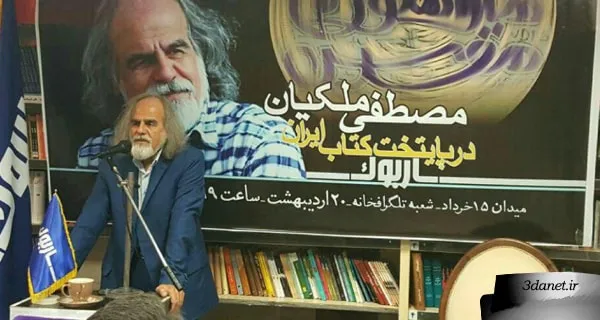
I offer greetings and respect to all the ladies and gentlemen present, and I am very pleased that in the year when the deeply historic and profoundly cultural city of Kashan has been designated the Book Capital, I am in the presence of my friends from Kashan. I truly consider it a privilege to be among Kashani friends, and I hope that with the remarks I will present to you, I will not waste your time.
Subject of the Discussion
The topic assigned to me is "We and the Sacred Texts" or "We and the Holy Books." When "we" is said, it means we human beings of the early twenty-first century AD; and what is meant by "We and the Holy Books" is this: Should the human beings of the early 21st century have anything to do with the holy books? And if they should, what is that thing? To put it more simply, do the holy books still have any utility or function, or not? And if they do, what is that function? And how should we approach and engage with the holy books so that this approach and engagement will yield that function for us. The discussion is, in fact, about this.
Preliminaries to the Discussion
From the outset, I will mention a series of clear preliminaries one after another and then proceed to the main point.
1- The requirement of the human being's truth-seeking is that wherever one finds a truth, wherever one encounters a matter that one finds to be true, one must have complete theoretical and practical commitment to that truth, which in one's own opinion has been found and discovered; both theoretical commitment, meaning to be convinced of and believe in that truth; and practical commitment, meaning that this belief becomes a source of effect in one's life and behavior. The requirement of truth-seeking is that I not be indifferent to the truth. If I find something to be true, I must have both an inner and mental attachment to it, and an outer and behavioral adherence to it. We refer to this inner and mental attachment as "theoretical commitment" and the outer and behavioral adherence as "practical commitment." This is the first preliminary. Of course, this is based on the assumption that we humans are either fundamentally truth-seeking, and truth-seeking, as Plato said, is one of the three great desires of our soul; or, even if we do not subscribe to Plato's theory, those of us for whom truth-seeking holds great appeal must have this theoretical and practical commitment to the truth.
2- Truth has neither history nor geography; it has neither time nor place. If something is true, it is true, regardless of whether its discoverers lived in ancient times or in modern times, and irrespective of whether this truth was first discovered in the East of the world or first in the West of the world. Truth is truth and is not temporal—that is, it has no history; nor is it spatial—that is, it has no geography. If you say, 'I accept a truth that Easterners have discovered,' or 'I accept a truth that Westerners have discovered,' or 'I accept a truth that was discovered in ancient times,' or 'I accept a truth that is discovered today,' this indicates that you are not a seeker of truth. If you are a seeker of truth, your sole and only concern is whether this is the truth or not. If it is not the truth, whether Eastern or Western, whether from yesterday or today, I reject it; and if it is the truth, whether it be Eastern or Western, whether it be from yesterday or today, I accept it. It is not important to me what place or geography this truth has, nor what time or history it has. Therefore, I do not pursue the discoverers of truth to find out whether these discoverers lived in ancient times or live today, or whether these discoverers dwelled in the East or dwelled in the West; 'al-ḥikma ḍāllat al-muʾmin.' This saying, whoever it may be from, is a correct saying. My point is that I do not accept this saying because it is the saying of Ali ibn Abi Talib; rather, I would have accepted this saying whoever had said it. Ali ibn Abi Talib said, 'al-ḥikma ḍāllat al-muʾmin'; 'Wisdom (truth) is the believer's lost camel'; 'aynamā wajadahā akhadhahā'; a person, wherever he finds his lost camel, takes it by the halter and brings it home; he does not say, 'If my camel is found in gardens and among flowers and meadows, I will accept it, but if it is found in a ruin or in a desert, I will leave it to its own devices.' He has no further affection for a camel that is found in the desert; nor does he say, 'If Hasan finds this camel for me, I accept it, and if Husayn finds it, I do not accept it.' 'Ḍāllat al-muʾmin' means the believer's lost property. 'Ḍālla' in Arabic means both any lost thing and a lost camel; 'al-ḥikma ḍāllat al-muʾmin aynamā wajadahā akhadhahā.' Wherever he finds it, he takes it. We must have such a disposition toward truth. Therefore, anyone who says truth must be from the East for me to accept it, or from the West for me to accept it, or that truth must have been spoken by the ancients or spoken by the moderns and contemporaries, is not a seeker of truth. This is the second premise.
3- All truths in the world, while all valuable by virtue of being truths and in this respect no different from one another, nevertheless, in terms of how much they affect my practical life, how little they affect my practical life, and how much less still they affect it, are graded in relation to one another. A truth is a truth. That is, it expresses for you a reality among the realities of the world. But understanding all the realities of the world is not of equal importance to you. If I were to know how many leaves exist on the trees on Earth at this very moment and in this temporal coordinate, that too would be a truth, but this truth has no effect on my life. However, there are truths that do have an effect, and what is meant by effect is that there are truths which, when revealed to me, influence my practical life and my tangible, perceptible life. That is, from the moment they become known to me, I am no longer as I was before and cannot live as I did before. But there are also truths that have no practical effect on my life. They are truths, not ignorance, error, illusion, or delirium. They are truths, but truths without effect in practical life. If you know the number of hairs on your head, that too is a truth, but it has no effect on your life. But if you know the degree of your eyesight, this is a more important truth and truly affects your life. And more important than this is if you know what your stomach ailment is; this is yet more important, because its practical effect is greater. Therefore, truths are valuable in that they are truths, but in terms of how much they affect my life, they are placed on very numerous degrees from high to low. I have said this point many times: if a question meets three conditions, it is clear that the question is important in your practical life, and for this reason, you must certainly pursue it: 1. Before this question arises in your mind and after it arises in your mind, your practical life becomes different; 2. Before that question finds an answer and after it finds an answer, again your practical life becomes different; 3. And if the answer to that question is X, your practical life becomes different from when the answer is Y. So, if a question meets this condition—that before this question even crosses my mind and after the question crosses my mind, my practical life can no longer be as it was before; and before it finds an answer, my practical life cannot be as it is when it has found an answer; and if the answer to this question is X, my practical life differs from when the answer to this question is Y—such a question is called one that is effective in my practical life. And if a question lacks these conditions, should you pursue it and reach an answer, you have undoubtedly discovered a truth, but a truth that has no effect on your practical life. This is the third premise.
4- But our lives are limited. Each of us is limited in terms of our lifespan, our energies, our inner talents, and our external opportunities, yet the number of questions is infinite. Since I am limited and the number of questions that exist is infinite, naturally I must be selective about which questions I pursue answers to and which I do not. Because if I had infinite resources, I would of course pursue every question to find its answer, but since my life is limited, and my lifespan, energies, inner talents, and external opportunities are limited, I can no longer pursue every question that crosses my mind or every question you place before my mind. For questions are, in the fullest sense—that is, in the precise mathematical, logical, and philosophical sense—infinite. So one must be selective. Now that we must be selective, every selection requires a criterion. Which questions should we choose to pursue answers to, and which should we say we unfortunately lack the opportunity to pursue? This selection needs a criterion. The criterion is what I mentioned in the previous preamble. Questions whose answers, once determined, change our practical lives are the ones we must pursue; but questions whose answers, even when known, do not change our practical lives, leaving our practical lives just as they were yesterday, are not questions we need to pursue. If the answer to a question becomes clear and my relationship with God—if I have a relationship with God—remains as it was yesterday, and my relationship with myself, other human beings, and the surrounding nature remains as it was yesterday, I should not pursue such questions. So, in the area of which questions to pursue and which not to pursue, the extent to which the answer to that question practically affects my practical life, and the extent to which it does not, must certainly be taken into consideration in that selection. What should we do about the remaining questions? Regarding the remaining questions, we must do what has long been called the 'wisdom of what-is-it-to-me'; adopt the 'sagacity of what-is-it-to-me' and say: 'What is it to me?' That is, there are questions whose answers I also do not know, but these questions are of no concern to me, and discovering their answers has no effect on my practical life. What is it to me! If our resources were infinite and we could pursue the answer to every question, that would be good, but such is not the case. Now that this is the case, let us pursue only the answers to questions of this type, and regarding the rest of the questions, adopt the sagacity and wisdom of 'what-is-it-to-me' and say: 'What is it to me? What concern is it of mine?' I emphasize again that 'What concern is it of mine?' does not mean that truth is worthless, but it does mean that when truths are divided into two degrees and two broad categories—that is, truths that affect life and truths that do not affect life—I at least sacrifice the truths that do not affect life for the truths that do affect life. This is another preamble.
5- The next preliminary point is that among the fields of knowledge that humanity has gradually acquired, developed, deepened, and advanced throughout history, there are five categories of knowledge within which we must search for the answers to questions that affect our practical lives. Pay close attention to exactly what I said. I did not say that everything in these five areas is useful for our practical lives, but I did say that whatever is useful for our practical lives must be sought within these five areas. Other fields of knowledge should only be pursued by those whose occupation and profession involve those fields. Let me give an example. Must every human being on earth know the history of Egypt? Must every human being on earth know the geological eras? Must every human being on earth know how many religions there were in Latin America and what relationships and connections they had with one another? Must every human being on earth know how many light-years away the galaxy that is the fiftieth galaxy from the Milky Way is? Must everyone know these things? No. Who should know the answer to each of these questions? Someone who, by the requirements of their job and profession, needs to know the answer to that question. These are not questions that every woman, man, girl, or boy, in any historical period, in any society, culture, or civilization, and at any age or social class, needs to know the answers to. These are questions whose answers must be known by anyone who has chosen such a job or profession. For example, someone who has chosen geography must pursue questions related to geography, and someone who has chosen history must pursue answers to questions related to history, and so on for other sciences. But there is a series of questions whose answers we all must know. It is no longer a matter of saying that men should know and women should not; that past generations should have known and future generations should not; that we Easterners should know but Westerners should not; that the wealthy should know but the poor should not; that the highly educated should know but the less educated should not. Absolutely not. These are questions whose answers everyone must know. That is, they are questions that, if we do not know their answers, sooner or later our lives will falter somewhere, and we will come crashing into the hard rock of reality. This is different from the question of how many watch models have been designed and built since the beginning of the watchmaking industry. That has nothing to do with me, and if I do not know the answer, my life will not be hindered. It is not the case that I did not know it until yesterday and the question had never occurred to me. Today, even though the question has occurred to me, I still do not know the answer. Even if I knew the answer, my life would not change. My life would be no different yesterday, today, or tomorrow; whether before the question crossed my mind, after it crossed my mind and I did not know the answer, or after it crossed my mind and I did know the answer. My life does not change by knowing how many types of watches humanity has made since the beginning of the watchmaking industry. These are important truths only for specialists in those fields. If you are a specialist in logic, you must engage with logic. If you are a specialist in branches of mathematics, you must engage with branches of mathematics, and likewise for branches of physics, chemistry, and whatever field of knowledge you are in. But the answers to the questions that we all must know must be found in five areas. I repeat: "Not everything in these five areas is necessarily relevant to our practical lives, but whatever is relevant to our practical lives must be sought in these five areas." What I mean is that even within these five areas, there are things that are still not relevant to our practical lives. These five areas are the domains to which we must pay attention and be mindful, because we must find the answers to our questions here. That is, if our question is to be answered, it must be found in these areas; and if it is not found, then so be it. It is like me telling you that if you want to eat good bread, you must go to a bakery. Yet I have not guaranteed that the bakery will definitely give you good bread, but good bread cannot be found anywhere except in a bakery. So, pay attention to this point as well: I am not saying you will find the answers to these questions in these five areas, but if they are to be found, they must be found here. If they are not found here, then by even greater reason, they will not be found anywhere else. These five areas among the human sciences and fields of knowledge are: 1. Some branches of philosophy, not all of its branches; 2.
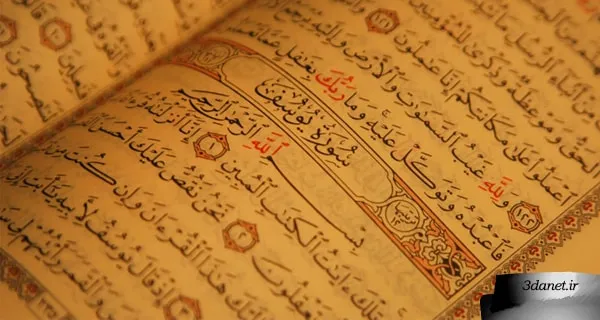
All the knowledge that today is considered part of the empirical human sciences, that is, the entire science of psychology; 3. World literature; the great novelists, great poets, and great storytellers in history have answered many of the questions related to our practical lives. The entire domain of world literature. Especially among the various branches of literature, one is the great novels and another the great poems that great poets have composed throughout history; 4. Mysticism; what mystics have said throughout history and what has been left as a legacy from them; 5. The domain of religion.I mentioned the domain of religion last because I want to address it last; for now, I am not concerned with the other four domains in this discussion. Some of our questions are answered in the domain of religion, and it is here that we engage with “sacred texts.” For my discussion is, in fact, “We and the Sacred Texts.”
The Error of Turning Away from Sacred Texts, Based on Simone Weil’s Argument Regarding “Attention”
Before I address the main discussion, I would like to make a point. How foolish do you think it would be for someone to say, “I want to completely disregard everything philosophers have said throughout history”? How foolish does this act seem? They will say that however many errors of thought and intellect philosophers may have committed throughout history, however incompatible their views may be with one another, and however unable they may have been to solve problems and remove difficulties, these philosophers are nonetheless the greatest peaks of human intellectual history, and one cannot live as if not even one of these philosophers has ever set foot in history. This statement can also be made about mystics. Mystics were not a bunch of madmen and lunatics. Mystics were a school and group of some of the greatest thinkers in human history. Is it right for me to live as if no mystic has ever appeared in history? This act will only result in my own deprivation and loss. Just as if you wish to disregard all the advances made in medicine and live as if a science called medicine has never existed and medicine has never appeared in history, you are making yourself wretched and miserable; you are depriving yourself of many blessings related to the health, strength, or beauty of the body. After all, medicine has come to make my body healthier, stronger, and more beautiful. If I wish to ignore these, I have deprived myself. Just as we cannot turn our backs on what physicists, chemists, biologists, logicians, mathematicians, historians, geographers, and others have said, and if we do so, we have in fact deprived ourselves, in the same way, we cannot be indifferent to what great philosophers, psychologists, mystics, literary figures, poets, and novelists, and what the “sacred texts of religions and denominations” have said. My emphasis here is on the “sacred texts of religions and denominations.” Whether you accept the founders of religions and denominations or not, and whether you accept some of their teachings, all of their teachings, or none of their teachings, whatever your encounter with them may be, you cannot deny that these were great human beings who appeared, and every great human being may, of course, err, but is nonetheless a great human being. That is, Jesus is not someone history can overlook. Buddha is not someone history can overlook. For this reason, I want to make this point: due to a series of events that have occurred on a global level, generally, and in our country, particularly and especially, we see that a turning away from sacred texts has taken place among the newer generations. I want to say that this turning away is a turning away that is not to the benefit of the one who turns away. In fact, the one who turns away has deprived themselves of a rich source. Therefore, just as we cannot turn our backs on the works of great philosophers, mystics, poets, novelists, and sages, and one cannot live as if Shakespeare has not yet been born, and live as if Kant has not been born, and live as if Einstein has not been born, one cannot live as if Jesus, Muhammad, or any other founder of a religion or denomination has not been born. This is not out of anyone’s prejudice, undue positive bias, or dogmatism regarding religion, but rather it is a fact. The fact is that the founders of religions and denominations, whether they spoke entirely correctly, or some of what they said was correct and some incorrect, or all of what they said was incorrect, were human beings to whom one must pay “attention,” and this brings us to the next point, which is “attention.”
Simone Weil, the great twentieth-century French philosopher, mystic, socio-political activist, and religious scholar, coined a concept, the concept of "attention," and I wish to refer to this concept. In the concept of "attention," Simone Weil pointed to this idea. She said God will never ask why you did not accept all the words of a certain philosopher, or a certain founder of a religion, or a certain mystic. Not at all, never. Why? Because accepting or not accepting is not a voluntary matter. A subject must be compatible with the totality of my perceptive faculties for my mind to be able to accept it. If it is not compatible, my mind cannot accept it. God cannot ask us why we did not understand all the words of a certain philosopher, or a certain mystic, or a certain founder of a religion. Because understanding, too, is not within my or your control. But God can ask why you did not pay "attention" to the works of a certain philosopher or a certain founder of a religion. Why? Because Simone Weil believes that philosophers, mystics, founders of religions, sages, and psychologists are like natural blessings. Just as if we do not pay attention to plants, animals, and inanimate objects, we deprive ourselves of things, if we are inattentive to these blessings, we also deprive ourselves. When God brought us into the world, He placed inanimate objects like wood, stone, and water at our disposal; He placed plants (all kinds of herbs and trees) at our disposal; He placed all kinds of animals at our disposal. Then she says God has also placed all kinds of "human beings" at your disposal. How is it that you consider inanimate objects, plants, and animals as blessings from God, but philosophers, mystics, sages, founders of religions, scholars, and literary figures are not God-given blessings to you? Blessings are not only things that are from outside the human species. We think that God-given blessings are only blessings that are either of the inanimate kind, or the plant kind, or the animal kind. But a part of the blessings, and a very important part of the blessings that God has given us, are human beings of our own kind. If among these human beings there is a knowledge that is not in you, a power of thought that is not in you, a depth of understanding that is not in you, an experience that is not in you, if you turn your back on them, you have condemned yourself to the lack of knowledge, the lack of power of thought, the lack of depth of understanding, and the lack of experience. That is, just as if I turn my back on peach trees and shun them, I have deprived myself of the blessing of a fruit like the peach, if I turn my back on philosophers, I have also deprived myself of a blessing. In Simone Weil's view, attention and regard to this point that "God has not given us all blessings only through inanimate objects, plants, and animals, but has also given us blessings through human beings" obliges us to pay "attention" to them as well. God will also hold us accountable for this. God says you should not have lived after Shakespeare the way those who lived before Shakespeare lived. You cannot live after the emergence of Buddha the way those who lived before the emergence of Buddha lived. Just as you cannot live after the emergence of Bach and Beethoven the way those who lived before Bach and Beethoven lived. Because they did not have a blessing that you have, and you should have made the fullest use of this blessing. With this reasoning, Simone Weil said God will never say to me, for instance, 'Madam Simone Weil, why did you not "accept" the words of a certain philosopher?' Because I will say, 'Because these words were not compatible with my mental constitution. It is not in my hands to accept. This constitution must accept the word. So I did not accept it.' Again, He will not say, 'Why did you not "understand" their words?' Because understanding is also not in my hands. Understanding also requires mental abilities that are not in my hands and that I did not possess. Therefore, I did not understand the words of that philosopher. But God can say to me, 'I do not ask of you understanding and acceptance, but I do ask for "attention." You should have behaved in a way that shows you are living after Newton, not before Newton; before I had given you a blessing named Newton, Jesus, Muhammad, Ali ibn Abi Talib, Francis of Assisi, and so on. You must pay "attention" to these blessings.' Therefore, Simone Weil said "attention" is the greatest duty that a human being has towards God. Because if I do not pay attention to the blessings, it is like someone who has returned God's gift and said, 'I do not want this gift, I have no need of this gift, and I want to live as I did before receiving this gift.'
Therefore, he would say we must "pay attention," and in this respect, Simone Weil's message was that we should also "pay attention" to the sacred texts of religions and faiths. However, after we "pay attention," we see that we do not "understand" much of what is in the sacred texts. Well, here you are not at fault, because you do not understand. Among the things you do understand, you also see that your own reason cannot accept some of them. Again, you are not at fault. Do not accept them. But there is a part of it that you both understand and see that you can accept. You must have a theoretical and practical commitment to these. Therefore, I cannot, under the pretext that the sacred books of religions and faiths contain falsehoods or possibly even nonsense, refuse to pay attention to the sacred texts. In whose speech has falsehood and nonsense not found a way? It is you who must pay attention, and as for those things that, with all your attention, you do not understand or do not accept—well, nothing can be done; and those you understand but cannot accept, again, do not accept them. But those you both understand and accept are a different matter. These are blessings that God has sent to you, and just as He will ask you about every other blessing and what you did with it, He will ask you about these blessings too. Therefore, one cannot turn one's back on these great figures.
But if you pay close attention, this statement, with which I also completely agree, does not imply that paying attention to the sacred text means accepting the entire sacred text to the letter. Absolutely not; such a conclusion does not emerge from this speech at all. Why? Because no just person, and no fair-minded human being—including God, who, by supposition, possesses justice and fairness in perfect measure—can impose upon us a duty beyond our capacity. No fair-minded person can ask of me something I am incapable of doing. God also cannot ask such a thing of me. If God cannot ask of me something I am incapable of doing, well, if my mind is incapable of accepting this sentence from the sacred book, and I cannot, and my reason cannot accept it, then they cannot say that even though your reason cannot accept it, you must accept it. It is like saying your leg cannot move, but you must become a world-class runner. I cannot; I lack the capacity. A person's capacity is not only their physical capacity. Mental capacity is also a capacity. Psychological capacity is also a capacity. I lack the capacity to accept this sentence from the sacred book. I cannot accept this verse, but I have "paid attention" to it. That is, I have not shown myself to be indifferent. I have not spurned or rejected the gift.
The Harmfulness of Indifference to Sacred Texts
On this basis, I wanted to say that this tendency that has emerged on a global level, generally, and in Iran particularly among the newer generations, who are absolutely indifferent to the sacred book and seem to consider the entire set of sacred matters and the entire set of sacred books as nonsense, meaningless, extravagant, and futile, appears not to be in the interest of the audience themselves—that is, not in the interest of the person who shows this aversion or even hostility. Just as if you turn your back on the works of Shakespeare, it is not to your benefit. Shakespeare also has things to say, relevant to this tangible, concrete, and practical life of ours. The fact that Shakespeare wrote in a few poetic meters is of no use to my practical life, for me to understand how many meters there are in the sonnets and lyric poems of Shakespeare in English poetry. These things are of no use to my practical life, but the content of his poetry might be of use to my life. I might be oblivious to this point.
If your mind is still not satisfied, I will make this point with an example and then move on to the main topic. Suppose you go on a trip abroad. I say "abroad" because I want it to be a food you have never eaten in your life. For instance, you go to Spain and in a restaurant they serve you a dish, and you eat it, and this food seems very delicious to you. It is also the first time you have ever encountered this food. It seems very delicious to you, and from the moment you eat this food, your heart burns with longing, wishing you had eaten this food for the first time thirty years ago. If I had eaten this food for the first time thirty years ago, I would have eaten it twice a week for these thirty years. The more delicious that food seems to you, the greater your regret for your past life becomes, and you say, if I had become acquainted with this food forty years ago, I had forty times fifty-two weeks, and I would have eaten this food twice each week, which means 2×52×40, which equals 4160. That is, I would have eaten this food 4160 times. Meaning I have been deprived of this food 4160 times. This statement, which holds true for the food of your body, also holds true for the food of your soul. You might read a book tonight and then say to yourself, if I had read this book forty years ago, how many crooked paths I would not have taken, and how many futile tasks I would not have done, and how many erroneous ways I would not have gone, and onto what rocky grounds I would not have thrown myself, and what pain and suffering I would not have imposed upon myself. Do you consider the possibility that there is a food you have never eaten in your life that is more delicious than all the foods you have eaten so far to be ruled out? No. So why do you not allow for this possibility regarding books? Why do you not allow for this possibility regarding philosophers, founders of religions and sects, mystics, sages, psychologists, poets, and novelists, that you might come across a book tonight and from tomorrow onward, all your sorrow and regret would be that you wish you had come across this book, which you encountered tonight, thirty years ago? Believe me, if you had the time, I could tell you numerous examples from the great figures of history of people who feel pain and regret, saying, why did I become acquainted with that book in that particular year? If I had become acquainted with that book or that person twenty or thirty years earlier, my life would have been different. Now, do you not allow for the possibility that one of these truths might be in the sacred texts of one of the religions or sects? For example, do you not allow for the possibility that in the Dhammapada of Buddhism, the Tao Te Ching of Taoism, the Upanishads, the Bhagavad Gita, the Mahabharatas of Hinduism, the Quran, the Old Testament, the New Testament, the Avesta, and all the texts of living or dead religions and sects, there might be truths that are useful for your practical life? Do you truly not allow for such a possibility? Believe me, this is a reality that, when you encounter it, you will regret not having become aware of this truth sooner. I tell you this with honesty, as someone who wishes you well. Open up your scope a little and do not confine yourself, and do not say I have essentially given up on mysticism, or religion and sect, or philosophy. I repeat again, it is not the case that everything philosophers, psychologists, mystics, founders of religions and sects, poets, and writers have said is correct. It is not even the case that everything they have said is useful for our practical life, but the things that are useful for our life must be found in these places. If they are not found here, they will not be found anywhere else; just as if the bakery in your neighborhood does not give you good bread, you cannot say, because the bakery does not give good bread, I will buy good bread from the radio and television repairman. Bread must be bought from the bakery. If something is to be found, it must be found in those five domains.
Necessary Conditions for a Fruitful Consultation of Sacred Texts
For consulting sacred texts to be fruitful, we must consider three characteristics, and if we consider these three characteristics, we will then reach the conclusion that I wanted to present to you today;
1- If one wishes to engage with the sacred texts of religions and denominations in a truth-seeking manner, one must not assume that everything true is contained in a single sacred text. No. It is not so. There are many truths that are not found in this sacred text, and one must turn to other sacred texts and find them elsewhere. Or one must turn to the works of mystics, philosophers, poets, novelists, and psychologists and find them there. We must not assume that everything true is in this holy book; whichever holy book it may be. This is the first assumption. We must not say, 'Everything I need for my life is in this book.' There may be many truths necessary for your life that are found in other books. I am astonished that some religious people oppose this statement, while the prophet of this very religion said: 'Seek knowledge, even unto China.' Were the Chinese, in your opinion, Muslims? So why does a prophet who has the Quran tell people to go and seek knowledge, even in China? Why? Could people have said to the prophet, 'Well, since you have brought us the Quran, where else should we go? Why should we go to China?' This means: do not think that everything is here. The things that are here are not all of the truth. There are truths that you must also ferret out and explore elsewhere. Those other places might be the sacred texts of other religions and denominations, or the works of philosophers, psychologists, poets, novelists, mystics, sages, and so on. This is the first assumption. Therefore, not everything true is in this holy book.
2- Not everything in this sacred book is true. We must not assume that everything in the sacred text is true. We must see whether our reason and moral conscience can accept what is in the sacred text or not. There may be matters in any sacred book that are not true. It is possible. I did not say there definitely are. But it is possible; and therefore, our second assumption is also that not everything in this book is true. In this book, as in any other book, there is truth and there is falsehood. There are deeper truths. There are also more superficial truths. When our poet said, "Where is 'Tabbat Yadā' like 'Yā Arḍu Iblaʿī'?" he was not a modern intellectual poet of the twenty-first century afflicted with Westoxification. When our poet and mystic a thousand years ago said, "Where is 'Tabbat Yadā' like 'Yā Arḍu Iblaʿī'?" he meant: I accept that the verse "Perish the hands of Abu Lahab, and perish he!" (Al-Masad: 1) is in the Quran, and I also accept that the verse "O earth, swallow your water, and O sky, withhold [your rain]..." (Hud: 44) is in the Quran. He did not even say that one of these two is incorrect, but he said, where is this, and where is that? Where is cursing Abu Lahab, and where is "O earth, swallow your water, and O sky, withhold [your rain]"! I do not wish to refute that mystic's message or present it to you as erroneous and say that the poet claimed one of those verses is true and the other false. The poet said this verse exists and that verse exists, but where is this, and where is that! Even the great figures of Islamic culture in the past wrote books called Jawāhir al-Qurʾān (The Jewels of the Quran). Many of the great figures of our culture have written Jawāhir al-Qurʾān. Al-Ghazali has a very famous Jawāhir al-Qurʾān which has been published in Iran and also translated into Persian. A thousand years ago, Al-Ghazali was the Hujjat al-Islam and the greatest scholar of the Sunni world. A thousand years ago, in the introduction to his book, he says the entire Quran is true, but the verses of the Quran can be divided into two categories: jewels, and shells or potsherds. One group of Quranic verses are jewels. The rest are either shells that have held these jewels within themselves, or they are simply potsherds; and then he says, in my opinion, these verses that I have collected here are the jewels of the Quran. That is, the jewels are these verses. Al-Ghazali does not say the rest of the verses are untrue. This differs from my statement. My statement goes even further than this. Al-Ghazali does not say these verses are false. He only says there is a difference between this group of verses and another group of verses. Some verses are jewels and the rest of the verses are at most shells; a shell that has come to hold that jewel and is a husk that has come to preserve that kernel. Or they are simply potsherds and earthenware. They are worthless things. When the poet said, "We took the kernel from the Quran, and left the husk for the donkeys," was he not saying this? That is, the Quran also has husks that we did not take and left them for the donkeys. Of course, this poet's expression is somewhat crude, but he wants to say there are people whose level of thought is so low that those verses are more beneficial for them, and there are also people who have a more magnificent and higher level of thought and these verses are valuable for them. Even many commentators, when interpreting this very verse in the Quran, "So give good tidings to My servants who listen to speech and follow the best of it"; "O Muhammad! Give good tidings to those who hear My, God's, speech and choose and follow the best of it" (Az-Zumar: 17-18), would say, after all, "the best" means that the verses of the Quran differ from one another. We have "good" and we have "best." We have "good" and we have "better." Of course, I went even further than this in my address to you. I said that regarding sacred texts, our first assumption must be that it is not the case that everything that is true is in this book. There are also truths that are in other books and in other places. Secondly, it is not the case that everything in this book is true. This is the second assumption. Then, afterward, the third conclusion becomes that:
3- Possessing one sacred book does not make us needless of other sacred books.
If we approach sacred texts with such an outlook, we will then find matters that improve our lives.
The Product of a Truth-Seeking Encounter with Sacred Texts
Now, if these matters are observed with these three conditions, then the sacred texts will give us a conception which, in the view of many, including a British thinker named Raymond Geuss, if we hold this conception, our encounter with the sacred books will make us into one of these three types of human beings; and religions have come to make us into one of these three types of human beings. If the sacred book makes us into a fourth or fifth type of human being, we have not understood what the function of these sacred texts is in life. Up to this point, the words have been my own, but from here on I will quote to you from Geuss. He said that those who have a truth-seeking encounter with sacred texts, when they engage with sacred texts and pay full attention to them, and as for what they do not understand—nothing; and what they understand but do not accept—also nothing; and what they understand, accept, and commit to in theory and practice, the product will be one of these three human beings, and all three are good;
1- The first type of human being that emerges from this encounter are those who conclude that in order to reach and be united with God, the Soul of the World, Being, the ultimate reality of the universe, or whatever other expression you use for it, I have no choice but to attain a kind of inner moral purification. I do not want to present Geuss's discussion to you in detail here, but I will give a summary. I will give an example. In this conception, God, by way of analogy, is like a king. If you have a petition and you want to take it before a king, and you want the king to receive this petition, read it, act upon the content of your petition, and come to your aid, what do you do? Think naturally. The first thing you do is clean your body and your clothes so thoroughly that he does not feel revulsion from the smell of your body or the filth and dirtiness of your clothes and tell you to step back; so that you can approach the king and hand him the petition. For a person to draw near to the king, they must have the cleanest body and clothes so they can go up to the king; otherwise, if the king says from afar, 'Do not come forward at all,' then the probability that I can deliver my petition into his hand is low. In this example of mine, the impurity is physical, bodily impurity. In this first conception, they say we are dealing with a king who is not Himself of a corporeal nature. Because these [earthly] kings are themselves of a corporeal nature, the impurity or cleanliness of body and clothes matters to them, and that my mouth should not smell, and so on. But that King is Himself of the nature of spirit. Therefore, if my petition is to reach His hand, I must not have spiritual impurity; otherwise, I cannot draw near to Him. Nearness to that King is achieved through my having spiritual cleanliness, and therefore, in order for me to be united with the Soul of the World, God, the Spirit of Existence, or whatever you call it, and to attain nearness to God, and to join Nirvana, and to attain annihilation in God and subsistence through God, and, in the expression of Christian mystics, to achieve spiritual marriage with God (all of these are different expressions of one concept), I must have spiritual cleanliness, and therefore the sacred book is telling me from now on to purify my soul in this way. Because God, that is, that King, does not admit the impure into His presence. This is one viewpoint. This viewpoint is almost like the saying attributed to the Prophet of Islam: 'I was only sent to perfect the noble traits of character' or 'I was sent to perfect the noble traits of character'[1] (I have only been sent to perfect the noble traits of moral character), which is very close to the horizon of this first viewpoint. It wants to say that religion has come precisely so that you may become pure mentally, psychologically, and morally. If you become pure, you will join the Spirit of Existence and will not be separated from the Spirit of Existence. This is one conception. The first conception presupposes the existence of a personal, anthropomorphic God in existence, a discussion I do not wish to enter into. I merely mention it for those friends who are familiar with this discussion.
2- But there is a second conception as well. It is possible that when you encounter sacred texts, you become a different human being; that is, you become a person who looks upon all of existence with a single eye. For you, there is no ugly or beautiful in existence; no good or evil; no polluted or pure; no unadulterated or tainted. Why? That is, how can we look upon all of existence with a single eye? Because the distance of any number from infinity is equal to the distance of any other number from infinity. That is, 1 is 999 away from 1,000, but how far are one and a thousand from infinity? They are equally distant. So no part of the universe is closer to God than any other part. It is because we think some parts are closer to God and some are farther from God that we say some are ugly and some beautiful; some good and some evil; some polluted and some pure; some unadulterated and some tainted. Because we think their distance from God differs. Numbers have distances relative to one another. There is no doubt. One is very far from a thousand, and a thousand is very far from ten billion, and ten billion is very far from five hundred trillion. But how far is each of these numbers from infinity? Just as far as the other one is from infinity. Therefore, it is we who think the degree of nearness and remoteness of beings to God differs, and on that basis we grade them. Guys used to say that some people, when they encountered sacred scriptures, saw that the scriptures wanted to tell them that all partake equally of beauty, goodness, and purity, and all are equally refined and unblemished. It is we who make things near and far from our own perspectives. It is we who, when a strand of a woman's hair is visible, say she has fallen very far from God. It is we who, when a man trims his beard a little, say, 'You have fallen far from God.' We are measuring with our own criteria, but it is as if a person can reach a state where they say these things differ among themselves; just as one differs from a thousand, but the distance of one from infinity is equal to the distance of a thousand from infinity. Therefore, in their relation to God, God loves them all, and God loves them all equally. Just as, in Rumi's expression, when the sun wants to rise over the mountain in the morning and emerge from the east, it does not search for the meadows and say, 'I will shine on the meadows but not on the swamps and marshes.' It says, 'I shine equally on all, and it makes no difference to me.' The sun of God also shines equally on all; and therefore, I set aside grading. We are all equally close to God. We are not equally close to one another, but we are all equally close to God. This view is similar to the view of Lady Zaynab. Note that I am only giving examples and I do not attribute any of these to the great figures of religion. Because countless things have been attributed to them that have no basis whatsoever. The sentence attributed to Lady Zaynab is: 'I saw nothing but beauty.' When she says this sentence, she does not mean that Husayn ibn Ali is equal to Yazid ibn Mu'awiya. She does not mean that someone fighting for the truth is like someone striving for falsehood, but she means that all of them are equally encompassed by God's grace. This is also a viewpoint. This viewpoint, in Guys's expression, creates a kind of ideal and ultimate egalitarianism for the human being. We all differ from one another, but we all abide in the heart of God. We are all parts of one God. Just as the cells of a body differ immensely from one another, yet they all organize one body, constitute the structure of one body, and provide the function of one body. This is the second viewpoint.
3- There is also a third viewpoint, which is not second-rate, but is a very noble viewpoint, and that is the view that I still see good and evil, ugly and beautiful, high and low in the world. I still believe in ups and downs. I still believe in pure and polluted, clean and unclean. I still see vileness in the world. Therefore, I have not been able to reach the point of seeing everything with a single eye. It makes a difference to me. But I am kind to all. I cannot say I see this one and that one with the same eye. It still makes a difference to me. But I am kind to all. Because I believe kindness makes the good better and makes the bad good.
Since time is short, I have summarized Guise's view very briefly. With this understanding of the sacred text, if we become such human beings, we become exactly what the Buddha or Jesus wanted of us. But if the result of reading sacred texts is that I and a small number of people in the world are in the right and the rest are in the wrong, and are ugly, filthy, accursed, and wicked, and there is something wrong with their morsel and their seed, and so on, this is not the understanding one should have of sacred texts. Can you believe that a God with the three attributes of omniscience, omnipotence, and absolute benevolence would send sacred books only so that when human beings study them, the lines drawn between them increase? Can you believe such a thing? At least these three attributes of God are undeniable for those who are religious. If someone does not believe in the existence of God, that is another matter, but those who are religious, can they believe that a God who possesses omniscience and omnipotence and has absolute benevolence toward all existence and is the benevolent of all existence would send a sacred book or sacred books whose result is that when people read them, they understand that they themselves and a group like themselves are entirely correct, and the rest of humanity, throughout history and across geography, are all in the wrong, and all are impure, filthy, unwashed, contaminated, and foul, and all have corrupt intentions and all commit unhealthy actions? This is not believable. If that God has these three attributes, after reading His message we must draw closer and closer and closer to one another.
There is no more time here to explain how, if we read the sacred book with these three understandings (that not everything true is in one sacred book, and not everything in one sacred book is true, and consequently we need all the sacred texts of all religions and denominations, and of course philosophical, mystical, psychological, and literary texts, and the other five types of products I mentioned), the result would then be one of these three types of human beings.
And that is all.
[1]. Both forms of it have been narrated.
.
.
Audio of Mostafa Malekian's Lecture Titled "We and the Sacred Texts"
Text of Mostafa Malekian's Lecture Titled "We and the Sacred Texts"
.
.
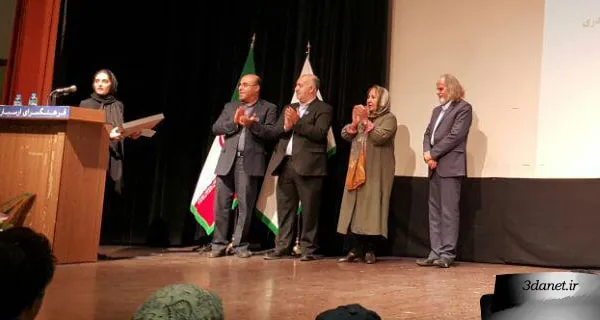
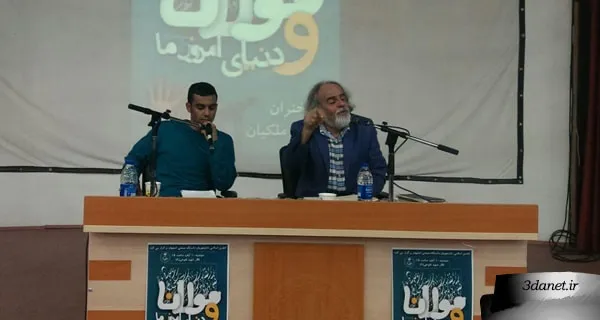
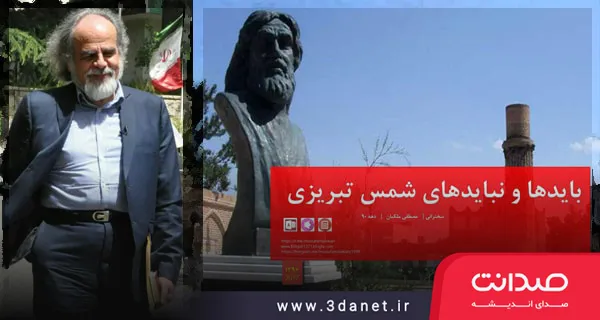
Mostafa Malekian's Lecture on 10 Ordibehesht 1397 at Sarbook Bookstore in Kashan, Titled "We and the Sacred Texts"
.
.
Discussion7 comments
بسیار بسیار لذت بردم از سخنرانی دکتر ملکیان در باره ما و متون مقدس و به ویژه از زحمات همه اهل دانش در این سایت در باره به اشتراک گذاری سخنان و تازه های ایشان .
شگرد ملکیان، دقیقا طراحی شده تا در محیط های شدیدا آلوده به دین شناسنامه ای و «عقیده پرستی» کمترین مقاومت ضد علمی و ضد شناختی را برانگیزد. این یعنی ، با زبان خود مخاطب حرف زدن و فکر کردن. این، هنر ملکیان است. علت این که مرحوم صادق هدایت، یا .. یا ... نقدشان از نهاد های مانع رشد، پا نمی گرفت و پا نمی گیرد، در برخورندگی و تحقیر به سوی مخاطب اصلی بوده، اما ملکیان، تا این جا، روش هوشمندانه تر و مستدل تری را بکار گرفته تا شوکِ «پارگیِ مخ» در مخاطب، وحشت زا نشود. و نرم نرمک او را به سمت گشودگی به کیهانِ گشوده و فراخ میل دهد.
«تنها»ی گرامی سلام. به عنوان یک علاقه مندِ ساده، از توجه تان به این بحث خوشحالم. (قبلا ار صدانت بایدسپاس گذار بود بابت نشر این بحث ها، و همین طور نشر بی کم و کاست بازخوردها، و تحمل بعضی نظرات بی تامل یا عجولانه یا گلایه آمیزِ نامنصفانه ی ما «آماده خواران و نیز دادن فرصت گفتگو به ما خوانندگان.» تنهای گرامی، این دعوتِ به جستجوی ظاهراً «همه عمری» را برای کشف حقیقت، از سوی ملکیان زیاد جدی نگیرید. در واقع ایشان دایما این شگرد لطیف و ظریف و هشیارانه را بکار می گیرند تا لزومِ حیاتی بودن حس تعلیق، عدم قطعیت، خودداری از قضاوت فرقه ای و نهادی، و فروتنیٌ علمی را به من و شما اثبات کنند، به شکلی که دست از «گفتند فسانه ای و در خواب شدند» برداریم و برویم به سراغ کاهش درد و رنج خود و دیگران (تقلیل مرارت)، اما در مواقعی که فرصت داشته باشیم، شاگرد جوینده ی حقیقتی باشیم که «دیر یابی» و حتی نایابی خود را با استدلالات و پیش شرط هایی به ما نشان داده که امثالِ ملکیان و جان لاک و اسپینوزا و راسل به ما هشدارشان را داده اند. پس با فرض قبول دیر یابی و نایابی و اصل تقریب به حقیقت ( و نه وصال آن)، فروتن می مانیم، مخصوصا فروتنی علمی، و سر در کار پاسخ به ندای نان و وجدان و رهایی، با هر شیوه ای که تا به حال یافته ایم. لطفا غمین نباشید. ملکیان به مرگ گرفته تا «(من و) تو به تب راضی باشی و از بیماری تعصب و قطعیت ضد علمی و نفرت و منیت و فرقه رهایی یابی و بدانی که حقیقت دست نیافتنی است، پس سلسله ی امر محال نجنبان و به حکمت «به من چه» وفادار بمان.» این شیوه ی معلمی اوست، و او معلمی خوب است! با احترام.
مشکل اصلی مصطفی ملکیان در اینه که اساسا مشخص نیست که مقعیت بحث هاش در کجاست.همین بی موقعیتی باعث پریشان اندیشی و در بعضی مواقع حرف های بی معنی و احیانا عجیب و غریب میشود.(دلیل اصلی این سردرگمی در اینه که خود اقای ملکیان هم نمیدونه که موقیعت بحث هاش در کجاست).
نمونه ای از « پریشان اندیشی » و « حرف های بی معنای » ملکیان در این متن را نشان مان دهید ؟ ( معنای « موقعیت بحث » و دلیل جهل ملکیان از آن ، پیش کش . )
یعنی کار و زندگی و تحصیلات و تخصص و هزار بدبختی و گرفتاری و کمبود را بیخیال شویم و برویم دنبال اینکه ببینیم عیسی و موسی و بودا و کانت و دکارت و اسپینوزا و کافکا و هزار نفر دیگر چه گفتهاند و چه کردهاند!؟ که آنوقت بشویم یک موجود هزار تکه... جناب ملکیان باید این را در نظر بگیرد که به قول خودتان به دلیل وقت بسیار کمی که در اختیار ما قرار گرفته است، نمیتوانیم دست به چنین انتخابی بزنیم؛ پس بهتر است با توجه به کاستیها، بحرانها و شرایط و نیازهای مردم، نظام آموزشی یک برنامهی مدون و مطابق با کاستیها و نیازها تدوین کند و نیروهای متخصصی پرورش دهد تا منجر به تولید چیزی و برداشتن مانعی شود. به نظر من کسی که بودا را بخواند دیگر نمیتواند زندگی کند. باور کن آشنایی با بیشتر آرا و اندیشمندان امثال او میتواند روح شادی و پویایی را در وجود یک ملت بکشد. در ضمن نظرات و باورهای این اندیشمندان در بیشتر موارد آنچنان در تضاد با یکدیگر است که ناخودآگاه شخص را در انتخاب راه، دچار سردرگمی و پریشانی میکند، به گونهای که کمکم قدرت استفاده از قوای ذهنی خود را بنابر موقعیتش از دست میهد. جناب ملکیان، امثال من و شما، آخرین نسل از انسانهایی هستیم که دغدغهی معنا و حقیقت داریم ؛ البته پروندهی این قرنها جستجو هم پیش رویمان باز است (همین کتابهایی که گفتید)؛ اما سئوالی از شما دارم؟ نتیجه؟؟؟ میدانید چقدر استعداد به هدر رفت در راه جستجوی معنا و حقیقت؟ میدانید با تزریق همین باور که: ”آفتابی لب درگاه شماست“، چقدر انسان، زندگی نکرده در دل ظلمت خاک شدند بیهیچ نشانی از روشنایی و نور؟ جناب ملکیان مدتهاست که دیگر رشتهی صحبت را به چفت آب گره نمیزنید و هیچ تازگی و طراوتی در سخنانتان نیست.
فرمودید نتیجه قرنها در جستجوی حقیقت گشتن چه بوده است... البته جواب که زیاد پیدا شده (همین کتابایی که گفتن و شما هم اشاره کردی) ولی اگه اشکالتون اینه که چرا اختلاف نظر برطرف نمیشه و همه به یه نظر واحد نمیرسن، فقط جواب پیشنهادی یکی از همین رمانها رو براتون میذارم؛ تو رمان «لبه تیغ» وقتی از لاری همین سوالو میکنن که اگه قرار بود این سوالات جوابی داشته باشن حتما بعد از این همه فحص و بحث جواباشون پیدا می شد، لاری جواب میده که شاید اصلا قرار نیست که یک نفر جوابو پیدا کنه و به بقیه بگه و بقیه هم زندگیشونو با جواب همون یه نفر سر و سامون بدن. شاید قراره هر کسی خود خودش دنبال این سوالات بره، قراره همه به دنبال حقیقت راهی باشن. این جستجوها به آخر نمیرسن و پرونده شون مختومه نمیشن چون لازمه هر کسی در هر زمین و زمانی با این سوالات روبرو بشه... این سوالات و پرسشها تا آخر تاریخ پرسیده میشن و همین زندگی انسان رو از عذاب و رنج نجات میده... اصلا اگه قراره جواب حقیقت جویی شما رو کس دیگه ای بده آیا این واقعا حقیقت جوییه؟!