Religion
Zuhair Mir-Karimi's essay 'Early Islam Through the Eyes of Others'
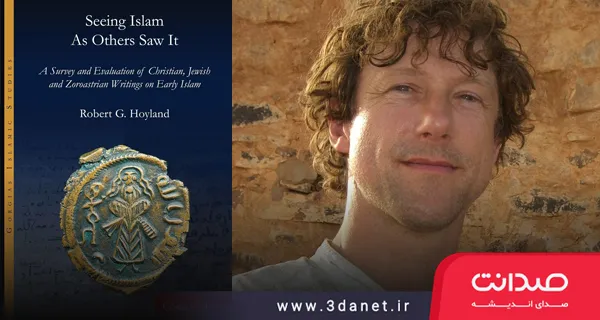
In his book Seeing Islam as Others Saw It, Robert Hoyland examines early Islam from the outside through Christian, Jewish, and Zoroastrian writings, exploring how followers of other faiths experienced their encounter with the new rulers.
Early Islam Through the Eyes of Others
A Review of Robert Hoyland's Book "Seeing Islam as Others Saw It"
Zuhair Mir-Karimi
Robert Hoyland (born 1966), Professor of "Middle Eastern History in Late Antiquity and Early Islam" at New York University, is a graduate of the Faculty of Oriental Studies at the University of Oxford, and since then his research has focused on examining the rise of Islamic civilization. His most recent book, "In God's Path: The Arab Conquests and the Creation of an Islamic Empire" (2015), was also written in this field. Hoyland is also interested in field research activities and has participated in archaeological explorations in Middle Eastern countries. The book "Seeing Islam as Others Saw It: A Survey and Evaluation of Christian, Jewish, and Zoroastrian Writings on Early Islam" (1997) is structured around several fundamental questions: What did non-Muslims or non-Arabs in the seventh and eighth centuries AD think about Muslims and Arabs, and how did they describe them? And can these descriptions be used in historical studies? In this research, Hoyland pursues two goals: first, by delving into non-Islamic sources attributed to the early Islamic period, to cast a gaze "from outside Islam" upon those historical events; and second, to see the experience of the followers of other religions encountering their new rulers, namely the Muslim Arabs, through their own eyes and to read it from within their texts.
Today, when we encounter historical research works about early Islam, especially what can be called the legacy of Ignaz Goldziher, Carl Heinrich Becker, Joseph Schacht, and others, three approaches present themselves to us. The first approach is to completely deny that there is any problem with the existing Arabic and Islamic sources on the history of Islam and to accept that although these sources were written more than 150 to 250 years after the death of the Prophet of Islam, they had deep roots in an oral tradition that reliably transmitted material from the very beginning and finally committed it to writing after two to three centuries. In contrast, the second approach distrusts the reconstruction of early Islamic history based on Arabic and Islamic sources, because the oral culture of the Arabs on the one hand, and the rapid political, religious, sectarian, and tribal transformations in the first decades of Islam's formation on the other, leave no room for trust; in other words, what was transmitted is less "history" than it is history-making to serve the political, social, and governmental interests of the great Islamic empire. In this approach, the only reliable way to recover the history of early Islam is, on the one hand, the utilization of archaeological, epigraphic, and numismatic sources, and on the other hand, consulting the texts and written sources that non-Muslims wrote when encountering the Muslim Arabs. The third approach is that, while acknowledging the problem with Arabic and Islamic sources related to the history of early Islam, we consider that by employing various methods of source criticism, reliable sections can be identified, various levels of editing and textual corruption in the texts can be found, and the traces of political, social, tribal, and sectarian currents can be identified and their influence on the formation and transformation of narratives can be discerned. In this book, Hoyland has attempted to combine the second and third approaches.
Before Hoyland’s work, Patricia Crone and Michael Cook, in their book Hagarism: The Making of the Islamic World (1977), drawing on Arabic, Hebrew, Aramaic, Syriac, Armenian, Coptic, Greek, and Latin texts alongside existing archaeological evidence from the early Islamic period, presented a narrative of the formation and expansion of Islam that differed markedly from the conventional written account found in Muslim Arabic historical works. Hoyland, a student of Crone, considers his book a continuation of his teacher’s work but makes a more modest claim. He does not seek to rewrite the history of early Islam solely on the basis of non-Islamic sources; rather, alongside a critical view of Islamic Arabic texts, he wants to take Jewish, Christian, and Zoroastrian non-Islamic sources seriously as well. In this book, he calls upon readers and researchers to adopt an interdisciplinary and inclusive approach to the study of early Islam in the seventh and eighth centuries CE; an approach that considers all the cultures and religions present in that context and era, and utilizes all surviving textual and literary, archaeological, epigraphic, and numismatic sources—whether from Muslims or from other religions and denominations present in the Middle East—for the study of Islam over a 150-year period, from 630 to 780 CE.
Hoyland’s book, after the introduction and before the appendices and bibliography, is organized into four main parts. To gain a general yet comprehensive understanding of Hoyland’s backgrounds, approaches, methods, data, hypotheses, theories, and achievements in this book, reading the first and third parts is sufficient. The second and fourth parts confront us with the original Jewish, Christian, and Zoroastrian historical and textual evidence that has reached us in various languages. Part One, entitled “The Historical and Literary Background,” comprises two chapters: “The Historical Background” and “The Nature of the Sources.” In this section, citing abundant evidence, the author depicts a world in the Middle East of the seventh and eighth centuries CE in which more or less similar, common, and intertwined conditions prevail across all neighboring lands and both ancient and newly emerging religions. Therefore, understanding the Arabs and early Islam is impossible without understanding the other governments and religions of that era through the examination of the texts and sources surviving from them. He first outlines the historical, political, religious, and social contexts in the Middle East and identifies the challenges between the Sasanian Empire and the Eastern Roman (Byzantine) Empire as laying the groundwork for an ever-closer union of religion and politics. In this atmosphere, rulers and elites became sensitive to the beliefs of the masses, apocalyptic and eschatological beliefs became widespread, religion turned into an effective weapon in political and governmental rivalries, and clerics assumed positions that had previously been political or governmental offices. In this way, the Muslim Arabs also adopted the practice of merging religion and politics in accordance with the dominant culture of Late Antiquity. Then, in the second chapter, Hoyland compares the experiences of both groups—that is, the conquering Arabs and the followers of other religions residing in the conquered lands—and demonstrates the impact of this encounter on the texts of both groups. He particularly addresses the oral and cross-cultural transmission of beliefs and narratives, showing that in very many cases, oral accounts traversed territorial, religious, cultural, and historical boundaries, originating from the tongues of Zoroastrians, Jews, and Christians, and were retold and rewritten with slight changes to narrative and story characters in the sayings and texts of Muslims. For this very reason, Hoyland considers the role of Muslim storytellers (quṣṣāṣ) in the formation of the Islamic tradition through the transformation and repetition of multiple versions of these narratives to be highly significant.
The second part, in over 560 pages, is a detailed encyclopedia of Jewish, Christian, and Zoroastrian texts about Islam, Muslims, and the Arab conquests. In this section, Hoyland does not seek to prove a particular theory but rather aims to categorize and index sources related to Islam and the Arabs so that they may be used in other research. This part is itself organized into two sections: the first section, “Incidental References to Islam,” introduces sources in which one can find allusions to Islam and the Arab conquests in the course of discussing another subject, including Greek sources; West Syrian, Coptic, and Armenian sources; East Syrian sources; Latin sources; and Jewish, Persian, and Chinese sources. In the second section, “Deliberate References to Islam,” works that were specifically written to examine this subject are surveyed. This time, instead of the language of the text, he divides the sources by subject: apocalyptic and revelatory texts; martyrologies; chronicles, histories, and adapted reports; and finally, apologetics and refutations. Under each subject, texts in various languages are presented along with a summary of each text’s content. Hoyland also addresses issues concerning the origins of the text, the text’s reliability, the authenticity of its attribution to an author, and the date of its composition and redactions. In these chapters, in addition to the main text, which provides the reader with a wealth of valuable and sometimes unknown information, each footnote also furnishes a lead to a research topic.
In the third part, “Writing the History of Early Islam,” Hoyland first attempts to outline for the reader the cultural and religious frameworks of the peoples of the conquered lands in order to determine what understanding they had of Islam and Muslims. The most important frameworks are as follows: a religio-political institution had suddenly and from an unexpected quarter emerged, achieved astonishing military successes, and its followers considered themselves God’s chosen and beloved ones. In this atmosphere, followers of other religions were trying both to mitigate the blows they were receiving from the Arabs and the benefits of the new rulers, and they hoped to regain their former power. By understanding these frameworks, we can both better grasp the reactions and responses of Jews, Christians, and Zoroastrians in their encounter with the new rulers, and we can discern the impact of these reactions and responses in the surviving texts from that period. In the continuation of this part, Hoyland explains how non-Islamic sources attributed to that period can be used critically in understanding the manner of Islam’s emergence and expansion and the rule of the Muslim Arabs. He tries to equip the reader with tools to distinguish hearsay and rumors, doctrinal and theological apologetics, and the hasty judgments of followers of other religions about the new faith from reliable, first-hand observations and accounts. However, Hoyland himself emphasizes at the beginning of this part that he is not seeking to confirm or refute any historical theory, but only wants to demonstrate the efficacy of non-Islamic sources in better understanding the historical events related to Islam.
In this section, by presenting several examples, he shows how non-Islamic sources can illuminate unknown angles of some of our knowledge about early Islamic history or correct certain other notions of ours. In one of the chapters, Hoyland refers to the justifications and polemics that non-Muslims offered for their defeat at the hands of the Muslims and categorizes them. It is interesting that, on the one hand, while Islam was a sign of divine wrath for some inhabitants of the conquered lands, sent down upon them as a punishment for their sins, on the other hand, some Jews considered Islam a source of their deliverance and salvation. Hoyland also shows that in doctrinal confrontations, Christians tried to employ the same polemics they had previously used against the Jews, this time against the Arabs, in order to protect the doctrinal boundaries of their religion. Similarly, Zoroastrians also employed the same polemics they had previously used against other monotheists, this time against the Muslims. Another example of the Christian and Zoroastrian encounter with Islam is a greater attention to apocalyptic beliefs, as if the conquests of the Muslim Arabs were, for Zoroastrians, a prelude to the appearance of Ushēdar, the Zoroastrian apocalyptic savior, and for Jews and Christians, a means for the collapse of the Byzantine Empire, whose fall, according to the prophecy of the Book of Daniel, would set the stage for the appearance of the Antichrist or Dajjāl, and now the Arabs are that very Antichrist.
In the fourth part, "Explanatory Appendices," Hoyland has translated several texts attributed to the seventh and eighth centuries AD into English for the first time from other languages and has identified their primary sources and where they are held, including: "The Canons of Jacob of Edessa," "The Byzantine-Arab Chronicle of 741" (which was written in Muslim-ruled Spain and contains events of the Arabs and Islam up to 724 AD), and "The Spanish Chronicle of 754" (which, continuing the previous chronicle, mentions events from 724 to 750 AD). Hoyland has also attempted to recover and translate "The Chronicle of Theophilus of Edessa" through the three surviving sources that have quoted it. Theophilus of Edessa, called Thawāfil ibn Tūmā in Arabic, was the court astrologer of the Abbasid Caliph al-Mahdi in the final years of his life, and in his chronicle, he recounted events up to 760 AD, that is, the time of the Arab conquest of Africa. At the end of this section, Hoyland addresses the epigraphic sources surviving from the first seventy years of the first Hijri century, listing sources whose date of writing is known and providing the text of the inscriptions and documents. He doubly emphasizes the importance of these texts, because, on the one hand, texts attributed to before the year 72 AH are religiously different in nature from texts written after that year, and on the other hand, these texts were composed in the first half of the Umayyad rule and provide us with valuable data on the formation of a newly emerging phenomenon called "Islamic governance" that cannot be found in other sources.
After these four main parts, the book contains several maps, two bibliographies of primary and secondary sources, and indices. The bibliographies themselves are a monumental work, listed over 115 pages. In the primary sources section, sources are cited in the non-Arabic languages of Andalusia, Arabic, Christian Arabic, Judeo-Arabic, Samaritan Arabic, Armenian, Chinese, Coptic, Ge'ez or Classical Ethiopic, Georgian, Greek, Hebrew, Latin, West Syriac, East Syriac, and archaeological sources. Furthermore, in the secondary sources bibliography, more than 1,340 sources are listed, demonstrating the magnitude of Hoyland's work in this research.
Hoyland has included almost all sources related to early Islam written by non-Muslims in his book, which has made it an unparalleled reference in this regard. But beyond this, it should be noted that the author's approach to issues and topics in this book is also novel. In his words, "Our problem with the early Islamic period stems not from a lack of sources, but from a lack of proper perspectives on those sources." For example, he says the Muslim Arabs were not the first people to link religion and conquest; rather, they were the inheritors of a long-standing tradition from Late Antiquity in which the belief in the imminent onset of the apocalypse entered politics, thereby integrating religion and conquests.
Finally, it should be noted that some specialists in this field, while acknowledging the breadth and depth of Hoyland's work, have pointed to a few items that have been omitted from this book. For example, Hoyland only makes a passing reference to sources concerning Arabic divinations and prognostication of the early Islamic period and does not address them in detail. He has also not examined the Christian Arabic poetry attributed to that era. Furthermore, one should not forget that more than twenty years have passed since the writing of this book, and since then, many more studies have been conducted in this field, which the researcher cannot dispense with consulting. Nevertheless, the book Seeing Islam as Others Saw It can still serve as the first window of entry for students and researchers interested in the field of early Islamic history.
.
.
Essay by Zuhair Mir-Karimi titled "Early Islam Through the Eyes of Others"
Source: Doornama
Listen to the podcast of Zuhair Mir-Karimi's conversation with Doornama
PDF file of "Early Islam Through the Eyes of Others"
.
.


Discussion1 comments
کتابی بسیار عالی و سترگ که میتواند دستمایهی کتاب هایی باشد که باید فصل الخطاب برای درهم آشفتگیِ روایتهای تاریخیِ جعلی بشود! سپاس از معرفی این کتاب.