Religion
Zuhair Mir-Karimi's essay 'The Conquest of Jerusalem and the Establishment of the Apocalyptic State'
In The Apocalypse of Empire, Stephen Shoemaker argues that Muhammad's prophetic mission and the early Islamic expansion were rooted in apocalyptic belief, aiming to establish a polity that would inaugurate the end of history—with Jerusalem, not Mecca and Medina, at its center.
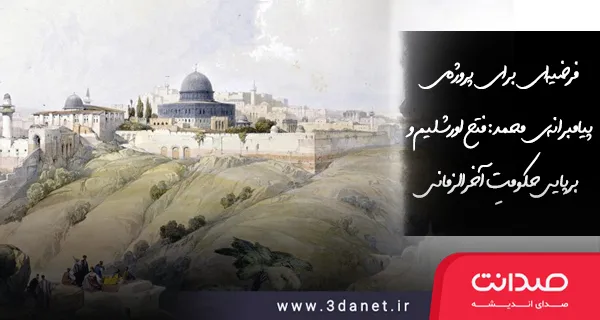
A Hypothesis for Muhammad's Prophetic Project: The Conquest of Jerusalem and the Establishment of the Apocalyptic State
A Summary of the Book The Apocalypse of Empire: Imperial Eschatology in Late Antiquity and Early Islam by Stephen Shoemaker
Zuhair Mir-Karimi
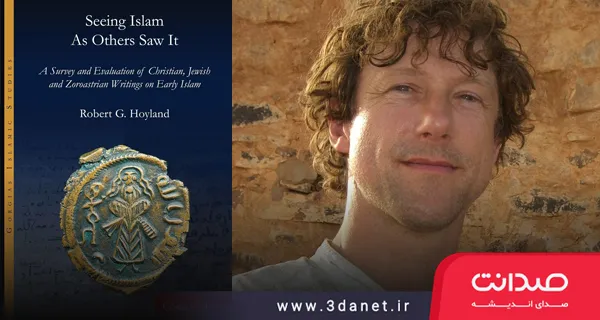
Shoemaker's recent book, The Apocalypse of Empire: Imperial Eschatology in Late Antiquity and Early Islam, published in 2018, is in many respects a continuation of his previous book, The Death of a Prophet: The End of Muhammad's Life and the Beginnings of Islam, and employs similar methodological principles and historical findings. It is therefore necessary to first provide a brief overview of that book.
In his previous book, based on an examination of the available textual, historical, and archaeological evidence concerning the formation of Islam, Shoemaker made two main, groundbreaking claims:
(1) The Prophet of Islam, Muhammad, died not in 11 AH / 632 CE, as the accepted accounts among Muslims claim, but after the commencement of the Muslim conquests in Palestine, that is, in 13 AH / 634 CE; and
(2) Muhammad preached eschatological and apocalyptic promises and summoned his followers to the conquest of Jerusalem, as the focal point of the imminent apocalyptic culmination of history; in fact, Medina and Mecca were not Muhammad's ultimate goals, but rather reaching Jerusalem and preparing for a universal, apocalyptic state was his primary objective.
In his previous book, Shoemaker had two important methodological principles that he has also utilized in this book:
(1) The emergence of Islam must be examined within a broader context, namely the setting and era of Late Antiquity in the lands of the Near East; and
(2) The formation of early Islam must be examined using the same method that has been used for over a century to study the formation of other religions such as Judaism and Christianity: the historical-critical method.
In Shoemaker's previous book, the methods used to examine the formation of Christianity were also applied to the study of the formation of Islam; and he was able to demonstrate how the eschatological and apocalyptic promises present in the early movement created by Muhammad were, within just a few decades after his death, rewritten and reinterpreted in a way that forever changed the meaning and tenor of Islam.
But this book, The Apocalypse of Empire: Imperial Eschatology in Late Antiquity and Early Islam, takes a step forward and, by expanding the scope of investigation from the land of Arabia and its neighbors to the cultural milieu of Byzantium and the Mediterranean world, and from Zoroastrian, Jewish, and Christian texts to Islamic texts, seeks to explore the position of the Quran and Muhammad's mission within its religious and political contexts. In this book, Shoemaker also makes two main claims:
(1) Both the early community the Prophet founded in the Hijaz and the imperial-like expansion of Islam were entirely based on apocalyptic belief and aimed at forming a state that would initiate and guide the era of history's culmination, that is, the era promised by the Christian teachings accepted by Muhammad. In this case, Muhammad is no longer that prophet whose primary goal was establishing social justice in Arabia; and
(2) This outlook, namely the imminence of history's culmination and the arrival of the apocalypse and the beginning of the reign of God/the Messiah/the Promised One, as found in Christian messianic teachings, was common and widespread in the lands of the Mediterranean and the Near East in the centuries before the emergence of Islam; therefore, what is sometimes considered a unique feature of Islam, namely the correlation of state and eschatology, was in fact a prevalent and widespread belief in that context and era; and not only is it not exclusive to Islam and Muhammad, but its precursors emerged centuries before Islam among Zoroastrians, Jews, Christians, and the Byzantine Empire.
Shoemaker has several other thought-provoking discussions in this book. He claims that Muhammad's apocalyptic state was a manifestation of the dominant belief of his time, but it was not a unique case; rather, we must also interpret and analyze the apocalyptic and messianic doctrines that sprouted in Judaism and Christianity at that time in light of these same beliefs. Furthermore, contrary to theorists who claim that apocalyptic movements were in fact a form of struggle and opposition against the ruling monarchical governments, he asserts that those movements themselves were formed in order to establish governments that could prepare for or initiate the end times and the fulfillment of the promises associated with it. More precisely, through textual analysis, Shoemaker shows that in a historical trajectory, there was a shift from "belief in the imminence of the apocalypse but opposition to establishing an apocalyptic state" towards "belief in the imminence of the apocalypse and support for establishing an apocalyptic state." Muhammad's divine mission (from a believer's perspective) or the prophetic project he defined for himself falls under the latter category.
Shoemaker has even examined the wars between the two empires, the Sasanian and the Eastern Roman, within this same framework. The writing of the "Alexander Legend," an apocalyptic text that promised the imminent end of the world, the domination of the Christian empire over the universe, and the appearance of the Messiah, is another example of the spread of a view that saw the world's end as very imminent and placed the formation of a government centered on Palestine/Jerusalem at the forefront of its program. This text was written with political objectives and in line with religious propaganda against the Sasanian Empire after the victory of Heraclius, the Christian emperor of Eastern Rome (Byzantium), over the Persians and the recapture of Jerusalem and the return of the True Cross there in 629 or 630 CE. Shoemaker's research achievements in this book are far more than can be addressed in a short note. I will write more about this book in the future.
I have previously written about the influence of the "Alexander Legend" text on the Quran in a note consisting of 4 posts. Also, I have previously introduced and reviewed another article by Shoemaker in a note.
.
.
To access the text of the book, see:
Shoemaker, Stephen. The Apocalypse of Empire: Imperial Eschatology in Late Antiquity and Early Islam. Philadelphia: University of Pennsylvania Press, 2018.
To access the text of one of the introductions and reviews of this book, see:
Pregill, Michael. Review of The Apocalypse of Empire: Imperial Eschatology in Late Antiquity and Early Islam, by Stephen Shoemaker. Review of Qur’anic Research, vol. 6, 2020.
To access Shoemaker's previous book on the life and death of Muhammad and the formation of Islam, see:
Shoemaker, Stephen. The Death of a Prophet: The End of Muhammad’s Life and the Beginnings of Islam. Philadelphia: University of Pennsylvania Press, 2011.
.
.


Discussion2 comments
گویا اورشلیم به معنای شهر سلم/صلح است. پس عجیب نیست که رسالت نهایی خاتم الأنبیاء استقرار حکومت جهانی در بیت المقدّس بوده باشد. در واقع این شهر شریف در اشغال بنی اسراییل می بوده که سرکردگان صهیونیست پیامبران توحیدگرا را یا خود می کشتند یا از حکومتهای ظالم تقاضای قتلشان را بعمل می آوردند.
با سپاس از ترجمه ی متن حاضر، چنانچه امکان پذیر باشد متن کتاب را جهت ترجمه در اختیار مترجمان قرار دهید. با درود