Religion
A Summary of Joseph Witztum's Article “The Foundations of the House”
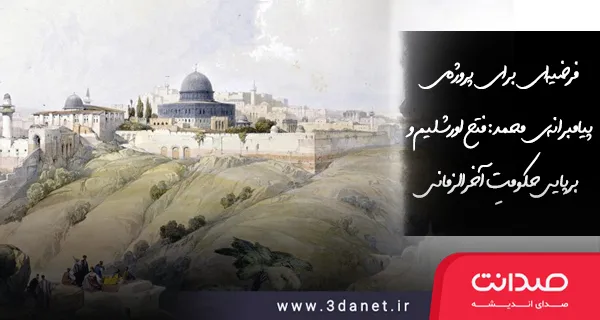
Witzum shows in “Al-Qawāʿid min al-Bayt” that the narrative of Abraham and Ishmael building the Kaaba originates in post-biblical traditions of Abraham and Isaac building the Temple in Jerusalem—a development aimed at forging an Arab identity and elevating Mecca’s status.
A Summary of Joseph Witztum's Article “The Foundations of the House”
In his article “The Foundations of the House” (al-Qawāʿid min al-Bayt), Joseph Witztum examines verses 127 to 129 of Surah al-Baqarah (وَ إِذْ يَرْفَعُ إِبْرَاهِيمُ الْقَوَاعِدَ مِنَ الْبَيْتِ وَ إِسْمَاعِيلُ رَبَّنَا تَقَبَّلْ مِنَّا إِنَّکَ أَنتَ السَّمِيعُ الْعَلِيمُ ...). In these verses, the building of “the House” (al-Bayt), which likely refers to the “Kaaba,” is attributed to Abraham and Ishmael. Witztum seeks to demonstrate that the Quran’s description of the construction of a sanctuary or house by Abraham and Ishmael is not found in the canonical biblical texts, but that this narrative can be traced back to post-biblical traditions and texts that relate to interpretations of Chapter 22 of the Book of Genesis in the Hebrew Bible.
One of the key points addressed in Witztum’s article is that there are undeniable similarities between post-biblical accounts of Abraham building an altar and a house for God with the help of Isaac in Jerusalem, and the Quranic account of Abraham building a house for God with the help of Ishmael in Mecca. The author claims that the post-biblical narratives concerning the story of Abraham’s test, the sacrifice of Isaac, and the construction of the sanctuary/altar in Jerusalem on Mount Moriah (מוריה) by Abraham and Isaac were transformed in the Quranic narrative, in accordance with the ethnic beliefs of the Arabs who considered themselves descendants of Ishmael, into the story of the sacrifice of Ishmael and the construction of the Kaaba sanctuary in Mecca by Abraham and Ishmael. This change served both to provide an identity-forming function for the Arabs and the new religion, and to strengthen Mecca’s status by attributing it to Abraham.
To prove this claim, he compares the text of the Quran and Muslim commentaries on the Quran with Jewish rabbinic texts, and Christian homilies and commentaries in Greek, Syriac, and Coptic that relate to Chapter 22 of the Book of Genesis. Through this examination, Witztum demonstrates the origin of the Quranic narrative, the path by which these materials reached the Quran from post-biblical texts, and the manner of their transformation and adaptation to fulfill the needs of the Quran. This is Witztum’s point of departure from Quranic scholars such as Henry Smith, Heinrich Speyer, Shlomo Dov Goitein, and Uri Rubin, who consider the Quranic narratives concerning the construction of the sanctuary by Abraham to be adapted from Chapter 22 of the Book of Jubilees. The Book of Jubilees is a Jewish text from the second century BCE that was considered authoritative by the Ethiopian Orthodox Church (Abyssinia) from pre-Islamic times.
At the beginning of the article, Witztum notes that the text of this verse has attracted the attention of Muslim commentators and Quranic scholars because, on the one hand, the word “Ishmael” is not placed alongside “Abraham” but is mentioned at the end of the sentence, creating a kind of suspension; and on the other hand, it is reported that in some Quranic readings, such as the reading of Abdullah ibn Mas‘ud and the reading of Ubayy ibn Ka‘b, the word “yaqūlān,” meaning “the two of them said,” appeared before the beginning of the supplication (رَبَّنَا تَقَبَّلْ مِنَّا ...). These points, along with attention to the preceding verse (verse 126), have led some Quranic scholars, such as Edmund Beck, to consider the first part of the verse, i.e., “وَ إِذْ يَرْفَعُ إِبْرَاهِيمُ الْقَوَاعِدَ مِنَ الْبَيْتِ وَ إِسْمَاعِيلُ,” to be an addition that was later inserted into the Quran. However, Witztum does not find the evidence sufficient to prove this claim and, in his article, assumes that the entire verse was present in the original text of the Quran, proceeding with his investigations based on this assumption.
Witztum's evidence and analyses rely primarily on two methods: narratological examinations (the structure and elements of the narrative), and lexicological and etymological examinations. In his lexicological and etymological examinations, Witztum first investigates the meaning of the phrase "يَرْفَعُ الْقَوَاعِد" (yarfaʿu al-qawāʿid) among Muslim exegetes and notes that the meaning of "qawāʿid" in Islamic exegetical texts is unclear and has been taken to mean various things, such as foundation (al-Qurṭubī), pillars (al-Zamakhsharī), walls and enclosures (al-Kisāʾī), and rows of brick and stone (al-Zamakhsharī). Midway through the article, when seeking to demonstrate the derivation of the phrase "yarfaʿu al-qawāʿid" from phrases found in Syriac texts, he returns once more to lexicological and etymological examinations.
In his narratological examinations, Witztum points to narratives found in post-biblical Jewish and Christian works written in explanation and interpretation of Chapter 22 of the Book of Genesis. In verses 1, 2, and 7 through 13 of Chapter 22 of the Book of Genesis, the narrative of the sacrifice of Isaac is recounted as follows:
After these events, it came to pass that God tested Abraham and said to him, "Abraham!" He replied, "Here I am!" God said, "Take your son, your only one, whom you love, Isaac, and go to the land of Moriah, and offer him there as a burnt offering on one of the mountains that I will show you." ... Isaac spoke to his father Abraham and said, "My father!" He answered him, "Here I am, my son!" He continued, "Here is the fire and the wood, but where is the lamb for the burnt offering?" Abraham answered, "My son, God will provide for Himself the lamb for the burnt offering." And the two of them went on together. When they came to the place that God had shown him, Abraham built the altar there and arranged the wood, then he bound his son Isaac and laid him on the altar, on top of the wood. Abraham stretched out his hand and took the knife to slay his son. But the angel of the LORD called to him from heaven and said, "Abraham! Abraham!" He replied, "Here I am!" The angel said, "Do not lay a hand on the boy! Do him no harm! Now I know that you fear God: you have not withheld your son, your only one, from Me." Abraham lifted up his eyes and saw a ram caught by its horns in a thicket, and Abraham went and took the ram and offered it up as a burnt offering in place of his son. [Translation by Pirouz Sayyar]
Jewish and Christian interpretations of this section of the Book of Genesis clearly narrate a story in which all the components of the Quranic narrative about the sacrifice and the building of the sanctuary are present, but it is Isaac, not Ishmael, who plays the role of the second person, whether as the sacrifice or as the one who helps Abraham build the house/sanctuary/altar.
In the book "Antiquities of the Jews" by Josephus, the first-century CE Jewish historian, as well as in a Coptic homily attributed to Amphilochius of Iconium, a fourth-century CE Christian bishop, the active role of Isaac in accompanying Abraham to build the altar and temple is explicitly stated. The narrative in the latter source bears a strong resemblance to parts of the Quranic narrative in which Ishmael supports his father in carrying out what God has commanded him (al-Ṣāffāt-102: ... He said, "O my father, do as you are commanded ..."). In addition to these two sources, numerous other sources in Syriac by anonymous authors from the fourth and fifth centuries CE contain similar narrative motifs in their accounts of this event. In some of these texts, it is stated that Isaac would gather stones and wood, carry them on his shoulders, and bring them to Abraham, and Abraham would take them from his beloved son and arrange them.
One of the most important sources whose narrative bears a strong resemblance to the Quranic narrative can be seen in the work of Jacob of Serugh (died 521 CE). Jacob of Serugh, a Syriac-speaking Christian, narrates this event as follows:
Abraham drew near and extinguished the fire with the knife, and on the top of the mountain began to build an altar for God. The master-builder of faith drew near and “spread the rows of stone” to build there a “house” for the religious ceremonies that would take place in the future. And when Isaac looked and saw what his father was doing, he himself lifted the stones and brought them near to build the altar. He had seen that the priest (Abraham) was building an altar for his (Isaac’s) own sacrifice, and without worry he set to work to finish the construction of the edifice with him (Abraham); for he (Abraham) was the priest, the master-builder, and the father of the lamb (Isaac), and Isaac was the sacrifice, the bringer of stones, and the son of the priest. [Translation by the author]
The noteworthy points in the book attributed to Jacob of Serugh are the presence of the words “house” and “spreading the rows of stone” in the Syriac phrase. By a lexicological and etymological examination of the Syriac phrase, which in this case is a loanword from Greek, and comparing it with its Arabic equivalents, and examining other works by Jacob of Serugh in which he uses the same phrase (i.e., “raising the rows of stone”), Witztum shows that “spreading the rows of stone” in Jacob of Serugh’s Syriac text is equivalent to the phrase “yarfaʿu al-qawāʿid” (raising the foundations) in the Arabic of the Quran.
In the continuation of the article, Witztum provides further evidence to strengthen his claim. Among other things, he points to the similarities between the prayer mentioned in the Quran from the tongue of Abraham and Ishmael and the prayers mentioned in Jewish commentaries (such as the “Great Commentary” of the Jews) from the tongue of Abraham. In addition to these, he considers the word “ibtalā” (He tried) which appears in verse 124 of Surah al-Baqarah to be equivalent to the word “nissah” (נסה) which appears in chapter 22 of the Book of Genesis, both of which carry the meaning of “test.” Witztum presents other evidence in the article in support of his claim.
With this evidence, Witztum attempts to show that the story of Abraham’s trial, the command to sacrifice his son, and the building of the house and the raising and spreading of the rows of stone, are written within a single, interconnected narrative context both in the Book of Genesis and post-biblical Jewish and Christian interpretations, and in the Quran. In other words, the narrative of the construction of the sanctuary (house) in Jerusalem by Abraham and Isaac at the place where, according to Jewish belief, Solomon would later build the Temple of Jerusalem, has been transformed in the Quran, according to the requirements of ethnic and religious identity, into the narrative of the construction of the Kaaba in Mecca by Abraham and Ishmael.
.
.
To access this article, see:
Witztum, Joseph. "The Foundations of the House." Bulletin of the School of Oriental and African Studies 72 (2009): 25–40.
.
.

Discussion3 comments
متن مورد بحث آشکارا وجود فرزند اول حضرت ابراهیم ( ع ) ، اسماعیل را منکر شده و اینکه قبل از قرآن تحریر شده دلیل نمی شود که آن را اصیل بشماریم. همه قبول دارند که اخلاف اسماعیل ، اعراب بیسواد بودند و شخص خاتم الانبیاء نیز امی بود. بهر حال خود راوی اصل ماجرا بودند. و به احتمال قریب به یقین احبار بنی اسرائیل روایت را تحریف کردند تا ضمن انکار ماوقع خود را بانی بیت جا بزنند.
با سپاس از اهتمام علمی عزیزان مقاله حاضر که به نظریه اقتباس در نسبت قرآن و کتب مقدس دامن زده و سعی دارد فهم و تفسیر مفاهیم قرآنی را در پرتو شواهد متون دیگر دنبال کند هرچند از منظر تفسیر و مطالعه تطبیقی بین الادیانی قابل توجه است اما به نظرم به دلیل تکیه بر مبنایی قابل نقد و پیامدهای نظری آن در حوزه قرآن شناسی چندان قابل دفاع نیست. قرآن کریم که به یمن سنت پیشوایان دین از منظر اسلامی متنی فاخر و استوار است با متون پرمناقشه و ابهام آلود دیگر چندان قابل تفسیر نیست . متن آیه مزبور چه ابهامی دارد که این بررسی تطبیقی رفع ابهام یا رفع سوء فهم کرده است؟ بلکه به عکس مفهوم یرفع القواعد که معنایی روشن در ادب عربی دارد به معنای بالابردن پایه ها نه ردیف گستردن است و تنها با استناد به ترجمه مبهم متن مورد اشاره در مقاله چگونه می توان از این معنا دست شست؟ آیا تأکید این منابع بر نظریه باطل اقتباس و نشاندن اسحق به جای اسماعیل بر اساس نظریه مورد اتفاق اسلامی برای عدم اعتماد به این دست تحقیقات و عدم تحمیل مفاد آنها بر ظواهر و نصوص قرآن کافی نیست؟
سپاس از نویسندۀ خوش ذوق و کوشا بابت معرفی این مقالۀ ارزشمند.