Religion
The Prophetic Dream, or the Alpha, Beta, Theta, and Delta Waves of Muhammad (PBUH); an essay by Mohsen Zandi
Mohsen Zandi sees Soroush's theory of prophetic dreams as a failed attempt to reconcile tradition and modernity through an obsolete interpretation of dreaming, reading it as a sign of his inner conflict. The lack of a clear definition of the dream is also criticised.
Mohsen Zandi: Here I want to point to only one possible wave. It seems that the same unsuccessful effort of his in resolving the confrontation between traditional and modern perspectives, which is evident in some of his other theories, manifests itself here more than anywhere else. An effort that, psychologically speaking, may be a sign of a confrontation between two layers of his personality, one rooted in deep religious upbringing and the other in perceptions arising from his modern knowledge. His unsuccessful effort here consists of solving problems arising from modern thought and knowledge while adhering to an entirely traditional and obsolete interpretation of sleep and dreams.
.
The Prophetic Dream, or the Alpha, Beta, Theta, and Delta Waves of Muhammad (PBUH)
Mohsen Zandi
Researcher in the Psychology of Religion
The theory of the prophetic dream is a response to several problems from a religiosity that is, on the one hand, familiar with modern science and its requisites, and on the other, has its heart bound to its religion and is striving to resolve this dilemma from its own perspective.Of course, some of the problems they raise are not new. Even an ordinary but contemplative reader, if they distance themselves slightly from their faith-based belief in the Quran and read it merely as a text (for instance, the manifesto of a group), might initially notice its apparent incoherence, unnecessary repetitions, descriptions and norms possibly unpleasant in contemporary life, scientific data not very advanced relative to today's knowledge and perhaps unacceptable, controversial historical attributions, multiple accounts of certain stories, a thoroughly Arabic cultural reflection even in its worldly and otherworldly ideals or its laws, figurative expressions that are difficult to understand and cause disagreement, and issues of this sort. They might even say to themselves, "If I, as an ordinary person, wanted to write a manifesto for my followers, I would write much more clearly so as not to create such historical and epistemological troubles." The manifesto of a group should be clear, lucid, precise, and unifying, not such that we say: "Religion's work is naught but bewilderment" (Masnavi, Book One).Although these problems may one day find precise answers, for now they are indeed problems; and in response, the religiously committed, inquiring audience seeks to solve them, the merely religiously committed audience to deny them, the non-religious, non-inquiring audience to dissolve their very basis, and researchers enamored with scholarly work to understand and critique them with dispassionate hearts.Setting aside discussions of the documentary analysis of the Quran in modern Quranic studies, the ontological discussion of this message has been of great importance throughout Islamic history. The question of what the nature of this message is, and with what "media model" it can be compared, is a historical, extensive, important, and influential discussion.Dr. Abdolkarim Soroush seeks to provide a new answer, which they believe is one of the worthy explanations that, if it does not solve a large part of those problems, at least justifies them (in the sense of excusing, not epistemological justification).In the author's view, although the theorist, with such a desire, casts the stone of their theory into the pond of researchers and, with a heart bound to their religiosity, wants to grant the same traditional epistemological validity in the mechanism of revelation to prophetic dreams, the resulting waves in this pond neither last as much as they wish, nor take the form they prefer. Their theory "carries" fruits they might not be pleased with; similar to what Max Weber says about the seed of modern secular capitalism in the soil of Calvinist religious beliefs about work. Fruits that Calvin himself fiercely fought against.Here, I want to point to only one possible wave. It seems that the same unsuccessful effort of theirs to resolve the confrontation between the traditional and modern perspectives, which is evident in some of their other theories, manifests itself here more than anywhere else. An effort that, psychologically, might be a sign of the confrontation between two layers of their personality, one rooted in deep religious upbringing, and the other in perceptions arising from their new knowledge. Their unsuccessful effort here consists of solving problems arising from modern thought and knowledge by adhering to an entirely traditional and obsolete interpretation of sleep and dreams.Before explaining my claim, I deem it necessary to note a point. As readers know, one of the first steps in any scientific research is the conceptual definition of the concepts used by the researcher, and in empirical research (whether natural or human sciences), a step further is taken and concepts are also given operational definitions. Of course, types of definitions are not limited to these two, but these are among the most important types. In any case, a definition must be clear and precise; such that, on the one hand, that concept can be easily examined, and on the other, it possesses the attribute of stability so that everyone has a more or less identical understanding of it, and the possibility of various interpretations, and consequently the possibility of evading forward in research errors, is minimized. In the theory of the prophetic dream and its surrounding discussions, despite the visible and hidden thirst of the audience for greater conceptual clarity, a clear definition of the concept of dream is not given to quench the curiosity of the reader familiar with research methods. This situation is the same for both critics and those who sympathetically wish to explore. On the other hand, since they consider part of the interpretation of dreams to be the work of the human sciences, one might even say that an operational definition is also appropriate and necessary for them. But alas, there is no clear, precise, and stable definition; so much so that I can use my own coined term “anti-definition” for his discussion: “The reader may, instead of the word dream, use words such as unveiling, event, imaginal realm, discontinuous and continuous imagination, the eighth clime, Jābalqā, Jābarsā, and the earth of the malakūt (as has been done), but the author, without opposing them, has deliberately chosen the word dream, firstly to avoid the cumbersome ambiguities of those ancient concepts and their terrifying metaphysics, and secondly to make the truth of Muhammad’s (PBUH) prophetic experience more manifest and accessible. There is no human being who has not had a dream and has not experienced dreams many times in their life, unaware of their bitterness and sweetness. Therefore, everyone, by referring to their own dreams, can grasp something of what transpired for the messengers and mystics in the solitude of meditation, in the depths of unveiling, in the presence of imagination, and in the world of the imaginal realm, and compare the perfect with the imperfect, and catch a scent of that hidden garden.”On this basis, in this writing, I have adopted dream in its conventional sense for four reasons:
Mr. Soroush’s scholarly background indicates his precision in choosing words, which, of course, is sometimes mixed with his literary genius and makes things difficult for those who deal with the scientific method of research. Since he is seeking a new theory, it is unlikely that he means the words mentioned in the above passage or other substitute words scattered throughout his text. The use of the aforementioned mystical words to explain revelation is not unprecedented in mystical texts, and he purposefully chooses the word dream to say something new.
He uses the term dream interpretation to explain the mechanism of revelation. This term is not used in authentic mystical texts in opposition to revelation or even to unveiling and intuition. Therefore, what is meant by dream is the same as what we deal with in common language.
He substitutes dream interpretation for the interpretation of the Quran; and perhaps in this choice, he has had a sidelong glance at the Quranic usage of dream in the story of Joseph. In his debate with Mr. Bazargan, he astutely mentions psychoanalysis as one of the capable sciences in dream interpretation (I will pass over the fact that, according to his Popperian foundations in the philosophy of science, psychoanalysis [which itself has numerous, and sometimes conflicting, approaches and is not a single standardized package] is entirely out of the game and is classified among pseudo-sciences, and yet here it receives such immense esteem. Of course, perhaps he mistakenly means experimental psychology by psychoanalysis). We all know that psychoanalysis deals with these very ordinary dreams, and, incidentally, the more these dreams are "confused," the more they are "meaningful" for the seasoned psychoanalyst.
Assuming the incorrectness of the three points above, as one of the readers of these writings, my impression (at least as a possibility) is precisely this sleep and dream (two words that, despite their conceptual difference in research texts, are used interchangeably in these writings) that we all know and experience. However, the prophetic dream is of a different kind. Now, as for which kind, again, in explaining its mechanism, nothing substantial is gained by a portion of the audience of this theory (namely, scholars of the human sciences), except considering dreams as ambiguous. While we know that things seemingly more complex than dreams, such as mystical experiences, are well-defined by thinkers like Stace in the book Mysticism and Philosophy, criteria are mentioned for it, and these criteria are so clear and precise that based on them, numerous quantitative scales are constructed in experimental psychology (such as the famous M-scale), and tens and hundreds of correlational and even laboratory studies are conducted. Perhaps his inattention here, as someone who is thoroughly familiar with scientific research methods, stems from that same literary genius and imaginary forms that have filled a part of his mental realms, and sometimes creates a "dreamlike language."
And now to explain the claim. The traditional view of revelation essentially removes it from the domain of empirical sciences (both natural and human), and it is for this very reason that all efforts in the natural and human empirical sciences to approach the understanding, description, and explanation of the mechanism of revelation have failed. Let alone revelation, even the precise research of scientists in fields such as the psychology of religion, the neuroscience of religion, and the cognitive science of religion (whether in correlational or laboratory form) in reconstructing and explaining similar phenomena, such as discovery and observation, and even lesser ones (like meditation or parapsychological experiences), has only led to the understanding of some possible physiological or psychological correlates, and there is no claim beyond this regarding the mechanism of these phenomena. In such a situation, a scientist who, on the one hand, possesses "epistemological intelligence" and "moral humility," and on the other hand, does not wish to abandon their positivist principles,[1] ultimately arrives at a position of agnosticism, considers the examination of these phenomena beyond the capability of modern knowledge, and places the efforts made in the category of "pseudoscience."But what about dreams? Do the players of the modern sciences also consider dreams outside the field of play? Or do they consider all matters related to sleep and dreams, in any form, as belonging to them, and deem it their "right" and "ability" to examine them in the four domains of description, explanation, prediction, and control? Yes, that is correct. Sleep is no longer a strange and wondrous thing for modern knowledge; it is a completely familiar subject, the examination of whose multiple dimensions has given rise to several specialized sciences. The mechanism of sleep is no longer an extraordinary and unknown matter. Sleep is no longer considered the flight of the soul toward the unseen world (Masnavi, Book One) or, in their terms, a descent into the "Presence of Imagination and the World of Similitudes"; and it is no longer divided into truthful and untruthful based on the number and type of the soul's aircraft flights. Here, sleep is merely a physiological phenomenon and a brain process that leads to the production of a complex sign called a dream. A veridical dream is merely the coincidental (and not entirely complete) correspondence of this brain processing with an external event. The mechanism of sleep and dreams is a clear matter for modern science. Why do we dream? What do we see, or not see, in dreams? Why are these things seen in dreams? What can we do to see certain things in dreams? And fundamentally, what is sleep? It is a familiar matter for the collection of sciences that deal with sleep. Today we know that sleep is simply a cognitive processing of the brain and its electrochemical correlates, where the data for this processing arises from the brain's interaction with the environment and the internal and external context (across broad intra-personal, inter-personal environments, and other contexts), and the product of this specific cognitive processing of the brain is what we colloquially call a dream; and it is only by awakening at a specific stage of the five stages of sleep[2] that this so-called dream is recallable, and the individual, to the extent of their memory capacity (which is again a physicalist phenomenon), can be the "narrator of their dreams." We know that even the emotional intensity of a dream is dependent on the intensity of the manifestations of the fifth stage of sleep. Sleep, and also dreams, largely follow rules that have either been discovered, or have the "capacity" to be discovered. Both sleep and dreams are phenomena necessary for the physical and mental health of the organism. Today, with various medical devices, what occurs during sleep and dreaming, as well as its brain, chemical, and other physiological correlates, are observable. We know the factors that make the sequence of different stages of sleep and dreaming possible. We have numerous tools for sleep research. For example, by attaching electrodes to the sleeper's skull to record and monitor the electroencephalogram (EEG), the experimenter prepares them for electrophysiological measurements. The electroencephalograph, or EEG, is one of the main tools used for sleep research. The EEG measures the electrical activity of the brain, which manifests as brain waves.But the content interpretation of this brain processing, and the recognition of the contexts with which the brain interacts to produce the content of a specific dream, has led to numerous theories in various sciences that analyze dreams; though naturally, this dream research has less precision compared to sleep research. On this basis, a dream is a sign or signifier that indicates one or more signifieds. This signified has multiple cognitive, emotional, behavioral, and social levels. This narration is either direct, or more often indirect, and requires a complex semiotics, technically referred to as interpretation (ta'bir) or hermeneutics (ta'wil). Conventionally, for more straightforward signs, the term ta'bir (passing from the signifier to the signified) can be used, and for complex signs, the term ta'wil (returning to the origin) can be used. With an imprecise distinction between sleep (the physiological aspect) and dream (the non-physiological aspect), one can refer among the famous theories of dream interpretation and hermeneutics to the theories of Freud (dream as something generally related to the past, and frustrations with intense emotional charge that have been driven into the unconscious), Jung (generally related to the dominant archetypes within the individual), Adler (related to wishes and desires), and Piaget's more comprehensive view on symbolism. Consequently, each of these, depending on the nature they attribute to the dream, adopts a different method of interpretation or hermeneutics.ConclusionThis writing does not seek a positive discussion on the nature of revelation and only addresses the argument that the theory of the prophetic dream suffers from an internal contradiction, and besides not offering any particular solution to the problem it addresses, it probably, without its theorist being willing, carries a ground for the complete invalidation of the meaning of the authority of revelation, and ultimately its acceptance as a spoken or written text by one or more persons in one of the early Islamic centuries in the Arabian Peninsula, which must now be analyzed with completely secular methods. Accordingly, the method of interpreting the Quran is no different from the method of interpreting Hemingway's "The Old Man and the Sea"; both are primarily psychological signs that reveal the psyche of the individual creator, and this psychological content is a combination of the individual's specific physiology and the environment with which they interact, and they possess no specific epistemological or religious value upon which a vast and extensive religion can be founded. If the Quran consists of discourses belonging to the Prophet, then it is merely a sign through which, by means of new sciences, one can make guesses (generally irrefutable) about the person who created it and the society in which they lived (like the work Erikson did on Martin Luther in the book Young Man Luther). According to this theory, the Quran narrates as much about the Prophet's personality (including his perception, excitement, emotion, behavior, and social context) as Augustine's Confessions does about his personality, and it has no logical necessity to be a book of belief, law, etc., upon which a religion can be founded. Even the rulings of the Quran could, for example, be a sign of the Prophet's psyche, wishes, or frustrations that he had based on his personal physiology and his 63-year interaction with his specific environment.If Dr. Soroush accepts the foundations of modern science, he has no choice but to accept the foundations, methods, and data of modern science regarding sleep and dreams. One cannot, because of the problems arising from modern knowledge, pose such a profound problem and solve it with an obsolete answer about sleep and by citing the ancients' understanding of dreams (like Rumi).There is no doubt that the Prophet, as a human being, has a body like others (something also confirmed by the Quran) and goes through the same stages in sleep as others. Just as even mystical experiences have physiological correlates which, without reducing those experiences to these physiological correlates, have also been confirmed by the mystics themselves. But does Dr. Soroush, by calling the Quran a dream, also accept its implications? Basically, if we consider a dream to be a cerebral processing of individual experiences, can some verses of the Quran, which the Prophet apparently could not have had any experience of (like the initial prediction of Surah Ar-Rum: The Romans have been defeated; In the nearest land, and they, after their defeat, will be victorious), be explained? Cannot even the imaginary forms he cites in these articles, based on today's explanation of the sleep mechanism, be considered nothing but confused dreams (adghath ahlam) that have a "phenomenal resemblance" to experiences resulting from chemical substances (in the terminology of psychologists of religion: entheogens)? Basically, were the Prophet's dreams limited to just these? Why, out of all the possible dreams a person sees in their lifetime, does only a selective collection take the name of the Quran? What reason is there that someone's dream (with the known process mentioned above) should be a source of authority for another, and why should I submit to such a dream? Basically, is not the entire Quran composed of imaginary forms about the Resurrection, the prostration of angels, the submission of the heavens and the earth, the descent of angels, and so on? Are there not propositions concerning the external world and reports of external events found in it?And did the Prophet himself not possess enough intelligence to distinguish between a dream and revelation, and just as he speaks of Joseph’s dream-interpretation, in his own case, instead of repeatedly saying “it is revealed to me,” say “I saw in a dream”? How can one, at the very least, ignore the reality-referring language in many Quranic propositions and deem its language “entirely” dreamlike, imaginary, and poetic? For what reason “must one not doubt that the language of the Quran is also entirely the language of dreams”?Perhaps, in the end, with only a smile from behind those charming clerical spectacles of his, and with a line from Hafez — “Can it be that they assay the coins?” — he would say, dear sir, you have labored in vain; I said from the very beginning that the prophetic dream is not the confused nightmares we see; its nature is fundamentally different, and do not measure the works of the pure by yourself. Well, I would then say that this is precisely where “the pen breaks,” and recommending psychoanalysts to interpret dreams becomes like recommending ornithologists to research the feathers of the Simurgh. Something we neither know what it is, nor is it definable, nor do we even have a proper image of it, and is in principle unfalsifiable (a basis he accepts) — how and with what tools should one approach and interpret it? Does this differentiation, even if gradational, not open the way for extremists to differentiate even the bodily nature of the Prophet?Sleep is sleep; and dream is dream. It also has one mechanism in everyone, which modern science knows and strives to understand better. As a Muslim with a slight familiarity with the new human sciences, I cannot consider revelation to be sleep and dream. If something called revelation is possible in the realm of existence, its nature is the same as what has been accepted by the majority for centuries.
In closing, as dictated by the moral and religious necessity of gratitude, I am thankful that, through their contemplations, they stir the slow-moving, and indeed bogged-down, caravan of thought.
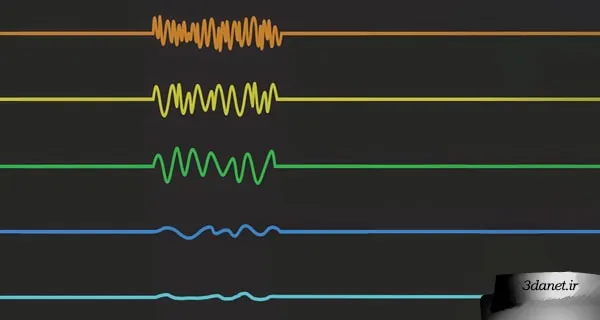
[1] Although other paradigms are also discussed in the philosophy of science, what governs modern empirical science is, in any case, more or less the principles of positivism in its later interpretations.[2] Sleep has five stages: four stages of non-REM (NREM) sleep (without rapid eye movements) and one stage with REM (rapid eye movements). When we are awake and active, the brain emits beta waves. The amplitude of these waves is weak and their frequency is between 15 and 17 cycles per second. When we close our eyes and lie down before sleep, the brain sends out many alpha waves. Alpha waves have a weak amplitude and frequencies between 8 and 13 cycles per second.Stage OneWhen we enter the first stage of sleep, brain waves transition from the alpha rhythm to theta. Theta waves, whose frequency is between 6 and 8 cycles per second, are accompanied by slow eye movements. The conversion of alpha waves to theta waves can induce a hypnotic state. During this period, we see brief hallucinatory images that resemble dream images and are like a vivid photograph. These images are probably related to creativity. The first stage of sleep is its lightest stage. If we wake up during this stage, we will likely feel as if we have not slept at all.Stage TwoAfter 30 to 40 minutes of sleep in the first stage, we descend into the second, third, and fourth stages of sleep. During the second stage, brain waves show a medium amplitude and a frequency of approximately 4 to 7 cycles per second, but they are accompanied by sleep spindles. Sleep spindles have a frequency between 12 and 16 cycles per second and represent brief bursts of rapid brain activity. During this stage, we also experience periods called K-complexes. A K-complex arises from a brief increase in brain activity in response to external stimuli, such as the noise of a book falling to the floor, or internal stimuli, such as a leg muscle cramp.Stage ThreeAbout fifteen minutes later, we enter the third stage of sleep, which is marked by the occurrence of high-amplitude delta wave activity (with a frequency of less than 3.5 Hz). The distinction between the third and fourth stages of sleep is not entirely clear. Stage three has 25 to 50 percent delta activity, and stage four has more than 50 percent delta activity.Stage FourStage four constitutes the deepest stage of sleep, a stage from which it is difficult to awaken. Only a loud noise will wake a person from this stage of sleep, and when they do wake, they are groggy and disoriented. In this stage, delta waves slow down, their number reaches half to two cycles per second, and it is at this moment that they have their greatest amplitude.Stage FiveApproximately half an hour after deep sleep in stage four, we begin the return journey. We pass through each of the stages again until we reach a stage called REM sleep, where REM refers to the rapid eye movements visible under the eyelids and is considered the indicator of this period. During the REM sleep period, the brain produces relatively fast waves with weak amplitude. These waves resemble the waves produced in the light sleep of stage one. REM sleep has also been called paradoxical sleep because the EEG traces observed during the REM sleep period create activity that somewhat resembles the activity of the waking state.During REM sleep, the amount of acetylcholine in the brain increases, but the amount of norepinephrine and serotonin decreases. REM sleep is also deep sleep, meaning we are difficult to wake during this period. Our first entry into stage 4 sleep is usually the longest. As the night progresses, sleep becomes lighter. The REM sleep period gradually increases, and near morning, the last REM sleep period may last half an hour.
.
.
.
PDF file of the article The Prophetic Dream, or the Alpha, Beta, Theta, and Delta Waves of Muhammad (PBUH)
.
.
The Prophetic Dream, or the Alpha, Beta, Theta, and Delta Waves of Muhammad (PBUH)
Author: Mohsen Zandi
.
.


Discussion6 comments
انسان بوده چون جاهل خداش کرده روح داخل او را بود این ولی وصلش سازد با کامل باور نما کار وحی ذاتش مکاو بی حاصل
روح هم که بنا بر غیر مادی بودنش می تواند با عوامل غیر مادی خلقت از فرشته تا خدا ، متصل شود و در رویا یا مکاشفه ، فراتر از ذهنیات و تجربیات پیشین خود ، واجد ادراکات بکر و ناب گردد. مثل رویا های صادقه.
همه این حرف ها درست است. یعنی هنگام خواب دیدن این اتفاق ها در مغز به وقوع می پیوندد. ولی خواب دیدن امری فرا مادی است و در واقع این روح غیر مادی است که خواب میبیند ولی این انفعال روحانی ، کنش هایی مادی نیز دارد. مثل فردی که ناراحت می شود و ناگاه قلبش ، دچار ضربان می گردد.آنکه ناراحت می شود روح است ولی چنین انفعالی در سطح روح، اثرات خاصی در بدن می گذارد. در قضیه رویا و مکاشفه عرفانی نیز چنین است. قطعا مغز ، به عنوان بستری برای فعالیت های مختلف روح در عالم ماده ، با فعالیت های روح دچار برخی اثرات و کنش و واکنش هایی خواهد شد. و این امر ، به هیچ وجه فرامادی بودن رویا یا مکاشفه را نفی نمی کند بلکه تنها شدت اتحاد و یگانگی روح و بدن را برای ما حکایت می کند. برای اثبات روحانی بودن ادراکات انسان هم ، شما را ارجاع می دهم به کتب و مقالات فلسفی مربوط به این امر.
با سلام جناب آقای زندی عزیز، بسیار لذت بردم. ان شاءالله آقای سروش پاسخ درخوری بدهند و از ابهام(های) این نظریه بکاهند. متأسفانه هنوز فرصت نکردم مقاله را با فراغ بال و به طور دقیق بخوانم. دو نکته تقدیم به شما: با این جمله به هیچ وجه موافق نیستم: «اگر چیزی به نام وحی در عالم امکانپذیر باشد؛ ماهیت آن همان است که قرنها مورد پذیرش اکثریت بوده است.» چرا که طبق مبنایی ترین پژوهش های پذیرفته و موجّه در حوزه ی فلسفه ی زبان - با عنایت به مثال مفهوم واقع نشدن سخنی که در پسِ آن ذهن انسانی نیست، با اشاره به مثال شیرِ سخنگوی ویتگنشتاین متأخر در کاوش های فلسفی - پذیرفتنی نمی نماید. صرفاً برای خالی نبودن عریضه توجه شما را به این نکته نیز جلب می کنم، فرمودید: «...و نه حتی تصویر درستی از آن داریم، و نه اصولاً ابطلالناپذیر است (مبنای مورد پذیرش ایشان)...» البته می دانم که «نه اصولاً ابطال پذیر» یا «اصولاً ابطال ناپذیر» مد نظر حضرت عالی است. ولی سروش در برنامه ی پرگار، تلویحاً، و در پاسخ به پرسش های کاربران فضای مجازی، صریحاً، به مبنای لاکاتوشی - و نه پوپریِ - خود در حوزه ی فلسفه ی علم اشاره می کند؛ فضایی که ابطال پذیری در آن مطرح نیست بلکه سیستم های تبیینی مورد اشاره هستند که جایگزین یکدیگر می شوند. امیدوارم بیشتر شاهد مقالات شما در عرصه ی مطالعات دینی باشم. (ایمیل را اشتباه وارد می کنم.)
اینجانب نظر رؤیای رسولانه دکتر سروش را قبول ندارم واعتقاد دارم این نظریه در آینده تبعات منفی بسیار بدی خواهد داشت و فهم ما از قران را دچار انحراف خواهد کرد ولی ایشان به تنهایی در یک طرف ایستاده و همه اساتید و روشنفکران مخالف ایشان در طرف دیگر متاسفانه تمام نقدهای بر ایشان بسیار بسیار ضعیفند گویی عقول آدمیان این عصر توان نقد افکار ایشان را ندارند دکتر سروش با نظرات درست یا غلطشان می توانست تحول عمیقی در وضعیت تفکر این جامعه ایجاد کند ولی صد حیف که با نقدهای ضعیف این امر تحقق نمی یابد
نویسنده محترم این یادداشت چند بار دچار مغالطه شده اند از اشتراک لفظی تا فضل فروشی و خلط امکان و واقع چند بار هم متلک گفته اند گمان می کنم ایشان «خوابیدن» را با «خواب دیدن» آمیخته اند.