Religion
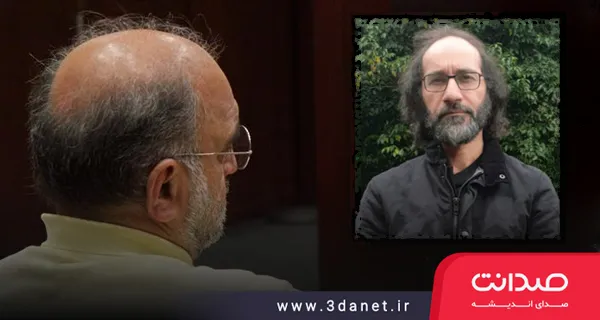
Mohammad Nasr Esfahani's essay “A Profile of Dr. Soroush”
The Qur'an is not merely a 'Book of Fear'; from the outset, the Prophet wielded both the wings of power and love. A critique of Dr. Soroush's recent claim, which commits the fallacy of one-sidedness and overlooks God's loving affection, by Mohammad Nasr Esfahani.
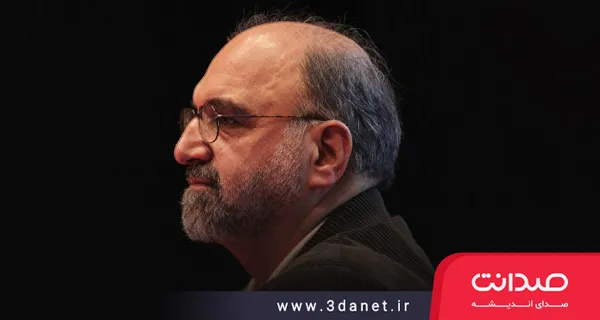
A Profile of Dr. Soroush
Mohammad Nasr Esfahani - 2021/01/05
In his final lecture of 2020, Dr. Soroush stated that he has recently realized two things he had previously overlooked: first, that he had hitherto thought religious knowledge undergoes contraction and expansion at the margins of other forms of knowledge, but he has lately realized that knowledge, including religious knowledge, and indeed religion itself, is constituted and grows in the shadow of power. Power, especially political power, also causes religious knowledge to contract and expand. This is a valid point, and psychologists and sociologists of knowledge not only do not limit the contraction and expansion of knowledge to power, but also consider factors such as climate, geography, tradition, history, and a society's economy as agents in the contraction and expansion, the highs and lows, of knowledge, including religious knowledge.
The second matter Mr. Soroush says he had overlooked and has recently realized is that Islam, and consequently the Quran, had no more than one wing. He says, "Islam lacked one thing, which Sufism gave to Islam." Sufism introduced a reprehensible thing into religious knowledge, and that was the phenomenon of love and affection. This introduction gave Islam another wing. In Dr. Soroush's view, the Sufis were "the discoverers of God's beauty," whereas the Quran was "a book of fear and awe." According to Dr. Soroush, the Quran was the Prophet's experience of fear, and the Prophet, who was the author of the Quran, reflected Muhammad's experience. Although in his view, Muhammad's author was God. Naturally, as Mr. Soroush explicitly states, Muhammad's God was fearsome, terrifying, dreadful, and torturous, who authored Muhammad in this way. Soroush ultimately concludes that the Quran is a "Book of Fear" and the Masnavi and Divan-e Shams are "Books of Love."
The question that must be considered is: what is the connection between the first and second points of Mr. Soroush's realization? The answer is clear. The second point or theory compensates for the contradiction of the first point and theory. The first theory was that Muhammad's God is fearsome and torturous, and consequently, Muhammad, authored by this God, is a ruthless authoritarian who does not shy away from any form of torture, terror, and murder of his opponents. Apparently, Mr. Soroush, following Nietzsche, whose name he frequently invokes, cannot believe that a human being can possess both a will to power and a will to morality. Nietzsche also believed that the law of the Übermensch is the law of pitiless humans. It seems he believes that power and authority, alongside affection and love, are like two parallel roads that never converge. Mr. Soroush ultimately expresses satisfaction that the result of the mystics' inner experience was that Islam, grounded by the grip of power, also found the wing of love and affection so it could soar and fly.
It must be understood that it is not the case that because the Prophet had a will to power, held governance, and his followers followed the same path, he lacked a will to compassion and had no more than one wing, relying solely on the sword. The Prophet possessed both wings from the very beginning and had no need for Sufis to design a second wing for him. Even if he had wanted to, his Wise Author would not have permitted him to compel people, for compulsory faith and religiosity had no value: "And had your Lord willed, those on earth would have believed, all of them entirely. Then, [O Muhammad], would you compel the people in order that they become believers?" (Yunus, 99). Years ago, in an article titled "The Governance of Ethics," this writer addressed these two wings of Muhammad with detailed historical specifics.
Unfortunately, many of our researchers suffer from the problem of the profile, and indeed from the fallacy of "essence and aspect," as if they view religious texts with only one eye and close the other to the rest of the texts. Sometimes they see only mercy and love, as if no fear and awe exist, and sometimes they see only fear and awe, their eye blind to love and affection. It is strange that Mr. Soroush places great emphasis on the point that love-based Sufism had no connection whatsoever to Muhammad, Muhammad's God, or the Quran. As if Muhammad's God, a fearsome being, created Muhammad fearsome so that he would author a fearsome Quran. Thus, we must be immensely grateful to the Muslim mystics who tinted religious knowledge with the hue of love and adorned it with affection; because the Quran was not a book of love and affection. Perhaps it was these love-oriented Sufis who made Muhammad the possessor of a sublime moral character, "a tremendous character" (Qalam, 4), and a mercy to the worlds: "a mercy to the worlds" (Anbiya, 107), and created God as the Most Gracious, the Most Merciful.
The profile that Dr. Soroush has seen is undeniable, but the Quran is not limited to this single aspect. Muhammad, possessed of a sublime character, is meant to extend the mercy of God, the “Most Merciful of the merciful,” to all. The Quran did not come solely for those of a slavish disposition—individuals who will not submit unless they fear hardship, loss, or, as he puts it, tangible and palpable torment—to be merely a “Book of Fear.” The Quran is, at the same time, a “Book of Glad Tidings.” Many people are transactional by nature and will not do something unless it yields a tangible and palpable benefit. The Quran addresses such people in certain verses. The Quran says to them: “So today no soul will be wronged at all, and you will not be recompensed except for what you used to do. Indeed, the companions of Paradise, that Day, will be amused in joyful occupation. They and their spouses will be reclining on couches in the shade. For them therein is fruit, and for them is whatever they request. ‘Peace,’ a word from a Merciful Lord.” (Ya-Sin, 54-58)[1]
But beyond this, the Quran is also a “Book of Love.” If our mystics have written “books of love,” they have seen these very pages of the Quran. In the Quran, God’s wish is presented as the formation of a community whom God loves and who, free from fear and greed, love only God: God will bring forth a people whom He loves and who love Him (Al-Ma'idah, 54). The Quran’s manner of speaking about these human beings is like the speech of a beloved who outlines their desires for their lover to fulfill. For instance, God says that some people love rivals besides God more than they love Him. Others love these rivals as much as they love God, but the believers love God more than anything else: “And among the people are those who take others besides God as equals, loving them as they love God. But those who believe are stronger in love for God.” (Al-Baqarah, 165). Therefore, I love this latter group. I love the pure, for they are pure like Me: “And God loves those who purify themselves” (At-Tawbah, 108). I, who am Himself established in justice, love the one who is established in justice: “Indeed, God loves those who act justly” (Al-Mumtahanah, 8). I love the doers of good, for they are doers of good like Me: “Indeed, God loves the doers of good” (Al-Baqarah, 195). I, who am Himself a being of justice, love the cry for justice of those seeking redress: “God does not love the public utterance of evil speech, except by one who has been wronged” (An-Nisa', 148). I love those who rely upon Me and not upon any other beloved or desired object: “Indeed, God loves those who rely upon Him” (Aal-E-Imran, 159). I love those who persevere: “And God loves the patient” (Aal-E-Imran, 146). I love those who are self-restrained and are not pulled in every direction by their desires: “For indeed, God loves the God-conscious” (Aal-E-Imran, 76). This “Book of Love” also contains a long list of things that God does not want His lovers to pursue, expressed with the phrase “and God does not love.”[2] In addition to the verses, the narrations and supplications are also filled with amorous and mystical literature, which we refrain from citing for the sake of brevity.
In conclusion, the author hopes that all dear ones who are concerned with religion—and I am certain Dr. Soroush is among them—will refrain from hasty and one-sided pronouncements in this critical time of irreligiosity stemming from the misdeeds of religion’s claimants, so that religion may be distinguished from pseudo-religion.
.
.
[1] 24- Surah 50, Verse 34 Enter it in peace. This is the Day of Eternity. 25- Surah 19, Verse 62 They will not hear therein any ill speech—only [greetings of] peace—and they will have their provision therein, morning and evening.
30- Surah 6, Verse 127 For them will be the Home of Peace with their Lord, and He will be their protecting friend because of what they used to do. 37- Surah 10, Verse 25 And Allah invites to the Home of Peace and guides whom He wills to a straight path. 38- Surah 5, Verse 16 By which Allah guides those who pursue His pleasure to the ways of peace and brings them out from darknesses into the light, by His permission, and guides them to a straight path.
[2] And Allah does not like every sinning disbeliever. (Al-Baqarah, 276)
And Allah does not like corruption. (Al-Baqarah, 205) Indeed, Allah does not like corrupters. (Al-Qasas, 77)
Indeed, Allah does not like the exultant. (Al-Qasas, 76)
Indeed, Allah does not like transgressors. (Al-Baqarah, 190)
Indeed, He does not like the wasteful. (Al-An'am, 141)
And Allah does not like the wrongdoers. (Aal-E-Imran, 140)
Indeed, Allah does not like one who is a habitually sinful betrayer. (An-Nisa, 107)
And Allah does not like every self-deluded, boastful one. (Al-Hadid, 23)
Indeed, Allah does not like traitors. (Al-Anfal, 58)
Indeed, He does not like the arrogant. (An-Nahl, 23)
Then indeed, Allah does not like the disbelievers. (Aal-E-Imran, 32)
Indeed, He does not like the wasteful. (Al-A'raf, 31)
.
.


Discussion2 comments
واقعا چطور ممکن است از توی این همه اشاره و توصیه به گذشت و رحمت و رحمانیت چنین دیدگاه بیماری و نگاه paranoidبیرون بیاید از عجیب ترین رفتارهای عاشقان و شدایان خارج ، فرنگستان، عالم برتر است!!! از رنجی که می بریم
نقد جامع و کاملی بود.بهتر است دکترسروش قدری از برج عاج خود پایین بیاید.