Religion
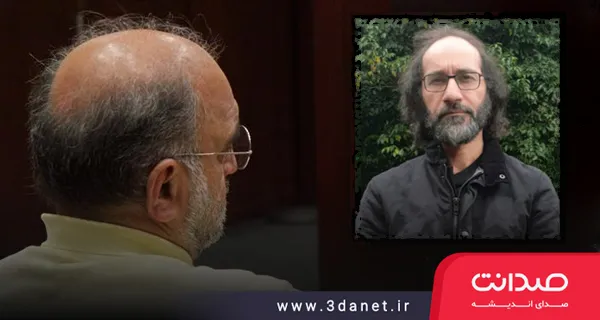
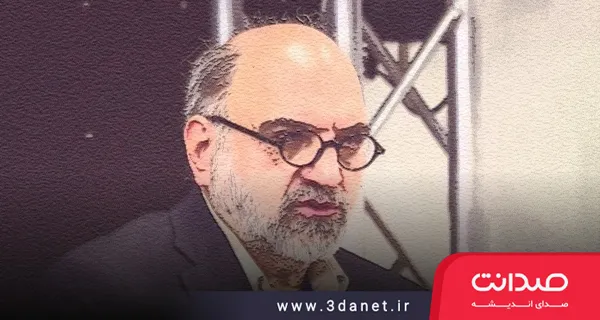
Farhad Shafti: A Reflection on the Recent Conversation with Dr. Soroush on the Theory of Religion and Power
In his critique of Soroush's theory of religion and power, Farhad Shafti takes the Quranic concept of 'completion of proof' (itmam al-hujjah) as his basis, arguing that the Prophet's show of power was not for establishing religion but for carrying out divine punishment after the proof had been completed—an approach that renders such power unnecessary.
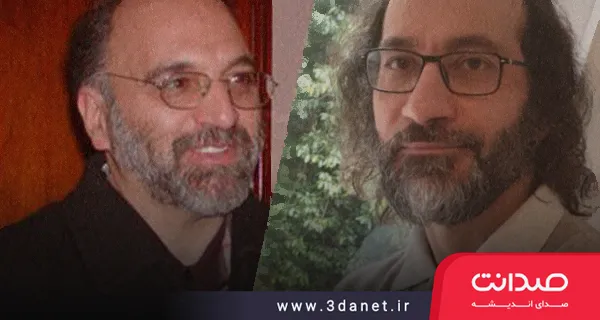
A Reflection on the Recent Conversation with Dr. Soroush on the Theory of Religion and Power
Farhad Shafti
I had the privilege, on the first of Farvardin 1400 (March 21, 2021), in a video meeting with Dr. Soroush and a group of religious studies scholars, to raise some critical points with him. The audio file of this meeting, which includes the conversations of, in order, Farhad Shafti, Forough Jahanbakhsh, Yaser Mirdamadi, and Soroush Dabbagh with Dr. Soroush, has been uploaded to the Telegram channel of the New Perspective Circle.[1] In this short piece, I will endeavor to briefly address the points I raised, Dr. Soroush's responses to these points, and my reflections on his answers. In the questions and critical points of the other friends and Dr. Soroush's responses to them, very valuable and interesting discussions were also raised, but I will rein in my pen and limit this discussion to my own conversation, so as not to enter their arena uninvited and without restraint. Also, before beginning this discussion, I would like to express my gratitude to Dr. Soroush for patiently responding to the critiques and points raised.
In the time given to me, I raised three points: two points were a detailed elaboration and follow-up on discussions from my previous critique of the theory of religion and power (the ultimatum – the story of Moses and the righteous servant), and one point was about the Prophet's relationship with the definition of justice and ethics. I will present the discussions related to these three in the same order they were raised in that meeting and to the same extent in terms of volume:
- Seeking power to establish religion or exercising power in the process of delivering the ultimatum?
In the fourth point of the previous critique I had written, I referred to "delivering the ultimatum" as an alternative explanation for the theory of religion and power, and in an opportunity I had in one of the critical meetings attended by Dr. Soroush, I explained it a little. In the recent meeting, I raised this same topic again, citing some verses of the Quran, and explained how, by taking the theory of delivering the ultimatum as a basis, our understanding of the power displays of religion, the Quran, and the Prophet becomes entirely different from the understanding offered by the theory of religion and power. I did not intend, and in this writing also do not intend, to formulate the Quran's narrative of delivering the ultimatum by citing verses. I am writing this narrative in detail. My intention, however, was to share this point with Dr. Soroush: that for explaining and clarifying the display of power in religion from a Quranic perspective, the basis of delivering the ultimatum is far more documented and consistent than the theory of religion and power.
I emphasized that for explaining this matter, I am setting aside extra-religious and extra-Quranic discussions here. Whether such an ultimatum actually took place and whether such a process was compatible with the justice and ethics of the time has little bearing on this discussion. The only point is to examine, by looking at the Quranic text we have at hand, this book's narrative of delivering the ultimatum as a basis for the discussion of religion and power. I framed the discussion as follows: according to the Quran's narrative, the prophets of the Abrahamic religions, backed by revelation, clearly and demonstrably explain the divine message to their direct audience, and this is what is known among Quranic scholars as delivering the ultimatum. After delivering the ultimatum, according to the Quran's narrative, divine punishment, in the form of nature's wrath or at the hands of the prophet and his followers, befalls the obstinate. Based on the Quran, these obstinate ones are those among the direct audience of the prophets who opposed and fought the prophets solely out of arrogance.
In the Quranic narrative of the ultimatum (itmām al-ḥujjah), the basis of power rests on a fundamentally different ground from the theory of religion and power. On this basis, all the outcomes of the discussion take on a different form and don a different garb. I, too, believe that there was offensive jihad during the Prophet's time, but not to compel opponents to submit, rather to carry out divine punishment after the ultimatum had been delivered. Displays of power are seen in the Quran and at critical junctures in the Prophet's life, but not for establishing religion and out of a desire for the Prophet's personal power; rather, they were for warning the direct addressees and completing the process of the ultimatum and its consequences. One of the important questions some critics of the theory of religion and power raised was: what is the duty today? If Muslims today see the foundations of religion in danger, can they, like the Prophet, use power to re-establish religion? If we consider the basis of power to be the ultimatum, then from my perspective, such a question will not arise, because on this basis, in our time, when revelation has ceased, the process of the ultimatum fundamentally does not begin, so as to lead to an outcome like the exercise of power.
Dr. Soroush's response to the points I raised in this section can be summarized in two points. Since the audio file of his remarks is now available, I am more at ease regarding the faithful conveyance of his response, and I invite those interested to listen to his full response through that medium. In reporting his response, wherever I have used parentheses, it is my own explanation. Dr. Soroush generally agreed with the discussion of the ultimatum, but he challenged my interpretation of some of the verses I presented, and specifically raised the point that, based on his understanding of the verses, and according to one passage in Nahj al-Balagha (Wisdom 88) explaining verse 33 of Surah Al-Anfal, worldly divine punishment for the Prophet's people was ruled out during the Prophet's time. Pointing to verses from the Quran, he concluded that, based on the Quranic narrative, worldly punishment for past peoples was in response to the prayer of those prophets for calamity to descend upon their people, and the Prophet never made such a prayer for his people. Another point he raised was the question: "Ultimatum from whose perspective? From the perspective of the Prophet himself or from the perspective of his addressees?" He stated that because the Prophet's ultimatum could be one-sided, this discussion, in his words, does not fulfill my intention.
There was no opportunity or place for debate, and the basis of this meeting was the flow of topics, not revolving around a single subject. Here, I wish to state that my thoughts on Dr. Soroush's response also boil down to two points. First, I do not concur with his interpretation of the verses I referred to in my discussion, including the point he raised about the Quranic narrative that worldly punishment was contingent upon the Prophet's prayer; however, what he quoted from the saying attributed to Imam Ali and his explanation of some other verses, ultimately, and for the sake of argument (salimtu), negates worldly punishment of a natural (celestial) kind for the Prophet's people. A look at the major Shiite exegetical works shows that this saying attributed to the Imam has not necessarily led exegetes to this definitive conclusion that divine punishment, especially punishment at the hands of the Prophet and his followers, did not apply to his people. Some of these exegetes point to numerous verses that seriously problematize the negation of punishment at the hands of the Prophet and his companions, and even the negation of natural (celestial) punishment for the Prophet's people.
The second and main point, however, is that if we accept the Quranic narrative of the ultimatum, even with differences of opinion about its nature, then in the face of the Quran's and the Prophet's displays of power, we do not necessarily arrive at the theory of religion and power, and we can easily emerge from a different abode. I wish to point out that whether the discussion is intra-religious or extra-religious does not detract from the essence of this statement. From an intra-religious perspective, and with any theory about the nature of revelation, it can be argued that the displays of power in the Quran and by the Prophet were not the essence of religion but a local and historical process based on divine tradition for warning the Prophet's direct addressees. In this intra-religious view, it is evident that the ultimatum, confirmed by revelation, was just and would not be one-sided. From an extra-religious perspective, based on the existing Quran, Muhammad's motivation for displays of power in the Quran and in the attributed sayings was not a desire for power and establishing religion, but the implementation of the same process of the ultimatum that appears in the stories of past Abrahamic religions and with which he was familiar. Whether he acted justly in this ultimatum or not, whether it was one-sided or two-sided, changes neither the motivation nor the basis.
I emphasize the phrase “display of power.” It is indisputable that manifestations of power display are seen in the Quran and some sayings attributed to the Prophet. I do not think this point is disputed among thinkers and scholars of religion. The point of contention, however, is the explanation of this power display and finding its basis. In a number of critiques of the theory of religion and power to date, depending on the author’s field of research, different historical, political, social, and religious foundations have been proposed to explain this power display. I, too, from the perspective of my own field of research, propose the notion of itmām al-ḥujjah (the final, decisive proof) as the Quranic explanation and basis for this power display. I argue that this basis is robust and relevant from both intra-religious and extra-religious perspectives, and there is no need to bypass it and traverse a long and arduous path to base the principle on the essence of religion and the psyche of the Prophet.
As I mentioned above, I will try, in a piece I am currently completing, to present the Quran’s narrative of itmām al-ḥujjah in a reasoned and comprehensively formulated manner.
- The Prophet as the Definer of Justice or the Establisher of Customary Justice?
In the second turn given to me in this session, I read back to Dr. Soroush a statement he had made in one of the recent discussions critiquing the theory of religion and power:
“Look, after the Prophet of Islam came, all Muslims considered his laws just. I am not bringing up the ruling on the apostate here, although they considered that just as well. They all considered it just to put to death someone who commits zinā-yi muḥṣina (adultery by a married person). They all considered it just to eliminate someone who commits sodomy and homosexuality. They all considered it just to eliminate someone who commits murder. They all considered it just to flog and forbid someone who drinks wine. They all considered it just to cut off the hand of someone who steals, and after the fourth theft, to put him to death. Where did this justice that had taken hold in the minds of Muslims come from? It was the Prophet’s definition of justice, which he had deposited in his jurisprudence.”
I was somewhat aware of his views on the contingent nature of ethics. I did not intend to discuss this topic, but I wanted to know what, in his view, the limits and boundaries of the Prophet’s role in defining justice and ethics are. In this part, I pointed out that jurists say that most of the laws of the Sharia are confirmatory (imḍāʾī) and not originative (inshāʾī). That is, the Prophet accepted the existing laws and customs, either completely or with adjustments, and incorporated them into the Sharia. According to what is recorded in pre-Islamic Arab history, cutting off a thief’s hand, and in some Arab tribes, under certain conditions, even punishing zinā-yi muḥṣina, was common. In general, Arab society at that time, like many other societies, was familiar with blood, the sword, and injury, and the penal laws of the Sharia were consistent with this conduct of society. The Sharia that the Prophet brought was spread out and situated upon the moral bed of its time and place. We can say that if the Prophet had been sent from another nation and at another time, the same procedure would have prevailed, and he would have confirmed and incorporated a form of the existing laws and conduct into the Sharia. I asked him, on this basis, can we still consider the Prophet as the definer of justice and ethics?
Dr. Soroush’s response was that this very approval of laws indicates the Prophet’s role in defining ethics and justice, while there were also laws and matters in society that the Prophet did not approve and strongly negated, such as usury (ribā) and certain forms of marriage. He characterized the Prophet’s coming in the Arabian Peninsula as an accidental matter and agreed that, as a rule, if the Prophet had been sent in another time and place, he would have, by the same procedure, brought rulings based on the same laws and current conduct of that society.
Following this response, and based on this response, with which I concurred, I raised this point as the main intent of my question: “So perhaps we cannot say that the Prophet was the absolute criterion for ethics and justice, because he himself established this criterion based on the society to which he was sent and from which he came. Is this statement wrong in your opinion?” Dr. Soroush, in response, confirmed this statement and said: “The Prophet acted according to the justice of the time, and this is precisely what allows us to practice ijtihad (in the principles) ...”
Here it occurred to me that this last statement of Dr. Soroush is a necessary addendum to his earlier remark that I cited above. That earlier remark alone could suggest to the listener or reader that, in Dr. Soroush's view, the Prophet was the absolute standard of morality and justice, but this recent statement that
In closing this piece, I would like to once again thank Dr. Soroush for his patience in listening to my words and responding, and invite interested readers to listen to his full replies. I am certain that he has noteworthy responses to the points I have raised in this writing, and I hope this short piece, among other opinions and critiques, will be useful for the elucidation, analysis, and evaluation of his theory of religion and power. Differences in perspectives and findings have always been a source of blessing and majesty for thought, and will continue until the veil is lifted.
[1] New Perspective Circle / Wednesday, 1 Farvardin 1400 / Listen on Anchor / YouTube / Telegram

Discussion0 comments
No comments yet; let yours be the first voice.