Religion
A Comparison of Dr. Soroush's and Ayatollah Javadi Amoli's Views on Revelation, by Asranews
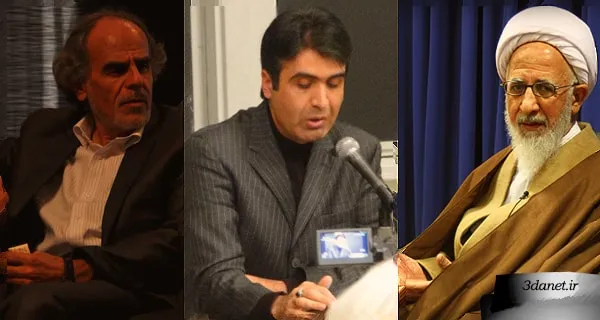
Ayatollah Javadi Amoli considers any intervention by the Prophet in revelation to be illegitimate, whereas Dr. Soroush reads the Qur'an as the account of the Prophet's dreams—possessing a human, dreamlike language. In his view, God is not the speaker; Muhammad (PBUH) is the observer and narrator of his own experiences.
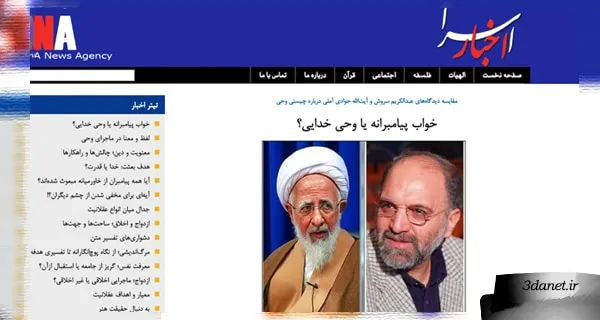
Ayatollah Javadi Amoli, citing certain Quranic verses, considers any intervention by the Prophet in the matter of revelation to be impermissible and recalls the Quranic threats in this regard.
The phenomenon of revelation is one of the most mysterious categories in religion. Many have spoken in the effort to understand it. Dr. Abdolkarim Soroush, however, in an analysis of this mysterious matter in 2013, equated it with sleep and dreams. Soroush has recently elaborated further aspects of his idea in a debate[1] as well.
He believes that to analyze the category of revelation and to explain many Quranic verses, one must undertake a paradigm shift. The paradigm shift that Soroush proposes is a transition from "exegesis" (tafsir) to "interpretation" (ta'bir). He holds that the Muhammadan revelation has a dreamlike, visionary, and auditory nature. The Quran is the narration of the dreams of the noble Messenger of Islam. In his words: "It is as if Muhammad (PBUH) is an observer and reporter who recounts the description of his observations to us, and in this recounting, he is sometimes the speaker and sometimes the listener, sometimes addresses himself and sometimes others, sometimes distances himself from himself and sometimes withdraws into himself, sometimes speaks passionately and eloquently and sometimes coldly and wearily. Sometimes he is at the peak and sometimes in descent, sometimes he transcends history and nature, sometimes he clothes his language and experience in the garb of language and causality, sometimes he speaks in prose and sometimes in verse, sometimes he has a mystical unveiling, sometimes a scientific error, and in all these states, he is both aided by the Holy Spirit and bound by human constraints."[2]
In Soroush's interpretation, Prophet Muhammad (PBUH) is not the addressee and recipient of revelation; rather, he is the narrator of events and dreams that he sees. "It is not the case that Muhammad (PBUH) was addressed by voices and words were recited into his inner ear and he was commanded to convey them. Rather, Muhammad (PBUH) is the narrator of experiences and the observer of scenes that he himself has seen, and there is a great difference between the narrator of an account and the recipient of a report. He was not told, 'Go and tell the people God is One'; rather, he saw and witnessed God in His attribute of oneness and recounts his narration of this observation to us in his own language. He was not told, 'Go and tell the people that God, the angels, and the knowledgeable bear witness to the Oneness of God'; rather, he himself saw and heard the testimony of God, the angels, and the knowledgeable, and is now its narrator."[3] It is with this explanation of revelation that Soroush also reaches the conclusion that the language of the Quran is a human and mortal language. The Quran is directly and without intermediary the composition, experience, effusion, and growth of Muhammad's (PBUH) soul and his language and expression. Muhammad is a human being who is historical, on the path of evolution, and becomes more prophetic with the passage of time. The personal states, mental images, environmental events, social situation, and tribal life of the Prophet (PBUH) influence his experiences. According to Soroush, God has not spoken, commanded, or prohibited anything in the matter of revelation; rather, a historical human being has spoken and written a book on His behalf.
Abdolkarim Soroush believes that with the idea he has put forward, many difficulties in the interpretation of the Quran can be resolved. He even acknowledges that instead of the word "dream" (ro'ya), the term "unveiling" (mokashefeh) can also be used. He states it this way: "The reader may use terms such as unveiling, spiritual event, imaginal world, discontinuous and continuous imagination, the eighth clime, Jabalqa and Jabarsa, and the realm of the malakut instead of the word dream (as has been done), but the author, without opposing them, has deliberately chosen the word dream, firstly to avoid the cumbersome ambiguities of those ancient concepts and their terrifying metaphysics, and secondly to make the truth of Muhammad's (PBUH) prophetic experience more manifest and accessible. There is no human being who has not had a dream and has not experienced dreams many times in their life, unaware of their bitterness and sweetness; therefore, everyone, by referring to their own dreams, can understand something of what transpired for the messengers and mystics in the solitude of vigil, in the depths of unveiling, in the presence of imagination, and in the imaginal world, and can compare the perfect with the imperfect and catch a scent from that hidden garden."[4]
According to Soroush, the Prophet's (PBUH) dream is expressed in common language but requires dream interpretation, and this dream interpretation, although similar to esoteric interpretation (ta'wil), is not the same, and those who have resorted to esoteric interpretation and abandoned the apparent meaning of the text have unintentionally drawn close to dream interpretation. Therefore, although they call the Quran the Word of God, the title "The Dream Book of Muhammad (PBUH)" is more fitting for it, and if the word "dream" seems burdensome, it can also be named "The Unveilings of Muhammad."[5]
Soroush believes that substituting dreams for revelation not only does not diminish its strength and richness, but actually enhances it. For previously, exegetes considered revelation to be the auditory experiences of the noble Prophet, but now it becomes clear that they are his visual experiences. If they used to say that the Prophet heard the news of the Resurrection from God and recounted it to us, we now say he saw the scene of the Resurrection, as well as the jinn, the angel, Satan, the Throne, and the Footstool. If they used to say that God narrated the story of the angels' prostration to Adam and Satan's defiance to the Prophet, we now say the Prophet saw that magnificent scene with his own dreaming eye and recounted it to us—and what a breathtaking image and what a tale full of mystery and subtle points it is.[6]
To explain his theory, Soroush invokes certain modes of Quranic expression. For instance, he acknowledges that the many repetitions in the Quran are something only possible through recurring dreams. That is to say, Muhammad (PBUH) repeatedly saw the same dreams and shared them with his audience. In his words: "As is evident, the noble Prophet of Islam saw Moses (AS) in a dream more than a hundred times, and each time he narrated his story (in more than thirty surahs), he offered a new arrangement of the scene, with both similarities and dissimilarities. An author never repeats something this many times, but a dreamer can see a friend in a dream ten times and recount the story in fragments and with variations.[7]
In explaining the Prophetic Dream, Soroush assigns the primary role to the Prophet Muhammad (PBUH) and removes God from this scene: "It is as if a speaker named God is purely absent from the scene, and the Prophet himself is present, witnessing, reporting, and narrating them. Instead of the proposition in the Quran that Allah is the speaker and Muhammad (PBUH) is the listener, the proposition now established is that in the Quran, Muhammad (PBUH) is the witness and Muhammad is the narrator—and, of course, through God's eye and by God's permission."
Through this explanation, Soroush reaches the conclusion that the Quranic language is not the language of the waking world, and interpretations corresponding to the waking world should not be imposed upon it. "The language of the Quran is not the language of wakefulness; rather, it is the language of dreams, cryptic and symbolic, and of course, a conventional and human language. Equating the language of the Quran with the language of wakefulness is a fatal and monumental error, a dream-interpreter's fallacy. The fire, sun, and stars in the Quran are the fire, sun, and stars of dreams, not real sun and stars. Likewise, in the language of dreams, figurative speech and metonymy have no place; that is, words are not taken in anything other than their literal meanings, and of course, a dictionary is of no use for understanding them—one must employ the method of dream interpretation."
In response to those who consider certain Quranic expressions to be metonymy and metaphor, Soroush also reminds us that "it is not always the case that literary figures resolve and decide to substitute one meaning for another and lend a new garment to an old word (metaphor) to achieve some purpose or desire. Rather, often there is no intention or purpose involved, and the experiencer, without reflection and intuitively, sees one thing as another. This is neither voluntary nor artificial, but a matter of unveiling and vision in the realm of imagination, an experience beyond language. From the shepherd who 'combs God's hair' to a Muhammad who sometimes sees God as the Light of the heavens and the earth, and sometimes as 'a king seated on a throne, and a throne resting on water.' None of these are subjective constructs, nor metonymy, nor metaphor. Neither God nor God's Messenger, Muhammad (PBUH), strained their minds to substitute a borrowed meaning for another to adorn speech and charm the audience, aiding the dim-sighted in discovering the gem of intent. Rather, before the eyes of Muhammad (PBUH), a luminous, majestic king seated on a royal throne was observed in a misty, dreamlike space. The same applies to the story of the heavenly dwellers drinking wine, the hell-dwellers drinking boiling water, the angels having wings, humans being made of clay, the jinn being made of fire, the dead rising from their graves, the infernal tree of Zaqqum, the Quran being a book, and so on. For they are very many."[8]
With this explanation of the category of revelation, Soroush also regards jurisprudential rulings as the result of dreams that the noble Prophet saw and upon which he placed the seal of confirmation. "The truth is that the jurisprudential rulings of the Quran are the product of the Prophet's dream experience and its interpretation. The Prophet of Islam saw spiritual purity, which is a prerequisite for performing prayer, in the form of washing the hands and face in a revelatory dream and commanded it. The same is true of the impurity of wine, pork, blood, and other prohibitions. In other, more familiar words, ends such as purity and luminosity appeared to him in the form of customs and rituals."[9]
Ayatollah Javadi Amoli's Encounter with the Category of Revelation
Grand Ayatollah Javadi Amoli, however, believes that the nature of revelation is different from that of a dream. In the Ayatollah's belief, revelation fundamentally does not fall under any of the quiddative categories so that we might define it through genus, differentia, definition, and description and grasp its reality. Unlike Soroush, who considers revelation to result from the Prophet being influenced and his visions and unveilings, Ayatollah Javadi Amoli does not tolerate such a position. The Ayatollah says in this regard: Revelation is predominantly of the type of knowledge and perception, not of the genus of stimulation and action. Although a person, at the time of action, seeks aid from the channels of thought and reflection, and knowledge and perception are a specific mode of existence that is free from quiddity, even though quiddity accompanies it; therefore, since revelation is a concept derived from "being," it consequently has no quiddity and cannot be defined through genus, differentia, definition, and description.[10]
Ayatollah Javadi Amoli emphasizes the non-human category of revelation and does not tolerate equating the two. In his interpretation: "The Quran itself is a living and eternal witness to the non-human nature of the prophets' revelation, for numerous proofs and evidences indicate that the Holy Quran is not the result of the inner effusion of a human being and the findings of Prophet Muhammad (PBUH)." Some of these evidences can be enumerated as follows:
A: The Quran is a divine miracle because it has challenged all of humanity to produce its like, yet despite the efforts of countless individuals, no one has succeeded in this. The Holy Quran asks all people, if they are in doubt about its being revelation, to bring forth the like of it, ten surahs, or even a single surah, with the intellectual and spiritual collaboration of one another, and ultimately informs of the permanent incapacity and inability of humans and jinn in this challenge: Say, 'If mankind and the jinn gathered in order to produce the like of this Qur'an, they could not produce the like of it, even if they were to each other assistants' (Al-Isra, 88).
B: There are also many verses that indicate the Holy Quran is not the result of human effort and the effusion of the inner thoughts of the Holy Prophet (PBUH), because the Prophet is threatened in some of these verses. Such as these verses: And if he had made up about Us some sayings, We would have seized him by the right hand; Then We would have cut from him the aorta. And there is no one of you who could prevent [Us] from him (Al-Haqqah, 44-47). God Almighty threatens the Prophet that if he fabricates falsehood against God, he will be punished. Therefore, the Quran is a divine revelation and a heavenly book in such a way that all three dimensions of meaning, wording, and its harmony are from the Lord, without any individual, whether the Messenger or anyone else, having any involvement in those three sides.[11] Ayatollah Javadi Amoli's interpretation is that: Fundamentally, the entire miraculous nature of the Quran lies in the fact that the Quran is the Word of God and is in no way attributable to the Messenger of God, although it has been manifested through the tongue of a Messenger who speaks only according to the logic of revelation.[12]
In the Ayatollah's view, revelation is not subordinate to the Prophet (PBUH) but is attributable to God Almighty: "It is clear that the divine speech and the Quranic verses are attributable to the One followed, who is the Almighty Truth, not to the follower, who is Prophet Muhammad (PBUH). It is attributed to the Everlasting God, not to the mortal Muhammad. Because, firstly, revelation itself is beyond the existential limit and capacity of the Mustafawi Prophet. Secondly, God Almighty, who is also not contained within the capacity of the Prophetic being, in a manner considered part of him, though internal without amalgamation with him, has instilled the truth of revelation into the soul of the Messenger. Thirdly, the supreme divine Messenger has also drawn revelation into himself with his entire being, and this is the very meaning and intent of the casting of revelation from outside the existence of the Mustafawi Prophet, because the Messenger is in need of revelation, and a needy essence lacks that which it needs, which it seeks from outside its own existence and identity. From what has passed, it becomes clear that revelation is attributable to the Divine Essence, although it has been manifested through the Prophetic Messenger."[13]
Differences Between Revelation and Unveiling
By equating dreams and unveiling, Dr. Soroush had asserted that what is meant by revelation is the same as a dream or mystical unveiling. Ayatollah Javadi Amoli, however, considers the very nature of revelation to be distinct from a dream or mystical unveiling. He enumerates some of the differences between revelation and unveiling as follows:
1- Mystical unveiling is the fruit of practical effort, an effect of spiritual discipline, or prolonged contemplation, and the entire doctrine of the people of the spiritual path recommends the acquisition of these preliminaries. This is unlike revelation, which requires no spiritual discipline.
2- The recipient of revelation, in that very state, has a presential awareness of the sender of the revelation, that is, God Almighty, and has complete trust and certainty that the revelation is from Him. For this reason, he feels tranquility; unlike the unveiling and intuition of the mystic, who has no awareness of its source.
3- In mystical unveilings, there is a possibility of error and of Satan's involvement. Because mystics sometimes see their observations in the connected imaginal realm and sometimes in the disconnected imaginal realm; therefore, a criterion and measure is needed to separate correct, divine observations from false, satanic ones. This is unlike the revelation of the prophets, which is free from any kind of error or mistake, and the divine prophets consistently report from the disconnected imaginal realm.[14]
Quranic Repetitions
Dr. Soroush had also acknowledged that the Quranic repetitions are evidence that the Prophet (PBUH) had repeated observations in his dreams and shared them with others. However, Ayatollah Javadi Amoli considers the Quranic repetitions to be indicative of Divine Wisdom. In his belief: "God is Wise and He also introduces the Quran as wise. Therefore, the Quran is far from idle talk and is purposeful, and its important goal is to make human beings rational so that, in its shadow, they may achieve the ultimate goal, which is the guidance of humanity, and to reach this, it has used various methods such as repetition, etc."[15]
Repetition in the Holy Quran is because the Quran is a book of light and guidance, and in the station of guidance, it is necessary for a single matter to be expressed on every occasion with a specific language so that it possesses the characteristic of admonition, unlike scientific books where each matter is stated in only one place and its repetition is not beneficial. The secret of the necessity of repetition in a book of guidance is that Satan and the commanding self, which are agents of misguidance and torment, are constantly engaged in leading humanity astray and misleading them, and although their work sometimes diminishes, it is never abandoned; hence, the repetition of guidance and direction is essential.[16]
Ayatollah Javadi Amoli also counts the Quranic repetitions as a means for facilitating the understanding of weighty teachings and states explicitly that: "To facilitate the understanding of weighty teachings, the Quran has used parables and stories, and it has narrated true stories selectively and in the best ways with the aim of providing the core lesson and deriving admonition. And any story that contains a greater lesson for admonition, it has repeated."[17]
Conclusion
By proposing the theory of prophetic dreams, Dr. Abdolkarim Soroush seeks to remove some of the difficulties in understanding the Quran. For this important task, he draws upon an idea to make Quranic concepts compatible with common understanding. He has repeatedly emphasized that knowing the nature of revelation, as the ancients described it and drawing upon difficult concepts like the connected and disconnected worlds, or the worlds of Jābalqā and Jābalṣā, does not untie any knots. But the theory of dreams and sleep is something that can be understood by the general public; because all human beings are familiar with sleep and dreams and can experience and comprehend them. Ayatollah Javadi Amoli, however, in explaining the category of revelation, does not consider it to be of the nature of unveiling or dreams, and believes that the nature of revelation is completely distinct from human dreams and mystical unveilings. In the belief of Ayatollah Javadi Amoli, Quranic revelation is accompanied by teachings that are presented from a transcendent world. Revelation is like a rope whose end is in the unseen world and whose other end is presented in the written form of the Quran. Therefore, from its beginning to its end, it is entirely attributed to the Essence of the One, and neither did any interference on the part of the Prophet take place in it, nor does he have the power to make any alteration in it. Citing a number of Quranic verses, Ayatollah Javadi Amoli considers any intervention by the Prophet in the matter of revelation to be impermissible and recalls the Quranic threats in this regard.
Abdolkarim Soroush, citing certain Quranic features such as the frequent repetitions in the Quran, believes that the Prophet's recurring dreams caused numerous verses to be recounted repetitively in the Quran. Ayatollah Javadi Amoli, however, considers these repetitions to be a sign of Divine wisdom in the expression of His Word. Ayatollah Amoli also emphasizes that mystical unveilings cannot replace divine revelation. In other words, the nature of divine revelation is incomparable to any other phenomenon. It can neither be measured in the mold of unveiling, nor can a dream be considered a rival to divine revelation.
.
.
[1]Debate between Abdolkarim Soroush and Abdolali Bazargan on BBC's Pargar program
[2]Abdolkarim Soroush, Muhammad, the Narrator of Prophetic Dreams (5), He Descended from the Heavens One Night.
[3]Abdolkarim Soroush, Muhammad, the Narrator of Prophetic Dreams (1)
[4]Ibid.
[5]Abdolkarim Soroush, Muhammad, the Narrator of Prophetic Dreams (5), He Descended from the Heavens One Night
[6]Abdolkarim Soroush, Muhammad, the Narrator of Prophetic Dreams (2), Ahmad's Dream is the Dream of All Prophets.
[7]Ibid.
[8]Abdolkarim Soroush, Muhammad, the Narrator of Prophetic Dreams (4), The Cessation of Sharia and the Impossibility of Prophethood
[9]Ibid.
[10]Ayatollah Javadi Amoli, Thematic Exegesis of the Holy Quran, Vol. 3, (Revelation and Prophethood in the Holy Quran), p. 53
[11]Ayatollah Javadi Amoli, Revelation and Prophethood, p. 112
[12]Ibid., p. 123
[13]Ibid., p. 161
[14]Ayatollah Javadi Amoli, Thematic Exegesis of the Holy Quran, Vol. 3, Revelation and Prophethood in the Holy Quran, pp. 91-105; also Exegesis of Human to Human, pp. 94-97
[15]Ayatollah Javadi Amoli, Tasnim Exegesis, Vol. 1, pp. 44-52
[16]Ibid., pp. 51-52
[17]Ayatollah Javadi Amoli, Quran in the Quran, p. 299
.
.
Source: Esra News Website | 1395/02/21
.
.

Discussion5 comments
درمقاله فوق از قول ایت الله جوادی املی گفته شده که تفاوت وحی با رویا دراینست که گیرنده وحی به فرستنده وحی توجه حضوری دارد ویقین واعتماد کامل دارد ولی در رویا چنین نیست ودر رویا احتمال خطا واشتباه هست ولی در وحی چنین نیست ایه 92 سوره یونس میگوید فان کنت فی شک مما انزلنا الیک فسئل الذین یقرون الکتاب من قبلک اگر در انچه بر تو نازل میشود شک داری از دانشمندان اهل کتاب بپرس توجه میکنید قران به پیامبر میگوید اگر تو شک داری برانچه به تو نازل میشود پس معلوم است که پیامبر بر وحی که به او میرسیده شک داشته واین با یقین واعتماد کامل وتوجه حضوری که جوادی املی ادعای انرا دارد همخوانی ندارد همین سوره درادامه ایات میگوید که ای پیامبر چنانچه از تکذیب کنندگان باشی از زیانکاران خواهی بود ! این ایات بدرستی نشان میدهد که یقین واعتماد کامل حتی درپیامبر هم نبوده است مسئله ی بعدی اینست که قران به هرصورتی نازل شده همه اش به یک روش بوده است اینطورنیست که بعضی ایات بصورت خواب بوده باشد بعضی ایات توسط جبرئیل بصورت شنیداری باشد وبعضی ... قران در سوره اسرا ایه 60 میگوید وما جعلنا الرویا التی اریناک الا فتنت للناس والشجرت الملعونه فی القران ونخوفهم فمایزیدهم الا طغیانا کبیرا واذ قلنا للملائلت السجودو لادم فسجدو الا ابلیس قال ئ اسجدو لمن خلقت طینا وما رویایی به تو نمایاندیم که برای ازمایش مردم بود ودرخت نفرین شده ای درقران بود که جز برای ترساندن مردم نبود ولی سبب سرکشی وطغیان بزرگ انها شد وبه ملائک گفته شد ادم را سجده کنند همه سجده کردند مگر شیطان او گفت چیزی را سجده کنم که از خاک افریدی اینجا کاملا قران صراحتا میگوید که داستان ادم وحوا ودرخت نفرین شده که نمیایست به ان نزدیک میشدند یک رویا بوده است وبصروت رویا به پیامبر عرضه شده است با توجه به یکسان بودن نحوه نزول ایات میتوان نتیجه گرفت که مابقی ایات را نیز پیامبر بصورت رویا دیده باشد
اقای خداجو با سلام باید به عرض برسانم که وقتی شما میگویید خدا اراده تکوینی کرده که انسان بتواند با اراده خودش بهاراده تشریعی خدا وند تن بدهد یا ندهد این تفویض است یعنی خدا تفویض اراده واختیار کرده که انسان تصمیم بگیرد وعمل کند در حالیکه شیعه معتقد به لا جبر ولا تفویض والامر و بین الامرین میباشد خاصه وحدت وجودیان که تحقق اراده انسان را بدون اراده خداوند ممکن نمیدانند واراده انسان را درطول اراده خداوند میدانند اتفاقا به همین دلیل است که دکتر سروش میگوید خدا در اشویتس همه کاره بود حضور داشت وهمه کاره خدا بود البته ایت الله حسن زاده املی وصمدی املی وبسیاری از بزرگان دیگر هم براین عقیده هستند گرچه تعیین مصداق نکرده باشند حتی بعضا بر همین اساس شمر ویزید را هم مستوجب عذاب نمیدانند چون معتقدند انها هم نقش خود را در صحنه هستی ایفا کرده اند علت اینکه دکتر سروش فاعلیت پیامبر را در قران منظور میدارد تناقضاتیست که در قران مشهود است که این تناقضات نه منحصر به ایات متشابه بلکه در محکمات نیز تناقضات دیده میشود بنابراین دکتر سروش با فاعلیت پیامبر به عنوان یک انسان خواسته به گونه ای پاسخگوی تناقضات قرانی باشد که هرگز پاسخی دریافت نکرده بود اگر بخواهیم قران کلمه به کلمه از طرف خداوند بدانیم انگاه باخطاهی علمی قران وتناقضات قرانی چه خواهیم کرد ؟
باسلام از سایت وزین صدانت توقع میرفت در طرح ادله آ.جوادی آملی برای دوری از مغالطه پهلوان پنبه، با رجوع به خبرگان آشنا با مبانی ایشان، به مسیر انصاف ملتزم بماند. ممکن است نویسنده به هردلیل با آ.جوادی موافق نباشد، اما این روایتی که از ایشان آورده حتی کودکان دبیرستان را هم قانع نمیکند، چه برسد به فیلسوفی که از سوی جامعه علمی حوزوی (که خود د.سروش درباب ارزشمندی و قوت تحلیلی این سنت اخیرا در بحث حول آ.خمینی حق مطلب را ادا کرد)، رئیس یا از روسای فلسفه صدرایی معاصر دانسته میشود! کتاب وحی و نبوت ایشان برای آشنایی خوب است اما کافی نیست بلکه توضیح بیشتر و فنی تر در دروس الهیات بالمعنی الاخص و مباحث علم النفس رحیق مختوم ایشان باید پیگیری شود. شاید بفرمایید به جای این همه توضیح، چرا خودت ادله ایشان را نمی آوری، در جواب عارضم که بنده هم مطمئن نیستم مبانی ایشان را به خوبی دریافته باشم و اگر دقت بفرمایید تذکر من کاملا پیشین بود نه پسین. فقط این را میتوانم عرض کنم که تا آنجا که من دریافته ام آ.جوادی هم مثل د.سروش معتقد است قوای درونی پیامبر، صورتگری وحی را به عهده دارند. این را در کتاب فوق الذکر توضیح داده است. تفاوت اساسی او با د.سروش این است که آ.جوادی معتقد است قوای متخیله و متصرفه پیامبر خارج از اراده باری تعالی عمل نمیکنند بلکه تمام فعلیت و فاعلیت آنها تحت تدبیر و ربوبیت تکوینی خداوند در کار میشوند. لذا صورتها نیز همچون بیصورتیها کاملا وحیانی، لاهوتی و مقدسند، نه ناسوتی، بشری و عرفی. شاید بفرمایید مگر نزد حکمت متعالیه، فعل و انفعالی خارج از اراده باری هست که رویداد وحی از این حیث متفاوت باشد؟ عارضم که نزد ایشان میان دو اراده تکوینی و تشریعی حق تعالی تفاوت گذاشته میشود. آنچه برای احدی تخلف از آن ممکن نیست، اراده تکوینیه است (تعبیر قرآنی کُن فیکون) اما در اراده تشریعیه، اراده خداوند از مجرای اراده آدمی محقق میشود، یعنی او اراده تکوینی کرده که انسان بتواند با اراده خودش به اراده تشریعی خداوند تن دهد یا ندهد: فَمَنْ شَاءَ فَلْيُؤْمِنْ وَمَنْ شَاءَ فَلْيَكْفُرْ. نقطه اساسی این است که آ.جوادی اگرچه محتوای وحی را حاصل اراده تشریعیه حق تعالی میداند اما معتقد است فرایند نزول وحی تحت سرپرستی اراده تکوینیه خداوند محقق میشود، لذا جایی برای مداخله شخصیت پیامبر باقی نمیماند، و نتیجتاً از این حیث از سایر افعال انسانی، متمایز میشود. حال سوالاتی از این دست که این مفاهیم در باب خداوند معنای محصلی دارد یا ندارد، با اختیار و فضیلت نبی تعارض دارد یا ندارد و... نیازمند بحث و فحص عمیق فلسفی است که از عهده بسیاری همچون من خارج است. مشتاق نقد و نظرات عالمانه دوستان هستم. بدرود!
آیتاللهالعظمی جوادی آملی اما بر این باور است که جنس وحی، متفاوت از رؤیا است. به باور آیتالله، وحی اساساً تحت هیچ مقولهای از مقولات ماهوی قرار نمیگیرد تا آن را از طریق جنس و فصل و حد و رسم تعریف کنیم آیتالله در این زمینه میگویند: وحی غالباً از سنخ علم و ادراک است، نه از جنس تحریک و عمل. هردو سخن از آقاي جوادي آملي نقل شده و به نظر مي رسد با هم قابل جمع نباشد اگر وحي تحت هيچ مقوله اي قرار نمي گيرد پس چگونه وي را از جنس علم و ادراك دانسته اند؟
جنس وحی از (جنسِ وجود و هستی) است و نه از( جنسِ ماهیت). وحی تحت هیچ مقوله ای از مقولاتِ ماهوی قرار نمی گیرد. وحی از جنس "علم و ادراک" است زیرا در( اتحادِ عالم و علم و معلوم) همه تحت لوای" وجود" قرار می گیرند ونه "ماهیت". در نتیجه : علم و ادراک جزء" وجود" محسوب می شوند و نه "ماهیت"... در سخنان آقای جوادی آملی تناقضی دیده نمی شود!