Religion
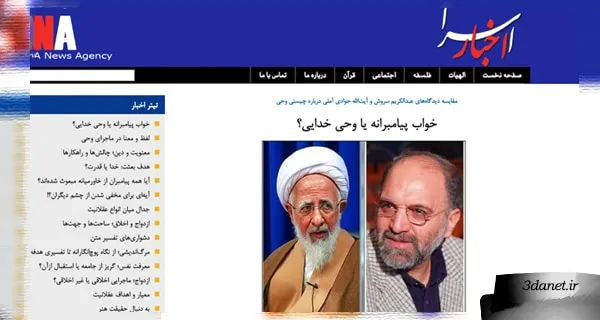
Asra News Compares the Views of Certain Intellectuals with Ayatollah Javadi Amoli on Marriage
Malekian considers marriage an unethical institution and Naraghi views it as an optional lifestyle; in contrast, Ayatollah Javadi Amoli holds that the purpose of nikah is the preservation of the human species and the upbringing of righteous children, not the pursuit of pleasure.
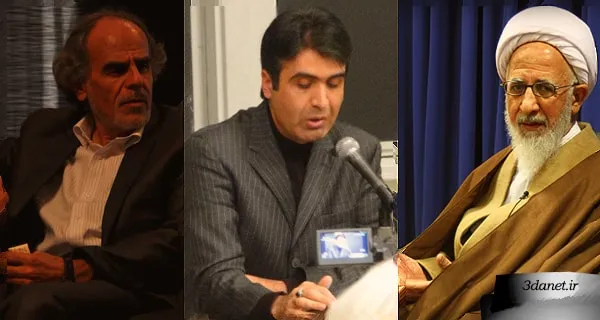
Marriage is an affair that has existed since the dawn of humanity. Its forms, customs, and traditions have undergone transformations throughout history, but the essence of this matter has never been called into question. In the contemporary era, too, discussions concerning this weighty human institution have arisen and have also penetrated our land.
An Unethical Institution
Some time ago, Mostafa Malekian, by putting forward an idea about marriage, deemed this act unethical. Enumerating his reasons, he believed that marriage is an unethical institution, and those who are concerned with moral issues should not enter into this matter. Malekian's arguments, in brief, were as follows.
1- Marriage is sustained by feelings, emotions, and passions, and feelings, emotions, and passions are the most involuntary part of our being. Then, in the institution of marriage, we want the most involuntary part of our being to be brought under the spur of law, clauses, and articles, and this is quite meaningless and will have negative moral consequences.
2- In marriage, since it is morally assumed that one must marry for love, and love is a two-sided affair, therefore, if a characteristic in me changes, or a characteristic in my beloved changes, or in both of us changes, love will undoubtedly wax and wane. Love is sustained by both parties. Where it waxes, no problem arises, but where it wanes, it causes you, in marriage, if you act upon fidelity, which is your moral duty, to have to continue your life with this person, but this is incompatible with "natural inclination," which is also our moral duty. Why should we create an institution that creates a conflict between two of our moral duties?
3- For the very same reason you fell in love with this individual, you might fall in love with another person in the future, and that love might intensify over this one. Then, by what reasoning can your right to live with that person be taken away? Why should we do something that causes commitment to a former spouse to conflict with love for another person? Let us not create an institution that generates this problem in the first place.
4- A person's mental health, the provision of which is a moral duty of a human being, requires privacy, and marriage takes privacy away from you. That is, for your mental health, you need to have privacy for yourself. Privacy means that I must, at certain moments, for certain instants, spend time in solitude as I wish, and this abandonment and solitude is always deprived in married life.
5- You and your partner are only common in loving and being beloved, but you differ in all other characteristics. Now, if this difference manifests in practice, what is to be done? Suppose you love cinema and detest theater, and your spouse loves theater and detests cinema, and you want to go out together; this is an easy matter, and if you want to be very reasonable and act morally, you say, you go to your theater and I will go to my cinema. So far, there is no problem, but what if it is an issue where one cannot say, I will go my way and you go yours? For example, we want to buy a house. I want to buy a house in a neighborhood that has clean air but lacks social prestige, but my spouse wants to have a house in a neighborhood that has social prestige but very polluted air. Can one say here, you buy your house and I will buy mine? The problem is precisely that if I want to preserve my spouse's right, I must sacrifice my own right, and if I want to preserve my own right, I must sacrifice my spouse's right. We might resolve the conflict in such cases, but gradually, psychologically, you come to the conclusion that I am purchasing this person's love at a high cost. The cost is that I forgo my own desires[1].
Malekian emphasizes that a faithful life must possess desirable quality, not multiplied quantity. If the quality of life declines, it is not worth living[2]. By expounding these arguments, Malekian considered entering into the arena of marriage an improper and unethical act.
Lifestyle as a Choice
Arash Naraghi also views the matter of marriage from a different perspective and does not consider it recommendable to others. He believes that: In traditional thought, "celibacy" is a temporary and transitional stage in an individual's life. The single person must sooner or later marry in order to "settle down." That is, it is as if celibacy is a kind of unsettledness. And if the period of celibacy is prolonged, a negative suspicion falls upon the single person. It is as if a natural and ethical life is only attainable by passing through the transitional stage of celibacy. At best, one should pity the single person. By depicting this traditional view, Naraghi believes that: One of the characteristics of the modern era is that public culture gradually recognizes celibacy not as a temporary, unnatural, unethical, or pitiable stage, but as a kind of lifestyle. People's lifestyles differ according to their natures. Some people flourish alongside a spouse and children, while some people find peace and tranquility in their desired solitude[3].
Based on these two views, the category of marriage has been looked upon in an unethical framework and is considered a completely personal and individual act.
The Difference Between Nikah and Marriage
Ayatollah Javadi Amoli, however, by shifting the perspective on the category of marriage, sees the flaws of these aforementioned types of views in their failure to recognize the purpose of marriage. He states that one must not imagine that nikah is for you to derive pleasure. No, marriage is like eating food. Some imagine that eating food is for deriving pleasure, but the truth is that eating food is for staying alive. Marriage, too, is for the preservation of humankind. In eating food, there is also a pleasure obtained, but that pleasure is not the goal. Those who consider eating food as the goal overeat, whereas eating food is for the purpose of staying alive, but some, due to a lack of awareness of the purpose of eating food, endanger their own lives as well. The one who does not understand why humankind must eat food overeats. The one who does not understand why humankind needs nikah pursues debauchery. It is stated in the Quran that you should be mindful of your food, be mindful of your private parts. Do not imagine that this nikah is for you to derive pleasure. This nikah is for the preservation of the human species. The same applies to the matter of nikah; it has been established to preserve the foundation of families and to raise righteous children. It seems that in Malekian's view, the central focus in the discussion of marriage is based on pleasure, and the failure to achieve this pleasure has led to the ruling to abstain from marriage[4].
Ayatollah Javadi Amoli also draws a distinction between “marriage” (ezdevāj) and “wedlock” (nekāh). There is a verse in the Quran that refers to marriage: “The Originator of the heavens and the earth, He has made for you from yourselves, mates, and among the cattle, mates…” (Shura/11). In the Holy Quran, when God mentions ordinary human beings, He divides blessings into two categories. He allocates some blessings to humans and others to livestock and animals. For instance, He says that when you wish to eat fruit, eat some yourselves and give some to the animals. But whenever God wishes to speak of knowledge and the rational sciences, He states that these are the words of the learned and the angels. A luminous saying is narrated from Imam Sajjad (AS), stating that it suffices for the virtue of knowledge that God mentions it alongside the angels. Thus, when it comes to knowledge, the human being is on a par with the angels, but when it comes to economics and eating, the human being is placed on a par with animals. We have one thing called marriage (ezdevāj) and another called wedlock (nekāh), and the fact that God, in this verse, places human marriage alongside cattle points to this very matter. For marriage, which is the union of male and female, exists in all animals, and whoever pursues this union, his act and his marriage are animalistic, and it is natural that the product of such a marriage will not be a righteous child. This is while the Prophet (PBUH) says, “I have brought wedlock (nekāh).” That which, if a person performs it, completes half of his religion is wedlock (nekāh), not marriage (ezdevāj). Thus, this wedlock is very different from that marriage, and therefore, if someone, in wedlock, covets upon hearing the voice of a non-mahram, there is a disease in his heart[5]. Malekian, in his third reason, had said that love for another person might occur during one’s lifetime. Ayatollah Javadi Amoli, however, explains this issue by distinguishing between marriage and wedlock. He considers wedlock a superior act and regards the recommendation of religion as being directed toward wedlock. In wedlock, the suspicion of falling in love with another does not arise, because its goal is not worldly pleasures and gratifications.
Ayatollah Javadi Amoli then rules on the ethical nature of the marriage affair and considers it the central locus of affection and mercy. Regarding the issue of dowry (mahr), which he deems a non-ethical practice, he states that the dowry is a symbol of an ethical matter: the dowry affirms the wedlock and is a sign of “sincerity” and “fidelity.” For this reason, it is called “sedāq” (dowry, from the root meaning truthfulness). The word “nihlah” in the noble verse “And give the women their dowries as a free gift” (4:4) also means a gratuitous gift, and the expression of dowry as nihlah is because the dowry is a divine gift that God, the Glorified, has made obligatory upon men to bestow freely upon women. The subtle expressions “sedāq” and “nihlah” demonstrate the courtesy and modesty in the divine speech, as well as the honoring and veneration of women and their chastity, so that no one imagines that the sacred matter of wedlock is a form of buying and selling, and that the woman places herself at the husband’s disposal in exchange for the dowry. In wedlock, the woman does not transfer ownership of anything to her husband for the dowry to be in exchange for it; rather, the dowry is a divine gift that, by God’s decree, the husband must pay to the wife, and it is gratuitous, not in return for something. In Ayatollah Javadi Amoli’s expressions, the family is the sacred center and the core nucleus of society, which is sustained only by its two main pillars, affection and mercy (“…and He has placed between you affection and mercy…” – Rum/21), and not by other titles. And this is the pinnacle of an ethical affair.
.
.
Footnotes:
[1] : Sedanet’s conversation with Mostafa Malekian on marriage, the rights and duties of children and parents
[2] : Mostafa Malekian's completed view on marriage
[3] : Quoted from Arash Naraghi's personal Facebook page
[4] : Marriage in the view of Allameh Javadi Amoli
[5] : Ayatollah Javadi Amoli explained: What is the difference between marriage and nikah?
.
.
Asra News' comparison of the views of certain intellectuals with Ayatollah Javadi Amoli on marriage
Source: Asra News website
.
.
Discussion7 comments
بماند که نظرات آقای ملکیان به درستی نقل نشده. اما خود اصل حرف های آقای ملکیان، آقای نراقی، و آقای جوادی آملی همگی به نظرم خام هستند و هیچ کدام نمی توانند به خوبی چنین واقعه ای را تبیین کنند چه برسد به این که مسائلش رو تبیین کنند.
نظر به اینکه برخی سخنان نقل شده از استاد مصطفی ملکیان در باب ازدواج، که به صورت ناقص و ناتمام صورت گرفته، سوء تفاهماتی را باعث شده است؛ در جهت رفع سوءبرداشت ها، فایل صوتی توضیحات استاد ملکیان درباره دیدگاهشان در مورد ازدواج در اینجا منتشر میشود. (تاریخ ایراد این سخنان هفتم تیرماه 1392 میباشد.) https://neeloofar.org/mostafamalekian/dialogue/857-22793.html
حرف های جناب ملکیان نهایتا ردیه ای بر مبانی کلامی خودشان در باب حکمت الهی خواهد بود .توصیه به عمل غیر اخلاقی توسط حکیم با حکمت (به معنایی که ملکیان در اثارش پذیرفته)سازگاری ندارد ... بگذریم که در استدلالاتش سراسر ترویج خودخواهی به اسم اخلاق میکند ( اگر در یک مسالهای بود که نشود گفت من میروم راه خودم را و تو برو راه خودت را چه؟ مثلا م خواهیم خانه بخریم. من میخواهم خانهای را بخرم...) ...روشنفکری عجب اسان شده
باسلام وارزوی توفیق.اگر بنا بر انعکاس ایده ونظرات افراد است خوب است که بدون جانبداری ویا عامدانه نقل قول کردن دیدگاه های افراد باشد.بنظر من این شیوه بدترین نوع دفاع و ترویج یک نگاه است.وحتی عوض آنکه خواننده را جذب دیدگاه نزدیک به شما کند از آن دور کرده وجیهه خواهد گرفت.به علی ابتدا کنیم.
اگر نظر آیت الله در پاسخ با ملکیان و نراقی میباشد کاملا بی ربطه اما اگه نظریه در کنار دو نظر دیگر جای بحث نیست
آراء استاد جوادی آملی بیشتر جنبه آسمانی انسان را در نظر گرفته تا دو نظر دیگر.
آرا جوادی آملی اصلن شبهات ملکیان و نراقی رو پاسخگو نبود و ساز خودش را میزد