Philosophy
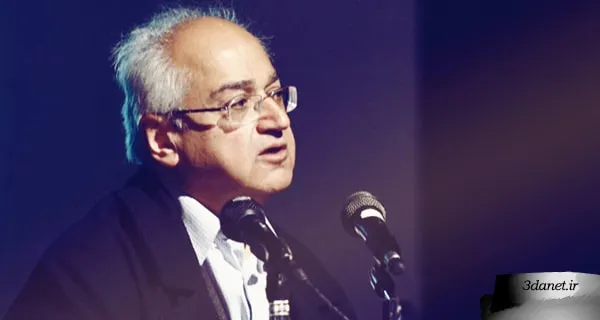
An Introduction to the Philosophy of Language: A Lecture Series by Morteza Sedaghatzadeh Ahangari
Morteza Sedaghatzadeh Ahangari’s lecture series on the philosophy of language, centered on Michael Morris’s book, examines concepts such as meaning, reference, and truth. It analyzes the theories of Locke and Frege on the unity of the proposition, sense and reference, and the relation of ideas to external reality.
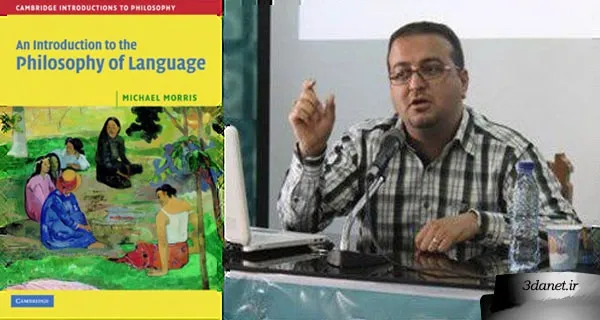
The philosophy of language is one of the important currents of analytic philosophy, which holds that philosophical content is explicated through linguistic action, and in philosophical inquiry, it pays special attention to the uses of words associated with philosophical concepts. The problem of truth, reference, meaning, necessity, and other such issues are the subjects of study in the philosophy of language. The following series of sessions comprises the lectures of Dr. Morteza Sedaghatzadeh Ahangari at Amirkabir University of Technology in the academic year 2013-2014, presented around Michael Morris's book.
.
.
Session One of the Philosophy of Language Lecture Series
Audio of this Session – Text of this Session
Topics Discussed:
1_ The textbook and further resources for study
2_ An overview of the book's chapters and content
.
.
Session Two of the Philosophy of Language Lecture Series
Audio of this Session – Text of this Session
Topics Discussed:
1_ Locke's theory in the philosophy of language
2_ The philosophy of language, meaning, and reference
In the philosophy of language, there are two discussions: one is the discussion of meaning, and the other is the discussion of reference. Meaning can, in fact, be both the meaning of something and the meaning of a set of descriptions. The meaning of Socrates can be the descriptions of Socrates that are true of him, and it can also be the external person of Socrates. Of course, not necessarily a concrete object, but abstract Platonic objects can also be intended. However, the referent or denotation is not always an object and can sometimes be a property, depending on the word. For example, the referent of greenness is a property, but water is a thing, yet it does not have a single instance; it has numerous instances, but its denotation or referent is the property of being water, H2O. Of course, one cannot say essence, because not everyone accepts essence. According to the doctrine of essence, there must be something that makes water water in all possible worlds. Kripke considers scientific structure to be the essence and attributes all the properties of the thing to it. Some do not accept essence and hold that no property is necessary for anything. Of course, Kripke's essence is scientific, but Aristotle's essence is not scientific.
.
.
Session Three of the Philosophy of Language Lecture Series
Audio of this Session – Text of this Session
Topics Discussed:
1_ A detailed examination of Locke's eight principles Ways to correct Locke's view
2_ The cosmological basis of the concept theory and its comparison with Locke's view
3_ An examination of the relationship between Locke's view and the common view with idealism and realism
The process of conceptualization also exists in a child's language acquisition. The child is constantly trying to understand what word others equate with what thing and concept. That is, the child initially has their own perception, but is constantly modifying and adjusting this perception and bringing it closer to the perception of others. And one of the mental disorders in children occurs in families where several languages are spoken. Typically, children in these families begin to speak later. Hence, many of a child's conversations are not for fulfilling their material needs, but for receiving feedback from others.
.
.
Session Four of the Philosophy of Language Lecture Series
Audio of this session – Text of this session
Topics discussed:
1. Continuation of objections to Locke's theory 2. Frege's account of the unity of the sentence 3. Frege, logic, and the philosophy of language 4. The discussion of sense and reference in the philosophy of language
There are two discussions in the philosophy of language that can be conflated: one is the discussion of sense, and the other is the discussion of reference. Some, like Mill, consider these two to be one, but they are usually separated. Some, like Kripke, prefer not to talk about sense because its very existence is questionable, but they do discuss reference. After the discussion of reference comes the discussion of sense, which is a foundational discussion. Because, to some extent, the existence of sense is a presupposition of reference. In the discussion of sense, some hold that sense does not exist and reduce sense to use, while of course trying to preserve semantic realism as well. What is meant by semantic realism is that when we say something, we are saying something about something. However, one need not necessarily have a semantic fact either, meaning one should not search for sense in the external world. We do not have semantic facts, but we do have semantic realism, and the former does not preclude the latter.
.
.
Session Five of the Philosophy of Language Lecture Series
Audio of this session – Text of this session
Topics discussed:
1_ Some principles of Frege's philosophy of language 2_ The consequences of adhering to the Context Principle (CP) 3_ The opposition of the second principle to the third principle 4_ Frege, the founder of modern logic 5_ Explanation of linguistic expressions through logical concepts in Frege's philosophy of language 6_ The reference of the three stated categories of logical expressions
By holding that the sentence is the unit of meaning, Frege avoided the problem that arose in Locke's view regarding the unity of the sentence. According to this principle that the sentence is the unit of meaning, explaining the unity of the sentence is no longer problematic. Frege's view of language here is a kind of functional view. In general, the functional view is a dominant perspective in many fields, including the philosophy of mind and language. In the philosophy of mind, some even hold that it is not so incompatible with dualism. That is, it is a kind of physicalist view that can be reconciled with non-physicalist views.
.
.
Session Six of the Philosophy of Language Lecture Series
Audio of this Session – Text of this Session
Topics Discussed:
Continuation of the examination of Frege's linguistic theory 1_ Sense and Reference 2_ The first stage of Frege's theory: meaning is reference. 3_ The reference and denotation of the components of a proposition 4_ Critique of Frege's view on the reference of the components of a proposition 5_ The second stage of Frege's theory: meaning is a combination of sense and reference. 6_ The compositional theory of reference
In this session, we discuss sense and reference according to Frege. Frege initially takes meaning to be reference, and this is also intuitive at first. However, later, considering the problems that are raised, some of which he himself articulates, he considers meaning to be a combination of sense and reference. Reference, or denotation, is the connection that occurs between the word and that non-linguistic entity. That is, a kind of relation, and that non-linguistic entity is called the referent. Usually, referent and reference are conflated, a conflation that is correct from one perspective and incorrect from another. It is incorrect from the perspective that these are, after all, two things, but it is correct from the perspective that without relata, there are no relations. Of course, structuralists hold that one can speak of relation without relata, the validity of which must be examined elsewhere.
.
.
Session Seven of the Philosophy of Language Lecture Series
Audio of this Session – Text of this Session
Topics Discussed:
1. Continuation of the discussion of the applications of sense according to Frege A: In sentences with a non-existent referent B: The problem of informative sentences 2. Problems with the discussion of sense A: Similarity to Locke's idea, the main problem of sense B: The sense of the components of a sentence 3. Differences between Frege's sense and Locke's idea 4. The relationship between sense, reference, and referent
Locke's idea is subjective and personal, but Frege insists that the identity of sense is objective, and he explains this by way of abstraction from external identities. That is, the thought, which is sense, is grasped by the individuals who understand that sentence. But in any case, there is something in the external world that we receive and that exists independently of me. And because it has an abstract identity, it has been abstracted from the external entity. In Locke, the idea is not in the external world; the object is in the external world, and its idea can differ, but my thought, since it is an abstraction from the external world, is abstracted in the very form in which it exists externally. Because it is an abstract entity and not physical, it cannot itself enter the mind, and only an image of it comes into the mind, and this is sufficient for linguistic conversation.
.
.
Session Eight of the Philosophy of Language Lecture Series
Audio of this Session – Text of this Session
Topics Discussed:
Russell 1_ Abandoning Sense 2_ Removing reference and referent from meaning 3_ Considering the domain of singular terms to be empty 4_ Considering truth-value to be universal for all sentences
Russell's main discussion concerns definite descriptions. A definite description is a description that applies specifically to one person. For example, the largest prime number, the current president of the United States. In contrast to a definite description is an indefinite description, which is not specific to one person. For example, a precious metal. Of course, Russell's discussion is not limited to definite descriptions and is, in a way, also an examination and critique of Frege. Russell's primary concern is that when we say something, our expression should not commit us to the existence of that thing. Of course, Russell does not say we have no referent; rather, he says the referent is distinct from meaning. The referent is for determining truth and falsity, and meaning is something else. You can state a proposition and understand its meaning, yet still not know its truth or falsity.
.
.
Session Nine of the Philosophy of Language Lecture Series
Audio of this Session – Text of this Session
Topics Covered:
1_ Linguistic problems of Frege's theory 2_ Meinong's solution to the stated problems 3_ Russell's introduction in response to the stated problems 4_ Names and definite descriptions according to Russell 5_ Russell's answer to the stated problems
Russell says: Do not be deceived by the surface appearance of linguistic expressions, because in language, many terms are mistaken for singular terms, and definite descriptions and proper names are not actually singular terms and do not commit us to a referent, and their meaningfulness is specifically derived from the sentence in which they are used. And these are Denoting Phrases, meaning they are expressions that begin with a quantifier and are incomplete, and their meaning is obtained in the sentence, and one must first translate the sentences, and then the problem is solved without the need for sense.
.
.
Session Ten of the Philosophy of Language Lecture Series
Audio of this Session – Text of this Session
Topics Covered:
1. Kripke, Millianism, and the critique of Frege 2. Demonstrating the inability of sense to determine meaning 3. Demonstrating the inability of sense to determine reference 4. The necessary a posteriori and essentialism in Kripke's theory 5. Demonstrating the contingent a priori
Kripke's famous book is Naming and Necessity. In chapters one and two of this book, Kripke discusses proper names, and in chapter three, natural kind terms. Kripke's discussion is to some extent a continuation of John Stuart Mill's discussion. Mill had discussed proper names or singular terms years earlier. Stuart Mill believed that proper names do not have sense, and that there is an inherent problem with Fregean sense, and he sought to rid proper names of the burden of sense. Kripke pursued "Millianism" and represents this idea in the present era. Of course, Kripke's discussion is more concerned with proper names, and as previously mentioned regarding definite descriptions, he may not be much opposed to the Fregean view.
.
.
Session Eleven of the Philosophy of Language Lecture Series
Audio of this Session – Text of this Session
Topics Discussed:
Continuation of the discussion on Kripke 1. Definition of rigid and non-rigid designators 2. Kripke's critiques of the descriptive theory of reference 3. Searle's cluster theory
Kripke's discussion is primarily concerned with proper names. In his view, the tenable reading of descriptivism belongs not to Frege or Russell, but to Searle. He first presents Searle's view and then critiques it. Kripke maintains that proper names are never specific descriptions or sets of descriptions, as Frege, Russell, and Searle each hold in their own way. For Kripke, even if we accept that proper names have sense or a specific cluster of descriptions, these are neither the meaning of the proper name nor its reference. Therefore, even if sense exists, it does no work. In effect, Kripke's attack is on the descriptive theory of reference.
.
.
Session Twelve of the Philosophy of Language Lecture Series
Audio of this Session – Text of this Session
Topics Discussed:
.
.
Session Thirteen of the Philosophy of Language Lecture Series
Audio of this Session – Text of this Session
Topics Discussed:
Continuation of Kripke's critiques of the descriptive theory of reference 1- A summary of Kripke's three categories of arguments 2- Semantic arguments 3- Epistemological arguments 4- Modal arguments 5- Kripke's positive account of the reference of proper names: the causal-historical chain 6- The breaking of the causal-historical chain 7- Evans's argument on the insufficiency of intention in the causal-historical chain 8- Application of the missing link in the discussion of reference
The discussion concerned Kripke's critiques of the descriptive theory of reference as narrated by Searle. The principles of Searle's theory were stated, and now Kripke's critiques of Searle are being presented. Kripke has no problem with the first principle but critiques the remaining ones. Kripke has three categories of arguments against principles two through six, each of which applies to some of them. One category is semantic arguments, one is epistemological arguments, and one is modal arguments.
.
.
Session Fourteen of the Philosophy of Language Lecture Series
Audio of this Session – Text of this Session
Topics Discussed:
Topics Discussed: Continuation of Kripke's Theory 1- Natural Kind Terms 2- The Essence of Scientific Kinds According to Kripke 3- Locke's Theory on the Reference of Natural Kind Terms 4- Kripke's Positive Argument on Natural Kinds 5- Types of Natural Kinds According to Putnam
Regarding essence according to Kripke, it should be noted that scientific essence is subject to change depending on the precision of scientists. Hence, Kripke in fact posits essence, although he also considers it changeable. And just as Kripke distinguishes between the epistemological and ontological realms, he can speak of an unknown reality. Therefore, one can speak of the essence of gold and water even if it has not yet been discovered and may never be discovered.
.
.
Fifteenth Session of the Philosophy of Language Lecture Series
Audio of this Session – Text of this Session
Topics Discussed:
The Discussion of Meaning in the Philosophy of Language 1- Davidson's Theory of Meaning 2- Davidson's Critique of Predecessors' Theories of Meaning 3- Davidson's Denial of Semantic Identity 4- A Brief Explanation of Tarski's Truth Theory 1. Outlining a Simple Axiomatic System 2. The Axioms of the System 3. Davidson's Use of Tarski's Truth Theory in His Own Theory of Meaning 5- Objections to Davidson 6- Davidson's Response to the Objections 7- The Later Davidson and the Influence of Quine 8- Another Objection to Davidson and Its Response 9- Some Supplementary Points on Kripke
Quine considers the nature of meaning to be translation, and he too is influenced by Tarski. In Tarski, p is a translation of s in the metalanguage, and indeed, Quine's influence from Tarski is greater than Davidson's. In his final theory, influenced by Quine and Tarski, Davidson proposes the discussion of interpretation, and in his view, translation is insufficient. Because if translation is taken as the basis, we arrive at skepticism, and while this is not a problem for Quine, who is a skeptic, it is for Davidson, who is a realist and does not want to lead to skepticism. For this reason, he replaces translation with interpretation.
.
.
Sixteenth Session of the Philosophy of Language Lecture Series
Audio of this Session – Text of this Session
Topics Discussed:
1- Quine's Theory of Meaning 1. Using Radical Assumptions to Explain Meaning 2. The Behavioral Dispositions of the Linguistic Community as Determinants of Meaning 3. Quine's Semantic Skepticism 2- Davidson's Theory of Meaning 1. Critique of Quine 2. Davidson's Positive Theory
Davidson, continuing Quine's work, tries to avoid anti-realism. Davidson accepts starting from a radical position for understanding the nature of language, but he does not accept two things: first, he does not accept the involvement of translation in understanding the nature of language, and second, he does not consider the facts that determine meaning to be dispositional facts. Instead of translation, Davidson introduces the discussion of interpretation and puts forward the beliefs of the linguistic community as the fact that determines meaning.
.
.
Session Seventeen of the Philosophy of Language Lecture Series
Audio of this Session – Text of this Session
Topics Discussed:
Davidson's final response to the problems 1. Charity 2. The interdependence of language and thought 3. Objectivity and intersubjectivity 4. Psychological realism in theories of meaning
Davidson has many similarities with Kant. For example, both are intersubjectivists and both attribute objectivity to it. Kant does not consider the phenomenon as objective but as intersubjective, yet at the same time, because it is common among us, he considers it the object of knowledge as well. Since we cannot have access to the noumenon as such. Davidson, too, to escape objectivity, adheres to intersubjectivity and says that objectivity is nothing but intersubjectivity. Since we do not have objectivity as such, the child comes with the language apparatus, and some aspects of language activity remain for the rest of life. In the process of using language, we try to correct our errors in interaction with others, which is a manifestation of rationality. That is, we adapt our usage to others, and this is the result of rationality. In other words, objectivity is given to a person by other individuals, and our social existence constitutes our thought.
.
.
Session Eighteen of the Philosophy of Language Lecture Series
Audio of this Session – Text of this Session
Topics Discussed:
Grice's theory of meaning 1. Distinction between natural and non-natural meaning 2. Distinction between sentence meaning and speaker's meaning 3. Grice's first formulation 4. Grice's second formulation
Grice wants to answer the question: if meaning is not intrinsic to words, then how does it arise? He first makes a distinction between natural and non-natural meaning and confines his discussion to the non-natural. The discussion of language is of the nature of convention and non-natural meaning, and it was mentioned earlier that meaning is not intrinsic to words. Grice wants to address what the truth condition is for the sentence that "E" means "P". "E" is the linguistic expression and "P" is the meaning. Since our discussion is about non-natural meaning, "E" cannot be had without "S", who is the speaker, and by uttering "E", intends "P".
.
.
Session Nineteen of the Philosophy of Language Lecture Series
Audio of this Session – Text of this Session
Topics Discussed:
Continuation of Grice's theory of meaning 1. Grice's third formulation 2. Strawson's objection to Grice 1- Schiffer's response to Strawson's objection 2- Grice's response to Strawson's objection 3- Harman's response to Strawson's objection 3. Davidson's objection to Grice 4. Durr's objection to Grice's theory
Generally, after Wittgenstein, his central doctrine emphasizing use is accepted by philosophers, and fewer people hold a reified view of language like Russell and Frege. Wittgenstein himself ultimately denies meaning and considers the question of meaning to be incorrect. Language is the result of applying its rules, but we understand these rules from the performance of the language user. The correctness of the language user's performance is also secured by the community in which they use a specific language. That is, the rules of language are unwritten rules that the language user is inevitably bound to observe in their human life, and this, in a sense, is the height of normativity regarding language. It seems that language acquisition in children, as well as the principle of the category of education, are of the same kind.
.
.
Twentieth Session of the Philosophy of Language Lecture Series
Audio of this Session – Text of this Session
Topics Discussed:
Continuation of Grice's theory of meaning 1. Platts's objection to Grice 1- Grice's response to Platts 2- Objections to Grice's response and Grice's responses to them 2. Searle's objection to Grice 3. Grice and Schiffer's response to Searle's objection and Searle's replies
The philosophy of language has two parts: semantics and pragmatics, where Grice's discussion pertains to semantics and Searle's to pragmatics. In some semantic discussions, we conclude that context can be involved in the constitution of meaning; the emphasis on speaker's meaning in Grice is an example of this. In pragmatics, the discussion is formally about contextual factors in language. This is why, in Morris's book, the discussion of pragmatics comes before Grice. In other words, with the rise of the Wittgensteinians and ordinary language philosophy, a definitive boundary can no longer be drawn between semantic and pragmatic discussions of language, unlike Russell and Frege, who held a reified view of language and drew a sharp boundary between these two types of discussion.
.
.
Twenty-First Session of the Philosophy of Language Lecture Series
Audio of this Session – Text of this Session
Topics Discussed:
1- Kripkenstein's theory of meaning 1. Realism and anti-realism in Kripkenstein's position 2. The skeptical challenge regarding meaning 2- Facts that determine meaning 1. Quine's theory 2. Kripke's theory 3- The theory of the normativity of meaning
that proponents of the normative theory of meaning must have two components to their theory: 1. The obligating factor, whatever it is, must be a constituent of meaning. 2. The obligating factor must be solely and exclusively an obligating factor, without any addition. Kripke believes that fundamentally, no meaning-determining candidate can satisfy the stated condition. Because no fact can fundamentally bear an obligation and an 'ought.' And this is a doctrine accepted from Hume. Even if there is an obligating factor, the obligation is not real.
.
.
Twenty-Second Session of the Philosophy of Language Lecture Series
Audio of this Session – Text of this Session
Topics Discussed:
Examining Responses to the Skeptical Challenge 1. Reference to another term 2. Reference to the mental state corresponding to the application of the concept 3. Reference to the memory bank 4. Reference to inner disposition
One way to answer the skeptical challenge is to say that the way out of the stated challenge is to appeal to one's memory bank for the set of operations in question and the correctness of its answer, which is 125. That is, every individual who learns the operation of addition has previously learned 99 single-digit plus single-digit additions and stored their answers in their memory, and in other cases of addition, they appeal to this memory set. Here, no rule-following has occurred, and this is how the skeptical challenge can be answered.
.
.
Twenty-Third Session of the Philosophy of Language Lecture Series
Audio of this Session – Text of this Session
Topics Discussed:
1- The Dispositionalist Response to the Skeptical Challenge 1. Objections to the Dispositionalist Response 2. Dispositionalists' Replies to the Objections 3. Kripkenstein's Critique of the Dispositionalists' Responses 2- The Social Dispositionalist Response to the Skeptical Challenge 3- Kripkenstein's Response to the Skeptical Challenge
Kripkenstein's answer to the stated challenge is that there really is no meaning-determining fact. For this reason, in the discussion of meaning, we are not faced with truth conditions, but rather with assertability conditions. The truth of assertability conditions in language use is also determined by the linguistic community. That is, a language user has fulfilled the assertability conditions in the application of a term when they are sufficiently similar to other members of the linguistic community. And this similarity is the necessary and sufficient condition because meaning is fundamentally just use.
.
.
Twenty-Fourth Session of the Philosophy of Language Lecture Series
Audio of this Session – Text of this Session
Topics Discussed:
1- The Normativity of Meaning 1. Correctness Conditions Critique of the Correctness Conditions Theory 2. Truth and Its Critique 3. Intention and Its Critique 2- Davidson's Theory on the Normativity of Meaning 1. Davidson's Semantic Theory Principles of Davidson's Theory 2. Davidson's Triangulation Thesis on the Content of Perceptual Beliefs 3. An Interpretation of the Normativity of Meaning According to Davidsonian Principles
In this session, an attempt is made to present an account of Davidson that is compatible with the previously stated theory of Kripke's Wittgenstein on the normativity of meaning, and can ultimately support the normativity of meaning. This is contrary to the non-normativist interpretation of Davidson and Wittgenstein. The primary source of research here is the works of Davidson's later period, which has somewhat distanced itself from the tradition of Tarski's influence and his earlier formalism. And of course, it can be considered a continuation and completion of his triangulation project.
.
.
PDF file of Morris's book (in English)
.
.
Philosophy Class
Philosophy of Language Course
Introductory Level
Dr. Morteza Sedaghatzadeh Ahangari
Amirkabir University of Technology
2013-2014
.
.

Discussion8 comments
با سلام درود بر شما عالی بود اما یک نکته: صوت آخرین جلسه ناقص است آن هم مهمترین قسمت بحث که استاد می خواهد حرف اصلی را بگوید؟ این قسمت امکان دسترسی دارد یا خیر؟
با تشکر از شما بابت قراردادن ادامه ی صوت جلسات.
خیلی حیفه که فقط 20 دقیقه از جلسه ی هشتم ضبط شده :( :(
سلام.اگر برایتان مقدور است لطفا ادامه جلسات را قرار بدهید.با تشکر
با عرض سلام و خسته نباشید اگر فایل ها به صورت متوالی و یک جا قرار بگیرد بیشتر به پیگیری بحث برای مخاطب کمک خواهد کرد. با سپاس فراوان
لطفا فایل درس گفتارها رو روی سایتهای مخصوص پادکست مثل soundcloud هم قرار بدین.
سلام لطفا صوت بقیه جلسات را هم قرار بدهید
سلام. پیشاپیش از زحمات شما تشکر میکنم. ازتون میخواستم فایل صوتی کل جلسات رو در سایت قرار بدین. انتشار قسطی فایلها وجه صلاح محصلی برای بنده نداره واقعا. ممنون میشم پاسخ مثبت به درخواستم بدین.