Philosophy
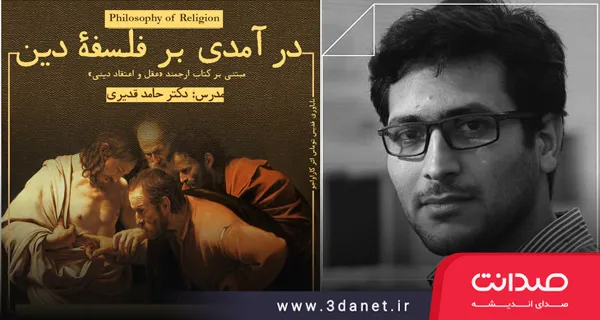
An Introduction to the Philosophy of Religion: A Lecture Series by Yaser Mirdamadi
Philosophy of religion is a branch of philosophy that evaluates the fundamental concepts and beliefs of religious traditions, and it differs from religious philosophy. In eight sessions, Yaser Mirdamadi offers a rational examination of the nature of religion, arguments for the existence of God, and the problem of evil.

An Introduction to the Philosophy of Religion: A Lecture Series
Date of sessions: Farvardin 1387 (March–April 2008)
Location: Academic Center for Education, Culture and Research (Jahad Daneshgahi), Mashhad
Number of sessions: Eight sessions
Speaker: Yaser Mirdamadi
.
Philosophy of religion is a branch of philosophy encompassing all philosophical discussions whose foundation lies in questions originating from religion. Philosophy of religion is the evaluation of the fundamental concepts and beliefs of specific religious traditions of various societies. The main topics of philosophy of religion include arguments concerning the nature, existence or non-existence of God, religious language, miracles, prayer, the problem of evil, the attributes of God, religious pluralism, religious epistemology, and the relationship between religion and other value systems such as ethics and empirical science. Philosophy of religion is different from religious philosophy; religious philosophy is philosophical thought guided by religion, examples of which can be found in Christian philosophy or Islamic philosophy, but philosophy of religion is the rational explication of the nature of religion in and of itself; therefore, belief in religions is not necessary for the study of philosophy of religion.
The term "philosophy of religion" is a term that became common from the late eighteenth century onwards. This term gained currency under the influence of Hegel, who had incorporated various types of philosophy into his system of thought. Philosophy of religion begins with the fundamental questions that religions have generated. Philosophizing about these questions reflects the philosopher's conception of the function of philosophy.
A significant part of the philosophy of religion consists of arguments for the existence of God and arguments for the non-existence of God. The cosmological arguments for the existence of God date back to Plato and Aristotle, who believed in the concept of causality. The ontological argument, first introduced by Anselm, centers on the concept of a perfect being. Arguments for the non-existence of God and the refutation of traditional proofs for God have also always been of interest to the philosophy of religion.
.
Audio of the First 4 Sessions of Philosophy of Religion Size approximately 80 MB
Audio of the Second 4 Sessions of Philosophy of Religion Size approximately 70 MB
.
۱- what is the definition of definition and that of religion
۲- what is philosophy
۳_The_varieties_of_religious_studies
۴- What is analytic philosophy of religion
۵_on_religious_non_realism (۱)
۶- On religious non-realism (۲)
۷- On religious non-realism (۳)
۸- On religious non-realism (summary and conclusion)
.





Discussion0 comments
No comments yet; let yours be the first voice.