Philosophy
A Journey Through the History of Philosophy of Religion, Reason, and Religious Belief
Philosophy of religion, as the rational study of religious beliefs, has a history as long as the history of thought itself, and philosophers have always maintained a close relationship with religion. This talk traces the development of this discipline and the four approaches philosophers have taken toward religious convictions.
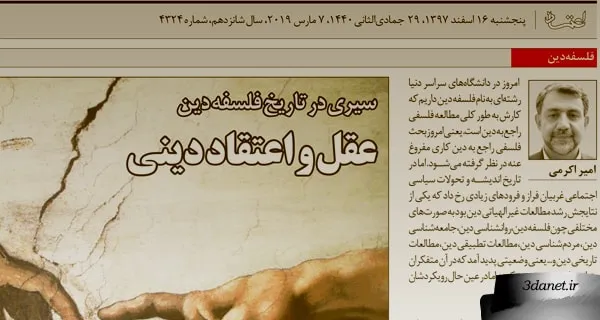

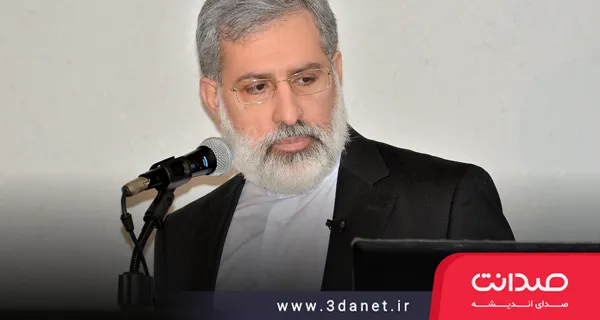
Seyed Amir Akrami
AuthorMohsen Azmoudeh: Religion, as a path and method for human beings to transcend this apparent material existence in order to connect with the unseen, to bestow meaning and identity upon themselves and their world, and to organize daily life in its individual and collective dimensions, is a reality and truth that has accompanied humanity. It possesses multiple facets and aspects, from beliefs and convictions to rituals and customs, from legal and judicial dimensions to institutional and material ones. The study of and reflection upon these multiple aspects has also been undertaken by thinkers since ancient times. Although over the last 150 years or so, religious studies have taken on a non-theological form—meaning that research into religion is no longer shaped solely from the perspective of the beliefs of the faithful, and sociologists, anthropologists, psychologists, historians, archaeologists, political scientists, and others also engage in research about religion, each with their own conceptual apparatus and scientific tools. Philosophers have been among the most serious contemplators of religion, and throughout the history of philosophy, there has always been a close relationship between philosophical reflection and religious belief. Of course, this relationship has taken various forms in different periods. Over the last 40-50 years, purely philosophical study of religion, especially in Anglo-American universities, has been recognized under the specific title "philosophy of religion," although prominent philosophers had engaged in non-theological studies of religion before this. Amir Akrami, a graduate in philosophy of religion from McGill University in Canada, a professor of comparative studies and Islamic studies at Yale University and Eastern Mennonite University in the USA, and a researcher and professor of Islamic philosophy and theology at the University of Birmingham, discusses the process of the formation of religious studies, and especially the philosophy of religion, in the following talk. This text is the edited and revised version of an excerpt from his lecture at the first session of a series of meetings on the philosophy of religion at the Institute for Humanities and Cultural Studies, organized by the philosophy of religion alumni of that institute and prepared by the Andisheh-ye Etemad page.
Today, in universities around the world, we have a discipline called the philosophy of religion, whose task, generally speaking, is the philosophical study of religion. That is, today, philosophical discussion about religion is considered a settled matter. But in the history of thought and the socio-political developments of Westerners, many ups and downs occurred, one of the results of which was the growth of non-theological studies of religion in various forms such as the philosophy of religion, psychology of religion, sociology of religion, anthropology of religion, comparative religious studies, historical studies of religion, etc. That is, a situation emerged in which thinkers could discuss religion without their approach being theological-doctrinal.
The Importance of Religion in History
David Hume, in the preface to his book "The Natural History of Religion," which the late Hamid Enayat translated in a literary style, says of the importance of religion that "belief in an invisible, intelligent power has been widely prevalent among humankind in all lands and at all times." The significance of this quotation from Hume is that this Scottish philosopher, despite the ambiguities surrounding his stance on religion, is known as someone who introduced the hermeneutics of suspicion into the history of thought. In other words, Hume popularized the worm of suspicion. Of course, this view accompanied by suspicion and doubt was prevalent before Hume as well, but Hume plays an important role in this field due to his importance and dominance.
In 2001, two sociologists at New York University conducted a survey and determined that 80 percent of Americans are religious. That is, a society like America is still religious. In my opinion, English society is the most secular society in the world. In 2012, a study on the social attitudes of people in England showed that 52 percent of people still have religious tendencies. These three pieces of evidence clearly show that despite various transformations throughout the world, and most importantly the growth of modern science, religion still plays a very important and undeniable role in human life, and even in Western societies, religion is a strong element in the social and individual tendencies of people. Therefore, religion deserves to be studied as a social phenomenon that has influence and impact everywhere in the world.
اما سوی دیگر تعبیر فلسفه دین، فلسفه است. فلسفه در طول تاریخ بشر قوت و قدمتی انكارناپذیر دارد. دستكم از 600 سال پیش از میلاد مسیح، متفكرانی چون تالس و گزنفون را داریم كه به فلسفه پرداختهاند. این اندیشههای فلسفی نیز بعضا متألم و سازگار و گاهی ناسازگار با دین بوده است. نقطه اوج تفكر در یونان باستان، سقراط و افلاطون و ارسطو هستند كه دین برایشان اهمیت انكارناپذیری دارد. برای مثال افلاطون در رساله فیدون استدلالهای متعددی بر اثبات جاودانگی روح ارایه میكند و ارسطو با استدلال محرك بلاتحرك وجود خدا را اثبات میكند.
به طور كلی فلاسفه نسبت به دین، رویكردهای متفاوتی داشتند. این رویكردها را میتوان در 4 گروه دستهبندی كرد. رویكرد اول فلسفه را با دین یكسان تلقی میكند. یعنی برای افلاطون و ارسطو و بسیاری از فیلسوفانی چون آنها، فلسفه نه فقط منكر دین نیست بلكه موید آن هست و دین هم چیزی جز تفكر فلسفی نیست. بنابراین با قدری تسامح میتوان گفت كه برای این دسته از فیلسوفان، فلسفه و دین یكی بوده است. رویكرد دوم فلسفه را در خدمت دین تلقی میكند. رویكرد سوم معتقد است كه نقش و شأن فلسفه عبارت است از جا باز كردن برای دین. یعنی فلسفه كلا در خدمت دین نیست اما یكی از نقشمایههای اصلی آن نوعی تایید و جا باز كردن برای مدعیات و باورهای دین است. رویكرد چهارم فلسفه به عنوان ابزار تحلیل دین است.
به طور كلی فلسفه دین بالمعنی الاعم را كه نزد افلاطون و ارسطو و توماس آكویناس دیده میشود، میتوان نوعی نگاه فلسفی به باورهای دینی خواند، اعم از نگاه مثبت یا منفی. این را میتوان نوعی الهیات فلسفی و نگاه عقلانی به دین خواند. البته مرز میان الهیات فلسفی و نگاه عقلانی به دین چندان قابل تدقیق نیست. به عبارت دیگر باید میان الهیات نقلی كه مبتنی بر نقلیات دینی است و الهیات عقلی كه تركیبی از روایات و درایات است و فلسفه دین كه كمتر از مفروضات دینی بهره میگیرد و عمدتا به مباحث عقلی راجع به دین میپردازد، تمایز گذاشت. میان این 3 نمیتوان دیوار حائل مشخص كشید اما دو تای اول را میتوان فلسفه دین بالمعنی الاعم خواند اما الهیات بالمعنی الاخص را فلسفه دین میخوانیم كه به خصوص از 1950 به بعد رواج یافته است.
نماینده فلسفه دین بالمعنی الاعم را میتوان افلاطون، فلوطین، اسپینوزا و چارلز هارتسهورن متفكر مسیحی امریكایی قرن بیستمی خواند. برای این متفكران مرز میان فلسفه و دین روشن نیست. رویكرد دوم را میتوان فلسفه در خدمت دین خواند كه متفكرانی چون آكویناس، جان لاك و ریچارد سوئینبرن استاد دانشگاه آكسفورد را میتوان از این میان تلقی كرد. نزد این متفكران فلسفه ابزاری برای تحكیم مدعیات دینی است. برای گروه سوم یعنی الهیات فلسفی، فلسفه جا برای اعتقادات دینی باز میكند و كسانی چون ویلیام اوكام، كانت، بارت و الوین پلنتینگا متفكر مبرز مسیحی را از این دسته میتوان خواند. گروه چهارم را فلسفه دین بالمعنی الاخص میخوانم كه آن را در آثار فلسفی از 1950 به این سو مییابیم.
در سال 1955 كتاب «مقالات جدیدی در الهیات فلسفی» با ویراست السدیر مكینتایر و آنتونی فلو منتشر میشود كه اثری دورانساز تلقی میشود. در این كتاب مباحث مهمی راجع به زبان دین، تحقیقپذیری و ابطالپذیری و تكذیبپذیری مطرح میشود. بعد از این كتاب آثار فراوانی در این زمینه منتشر میشود. ویژگی این آثار آن است كه از فلسفه به مثابه ابزاری برای تحلیل و نقادی عقلانی باورهای دینی استفاده میكنند. یعنی در این آثار پیشفرضهای الهیاتی و كلامی كه در 3 رویكرد نخست غلبه دارد، تقریبا از میان میرود و جای خود را به ظهور فیلسوفانی میدهد كه میكوشند صرف نظر از معتقدات خودشان با تاكید بر نگاههای فلسفی محض به باورهای دینی عمدتا مسیحیت و یهودیت بپردازند.
تعبیر فلسفه دین
The expression “philosophy of religion” first appears in the seventeenth century among the Cambridge Platonists such as Henry More and Ralph Cudworth, though it did not gain much currency, for these thinkers were not highly influential throughout the history of Western thought. The most important thinker who later writes a book entitled Philosophy of Religion, however, is Hegel, who publishes his Lectures on the Philosophy of Religion in 1821. Of course, by today’s understanding the book can hardly be considered philosophy of religion. In its introduction and conclusion he sketches a pyramid of religions and the course of their evolution. In the first chapter he addresses the concept of religion. He also refers to determinate, specific religions such as Islam and Buddhism. He then turns to Christianity, which in his view is the pinnacle of this historical development, and reinterprets the claims of Christian doctrine. But the bulk of Hegel’s philosophizing about the philosophy of religion is concentrated on Christianity; he can therefore be classified as continuing philosophical theology or philosophy of religion in the broader sense.
The Influence of Social and Political Factors
Various intellectual, political and social causes and factors emerged throughout the history of the West until, in the eighteenth century, humanistic studies in the field of religion gradually arose in non-theological contexts such as sociology, psychology, anthropology, philosophy, and so forth. The most important political and social factor was the religious wars in Europe. These wars lasted around 200 years, mainly in Europe, from 1520 to 1710. In Germany, for example, from 1618 to 1648 about one third of the German population (8 million) perished as a result of these wars. These wars had various non-religious causes, of course, but most of them were fought between Protestants and Catholics, or between different Catholic or Protestant groups against one another. These conflicts prompted Western thinkers to reflect on the nature of religion. European religiosity at that time was, of course, predominantly Christianity with a Jewish background. Hence the bulk of these thinkers’ reflections were concentrated on Christianity. One may cite as examples Jean Bodin of France and Herbert of Cherbury of England. In an important book, Jean Bodin stages an imaginary dialogue among seven persons, including three Christians (Catholic, Protestant, Orthodox), one Muslim, one Jew, and two deists. Deists are those who believe in God, the afterlife (usually), and moral duties derived from religion, but do not believe in revealed religion. One of the issues Bodin raises in this book is the question of religious truth—which religion is the true one; another topic is how to order society in view of religious diversity so as to prevent violence and wars over religion. Herbert of Cherbury, in a book on truth as distinguishable from revelation, also advances the discussion of deism. While influenced by the wars and other developments, these two thinkers played an effective role in shaping the discussion of the relationship between religion and philosophy. The gist of their argument is that we can attain truth rationally, which amounts to deism in place of theism (the theology of the monotheistic religions).
Another cultural and social factor in the formation of philosophy of religion and rational discussions about religion, one that resulted from the spread of technology and the advance of science, was the ease of travel to various parts of the world, including the East and the Islamic world. Acquaintance with other religions played an important role here. The peak of this acquaintance came in the late nineteenth century with the book The Sacred Books of the East, collected, translated and edited by Max Müller. In this book, for the first time, a relatively refined and polished translation of Eastern and Islamic sacred texts into European languages was produced, and Westerners also became acquainted with Eastern religions. The distinction between natural religion and revealed religion gradually manifested itself. Before this, natural religion had no dominant meaning in Western culture. Natural religion means a non-theological view of religion, one that does not rely on revelation.
Another important development was biblical criticism. The growing strength of three disciplines or bodies of knowledge—history, philology, and hermeneutics (directed at the interpretation of texts)—led to the formation of new approaches to religion. Together these disciplines provided the ground for the emergence of biblical criticism. In this context one must not overlook the role of Baruch Spinoza, who endeavored, in his own words, to take a scientific look at the Bible. Schleiermacher called Spinoza a thinker full of the Holy Spirit.
Great Thinkers and Their Influence on Philosophy of Religion
The most important figure in the formation of the philosophy of religion is undoubtedly David Hume, the eighteenth-century English philosopher. In his book The Natural History of Religion, he takes a non-theological and naturalistic view of religion. At the beginning of his book, Hume says that those who reflect on religion face two questions: first, what is the foundation of religion in human reason, and second, what is the foundation of religion in human nature?
What is important about Hume, regardless of the correctness or incorrectness of his view, is the formation of a non-theological perspective on religion. Antony Flew, the well-known philosopher of religion who late in life shifted from atheism to deism, published a book titled Writings on Religion by Hume, in which he presents ten works by Hume. The common thread in these works is a non-theological view of religion. After Hume, it is Kant who writes an important book called Religion within the Bounds of Bare Reason. The common feature of these Enlightenment thinkers' view of religion is the autonomy of human reason, religious tolerance, and opposition to the clergy of the church. Another important thinker is the Englishman Thomas Paine, whose ideas in America influenced thinkers such as Thomas Jefferson and Benjamin Franklin, among the Founding Fathers of the United States Constitution. In a book titled The Age of Reason, Thomas Paine emphasizes deism. A factor influencing the formation of Thomas Paine's ideas is the religious conflicts and wars in Europe.
But Schleiermacher is perhaps the first thinker who explicitly distinguishes between the core or essence and the shell of religion. He calls the shell of religion those aspects that differentiate various religions from one another. For example, in Christianity, the doctrine of the Trinity gives it a distinct character compared to Islam or Judaism, but it has nothing to do with the true essence of religion. Schleiermacher is a Romantic thinker, and feeling is important to him. He calls religion the feeling of absolute dependence on the absolute.
Hegel, in his book Lectures on the Philosophy of Religion, also complains about Hume and Kant, saying that a transformation has occurred in their thought. This transformation is the turn from philosophizing about God to philosophizing about religion. He considers this transformation inauspicious and believes that philosophy should continue to discuss God, and he himself discusses God in these lectures. In other words, the object of philosophical theology is God, while the object of the philosophy of religion's cognition is religion. It is clear that the relationship between God and religion is not one of equality.
Another thinker influential in the formation of the culture of religion is Auguste Comte, who proposed the idea of the Religion of Humanity, which is essentially deism. He believes that every culture and civilization has passed through three stages: 1- The theological, theological, and mythical stage; 2- The metaphysical-philosophical stage; and 3- The scientific stage. He believes that in the scientific stage, we have no need for revealed religions.
Another influential thinker in the formation of the philosophy of religion is Karl Marx, who, although he denies religion and sees it merely as a reflection of the economic tensions and conflicts of society, in the words of Paul Ricoeur, the French thinker, alongside Nietzsche and Freud, a hermeneutics of suspicion emerges with him. Marx has a one-hundred-percent sociological, economic, and non-theological or anti-theological view of religion. Another thinker is Ernest Renan in the nineteenth century, who has an important book titled The Life of Jesus. This book is a historical critique of the Bible, in which he claims that the historical Jesus is not the Jesus we find in the Bible, and he distinguishes between the historical Jesus and the Jesus of the Gospels.
At the end of the nineteenth century and the beginning of the twentieth, Max Müller enters the scene, proposing comparative religion. Of course, Müller's primary approach is linguistics, and he has a historical and linguistic view of sacred texts, but Müller's importance lies in the transition from linguistics to religious studies. He applies this important expression in linguistics—"He who knows one language, knows none"—to the field of religious studies and says: "He who knows one religion, knows none," because, as our thinkers say, things are known by their opposites. This is the starting point of scientific religious studies and disciplines such as the anthropology of religion, the sociology of religion, the psychology of religion, and the phenomenology of religion. The common feature of these branches of knowledge is a non-theological view of religion.
A thinker who put forward his works contemporaneously with these scholars is Friedrich Nietzsche, though interpreters such as Walter Kaufmann believe that Nietzsche is by no means an anti-God thinker and was merely setting forth the existing state of thought and culture in the West of his own time. But the important aspect of Nietzsche in the present discussion is the philosophical view of religion. He believes that Christian morality fosters weakness and cruelty, so in Nietzsche we see a kind of critique of Christianity and religion. We must also mention Freud, who takes a psychological view of religion. He distinguishes between the conscious and the unconscious and relegates religion to the domain of the unconscious. In 1921, Baron Friedrich von Hügel, the Austrian-Scottish British thinker, published a book entitled Essays on the Philosophy of Religion. His book, contrary to what one might expect from its title, is Christocentric, but it contains much discussion of the philosophy of religion. The next important book, as mentioned, is New Essays in Philosophical Theology, edited by Alasdair MacIntyre and Antony Flew, which was published in 1955.
These works, up to the late twentieth century, encompass the following topics: traditional problems in the philosophy of religion in the specific sense, the Christian idea or concept of God, discussion of the attributes of God such as God's power and knowledge, arguments for the existence of God such as the cosmological, teleological, ontological, and moral proofs and their rational evaluation, the important problem of evil, evidentialism, which has been raised since the time of Descartes, the problem of religious language, the problem of falsifiability and verifiability, the problem of life after death, and the problem of the relationship between religion and ethics.
3 stages in human philosophical thought and the philosophy of religion
Generally speaking, from the time of the pre-Socratic thinkers to the present, pure Western philosophy has passed through 3 general periods. The first is the period of traditional philosophy, or metaphysics, or the ontological period, in which various thinkers with different perspectives and with various results pursued a common concern: they wanted to know existence. These thinkers were largely in favor of the existence of God, and in the discussions they raised about existence, they addressed the question of God's existence. Thus, traditional Western philosophy from the pre-Socratic thinkers up to the time of Kant was largely devoted to ontology and metaphysics. Of course, in the history of thought, one cannot draw a rigid distinction. For example, in Plato and Aristotle, we also find major epistemological discussions. But in any case, with Kant, we witness a serious turn in the history of thought, the upshot of which is that philosophical discussions largely address how we can have knowledge.
For Kant, the question arises: how can philosophers know the world as it is? That is, how can a philosopher become a human being whose rational mind resembles the objective external world? This point was severely criticized by Richard Rorty, the American philosopher, in the twentieth century. In a book entitled Philosophy and the Mirror of Nature, he discusses the view that it is doubtful that philosophers possess a mind that, like a mirror, reflects nature. In any case, the important turn in Western philosophy with Kant is the epistemological turn.
But the other important turn at the beginning of the twentieth century is the linguistic turn. Of course, the importance of language and its connection to philosophy had been raised before, but this serious attention to philosophy is largely undertaken by Ludwig Wittgenstein in the twentieth century. For Wittgenstein, the question is: can one philosophize without language? He claims that thinking without language is impossible; therefore, whatever effort we make in the field of philosophizing must be from the perspective and through the passage of language, and consequently, the philosophy of language and language in religion gains importance.
These three major philosophical approaches—metaphysical philosophy, epistemological philosophy, and linguistic philosophy—are also reflected in the philosophy of religion. That is, one can read a philosopher's view of religion as influenced by the dominant philosophical perspective within each of these three approaches and discern the predominant hue of their philosophy of religion. This issue can also be seen in the conflict or contrast between analytic philosophy and continental philosophy. To the extent that a philosopher bases their work on one of those three approaches, these distinctions become apparent. For example, among analytic philosophers, due to the major influence of Wittgenstein and the school of logical positivism in the Vienna Circle, the discussion of religious language gains greater importance, as with D.Z. Phillips of Wales. But for thinkers like Plantinga, who are removed from this influence, epistemological discussions of religion become more prominent.
My expectation and prediction for the future paths of the philosophy of religion
New approaches—namely, first, the woman-centered and feminist approach; second, pluralism; and third, the comparative philosophy of religion—have been seriously proposed in our time. The first is the woman-centered approach to religion. The conception of God in Christianity, which has belonged to the philosophy of religion throughout the history of the West, has always been masculine, whereas in the feminist perspective on the philosophy of religion, this view has been contested, and there is talk of revision in this area. The second discussion is pluralism, that is, giving importance to the diversity of religions. This means that while the philosophy of religion should address religion in general and not one specific religion, this philosophizing about religion has usually been directed at the Christian faith. Yet it is clear that religion and faith are not limited to Christianity, and we are faced with a diversity of religions, and the claim of exclusive truth is not worthy of attention. For example, John Hick, until he published his doctoral thesis on the relationship between faith and knowledge in the 1960s, did not discuss the diversity of religions, but from the 1970s onward, he realized the importance of the issue of religious diversity. From this date onward, he wrote his important book, God and the Universe of Faiths, and in 1982, he wrote An Interpretation of Religion. For John Hick, from 1970 until his death, the issue of religious diversity was the most important preoccupation in the philosophy of religion. He says: "Think globally and do not limit yourself to one particular religion or culture." The importance of pluralism is deeply evident in a prominent thinker like William Alston. Of course, in my opinion, Alston's main work is philosophical theology, not the philosophy of religion. The third discussion is the comparative philosophy of religion, which is gaining strength with intensity and vigor in contemporary and forthcoming philosophy of religion. In these discussions, the general and common core of religion is emphasized. A thinker who has written works in this field is William A. Christian, an American thinker (born 1944), whose important book is Doctrines of Religious Communities: A Philosophical Study. In this book, he engages in comparative religious studies. His view of the philosophy of religion is directed at the nature of religion and addresses the question of pluralism. That is, when we encounter conflicting claims between religions, what philosophical ways do we have to resolve the conflict? He looks at this question through the window of philosophy.
Philosophies of religion considering the multiple dimensions of religion
In conclusion, we must speak of more comprehensive philosophies of religion considering the various dimensions of religion. Ninian Smart, the famous English thinker and scholar of religion, has an important discussion called the dimensions of religion. He believes that religion has 7 (in some places, he says 6) dimensions: 1- Doctrines or teachings; 2- Myths; 3- Ethical aspects of religion; 4- Legal-jurisprudential aspects of religion; 5- Institutional aspects of religion; 6- The experiential dimension of religion; and 7- The material dimension of religion. In his view, every religion encompasses these 7 dimensions. The clear conclusion is that religion is not limited to one dimension, whereas if you pay attention to the historical discussions of the philosophy of religion, you will mostly see that the discussions have been directed at doctrines.
.
.
A Journey Through the History of Philosophy of Religion
Reason and Religious Belief
Amir Akrami (Researcher in Philosophy of Religion)
Source: Etemad / 16 Esfand 1397 / Thought Section / Page 11
.
.





Discussion0 comments
No comments yet; let yours be the first voice.