اندیشهفلسفهخردگفتگوحکمتمعناپرسشفرهنگ
Philosophy
The Right to Be Wrong: The Cornerstone of a Civil and Liberal Religion — Arash Naraghi
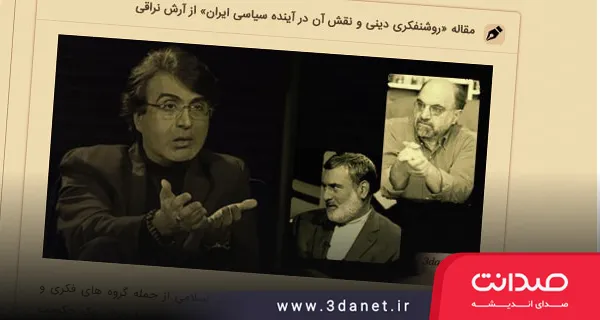
In his lecture “The Right to Be Wrong,” Arash Naraghi defends a right according to which judging another person’s belief or conduct to be wrong does not necessarily justify intervening or coercing them. Developing this idea, he proposes “civil religion” as a model for reconciling a life of faith with freedom of conscience, civic equality, and tolerance in a pluralistic society.


Arash Naraghi
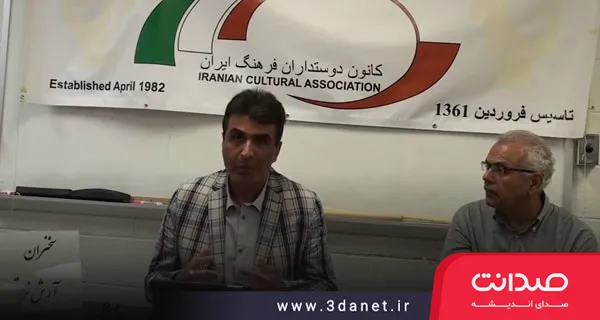
SpeakerThe Right to Be Wrong: The Cornerstone of Civil and Liberal Religion
A report on Arash Naraghi’s lecture at the School of Law and Ethics
Date: August 15, 2026
In his lecture “The Right to Be Wrong: The Cornerstone of Civil and Liberal Religion,” Arash Naraghi sought to defend one of the most fundamental ideas of modern political philosophy: human beings do not merely have the right to live in accordance with truth and virtue; within certain limits, they also have the right to choose beliefs or conduct that others—and sometimes even they themselves—regard as mistaken or wrong. In his view, recognizing this right does not mean treating error as correct; it means acknowledging a protected sphere of human choice and limiting the right of others to intervene.
Naraghi developed his argument in two parts. In the first, he offered a philosophical analysis of the concept of “the right to be wrong” and argued that the expression becomes coherent and meaningful only under a particular conception of rights. In the second, he examined the social and political implications of the concept, especially in a religious and pluralistic society. The central question of this second part was whether one could offer an interpretation of Islam that recognizes the right to be wrong while preserving religion’s social presence and avoiding the imposition of internally religious values on all citizens. Naraghi’s answer was affirmative: he defended a model he called “civil religion,” or “civil Islam.”
Two Conceptions of Rights
To clarify the issue, Naraghi first distinguished between two conceptions of a “right.” On the first conception, a right consists of two elements: the right-holder’s “permission” to do or refrain from doing something, and the “duty” of others not to interfere with that decision.
To explain this conception, he used the example of owning a car. When someone owns a car, on the one hand they are permitted to use it, leave it in the garage, lend it to someone else, or give it away; on the other hand, others are under a duty not to prevent them from using or not using it. If a neighbor, the police, or some other group repeatedly prevented a person from exercising control over their own property, that person’s right would effectively become meaningless. Thus, on the first conception, a right includes both the agent’s permission and the duty of others not to interfere.
On the second conception, however, a right is fundamentally a “claim-right.” Here, when we say that a person has a right with respect to something, the main point is that others are under a duty not to interfere in that domain. This definition does not, by itself, pass judgment on whether the action in question is morally permissible or impermissible. An action may be morally wrong while others nevertheless remain obligated not to prevent it.
To show the logical separation between permission and the duty of noninterference, Naraghi offered the example of a pen: the owner of a pen may place it at another person’s disposal and say that they do not grant permission to use it, while at the same time undertaking not to stop that person if they do use it. In such a case, the user is not morally or contractually permitted to use the pen, yet the owner has also declined to claim a right to intervene. Although such an arrangement may seem unusual in ordinary life, conceptually it shows that “being permitted to perform an action” and “others being under a duty not to interfere” do not necessarily entail one another.
Resolving the Apparent Contradiction in “The Right to Be Wrong”
If we accept the first conception of rights, the phrase “the right to be wrong” appears contradictory. To have a right to action “A” means that one is permitted to perform it; but for that same action to be wrong means that performing it is morally impermissible. It would seem, then, that we are saying a person is “permitted to do something impermissible.”
In Naraghi’s view, the second conception dissolves this contradiction. On the claim-right conception, when we say that someone has the right to do something wrong, we do not mean that the act is good, correct, or morally permissible; we mean that the decision lies within that person’s protected sphere of choice, and others are not entitled to stop them by force merely because they regard the decision as wrong. A right, in this sense, creates a protected space for exercising choice—a space in which a person may make the right decision, make a mistake, engage in trial and error, or even knowingly do something morally objectionable.
Naraghi used smoking to illustrate this point. Someone may believe that deliberately harming one’s own health is morally wrong and therefore regard smoking as impermissible; yet the wrongness of the act does not imply that they are entitled to force a smoker to quit. One may argue, warn, or encourage another person to stop smoking, but these are not the same as coercive intervention.
Another example was a windfall gained through a lottery ticket. One might argue that the recipient has a moral duty to devote part of this wealth to those in need or to charitable causes. If they keep all the money for themselves, their decision may be selfish and morally wrong; but others are not entitled, solely on the basis of that moral judgment, to force them to give away part of their property. The example of backbiting makes the same point: even if everyone agrees that backbiting is objectionable, criminalizing it may carry substantial costs, intrude on privacy, and lead to unjustified forms of intervention.
The principal conclusion of this section was that the “wrongness” of a belief or action does not logically entail that others have a “right or duty to intervene.” The moral wrongness of an act and the permissibility of coercion to prevent it are two independent judgments, and moving from the first to the second requires a separate justification.
“Having a Right” and “Being Right”
Naraghi then emphasized a linguistic and philosophical distinction crucial to the entire argument: the difference between “having a right” and “being right.” Having a right is a property of a person: a human being who holds a belief or performs an action possesses rights, and those rights generate duties for others. By contrast, being right is a property of a belief or action: a belief can be true or false, and an action can be morally right or wrong.
In the phrase “the right to be wrong,” the first term refers to a person’s having a right, while the second refers to a belief or action being right or wrong. There is no necessary connection between the two. People’s civil rights should not depend on the truth of their beliefs or the virtuousness of their way of life. To determine whether someone possesses rights, we should not first scrutinize their beliefs, conduct, or mode of life and then assign them rights in proportion to how close they are to truth or virtue.
Of course, judging something to be wrong is not always straightforward either. Sometimes “wrong” means conduct that is objectionable from the standpoint of our own value system, or a belief that appears false to us in light of the available evidence. Even if one believes in objective values that exist independently of individual viewpoints, human beings have limited capacity to know those values. Naraghi therefore stressed epistemic caution when declaring others’ beliefs false or their conduct wrong. Such caution does not preclude moral judgment, but it prevents us from too hastily converting our judgments into a license to intervene.
Tolerance Is Not Accepting Error, but Knowing One’s Limits
If someone concludes, on the basis of argument, that infidelity in marital relationships is morally wrong, two natural consequences follow: first, they themselves should remain faithful; second, they may share their reasons with others and encourage them to be faithful as well. But it does not necessarily follow from these premises that they have a duty or permission to intrude into other people’s lives and compel them to remain faithful.
Naraghi defined tolerance precisely at this point: tolerance means recognizing the right to be wrong and knowing one’s own limits. A person may judge another’s conduct to be wrong, criticize it, warn against it, and offer arguments aimed at changing it; but unless there is an independent reason for intervention, they are obligated to respect the other person’s sphere of choice. Tolerance, therefore, is neither moral indifference nor the belief that all beliefs and ways of life are correct; it is the refusal to coercively impose one’s own judgment on another.
Should Every Wrong Be Tolerated?
Naraghi made clear that not every wrong is something we ought to tolerate. If someone is about to kill an innocent person and another person can prevent the killing, one cannot invoke the right to be wrong and simply stand aside. In such a case, intervention is not only permissible but may be a moral duty.
His proposed criterion for distinguishing these two categories is the “harm principle.” A wrongful belief or action may fall outside the sphere of tolerance when it causes unjustified, serious, imminent harm to a specific individual or group. Restrictions on people’s rights, therefore, should not follow directly from the truth or falsity of their beliefs or the moral status of their conduct; the basis for restriction is the harmfulness of the conduct. Many actions may be morally wrong without causing immediate, serious, and specific harm to another person; by this criterion, such actions remain within the sphere of what ought to be tolerated.
From Personal Relations to the Public Sphere
This principle matters in relations between individuals, but in Naraghi’s view its full significance emerges in public life and politics. Modern societies are pluralistic: citizens hold different and sometimes incompatible views of good and bad, moral duty, happiness, and a worthy life. Political philosophy refers to these as “comprehensive conceptions of the good.” They cannot all be reduced to a single value system capable of securing everyone’s consent.
If the state selects one of these value systems and imposes it on everyone, it effectively subjects the rest of the citizenry to the values of a particular group and violates the requirements of justice. The just governance of a pluralistic society requires a basis that is intelligible and, as far as possible, acceptable to people with differing views. Here Naraghi likened the public sphere to “joint property” belonging to all citizens: when everyone shares ownership of this sphere, no group can treat it as its exclusive possession and govern it according to its own particular beliefs.
He also referred to John Rawls’s idea of the “veil of ignorance” in political philosophy. Citizens should choose the rules of the public sphere as though they did not know whether, once those rules were in place, they would find themselves among the majority or the minority. The guiding question is this: if we ourselves were members of a minority, would we still regard this law or policy as just? Such a test forces the majority to step back from its current position of advantage and attend to the rights of those who do not share its religious, moral, or ideological beliefs.
The Problem of a Religious Society
The more difficult question is whether a religious society can genuinely recognize the right to be wrong for nonreligious citizens, followers of other religions, or adherents of rival ideologies. In answering it, Naraghi distinguished among three models of religion’s presence in politics and society: traditional political Islam, intellectualist political Islam, and civil Islam.
Traditional Political Islam
In the traditional account of political Islam, of which Naraghi regarded the theory of the absolute guardianship of the jurist as the most important example, the primary criterion for distinguishing right from wrong is “divine command.” Whatever conflicts with divine command and religious teachings is deemed wrong, and believers have a duty to prevent its emergence and persistence in society. On this view, government is the instrument through which commanding right and forbidding wrong is extended from the individual to the social level, and the state may impose the rulings of Sharia on the public sphere from above.
In such a model, there is no genuine place for the right to be wrong. The aim is to remove from social life whatever conflicts with divine command; if immediate elimination is not possible, soft means such as persuasion are used first, followed, where necessary, by hard measures and legal punishment.
According to Naraghi’s account, in this system people’s “having rights” becomes dependent on their beliefs “being right.” Apostasy provides a clear example: by abandoning religious belief, a person is not merely regarded as mistaken in matters of faith but may also lose fundamental rights, even the right to life. Citizens are divided into different ranks according to their relationship to the dominant religious interpretation, and the further they stand from the ruling ideology, the smaller their share of rights becomes.
Intellectualist Political Islam
The second model seeks to soften political Islam and, instead of imposing religion authoritatively from above, to bring it into government from below through democratic mechanisms. The assumption is that a religious society naturally has a favorable disposition toward religion; religious parties can therefore mobilize public opinion, win majority votes, enter parliament, and transform religious norms into binding public rules.
This account accepts, to some extent, a plurality of religious interpretations and abandons the idea of a single official reading of religion. A person may hold a different religious interpretation and, even if that interpretation is judged mistaken, still retain certain rights and freedoms. Yet in Naraghi’s view, the scope of the right to be wrong remains limited here: disagreement is accepted insofar as it remains intrareligious, and the boundaries of what ought to be tolerated may still be determined on purely religious grounds.
In this connection, he cited Abdolkarim Soroush’s defense of the existence of the Guardian Council as an example—an institution intended to ensure that laws governing the public sphere remain religious. In this model, a religious majority may use the electoral process to restrict beliefs or ways of life that conflict with religious standards, or exclude them from the public sphere altogether. Citizens may perhaps be regarded as equal with respect to basic rights such as life and education, but equal enjoyment of rights beyond that level is not taken for granted, and for nonreligious citizens may require some additional justification or authorization.
In Naraghi’s view, both versions of political Islam—the traditional and the intellectualist—ultimately have difficulty with the right to be wrong. The first does not recognize the right at all, while the second recognizes it only in a limited form, within boundaries defined by religious understanding. For this reason, even more secular interpretations within religious intellectualism may still remain illiberal.
Civil Religion: An Alternative to Political Islam
Against these two versions of political Islam, Naraghi defended the possibility of “civil Islam,” or, in more general terms, “civil religion.” Civil religion is an interpretation of religion with three principal features:
1. It recognizes the right to be wrong;
2. It draws the boundary between wrongs that ought to be tolerated and wrongs that cannot be tolerated on rational and conventional grounds, rather than on purely intrareligious reasons;
3. It regards all citizens as equal in both basic and nonbasic rights.
On this view, a believer may choose a particular way of life for their personal life or voluntary community on the basis of a Quranic verse, a hadith, or the teachings of their religious tradition. But to turn that same value into a binding public law, it is not enough to appeal to sources that carry authority only for fellow believers. Public law must rest on reasons that other citizens, without accepting that religion, can also understand, assess, and debate.
Three Intrareligious Grounds for Civil Islam
Naraghi emphasized that accepting civil Islam does not necessarily mean breaking with the Islamic tradition. In his view, the three conditions required by this interpretation have roots in the jurisprudential, theological, and philosophical traditions of Muslims and can be reconstructed from within them.
The first condition is that the public sphere be regarded as the “joint property of all citizens,” an idea whose formulation Naraghi found particularly significant in the thought of Mehdi Haeri Yazdi. Everyone who lives in a society such as Iran—regardless of religion, ideology, or belief—is an owner of that country and of its public sphere.
The second condition goes back to the jurisprudential maxim “people have authority over their property”: people possess the right to exercise control over what belongs to them. If the public sphere is the joint property of all citizens, then all of them, as co-owners, must have a share in its governance and administration.
The third condition is justice. Justice requires that all citizens, simply by virtue of being citizens and co-owners of public property, have an equal share in its governance. Naraghi regarded this principle both as compatible with a Rawlsian conception of justice and as something that can be reconstructed within Shi‘i and Mu‘tazilite theological traditions.
Accepting these three premises leads to the conclusion that public policies must be based on reasons that all citizens are, in principle, capable of understanding and evaluating. Binding laws cannot rest on purely intrareligious grounds that are authoritative only for some of the co-owners of this shared domain. Laws should be framed in such a way that even minorities can regard them as just. From this perspective, religious justice itself requires that the followers of no religion organize the public sphere entirely according to their own distinctive values and push others to the margins.
Religion in Lawmaking: A Qualified Yes
Naraghi concluded by addressing two practical questions. The first was whether religious believers have the right to bring their religious values and beliefs into decisions concerning the public sphere and to seek to turn them into law. His answer was a “qualified yes.”
Religious citizens may advocate policies and laws consistent with their religious teachings, form parties, and engage in political activity to secure their passage, provided that they also offer independent and public rational reasons for those laws. He used abortion as an example. A Muslim cannot impose a ban on abortion on all citizens merely by citing the saying of an Imam or a religious tradition; but they may construct an argument from public premises, such as the wrongness of killing an innocent human being and the question of when a fetus acquires human moral status, in a way that non-Muslims can also understand and contest. In such a case, a person’s motivation may be religious, but the reason offered in the public sphere must be assessable independently of accepting that religion.
This condition does not mean silencing religious citizens or excluding religious values from politics. Many religious values may also have independent rational and moral support. Believers are free to advocate their values; the point is simply that, in order to impose legal obligations on those who do not share their faith, they need a public justification.
Freedom of Religious Associations and the Limits of Public Coercion
The second question was whether religious believers have the right to promote their way of life and values and to work toward their realization in society. Naraghi’s answer was unequivocally yes. Recognizing the right to be wrong does not mean eliminating religious life from society; the same principle that protects a nonreligious way of life also guarantees the freedom of religious citizens to express and practice their beliefs.
Religious believers have the right to write articles, hold lectures and seminars, engage in dialogue with scientific and medical institutions, invite people to adopt their preferred way of life, and form voluntary religious associations. Within those communities, they may also make adherence to rules such as abstaining from alcoholic drinks a condition of membership. What is not permissible is to turn a purely religious prohibition into public law and impose it on those who do not share its religious basis.
In this connection, Naraghi referred to the position of Seyyed Hassan Modarres in parliament, who, despite being a mujtahid, voted against a bill banning the production of alcoholic beverages and defended their production in the country. In Naraghi’s view, religious believers may argue for a public ban or restriction on the production and consumption of alcohol only if they can show, on independent grounds, that it harms the public good and can persuade the majority of society by means of a public argument.
In other words, a voluntary Muslim association may prohibit its own members from drinking alcohol on religious grounds, but to legally prevent others from consuming it in private or to prevent a shop from operating, a public reason independent of religious prohibition must be offered. Invitation, advocacy, and internal communal discipline are distinct from legal coercion.
Conclusion: Religion in Society, Without Exclusive Ownership of Society
Naraghi’s final answer to the possibility of a liberal interpretation of Islam was affirmative. In his view, religious sources and principles can support an understanding of religion’s place in society that recognizes the right to be wrong in the public sphere. In this model, religious believers live according to their intrareligious convictions within their voluntary communities and freely seek to promote their values; but they do not regard the public sphere as their exclusive property.
In civil religion, the public sphere is the joint property of all citizens, and justice requires that it be governed on the basis of rational and public reasons. The right to be wrong is the foundation of tolerance in society: a right that does not permit a person to call error truth, but requires them to distinguish between “judging another to be wrong” and “having the right to coerce another.” A believer may remain faithful to what they take to be true, argue for it, and invite others to embrace it; but they must genuinely refrain from imposing wholly intrareligious values on those who do not share that faith.
On this basis, civil religion means neither removing religion from society nor handing the public sphere over to religious government. The model seeks to reconcile a life of faith, freedom of conscience, civic equality, and the possibility of coexistence in a pluralistic society—a society in which no group, not even the majority, has exclusive ownership of political truth or of the rights of others.



Discussion0 comments
No comments yet; let yours be the first voice.