In their times
Open in the Timeline of Thought


Life and Thought
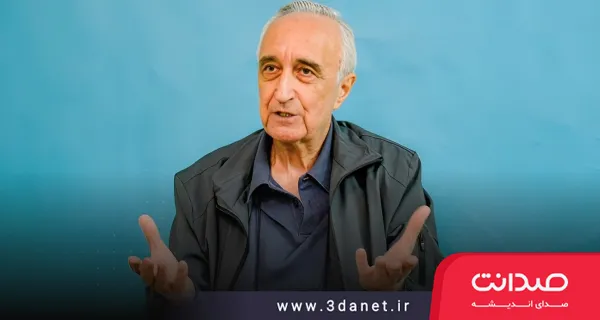
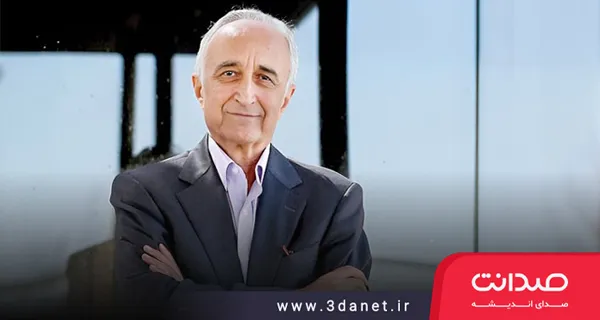
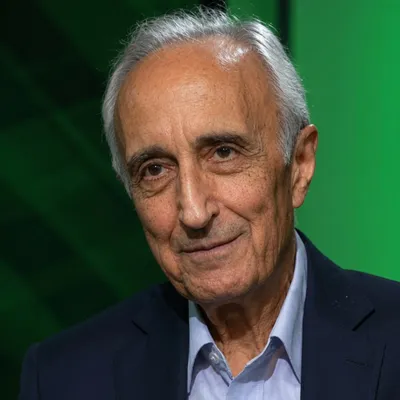
Mousa Ghaninejad, born 1951 in Tabriz, is an Iranian economist and researcher working in the fields of political economy, the history of economic thought, and classical liberalism. He is considered one of the influential figures in promoting market economics in Iran.
Mousa Ghaninejad, born 1951 in Tabriz, is an Iranian economist, author, and researcher in the fields of political economy, the history of economic thought, the epistemology of economics, and classical liberalism. He earned his bachelor's degree in accounting from the University of Tehran, then went to France to continue his studies in economics, obtaining a master's and a PhD in development economics from the Sorbonne University.
Ghaninejad is a retired faculty member of the Petroleum University of Technology and has been a visiting professor at the School of Management and Economics at Sharif University of Technology. He also maintains close intellectual and media ties with the Donya-e-Eqtesad newspaper and its Economic Research Center, and is considered one of the influential figures in promoting market economics in Iran's public sphere.
Ghaninejad is best known for his defense of free-market economics, his critique of price controls, his criticism of government intervention in the market, and his introduction of classical liberal ideas. Influenced by thinkers such as Hayek and other theorists of the liberal tradition, he emphasizes economic freedom, private property, the rule of law, competition, and the limitation of government power.
A key aspect of his thought is the distinction between "privatization" and "liberalization." Ghaninejad believes that privatization without price liberalization, competition, and the rule of law does not lead to a healthy economy and may result in rent-seeking and crony capitalism. For this reason, his critique targets command economy, rent distribution, administrative pricing, and short-term policymaking.
Ghaninejad views Iran's economy not merely as "state-owned" in the classical sense, but as a command economy, rent-based and plagued by extensive interventions. In his analyses, he has repeatedly emphasized that price controls, exchange rate suppression, hidden subsidies, interventions by regulatory bodies, and policy instability destroy the incentives for production and investment.
He is also a serious critic of economic populism—that is, policies implemented under the banner of justice or public support, but which in practice lead to inflation, budget deficits, corruption, resource waste, and the weakening of production. In recent years, in debates and public discussions, he has advanced these same positions against leftist, state-oriented justice-seeking, and institutionalist perspectives.
Bibliography
Writings and transcribed lectures13 titles
Economics: A Different Narrative
About Hayek
An Introduction to the Epistemology of Economics
Modernism and Development in Contemporary Iran
Civil Society: Freedom, Economy, and Politics
Interest or Riba? A Conversation on the Concepts of Interest and Riba
Economy and Social Justice
Iran's Future from the Perspective of Three Thinkers of Today's Iran
The Idea of Freedom: A Look at Contemporary Iran's Experience from a Political Economy Perspective
Liberalization and Economic Performance
Economy and State in Iran
Discourses on the Methodology of Economics
Piketty: The Fallacy of the Twenty-First Century