Foreign thinker
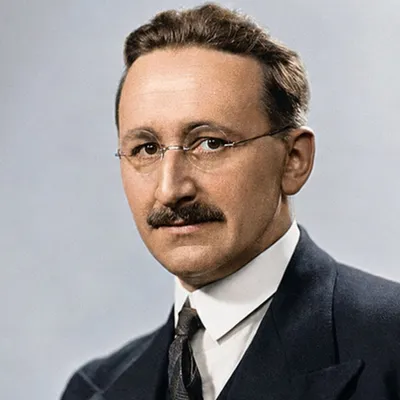
Friedrich Hayek
Friedrich HayekPolitical Economy, Political Philosophy, and LiberalismAustrian-British1899–1992
It is not surprising that the happiness gained from the control man has achieved over his own fate has blinded him to the fact that every attempt at the centralized direction of society may lead to the destruction of the very freedom that made such power possible.


Life and Thought
Friedrich Hayek was a prominent twentieth-century economist and political philosopher and the recipient of the 1974 Nobel Prize in Economics. He is considered one of the principal representatives of the Austrian School and one of the staunchest defenders of classical liberalism, the free market, and individual liberties against central planning and socialism. His masterpiece, <i>The Road to Serfdom</i>, played a significant role in the critique of totalitarianism and the defense of the rule of law.
Friedrich August von Hayek was born in Vienna and completed his studies in law, economics, and political science at the University of Vienna. After teaching at the London School of Economics and the universities of Chicago and Freiburg, he became one of the most influential figures in twentieth-century political and economic thought. His early research focused on monetary theory and the business cycle, but gradually came to encompass the philosophical, legal, and epistemological dimensions of sociology and politics.
A significant part of Hayek's fame rests on his epistemological critique of "central economic planning." In his famous essay "The Use of Knowledge in Society," he argued that economic knowledge is dispersed, local, and decentralized, and that no central institution or planner can gather all the information necessary to direct society; therefore, the price system in a free market is the best tool for coordinating this dispersed knowledge. His landmark work, <i>The Road to Serfdom</i>, was a stark warning about the dangers of state intervention and the move toward socialism, which he believed inevitably leads to despotism and the deprivation of individual liberties.
Hayek employed the concept of "Spontaneous Order" to explain social, legal, and economic institutions, believing that complex human structures, such as language and the market, are the result of human action but not of human design. His ideas on the rule of law, the limits of state power, and individual liberties, manifested in books such as <i>Law, Legislation and Liberty</i> and <i>The Constitution of Liberty</i>, had a profound impact on the revival of classical liberalism in the second half of the twentieth century.
Bibliography
Writings and transcribed lectures1 title
Sedanet articles about Friedrich Hayek