Institutions are the rules of the game in a society; or, more formally, the constraints that humans have devised to shape their interaction.


Life and Thought
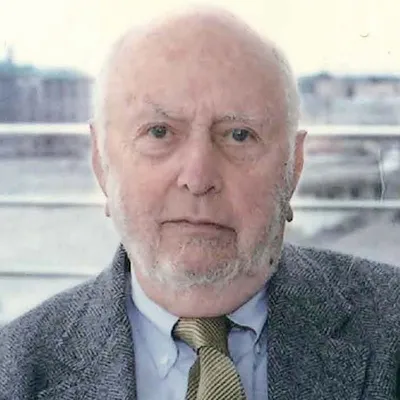
Douglass North was an American economist and economic historian who became one of the founders of the new institutional economics through his research on the role of institutions in economic development. In 1993 he shared the Nobel Memorial Prize in Economic Sciences with Robert Fogel. His work showed that the formal and informal rules of a society, and not only technical and market factors, shape the course of economic growth or stagnation.
Douglass Cecil North was born on 5 January 1920 in Cambridge, Massachusetts, and died on 23 November 2015 in Benzonia, Michigan. He studied at the University of California, Berkeley, earning degrees in political science, philosophy and economics, and received his doctorate in economics from the same university in 1952. During the Second World War he served in the American merchant marine. He later taught for many years at the University of Washington in Seattle and for a time at Rice University. He then moved to Washington University in St. Louis, with which he remained associated until the end of his life.
North began by working on American economic history and was a pioneer of the "new economic history," or cliometrics, which applied quantitative methods and economic theory to historical research. His book The Economic Growth of the United States, 1790–1860 is a major work of this period. Gradually he came to see that neoclassical theory alone could not explain why some societies grow over long periods while others remain stagnant.
His answer was to focus on institutions. North defined institutions as the "rules of the game" in a society, that is, the humanly devised constraints that shape political, economic and social interaction. These rules are both formal, such as laws and property rights, and informal, such as customs and norms, and they include the mechanisms by which they are enforced. In his view, institutions determine economic performance by shaping transaction costs and incentives. Structure and Change in Economic History (1981) and especially Institutions, Institutional Change and Economic Performance (1990) set out the main framework of this approach. With Robert Thomas he also wrote The Rise of the Western World (1973), in which he identified the emergence of effective property rights as an important factor in the growth of Western Europe.
In his well-known article "Constitutions and Commitment," written with Barry Weingast, North examined the evolution of English financial and political institutions after the Glorious Revolution and showed how limiting the sovereign's power raised the credibility of the state's commitments. In later years, with John Wallis and Weingast, he distinguished between "limited access orders" and "open access orders" in Violence and Social Orders (2009). In his later works he also attended to the role of beliefs, perception and cognitive processes in the formation of institutions, as in Understanding the Process of Economic Change (2005). His importance lies in treating development as the product of institutional and political structures rather than merely of capital accumulation or technology.
Sedanet articles about Douglass North
No articles have been published for this thinker yet.