Small groups often defeat large groups, because small groups usually organize better and act more effectively in pursuing their collective interests.


Life and Thought
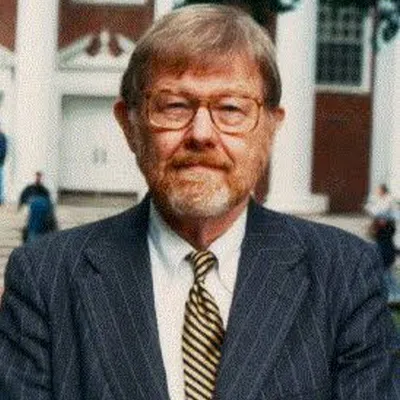
Mancur Olson was an American economist and social science theorist best known for his analysis of collective action, interest groups, and political institutions. His famous book, The Logic of Collective Action, demonstrated that the existence of a common interest is not in itself sufficient for collective action to form, and that small, organized groups often prevail over large, dispersed groups. His ideas have had a broad impact on political economy, public choice theory, political sociology, and development studies.
Mancur Olson was born on January 22, 1932, in the state of North Dakota, USA. He studied at North Dakota State University and then at the University of Oxford, and received his PhD in economics from Harvard University. Olson spent a significant part of his academic career at the University of Maryland and played a prominent role in linking economics, politics, and institutional analysis.
Olson's primary fame was established with the book The Logic of Collective Action in 1965. In this work, by criticizing the common notion that individuals with a common interest naturally cooperate to achieve it, he showed that collective action faces the problem of the "free rider": individuals may benefit from the public goods of an action without paying the cost of participating in it. In Olson's view, small, concentrated groups usually organize more easily, while large, dispersed groups face greater difficulty in mobilizing.
In his book The Rise and Decline of Nations, Olson extended this analysis to the level of macroeconomics and political history. He argued that in stable societies, interest groups and distributional coalitions gradually gain power and can, by pressing for special privileges, reduce economic efficiency and social dynamism. In his later work, Power and Prosperity, he also addressed the relationship between the state, property rights, political order, and economic growth, distinguishing between the roving bandit and the stationary bandit to explain why some forms of political power can come closer to order and economic development.
Olson's importance lies in showing that politics and economics cannot be understood merely on the basis of public intentions, common interests, or collective slogans. One must see who has the capacity to organize, how the costs and benefits of participation are distributed, and how institutions shape individual and collective incentives. Mancur Olson died on February 19, 1998, but his theories continue to be applied in the analysis of lobbies, unions, the state, development, corruption, special interests, and the difficulties of institutional reform.