A fully developed bureaucracy stands in the same relationship to other organizational forms as a machine does to non-mechanical modes of production.


Life and Thought
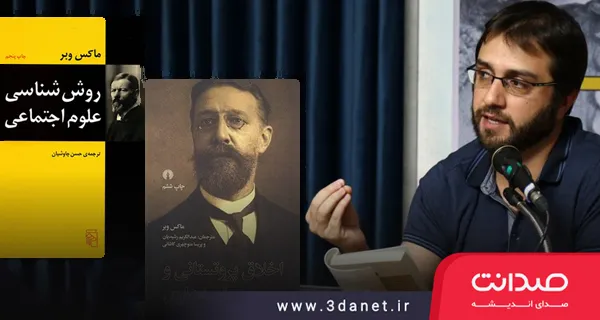
Max Weber (1864–1920) was a German sociologist, jurist, and political economist, and one of the principal founders of modern social science. His works on rationality, religion, and bureaucracy have had a profound influence on sociology and political science.
Max Weber (21 April 1864 – 14 June 1920) was a German sociologist, historian, jurist, and political economist. Alongside Karl Marx and Émile Durkheim, he is considered one of the principal founders of modern social science, and his works have had a profound influence on sociology, political science, economic history, religious studies, organization theory, and the philosophy of social science. Rather than constructing a closed system, Weber sought to show how meaning, power, religion, economy, and rationality are intertwined in the formation of the modern world.
Weber was born in Erfurt into a prosperous, cultured family and moved with his family to Berlin a few years later. His father was a jurist and liberal politician, while his mother was a devout, morally rigorous woman influenced by the Protestant tradition. This contrast between his father's political and worldly sphere and his mother's ethical and ascetic world was later reflected in Weber's intellectual sensitivity to religion, ethics, power, and rationality.
He studied law at the University of Heidelberg and then continued his studies and research in Berlin and Göttingen. His doctoral dissertation was on the history of commercial partnerships in the Middle Ages, and from the outset his academic research moved between law, economics, history, and sociology. Unlike many monocausal theorists, Weber viewed society as a multi-causal phenomenon and believed that to understand social action, one must consider the meaning that actors attach to their behavior.
One of Weber's most important concepts is "social action." He considered sociology a science that seeks to interpret social action by understanding its meaning and then to explain its processes and consequences. Weber's method thus differed from purely empirical or positivist sociology. He emphasized "interpretive understanding"; that is, the researcher must grasp how human beings make sense of the world and how they act based on those meanings.
Weber's widespread fame rests above all on his book The Protestant Ethic and the Spirit of Capitalism. In this work, he showed that certain Protestant religious values, particularly inner-worldly asceticism and the concept of "vocation" or "calling," had a historical and cultural affinity with the emergence of the modern capitalist spirit. Weber did not intend to derive capitalism solely from religion; rather, he wanted to demonstrate that ideas, beliefs, and values can also play a role in economic and social transformations.
Weber also left a lasting mark on the theory of politics and the state. He defined the state as an institution that claims the monopoly of the legitimate use of force within a given territory. He also distinguished three types of authority: traditional authority, charismatic authority, and rational-legal authority. In his view, the modern world is increasingly moving toward rational-legal authority and bureaucratic organizations—structures that are efficient but may trap human beings in the "iron cage" of instrumental rationality.
Weber is one of the most important theorists of the process of rationalization and disenchantment in the modern world. In his view, modernity means an increase in calculability, administrative order, legality, specialization, and rational control. Yet this very process empties the world of traditional and religious meanings, leaving modern human beings facing a more orderly but less enchanted and colder world.
After the First World War, Weber was also active in the German political sphere. He supported the formation of the Weimar democratic system, played an advisory role in constitutional debates, and in his famous lectures "Science as a Vocation" and "Politics as a Vocation," examined the relationship between knowledge, value, responsibility, and power. Weber died of illness in 1920 at the age of 56. Many of his major works were edited and published posthumously through the efforts of his wife, Marianne Weber.