Foreign thinker
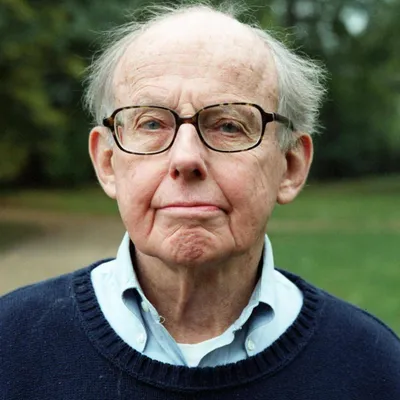
Samuel P. Huntington
Samuel P. HuntingtonPolitical Science and International RelationsAmerican1927–2008
The fault lines between civilizations will be the battle lines of the future.


Life and Thought
Samuel P. Huntington was a political scientist and Harvard University professor whose research on political order, political development, civil-military relations and democratization had a wide impact on political science. He is best known for The Clash of Civilizations and the Remaking of World Order, in which he highlighted the role of cultural and civilizational identities in post-Cold War global politics.
Samuel Phillips Huntington was born on 18 April 1927 in New York. He graduated from Yale University in 1946, earned a master’s degree at the University of Chicago and received his PhD in political science from Harvard University in 1951. Huntington began his academic career at Harvard in 1950 and, after a period at Columbia University, remained at Harvard from 1963 until the end of his professional life. There he also chaired the Department of Government and directed the Center for International Affairs.
His first major research area was the relationship between the armed forces and civilian government. The Soldier and the State: The Theory and Politics of Civil-Military Relations (1957) is one of his influential works in this field and examines the problem of civilian control over the military. Huntington then turned to development and political order. In Political Order in Changing Societies (1968) he argued that social and economic modernization does not necessarily produce political stability; if political institutions fail to keep pace with the speed of social change, instability and political violence increase.
In later decades Huntington also addressed democratization and political transitions. The Third Wave: Democratization in the Late Twentieth Century (1991) examines the spread of democracy from the mid-1970s to the early 1990s and is regarded as a major contribution to the comparative literature on democratization.
Huntington’s global reputation is linked above all to the article “The Clash of Civilizations?” (1993) and the book The Clash of Civilizations and the Remaking of World Order (1996). In these works he argued that in the post-Cold War world cultural and civilizational identities would play an increasingly important role in shaping international conflicts and that the main lines of some conflicts would run along civilizational boundaries. This view has been both highly influential and highly controversial.
In the final years of his intellectual activity, in Who Are We? The Challenges to America’s National Identity (2004), Huntington addressed the question of American national identity and political culture. He also played a role in U.S. public policy in the 1970s, serving as coordinator of security planning on the National Security Council in the Carter administration. Huntington died on 24 December 2008 on Martha’s Vineyard, Massachusetts.