

Life and Thought
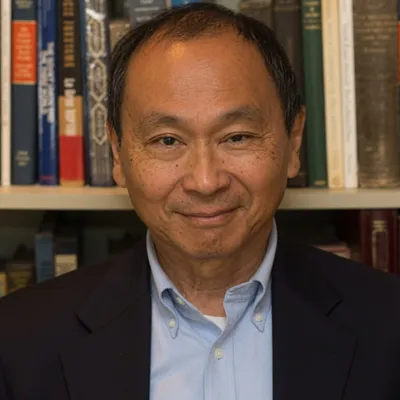
Francis Fukuyama, born in 1952, is an American thinker in the fields of political philosophy and development. His global fame began with the book "The End of History and the Last Man," and his works focus on the concepts of liberal democracy, social capital, and political order.
Francis Fukuyama, born October 27, 1952, in Chicago, is an American thinker in the fields of political philosophy, political economy, development, and international relations. He studied classics at Cornell University and received his Ph.D. in political science from Harvard University. According to Stanford University's official profile, Fukuyama is currently a senior fellow at the Freeman Spogli Institute at Stanford, director of the master's program in International Policy, and an affiliated professor of political science at the university.
Fukuyama's global fame began with the book "The End of History and the Last Man"; a work published in 1992 that became one of the most controversial books in contemporary political thought. The book put forward the idea that after the end of the Cold War, liberal democracy had become the most important political model in the world. He himself expanded on this argument in his later works, returning to it from the angles of culture, social trust, institutions, identity, and the quality of governance.
In his book "Trust," Fukuyama examined the role of social capital and cultural norms in economic development. In "The Origins of Political Order" and "Political Order and Political Decay," he addressed the history of state formation, law, and political accountability. His later works, such as "Identity" and "Liberalism and Its Discontents," focus more on the cultural and social crises of contemporary democracies.
Fukuyama's cultural significance lies in his ability to explain the complex concepts of politics, development, institutions, identity, and modernity in a format understandable to both general and academic audiences. His works, even when subject to criticism and debate, are considered important texts for understanding the post-Cold War world and today's crises of democracy.
Bibliography
Writings and transcribed lectures16 titles
The End of History and the Last Man
Trust: Social Virtues and the Creation of Prosperity
Political Order and Political Decay
The Great Disruption: Human Nature and the Reconstitution of Social Order
Our Posthuman Future: Consequences of the Biotechnology Revolution
State-Building: Governance and World Order in the 21st Century
America at a Crossroads: Democracy, Power, and the Legacy of Neoconservatism
Falling Behind: Explaining the Development Gap Between Latin America and the United States
The Origins of Political Order: From Prehuman Times to the French Revolution
Identity: The Demand for Dignity and the Politics of Resentment
Liberalism and Its Discontents
In the Realm of the Last Man: Memoirs
Poverty, Inequality, and Democracy
Multilateralism in East Asia
Nation-Building: Beyond Afghanistan and Iraq
Identity (Contemporary Identity Politics and the Struggle for Recognition)