No one has the right to obey.
In their times
Open in the Timeline of ThoughtInfluenced10


Influenced by6


Students2


Teachers2


Contemporaries10


Life and Thought
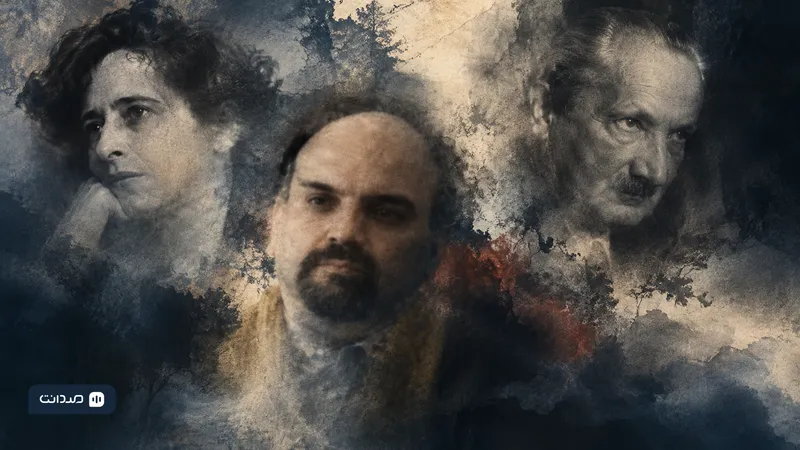
Hannah Arendt (1906–1975) was a German-American philosopher and political theorist. Her works on totalitarianism, freedom, and the concept of the banality of evil are considered primary sources in contemporary political philosophy.
Hannah Arendt (October 14, 1906 – December 4, 1975) was a German-American philosopher and political theorist. She is regarded as one of the most important political thinkers of the twentieth century, and her works on totalitarianism, freedom, political action, revolution, judgment, responsibility, and evil remain primary sources in contemporary political philosophy and the humanities. Arendt considered herself more a "political theorist" than a philosopher, because her primary concern was not the solitary individual, but human beings in their togetherness and the possibility of a shared political life.
Arendt was born in Hanover into a secular Jewish family and grew up in Königsberg. From her youth, she was interested in philosophy, literature, and theology. She studied under Martin Heidegger at the University of Marburg and later continued her studies in Freiburg and Heidelberg. She wrote her doctoral dissertation on the concept of love in Augustine under the supervision of Karl Jaspers. Her intellectual friendship with Jaspers lasted until the end of her life.
With the rise of the Nazis in Germany, Arendt's life was transformed. She was forced to leave Germany in 1933 and lived in Paris for several years. In France, she collaborated with Jewish organizations and refugees. After the occupation of France, she was briefly detained but managed to escape and emigrated to the United States in 1941. This experience of exile, statelessness, and the collapse of political rights later played a fundamental role in her understanding of totalitarianism, refuge, and the right to have rights.
Arendt's first major political work, The Origins of Totalitarianism, was published in 1951. In this book, she viewed Nazism and Stalinism not merely as two repressive regimes, but as new forms of political domination operating through ideology, terror, mass loneliness, and the destruction of the public sphere. This book established Arendt's position as one of the most important analysts of the twentieth century.
In The Human Condition, instead of focusing on the state or ideology, Arendt addressed fundamental human activities. She distinguished between labor, work, and action. Labor is tied to biological needs and the survival of the body; work creates the durable, artificial human world; and action is the highest human activity because it occurs in the public sphere and among plural human beings. For Arendt, authentic politics emerges where human beings, through speech and deed, reveal themselves to one another.
In On Revolution, Arendt compared the American and French Revolutions, showing that the central question of revolution is not merely liberation from oppression, but the foundation of political freedom and the creation of institutions for public participation. She warned against reducing politics to a purely social or economic matter and believed that freedom gains meaning only in the public sphere and through common action.
One of Arendt's most controversial works is Eichmann in Jerusalem. In this book, based on her report on the trial of Adolf Eichmann, she introduced the concept of the "banality of evil." She did not mean that evil is insignificant, but rather sought to show that great catastrophes sometimes arise not from exceptional monsters, but from human beings who refuse to think, judge, and take responsibility.
In the final years of her life, Arendt returned to the question of thinking, willing, and judging. The Life of the Mind was her last philosophical project. She completed the first two parts, "Thinking" and "Willing," but died before writing the third part, "Judging." After her death, this unfinished work was published, and together with her lectures on Kant's political philosophy, it showed that the question of judgment lay at the center of her final concerns.
Arendt died in New York in 1975. Her works still have a living presence in discussions concerning totalitarianism, human rights, the condition of refugees, truth and politics, violence, revolution, individual responsibility, and the crisis of democracy.