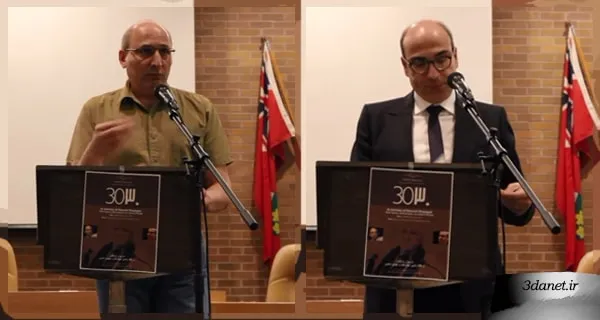
Iranian thinker
Mehdi Khalaji
Mehdi KhalajiPolitical ThoughtIranianb. 1973
In the Islamic Republic, ideology serves the leader, rather than the leader serving the ideology.


Life and Thought
Mehdi Khalaji, born in 1973, is an Iranian writer, translator, and political analyst. A former fellow at the Washington Institute for Near East Policy, he specializes in religion and politics in contemporary Iran and the institutional structure of the Shia clergy.
Mehdi Khalaji, born in Qom in 1973, is an Iranian writer, translator, journalist, and political analyst. He studied for several years at the Qom Seminary and attended advanced courses in Islamic jurisprudence and legal theory taught by scholars including Hossein-Ali Montazeri, Hossein Vahid Khorasani, and Javad Tabrizi. Alongside his seminary education, he developed an interest in philosophy and modern thought. He later studied philosophy at Tarbiat Modares University and pursued research on Shia theology and hermeneutics at the École Pratique des Hautes Études in Paris.
Khalaji began his journalistic career in the 1990s, contributing to periodicals such as Kiyan and Naqd-o Nazar and newspapers including Jame’eh, Iran, and Entekhab. After leaving Iran, he worked with media organizations such as BBC Persian, Radio Zamaneh, and Radio Farda. From 2005 until the end of 2023, he served as a scholar and analyst at the Washington Institute for Near East Policy.
His principal research areas include the relationship between religion and politics in contemporary Iran, the structure of the Shia clergy, intellectual developments within the Qom Seminary, political Islam, Qur’anic interpretation, and the role of religious institutions in political power. His seminary background enables him to pay particular attention to the structures of Islamic jurisprudence, religious authority, clerical institutions, and the internal language of the seminary in his analyses of Iranian politics.
Intellectually, Khalaji works at the intersection of analytical journalism, critical Islamic studies, and political research. His writings commonly adopt a critical perspective toward the Islamic Republic, the politicized clergy, religious fundamentalism, and the relationship between power and religious knowledge.
Bibliography
Writings and transcribed lectures5 titles
Stepchild
Apocalyptic Politics: On the Rationality of Iranian Policy
The Last Marja / آخرین مرجع
The New Order of the Clergy in Iran
Beyond the Veil