Foreign thinker
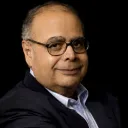
Mohammed Arkoun
Mohammed ArkounIslamic StudiesAlgerian-French1928–2010
After the death of Ibn Rushd, the creative interaction between theology, religious law, and philosophy was disrupted.


Life and Thought
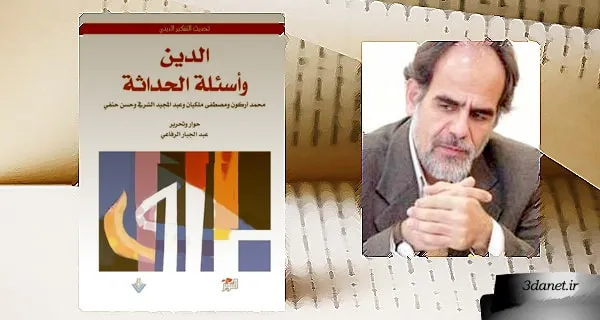
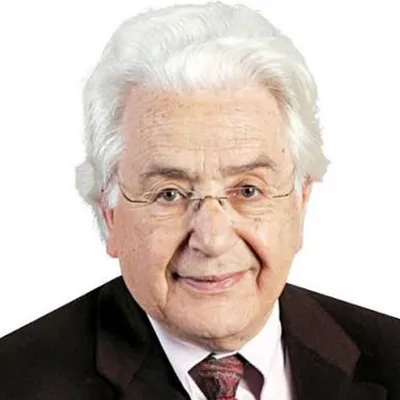
Mohammed Arkoun was a prominent Algerian-French scholar, philosopher, and specialist in Islamic studies, as well as an emeritus professor at the Sorbonne. A pioneer of “critical Islamic studies,” he applied the methods of the modern humanities to critique traditional historiography and reread religious texts.
Mohammed Arkoun was a prominent thinker and scholar of Algerian origin who spent most of his academic life in France, where he taught and conducted research as a professor at Sorbonne Nouvelle University (Paris 3). With his extensive knowledge of Islamic philosophy and contemporary Western thought, he became one of the most influential figures in religious reform and the critical study of Islam during the twentieth and early twenty-first centuries.
Arkoun’s principal intellectual project was the “Critique of Islamic Reason,” through which he sought to examine the epistemological structures of Islamic thought by employing methods from the contemporary humanities, including linguistics, semiotics, historical anthropology, and deconstruction. He introduced the concepts of “the unthought” and “the unthinkable” into the study of Islamic intellectual history, demonstrating how traditional theological and political systems had excluded certain fundamental questions from critical inquiry.
In major works such as Religious Thought in Confrontation with Modernity, Critique of Islamic Reason, and Islam: Yesterday and Tomorrow, Arkoun emphasized the need to move beyond traditional dogmatism and to adapt the concepts of modernity and humanism to the historical and cultural conditions of Muslim societies. His scholarship played an important role in developing a scientific, pluralistic, and humanistic approach to the Islamic heritage.