Foreign thinker
Nasr Abu Zayd
Nasr Abu ZaydReligious Intellectualism and Islamic StudiesEgyptianb. 1943
The text of the Qur'an is a cultural product that has appeared in a human language; ignoring the human and historical aspect of language blocks the path to a dynamic understanding of it.


Life and Thought
Nasr Hamid Abu Zayd was a prominent Egyptian thinker, Qur'anic scholar, and theorist who, by applying modern linguistics and hermeneutics to the analysis of Islamic texts, created a major transformation in Qur'anic studies. Due to his deconstructive views on the language of the sacred text and its historicity, he faced excommunication by conservatives and was forced to emigrate to Europe. His foundational works, such as Mafhum al-Nass (The Concept of the Text), are considered among the most influential texts of religious intellectualism in the Islamic world.
Nasr Hamid Abu Zayd was born in 1943 in the city of Tanta, Egypt. He completed his studies in Arabic and Islamic sciences at Cairo University, where he also received his doctorate. Abu Zayd taught and conducted research as a professor at Cairo University for many years, gradually becoming one of the most prominent figures in the movement of religious intellectualism and critical thought in the Arab world.
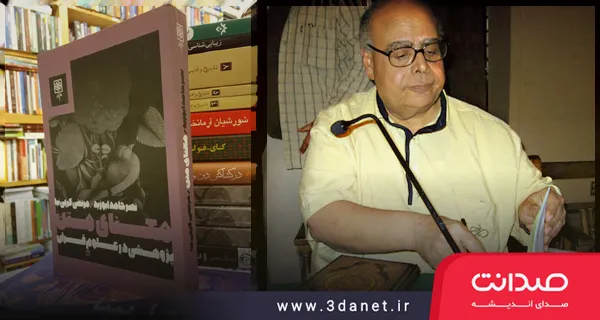
The foundation of Abu Zayd's thought rests on 'Qur'anic hermeneutics' and textual analysis. In his magnum opus, Mafhum al-Nass (The Concept of the Text), he argued that although the Qur'an has a divine origin, it is a textual and linguistic phenomenon that was formed and revealed in a historical and human context; therefore, understanding it requires the application of analytical methods from linguistics, history, and semiotics. He believed that reducing religion to rigid decrees and ignoring historical variables is the main obstacle to the dynamism of Islamic thought.
His innovative views and serious critique of fundamentalist and traditionalist currents provoked a severe reaction from Egyptian courts and conservative clerics in the 1990s, to the point where a ruling was issued for his excommunication and forced separation from his wife. These threats compelled Abu Zayd to emigrate to the Netherlands, where he continued teaching and writing new works such as The Meaning of the Text and Renewal of Religious Concepts as a professor at Leiden University and Utrecht University. Abu Zayd passed away in Cairo in 2010, but his critical method remains one of the most dynamic areas of discussion in contemporary Islamic studies.